What’s Inside
- Master Sunscreen Application for Full Protection
- Implement the Retinoid Sandwich Technique for Skincare Story Ideas
- Double Cleanse Effectively Every Single Night
- Invest in a Quality Vitamin C Serum
- Prioritize Skin Barrier Repair with Ceramides
- Share Silk Pillowcases as Skincare Story Ideas
- Use At-Home LED Light Therapy for Consistency
- Always Check Period After Opening Dates
- Don’t Forget Your Neck and Hands with Retinol
- Embrace Skin Longevity and Microbiome Focus
- Explore Microneedling for Collagen Induction
- Consider Peptides for Plumpness and Elasticity
- Don’t Mix Retinol with Certain Strong Actives
Last Tuesday at Whole Foods, I caught my reflection in the bulk bin glass and realized my chin was actively peeling off in sheets. It wasn’t cute. If you need fresh skincare story ideas to share with your audience, you’re in the right place. I’ve spent years testing products, ruining my skin barrier, and fixing it again so you don’t have to. I tried slapping pure acid on my face for months before figuring out that less is actually more. We’re going to talk about real routines, exact measurements, and the stuff that actually works. Skip the fat-free, chemical-free, everything-free marketing nonsense. It usually just smells like wet cardboard and does absolutely nothing. Let’s get into the nitty-gritty of what you should actually be putting on your face, how much it costs, and why most people are doing it completely wrong. I’m sharing my exact routine, complete with the weird textures, the strange smells, and the exact prices you can expect to pay at the store. Grab a coffee, sit back, and let’s fix your face.
1. Master Sunscreen Application for Full Protection

I can’t stress this enough. Most people get this wrong and apply sunscreen like it’s a precious, rare serum. Dermatologists recommend applying a generous two-finger rule amount. That equals about 1/4 teaspoon of SPF 30 or higher mineral sunscreen to your face and neck daily. Yes, even on cloudy days. I used to dab a tiny dot on my nose and cheeks, and I paid for it with sunspots that looked like muddy little freckles. You need a thick, visible layer before you rub it in. I personally swear by the La Roche-Posay Anthelios Mineral Ultra-Light Fluid Broad Spectrum SPF 50. It costs exactly $39.99 for a 1.7 oz bottle at Target. The texture is incredibly watery and milky. It drips right through your fingers if you aren’t quick, but it dries down to a matte, powdery finish that doesn’t feel heavy. If you have sensitive skin, the EltaMD UV Clear Broad-Spectrum SPF 46 is another fantastic option. It runs around $41.00 for 1.7 oz and blends beautifully under makeup without pilling. The biggest mistake I see is forgetting to reapply. If you’re sweating or swimming, you won’t get all-day protection from one morning application. You need to slather on another 1/4 teaspoon every two hours.
2. Implement the Retinoid Sandwich Technique for Skincare Story Ideas

If you want engaging skincare story ideas for your social media, show your followers the retinoid sandwich method. A common mistake is starting with too high a concentration or too frequent use of retinol. I burned my face off in college doing exactly this. My skin felt like tight, dry plastic. Experts advise beginning with a low-strength retinol, like 0.25% or 0.5%, just twice a week. You must gradually increase the frequency as your skin builds tolerance. To combat the flaky dryness and irritation, you need the sandwich technique. First, apply a layer of basic moisturizer. I use the giant 16 oz tub of CeraVe Moisturizing Cream. It costs $17.99 at Walmart. Wait ten minutes for it to dry completely. Then, apply a precise pea-sized amount of retinol. Do not use more than a pea-sized drop. Finally, finish with another light layer of the CeraVe cream. This buffers the active ingredient while still allowing it to work. The CeraVe cream is thick, gloopy, and incredibly soothing on angry skin. It traps the moisture and prevents that horrible stinging sensation the next morning. Learned that the hard way.
3. Double Cleanse Effectively Every Single Night

I’ve had nights where I was so tired I’d just use a makeup wipe. Bad idea. Last month in a Costco parking lot, I looked in my rearview mirror and saw yesterday’s mascara smeared under my eyes. Double cleansing is highly recommended by skincare experts for thorough removal of makeup, sunscreen, and daily grime. You start with an oil-based cleanser on completely dry skin. I use the DHC Deep Cleansing Oil. It costs $29.50 for a 6.7 oz pump bottle at Costco. It smells faintly of olive oil and has a thick, slippery texture. You need to massage it into your dry face for a full 30 to 60 seconds. This dissolves all the oil-based impurities and waterproof sunscreen. Then, add a splash of warm water to emulsify it. It turns into a milky liquid. Rinse that off. Next, follow up with a gentle water-based cleanser on damp skin to remove any remaining residue. The Epionce Gentle Foaming Cleanser is brilliant for this. It’s $40.00 for a 6 oz tube. It lathers up into a soft, fluffy foam that smells like fresh citrus. Your face feels completely clean but never tight or stripped.

6Pcs Jade Roller for Face
A dependable everyday pick — 6Pcs Jade Roller for Face pulls in 28 ratings at 4.5 stars. Not flashy, just solid.
4. Invest in a Quality Vitamin C Serum

Vitamin C is a powerful antioxidant that brightens skin, stimulates collagen, and reduces hyperpigmentation. But here is the ugly truth. Good Vitamin C smells terrible. If it smells like a bouquet of roses, it’s probably packed with artificial fragrance and very little active ingredient. You want a serum with 10% to 20% L-Ascorbic Acid. The gold standard is the SkinCeuticals C E Ferulic. It costs a whopping $182.00 for a tiny 1 oz dropper bottle. I bought it once at a medspa and it smells exactly like hot dog water. It has a sticky, yellowish texture, but it fades dark spots faster than anything else I’ve ever tried. If you aren’t ready to drop almost two hundred dollars, there are budget-friendly options. The TruSkin Vitamin C Serum is around $21.99 for 1 oz. I found it hidden on the bottom shelf at Kroger last week. It uses a gentler derivative of Vitamin C, so it won’t give you dramatic results overnight, but it’s effective for gentle, daily brightening. Apply exactly three drops to your face every morning before your sunscreen. It feels slightly tacky for a few minutes before sinking in completely. You might also like: 20 Beautiful Aesthetic Night Skincare for Any Style
5. Prioritize Skin Barrier Repair with Ceramides

In 2026, the focus on skin barrier health is shifting towards intense repair using ceramide-rich and lipid-rich formulas. We are finally moving beyond just slugging with plain petroleum jelly. When your skin barrier is damaged, everything stings. Even plain water feels like acid. I wrecked my barrier last winter by over-exfoliating, and my face was constantly red and hot to the touch. Products packed with ceramides are excellent for strengthening the skin barrier and preventing irritation. I went to Sprouts and picked up a basic moisturizer to calm things down. The CeraVe Moisturizing Cream I mentioned earlier is perfect for this, but if you want something specifically for the face, the La Roche-Posay Toleriane Double Repair Face Moisturizer is amazing. It’s $23.99 for a 2.5 oz tube. You need about a dime-sized amount. It has a lightweight, creamy texture that absorbs instantly without leaving a greasy film. Ceramides act like the mortar between your skin cells, keeping the good moisture in and the bad bacteria out. If your face feels tight or looks excessively shiny but feels dry, stop all your active ingredients immediately and just use a ceramide cream for two weeks. You might also like: 15 Gorgeous Aesthetic Glass Skin That Changed Everything
6. Share Silk Pillowcases as Skincare Story Ideas

This is one of my favorite skincare story ideas to share because it feels so luxurious but actually serves a medical purpose. A lesser-known tip for skin health is switching to a silk pillowcase. Unlike regular cotton, silk is significantly less absorbent. This helps your skin retain its natural moisture overnight and allows your expensive skincare products to actually work on your face instead of soaking into your bedding. I used to wake up with deep sleep creases on my cheeks that took hours to fade. Cotton creates friction, which can trigger breakouts and irritation, especially for sensitive or acne-prone skin. I finally bought the Slip Silk Pillowcase. It costs $89.00 for a standard size at Target. Yes, it’s expensive for a pillowcase, but it’s incredibly soft and cool to the touch. It feels smooth and slippery against your cheek. I hand wash it in the sink with a capful of gentle detergent. If you’re spending money on serums and night creams, you shouldn’t be wiping them off onto a rough cotton pillowcase while you toss and turn. You might also like: 15 Beautiful Aesthetic Vision Board Skincare to Inspire Your Next Project
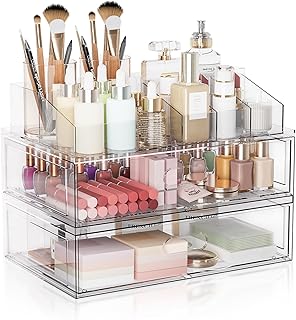
Clear Stackable Makeup Organizer with Drawer
Clear Stackable Makeup Organizer with Drawer has been one of the most consistently praised picks in this category. 302 reviewers averaged 4.5/5.
7. Use At-Home LED Light Therapy for Consistency

While definitely less powerful than professional in-office treatments, at-home LED devices can offer real benefits for mild acne, inflammation, and dullness. The catch is that you have to be wildly consistent. You can’t use it once a month and expect a miracle. Devices like the CurrentBody Skin LED Light Therapy Mask require daily use over weeks or months to see subtle changes in tone and clarity. This specific mask costs $380.00 for the device. It looks like a flexible silicone sheet with tiny red and near-infrared lights embedded inside. You strap it to your head with a velcro band. I sit on my couch for exactly ten minutes every night looking like a glowing red robot. It emits a very faint, comforting warmth. A huge mistake people make is using these masks over thick serums. You need to use it on clean, bare skin, or with a clear, water-based serum so the light can penetrate. I usually buy a simple hyaluronic acid serum at Trader Joe’s for $8.99 (1 oz) to apply right after my light session. It feels like a cool drink of water for your face.
8. Always Check Period After Opening Dates

A surprising but essential tip is to regularly check the Period After Opening symbol on your skincare products. This is known as the PAO date. Look at the back of your lotion bottle. You will see a tiny symbol of an open jar with a number followed by an M. For example, 6M or 12M. This indicates exactly how many months a product is safe to use after you break the seal. Using expired products can lead to severe irritation, breakouts, or completely reduced efficacy. I learned this the hard way last summer. I grabbed a tube of Trader Joe’s Daily Facial Sunscreen. It costs $8.99 for a 1.7 oz tube. It has a beautiful, velvety texture that usually acts as a great makeup primer. But I’d had this specific tube open for two years. It had separated into a chunky, oily mess that smelled faintly of old crayons. I put it on anyway. My eyes watered and burned for three hours, and I got a sunburn. Throw away your old stuff. It isn’t worth the chemical burn.
9. Don’t Forget Your Neck and Hands with Retinol

Many people make the terrible mistake of only applying their expensive anti-aging products to their face. You must extend your skincare routine downward. Your neck and the back of your hands are often the first places to show signs of aging because the skin is thinner and constantly exposed to the sun. I noticed the skin on my hands looking incredibly crepey and dry last winter. Now, whatever I put on my face goes on my hands. Take a pea-sized amount of retinol and rub it into the back of your hands before bed. I like using the RoC Retinol Correxion Deep Wrinkle Night Cream for this. It costs $24.99 for a 1 oz tube at Walmart. It has a distinct, slightly powdery floral smell and a rich, buttery texture. Because hand skin is washed so frequently, it gets dry quickly. Always follow the retinol with a thick hand cream. I keep a bottle of lotion right on my nightstand so I won’t forget. Treat your neck and chest with the exact same care you give your forehead.

EQQUALBERRY Vitamin Illuminating Serum | Niacinamide 4% +
EQQUALBERRY Vitamin Illuminating Serum | Niacinamide 4% + Brightening has been one of the most consistently praised picks in this category. 101 reviewers averaged 4.5/5.
10. Embrace Skin Longevity and Microbiome Focus

A major trend for 2026 is skin longevity. This focuses on long-term skin health and resilience rather than just aggressively fighting wrinkles. This includes a massive, renewed focus on microbiome diversity. Your skin is covered in good bacteria that help it stay healthy. When we over-wash and over-exfoliate, we kill off that good bacteria. We need ingredients like postbiotics and bacterial lysates that strengthen the skin barrier and help the skin self-regulate. I started incorporating the Beekman 1802 Milk Drops Probiotic Ceramide Serum into my routine. It runs $45.00 for a 0.95 oz glass dropper bottle at Whole Foods. It has a thin, milky texture that feels instantly cooling and soothing when you pat it into your skin. It smells very faintly of sweet milk. Since I started focusing on my skin’s microbiome instead of just scrubbing away dead skin, my face feels much less tight and reactive. Stop fighting your skin and start feeding it the bacteria it actually needs to function properly. You’ll notice a massive difference in redness. Trust me on this.
11. Explore Microneedling for Collagen Induction

Microneedling remains a highly popular treatment in 2026 for stimulating natural collagen and elastin production. It significantly improves skin texture and reduces fine lines. Standard microneedling sessions typically range from $200 to $700. If you add PRP (Platelet-Rich Plasma), the cost jumps to $500 to $1,500 per session. PRP uses your body’s own growth factors for enhanced healing. I tried a standard session last year. They slather your face in a thick, white numbing cream that smells like medicine. After twenty minutes, your face feels completely heavy and dead. The actual needling feels like tiny, rough cat scratches dragging across your forehead. It isn’t painful, but it sounds like scratching sandpaper right next to your ears. Afterward, my face was bright red and felt like a severe sunburn. I walked into Sprouts to buy groceries looking like a tomato, and the cashier definitely stared at me. You usually need a series of 3 to 6 treatments, costing $600 to $4,200 total, for optimal results. It’s an investment, but it actually physically changes the structure of your skin.
12. Consider Peptides for Plumpness and Elasticity

Peptides are a massive, re-emerging trend for 2026. They are recognized for their crucial role in long-term skin health. Peptides are essentially small chains of amino acids that act as building blocks for proteins like collagen and elastin. They signal your skin to produce more of these proteins, which reduces fine lines and improves overall elasticity. They are absolutely ideal for aging or chronically dry skin. I use The Ordinary Multi-Peptide + HA Serum. It costs $17.50 for a 1 oz bottle at Target. It has a clear, watery consistency that feels slightly sticky for about thirty seconds before it completely absorbs. It doesn’t have any noticeable smell. You only need three or four drops for your entire face and neck. I apply it immediately after washing my face while my skin is still slightly damp. Peptides are fantastic because they rarely cause irritation, unlike retinols or strong acids. You can use them twice a day without worrying about burning your face off. I’ve noticed my cheeks feel significantly plumper since I started using them.

Eclat Skincare Vitamin C Serum – Skin Care for Dark Spots
Eclat Skincare Vitamin C Serum – Skin Care for Dark Spots has been one of the most consistently praised picks in this category. 753 reviewers averaged 4.5/5.
13. Don’t Mix Retinol with Certain Strong Actives

A crucial mistake I see constantly is combining retinol with other potent active ingredients in the exact same routine. Do not mix retinol with Vitamin C, AHAs (Alpha Hydroxy Acids), or BHAs (Beta Hydroxy Acids) at the same time. This leads to massive irritation, redness, and a damaged skin barrier. I once applied a 2% BHA liquid followed immediately by a 1% retinol cream. My face felt like it was on fire, and it took a full week of heavy creams to stop the peeling. Instead, you must separate them. Use your Vitamin C serum in the morning under your sunscreen. Use your retinol strictly at night. If you want to use chemical exfoliants like AHAs or BHAs, use them on nights when you aren’t using retinol. Skin cycling is a great way to manage this. You do an exfoliation night, a retinol night, and then two nights of just plain moisturizer to let your skin rest. Consistency and patience are always better than trying to force ten different strong chemicals into your pores at once. No exaggeration.
I hope these tips help you rethink your daily routine. Skincare doesn’t have to be complicated, but it does require paying attention to exactly what you’re putting on your face. I highly recommend starting by fixing your sunscreen habits before you buy any expensive serums. Pin this page so you can reference these measurements and product recommendations the next time you’re standing confused in the skincare aisle. You don’t need a fifty-step routine to get glowing skin. You just need a few solid products, exact measurements, and the patience to let them actually work.
Frequently Asked Questions
How much sunscreen should I use daily?
You need approximately 1/4 teaspoon for your face and neck. I’m telling you, it’s more than you think. Use the two-finger rule to measure it out accurately.
What is the retinoid sandwich method?
It’s a layering technique to prevent irritation. You apply a light layer of moisturizer, wait ten minutes, apply a pea-sized amount of retinol, and top it with more moisturizer.
Can I mix retinol with Vitamin C?
No, you really shouldn’t. Mixing strong actives causes redness and barrier damage. Use Vitamin C in the morning and retinol at night so they aren’t competing.
What are the skincare story ideas for 2026?
The biggest trends focus on skin longevity, barrier repair with ceramides, and microbiome health. People are moving away from harsh scrubbing and focusing on deep cellular healing.
