What’s Inside
- Master the “Retinol Sandwich” for Beginner-Friendly Introduction
- Optimize Your Vitamin C Serum Application for Maximum Brightness
- The “Two-Finger Rule” is Your Non-Negotiable Sunscreen Standard
- Hydrate Smarter: Always Apply Hyaluronic Acid to Damp Skin
- Embrace Microbiome Skincare: A Key 2026 Trend for Barrier Health
- Brainstorming Skincare Post Ideas Around Peptide Serums
- The Surprising Secret to Better Skin: A Silk Pillowcase
- Never Skip the Patch Test: A Crucial Common Mistake to Avoid
- The Goldilocks Rule for Cleansing: Lukewarm Water is Just Right
- Target Pores and Redness with Niacinamide
- Skincare Post Ideas for Fixing the Over-Exfoliation Trap
Last Tuesday at Whole Foods, I caught my reflection in the curved glass of the bulk almond bin and audibly gasped. My chin was peeling in flaky, white patches, and my expensive foundation had separated into weird little orange dots across my nose. I desperately needed fresh skincare ideas for my blog because my own daily routine was clearly failing me. You can’t just slap expensive creams on a damaged skin barrier and hope for the best. I’ve spent the last six months testing, failing, and finally figuring out exactly how to layer, apply, and troubleshoot these products. I’m sharing the exact steps, the specific products I buy, and the embarrassing mistakes I made along the way. Let’s fix your routine before you end up looking like a shedding reptile in the grocery store aisle. Trust me.
I tried this all wrong for months before figuring it out. I’d buy whatever trendy serum I saw online, apply a massive handful of it to my dry face, and wonder why my skin felt like tight wax paper. Skincare isn’t just about what you buy. It’s about how much you use, the order of application, and the water temperature. I’m going to walk you through what works, down to the exact dollar amount and the number of drops. Grab your favorite moisturizer, and let’s get into the mechanics of a routine that won’t leave you burning, peeling, or breaking out.
1. Master the “Retinol Sandwich” for Beginner-Friendly Introduction

I’ll never forget standing in the brightly lit beauty aisle at Target last November, staring at rows of anti-aging products while my own face felt like it was on fire. I’d just started using a harsh, prescription-strength retinoid straight onto my bare skin every single night. Big mistake. My cheeks were peeling like a sunburned snake. That’s when I finally learned about the retinol sandwich method. It’s the only way to start using this potent ingredient without destroying your skin barrier.
You take a gentle option, like the CeraVe Resurfacing Retinol Serum ($22.99 for a 1-ounce pump bottle), and you sandwich it. First, wash your face and apply a base layer of a basic, hydrating moisturizer. I use a dime-sized dollop. Let that sink in for two minutes until your skin feels dry. Then, pump out a tiny, pea-sized amount of the retinol. Just a pea. Don’t get greedy. Gently tap it all over your face, avoiding the eye area and the corners of your mouth where it tends to pool and burn.
Wait another two minutes. Finally, seal it all in with a second, slightly thicker layer of that same moisturizer. Starting with a low concentration of 0.1% to 0.2% just once or twice a week is plenty. If you rush it, you’ll end up with red, angry patches. The sandwich method dilutes the immediate punch of the active ingredient enough to let your skin acclimate. Your face won’t feel tight or itchy the next morning. It just feels soft and normal.
2. Optimize Your Vitamin C Serum Application for Maximum Brightness

Vitamin C is notorious for being finicky, and most people get this wrong. I used to apply my Vitamin C serum at night, right over a heavy facial oil, which blocked it from absorbing. You’re wasting your money if you do that. For optimal results, apply 3 to 5 drops of an L-Ascorbic Acid-based Vitamin C serum to clean, dry skin first thing in the morning.
I swear by the SkinCeuticals CE Ferulic serum. Yes, it’s a splurge at $182 for a 1-ounce glass dropper bottle, but it works. Be warned, though. It smells like hot dog water. I’m not kidding. The scent is metallic, but it fades after thirty seconds. Drop the watery, yellow liquid into your palm, rub your hands together once, and press it firmly into your face and neck.
This antioxidant works best when applied before any other serums or moisturizers because it needs a low pH environment to penetrate. I wait a full 60 seconds after pressing it in before I apply my next product. If you apply a thick cream immediately over it, the Vitamin C won’t absorb, and you’ll just have sticky, expensive hot dog water sitting on your skin.
3. The “Two-Finger Rule” is Your Non-Negotiable Sunscreen Standard

I used to think a tiny dab of sunscreen was enough for my whole face. I’d rub it between my palms and lightly pat my cheeks. Then I got a blistering sunburn on my forehead during a cloudy beach day. Dermatologists confirm most people apply less than half the recommended amount, significantly reducing the SPF protection. If the bottle says SPF 50, but you only use a tiny drop, you’re likely only getting SPF 15.
The only way to guarantee full coverage is the two-finger rule. Squeeze a thick line of broad-spectrum SPF 30+ sunscreen down the length of your index and middle finger. I buy the Trader Joe’s Daily Facial Sunscreen. It’s $8.99 for a 1.7-ounce tube, and the texture is a clear, silicone gel that feels like a high-end makeup primer. It doesn’t leave a white cast.
Applying two full fingers of sunscreen feels like too much product at first. Your face will look shiny for about three minutes. Just keep rubbing it in, pulling it down onto your neck and ears. It will absorb. You have to reapply every two hours if you’re outside. I keep a cheap mineral stick in my purse for touch-ups because I refuse to get another forehead burn. You might also like: 20 Stunning Tips Natural Skincare That Actually Work
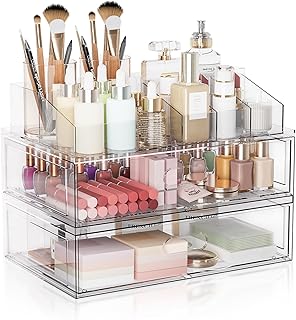
Clear Stackable Makeup Organizer with Drawer
Clear Stackable Makeup Organizer with Drawer has been one of the most consistently praised picks in this category. 302 reviewers averaged 4.5/5.
4. Hydrate Smarter: Always Apply Hyaluronic Acid to Damp Skin

This is my biggest pet peeve, and it’s a mistake I made for years. A common error is applying hyaluronic acid to bone-dry skin. Hyaluronic acid is a humectant, which acts like a microscopic sponge that pulls water from its surroundings. If you apply it to a dry face in a dry room, it can actually draw moisture out of the deeper layers of your skin, leaving you feeling tighter and drier. You might also like: 20 Gorgeous Aesthetic Products Korean Skincare for Every Budget
I figured this out during a random Tuesday run to Walmart. My skin felt like sandpaper, and I realized my expensive serums weren’t working. Now, I always apply it to damp skin. Immediately after washing my face, while water droplets are still visible, I pump out 2 drops of the COSRX Advanced Snail 96 Mucin Power Essence. It’s about $25 for a 3.38-ounce bottle. You might also like: 20 Beautiful Routine Skin Care Tips Natural Acne Skincare for a Fresh New Look
The texture is slimy and stringy, like melted mozzarella. But when you massage those two drops onto a damp face, it binds to the water. It plumps everything up, making fine lines look less visible. You have to lock it in with a moisturizer, or the water will just evaporate. Once I started doing this, my skin stopped feeling like a dry, crinkled paper bag by 2 PM.
5. Embrace Microbiome Skincare: A Key 2026 Trend for Barrier Health

We’re obsessed with scrubbing and sanitizing our faces, which destroys the good bacteria that keeps our skin healthy. Trending heavily for 2026, microbiome-balancing skincare focuses on supporting the skin’s natural flora to reduce inflammation. I used to use harsh, stripping acne washes that left my skin squeaky clean. Squeaky clean skin is damaged skin. It means you’ve stripped away your protective oils.
I changed my approach after a trip to Sprouts. I was wandering the wellness aisles looking for internal probiotics when I realized my skin needed the same thing. Now, I use products that feed the good bacteria on my face. I use the Glow Recipe Avocado Ceramide Recovery Serum. It’s $45 for a 1-ounce glass pump bottle.
It dispenses as a pale green, milky lotion that smells like fresh cucumber. It uses ceramides and prebiotics to soothe redness. I use one full pump and press it into my cheeks, which are prone to flushing. You aren’t going to see overnight results. It’s a slow process of rebuilding a damaged barrier. But after a month, my skin stopped reacting to every temperature change and minor breeze.
6. Brainstorming Skincare Post Ideas Around Peptide Serums

When I was drafting new skincare ideas for my blog, I realized I hadn’t talked enough about peptides. Peptides are short chains of amino acids that act as building blocks for collagen and elastin. They’re a top dermatologist-recommended ingredient for stimulating collagen and improving elasticity. If your skin is starting to sag, peptides are what you need.
I had a realization in the pharmacy section at Kroger. I was comparing ingredient lists on cheap drugstore creams and realized almost none had clinical levels of peptides. You have two routes here. You can go for a splurge with a multi-peptide complex, like the SkinMedica TNS Advanced+ Serum. It’s an eye-watering $295 for a 1-ounce dual-chamber pump. It smells strongly of metallic minerals, but the firming results are undeniable.
If you aren’t ready to spend car-payment money on a serum, I highly recommend The Inkey List Peptide Serum. It’s a budget-friendly $15.99 for a 1-ounce plastic bottle. The texture is a watery, cloudy liquid. I apply 3 drops morning and night, right after my toner and before heavier creams. It sinks in without sticky residue. It won’t freeze your face like Botox, but it gives your skin a bouncy, hydrated resilience that makes fine lines look softer.

Yeamon Gua Sha Facial Tools and Face Roller Set
Yeamon Gua Sha Facial Tools and Face Roller Set punches above its price — 1 buyers rated it 4.5 stars. I would buy it again.
7. The Surprising Secret to Better Skin: A Silk Pillowcase

This sounds frivolous until you try it. I used to sleep on cheap, rough cotton pillowcases. Every morning, I’d wake up with deep sleep creases pressed into my cheeks that took hours to fade. Worse, my face always felt dry because the cotton was absorbing all my expensive nighttime serums while I slept.
Dermatologists recommend sleeping on a 100% mulberry silk pillowcase to reduce friction. I finally caved during a Costco run. Seeing their piles of heavy cotton sheets reminded me of how much damage I was doing to my face every night. I went home and ordered a Blissy silk pillowcase. It’s $89 for a standard size.
The sensory difference is shocking. The silk is slippery and cool. When you roll over, your skin glides across the fabric instead of dragging. Silk is also significantly less absorbent than cotton. That means the $45 ceramide serum I applied at 10 PM actually stays on my face. I haven’t woken up with a single sleep crease since I made the switch. It’s an upfront investment, but it protects every other product in your routine.
8. Never Skip the Patch Test: A Crucial Common Mistake to Avoid

I learned this lesson the painful way. I bought a highly rated, strong exfoliating acid mask online. I was so excited to use it that I smeared a thick layer all over my entire face the second I opened the box. Within ten minutes, my skin was bright red, burning, and covered in tiny welts. I had to spend the next two weeks slathering my face in Vaseline just to heal the chemical burn.
Before introducing any new skincare product, especially actives like retinoids or acids, you must perform a patch test. It’s boring, but you can’t skip it. I test everything now. When I bought the Paula’s Choice 2% BHA Liquid Exfoliant ($34 for a 4-ounce grey bottle), I applied one drop to a discreet area behind my right ear.
The liquid smells like vinegar and feels slightly oily. I patted that single drop behind my ear and waited 48 hours to check for signs of irritation. For some potent ingredients, dermatologists suggest testing on your inner forearm for 7 to 10 days. It requires patience, but it’s better than walking around for a week looking like you face-planted into poison ivy.
9. The Goldilocks Rule for Cleansing: Lukewarm Water is Just Right

I love a scalding hot shower. I used to stand under the stream, letting the steaming water blast my face while I scrubbed with a foaming cleanser. I thought the heat was opening my pores. I was wrong. Hot water aggressively strips your skin’s lipid barrier, leading to dryness, redness, and a compromised moisture barrier.
Conversely, washing with ice-cold water won’t effectively dissolve heavy oils. You need the Goldilocks temperature. Dermatologists advise using strictly lukewarm water to cleanse. It should feel barely warm, almost room temperature. It helps loosen dirt without melting away the essential oils your skin needs to stay healthy.
I use the La Roche-Posay Toleriane Hydrating Gentle Cleanser. It’s $17.99 for a 13.5-ounce pump bottle. The texture is a dense, milky white cream that doesn’t foam. I dispense two pumps into my wet hands, massage it over my face for 60 seconds, and rinse with handfuls of lukewarm water at the sink. I never wash my face in the shower anymore. Washing at the sink ensures I control the water temperature.

Eclat Skincare Vitamin C Serum – Skin Care for Dark Spots
Eclat Skincare Vitamin C Serum – Skin Care for Dark Spots has been one of the most consistently praised picks in this category. 753 reviewers averaged 4.5/5.
10. Target Pores and Redness with Niacinamide

Niacinamide lives up to the hype, but you have to use the right concentration. I used to buy serums with 20% niacinamide, thinking more was better. It just caused irritation and made my skin flush. The sweet spot for effectiveness is a 5% to 10% concentration.
I recommend The Ordinary Niacinamide 10% + Zinc 1%. It’s affordable at $6.60 for a 1-ounce glass dropper bottle. The liquid is cloudy and has a tacky, gel-like texture. This ingredient is excellent for reducing the appearance of enlarged pores, calming redness, and supporting the skin barrier by increasing ceramide production.
You have to be careful with application. A common mistake with this serum is applying too much, which causes it to pill into gross, chalky white flakes when you apply makeup over it. I use 2 tiny drops. I rub them between my fingertips and press them into my T-zone, where my pores are largest. I apply it immediately after cleansing. It won’t shrink your pores permanently, but it makes them look tighter and less congested.
11. Skincare Post Ideas for Fixing the Over-Exfoliation Trap

When I was drafting my final batch of skincare ideas, I knew I had to talk about over-exfoliation. It’s the number one mistake I see. We get addicted to that smooth, glass-skin feeling after using a strong acid or a gritty scrub. So, we do it every day. Then we wonder why our skin is breaking out, stinging when we apply moisturizer, and looking shiny like a plastic doll.
That plastic shine isn’t a healthy glow. It’s a sign that you’ve scrubbed away your protective barrier, leaving raw skin exposed. Less is often more. Experts recommend using chemical exfoliants only two or three times a week. If you’ve already fallen into the over-exfoliation trap, stop all acids and retinoids immediately.
To repair the damage, you need a heavy, ceramide-rich balm. I rely on the La Roche-Posay Cicaplast Baume B5. It’s $18.99 for a 1.35-ounce squeeze tube. The texture is a thick, white paste that feels like diaper rash cream. It’s heavy, greasy, and takes forever to rub in. But if you apply a thick layer of this balm over your raw skin before bed, it acts like a liquid bandage. It replenishes essential lipids while you sleep. I won’t ever be without a tube in my medicine cabinet.
Honestly, fixing your routine doesn’t require a ten-step, complicated process. I’d rather see you use three high-quality products consistently than ten random serums you bought on a whim. The biggest lesson I’ve learned is that patience and gentle application are far more important than aggressive scrubbing. If you’re struggling with persistent redness or breakouts, try stripping your routine back to just a gentle cleanser, a basic moisturizer, and SPF for two weeks. Your skin barrier will thank you. I’m always testing new formulas, so save or pin this article if you want to reference these steps later when you’re standing confused in the beauty aisle.
Frequently Asked Questions
What are some good skincare post ideas for beginners?
Focus on foundational steps like the two-finger rule for sunscreen, how to apply hyaluronic acid to damp skin, and the retinol sandwich method. These specific skincare post ideas provide actionable value and help beginners avoid common irritation mistakes.
How much Vitamin C serum should I use?
You only need 3 to 5 drops of an L-Ascorbic Acid-based Vitamin C serum. Apply it to clean, completely dry skin in the morning before any other moisturizers or oils to ensure proper absorption and maximum antioxidant protection.
Why does my skin feel dry after using hyaluronic acid?
You’re likely applying it to dry skin. Hyaluronic acid is a humectant that pulls moisture from its surroundings. If your skin and the air are dry, it pulls moisture out of your skin. Always apply it to damp skin.
How do I fix an over-exfoliated skin barrier?
Stop using all acids, scrubs, and retinoids immediately. Wash with lukewarm water and a gentle cleanser, and apply a thick, ceramide-rich balm like La Roche-Posay Cicaplast Baume B5 every night to act as a protective barrier while your skin heals.
