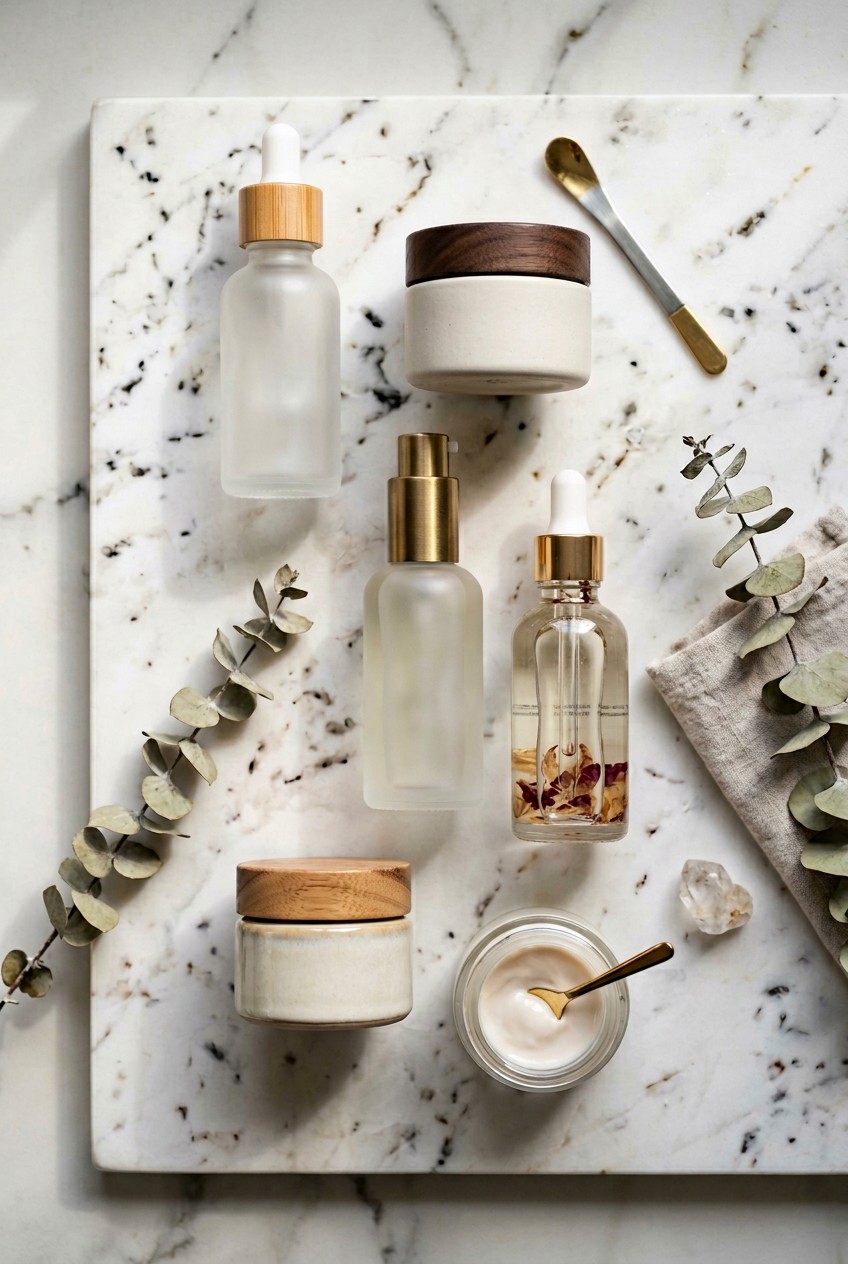
What’s Inside
- Prioritize High-Resolution Imagery for a Crisp Skincare Aesthetic Wallpaper
- Embrace the Gentle Power Aesthetic with Muted Palettes
- Utilize AI for Unique Textures and Backgrounds
- Incorporate Biophilic Design Elements
- Focus on Skinimalism for Your Skincare Aesthetic Wallpaper
- Showcase Key Ingredients in 3D Renders
- Utilize Professional Design Tools for Quality Control
- Curate Stock Imagery from Reputable Sources
- Implement Consistent Brand Typography
- Focus on Sensorial Design and Macro Photography
Last Tuesday at Whole Foods, I dropped my phone right in the produce aisle. It cracked the screen protector and showed off the absolute mess of a home screen I’d been hiding. My chaotic grid of random apps and blurry photos was ruining the vibe of my new phone. That’s why I spent the weekend designing the perfect skincare aesthetic wallpaper to fix it. I’m obsessed with how a clean, calming background makes me feel less stressed when I unlock my phone fifty times a day. We spend so much time perfecting our morning routines with expensive serums and moisturizers, but we completely neglect the digital spaces we stare at constantly. I used to think any cute Pinterest picture would work, but I was wrong. Most people get this wrong. They end up with a cluttered, pixelated mess that drains their battery and their mood. Let’s talk about how to make your own digital sanctuary without it looking like a messy 2012 Tumblr mood board. I’ve figured out exactly what works and what looks terrible, so you don’t have to make the same mistakes I did—took me years to figure out.
1. Prioritize High-Resolution Imagery for a Crisp Skincare Aesthetic Wallpaper

I used to just screenshot cute pictures from Pinterest and set them as my background. Big mistake. I tried this wrong for months before figuring it out. The image would stretch out, looking like a blurry, pixelated mess on my $999.00 Apple iPhone 15 Pro. If you’re going to stare at a skincare aesthetic wallpaper all day, it needs to be incredibly crisp. Always design at or above common display resolutions to prevent pixelation. For desktop monitors, you want exactly 1920×1080 pixels for Full HD. If you’ve got a fancy 4K monitor, bump that up to 3840×2160 pixels with a 16:9 aspect ratio. Mobile is a different beast entirely. I make mine exactly 1170×2532 pixels for my iPhone, which gives that perfect 9:16 aspect ratio. Android users usually need 1080×1920 pixels. Last month at Target, I was comparing phone screens with my sister in the electronics aisle. Her background was this gorgeous, high-definition macro shot of a 1 oz bottle of Glow Recipe Watermelon Glow Niacinamide Dew Drops ($35.00). It looked like actual glass. My blurry screenshot looked like a potato. Don’t be like me. Start with the right canvas size in your editing app. It’s the only way to get that premium, clean girl aesthetic without the eye strain. Pro tip: always save your final image as a PNG file, not a JPEG, to keep the edges of your text and graphics perfectly sharp.
2. Embrace the Gentle Power Aesthetic with Muted Palettes

I’m totally over neon colors right now. They scream at me when I check my notifications at 6 AM. The 2026 trend of “Gentle Power” in skincare is all about efficacy without irritation, and your digital space should match that exact energy. Translate this visually by using soft, muted pastels. Think baby pink, mint green, and dusty lavender. I recently bought a 0.7 oz jar of the Laneige Lip Sleeping Mask in Berry for $24.00 at a pop-up shop, and that exact soft pink color is my current obsession. I spent an hour standing in line at Kroger last week just color-matching that exact pink shade on my phone to make a new background. Neutral tones like crisp whites, warm beiges, and soft grays convey calmness and purity. Skip the loud, high-contrast stuff. It tastes like visual wet cardboard. When you open your phone, you want it to feel like a deep breath. I use a specific baby pink hex code (#FADADD) paired with a soft beige (#F5F5DC). It looks incredibly soothing. If you’re making a background, stick to three muted colors maximum. Any more than that, and it starts looking like a chaotic finger painting. Keep it gentle. Keep it soft. Your tired eyes will thank you. I actually tried a bright red background once because I thought it looked energetic. It gave me a massive headache within two hours. Soft tones are the only way to go.
3. Utilize AI for Unique Textures and Backgrounds

You don’t need a professional photography studio to get insanely good backgrounds anymore. I’m a huge fan of utilizing AI generative art platforms like PromeAI or Leonardo.Ai to create custom textures. It’s honestly wild what these tools can do. You can type in prompts for “minimalist white marble” or “flowing topographic contour lines” and get a masterpiece in ten seconds. I tried making my own marble background once by taking photos of a countertop at Sprouts while buying a $4.99 bunch of organic kale. The lighting was awful, and the fluorescent grocery store glare ruined every single shot. AI fixes all of that instantly. You can generate textures that align with the “new skin concept” of supporting your skin’s innate intelligence. Think hyper-realistic, creamy swirls that look exactly like a fresh 1.7 oz jar of Tatcha The Dewy Skin Cream ($72.00). I usually set my AI aspect ratio to 9:16 so it perfectly fits my phone screen without any awkward cropping. The trick is to add words like “soft focus” and “studio lighting” to your text prompt. Otherwise, the AI sometimes spits out these weird, gritty textures that look like sandpaper. You want it to look like a luxurious face cream, not a concrete sidewalk. Pro tip: always upscale your AI images before downloading them so they stay crisp on large screens. You might also like: 20 Charming Aesthetic Videos Night Routine Skincare You’ll Want to Bookmark

Eclat Skincare Vitamin C Serum – Skin Care for Dark Spots
Honestly, Eclat Skincare Vitamin C Serum – Skin Care for Dark Spots surprised me — sturdier than it looks in the photos, and over 753 buyers gave it 4.5 stars.
4. Incorporate Biophilic Design Elements

I’m completely obsessed with the “Local by Nature” trend happening right now. It’s all about bringing the outside indoors, and that includes your digital screens. Integrating subtle biophilic elements into your design makes a massive difference in how relaxing your phone feels. We’re talking blurred botanical backgrounds, soft focus shots of natural ingredients like thick aloe vera leaves, or tiny, crisp water droplets. Last Sunday, I was wandering the aisles at Trader Joe’s and grabbed a 12 oz bottle of their Aloe Vera Gel for $3.99. The bright, fresh green color of that bottle inspired my entire current phone setup. I highly recommend using earthy color palettes for this. I specifically use a beautiful sage green (hex code #C9D3CA) and a really comforting warm taupe (hex code #A39384). These shades evoke natural beauty and sustainability without trying too hard. I used to slap giant, high-contrast pictures of sunflowers on my lock screen. It looked so cheesy and distracting. The secret is keeping the botanicals blurred in the background. You want the suggestion of nature, not a high-definition nature documentary. A soft, out-of-focus monstera leaf behind a clean clock widget looks incredibly chic. It brings a little slice of a greenhouse right into your pocket. You might also like: 15 Brilliant Skincare Routine Ideas That Make a Real Difference
5. Focus on Skinimalism for Your Skincare Aesthetic Wallpaper

Clutter is the absolute enemy of a good aesthetic. I align heavily with the “Skinimalism” trend, which basically means doing more with less. This applies perfectly to your digital backgrounds. You need to adopt a minimalist design approach and use ample negative space. Negative space is just the empty area around your key visual elements. It creates a clean, uncluttered, and sophisticated look. I used to fill every single pixel of my screen with quotes, pictures, and widgets. It felt like walking into a messy teenager’s bedroom. Now, I leave at least sixty percent of the screen completely blank. The blank space makes the wallpaper feel calming and premium. I was standing in the massive warehouse aisles at Costco a few weeks ago, staring at a giant 20 oz 2-pack of Cetaphil Gentle Skin Cleanser for $19.99. The packaging is so basic, mostly just white space with a little blue and green. It looks clinical and trustworthy. That’s the exact vibe you want for a skincare aesthetic wallpaper. Let your apps breathe. If you put a tiny, aesthetic photo of a serum bottle right in the center, leave the entire top and bottom completely blank. Your eyes need somewhere to rest. Don’t cram a calendar, a photo, and a quote all onto one screen. Pick one focal point and let the negative space do the heavy lifting. You might also like: 20 Stunning Tips Natural Skincare That Actually Work
6. Showcase Key Ingredients in 3D Renders

Generic product shots are boring. I’m totally over seeing the same flat lay of a dropper bottle surrounded by fake flower petals on Pinterest. Instead, you need to feature 3D renders of potent skincare ingredients. Think glowing hyaluronic acid molecules or sharp, bright vitamin C crystals floating against a clean, monochromatic background. It communicates scientific sophistication and looks incredibly modern. I found this amazing 3D render of a water molecule and set it as my tablet background. It looks like a piece of modern art. This perfectly matches the current trend of ingredient-led spotlights. People actually care about what’s in their bottles now. I was browsing the skincare aisle at Walmart, picking up a 1 oz bottle of CeraVe Hydrating Hyaluronic Acid Serum for $18.97, and realized the packaging highlights the ingredients just as much as the brand name. You can find incredible 3D stock images online that look like microscopic science experiments. Just make sure the background color matches the ingredient. I use a soft, icy blue background for hyaluronic acid renders to give it that hydrating, watery feel. It’s a nerdy little detail, but it makes the whole setup look incredibly expensive and thoughtful. Common mistake: using a 3D render with a busy background. It completely ruins the scientific, clean aesthetic. Always stick to solid, monochromatic backdrops.

Masirs Clear Makeup Organizer
A dependable everyday pick — Masirs Clear Makeup Organizer – 16-Compartment Cosmetic and Jewelry Ho pulls in 258 ratings at 4.5 stars. Not flashy, just solid.
7. Utilize Professional Design Tools for Quality Control

You can’t build a premium aesthetic using clunky, free photo editing apps that watermark your images. I tried doing that in college to save money, and my backgrounds always looked cheap and slightly blurry. For pixel-perfect control, you really need to invest in Adobe Creative Cloud. I personally use their Photography Plan, which includes Photoshop and Lightroom, starting around $9.99 a month. If you’re doing heavy graphic work, a single app like Illustrator runs about $22.99 a month. I do all my editing on a 13-inch Apple MacBook Air ($999.00), and the color accuracy is fantastic. If Adobe feels too intimidating, Canva Pro is a massive lifesaver. It costs $14.99 a month and offers a vast template library with a super user-friendly interface. I use Canva Pro when I’m in a rush and just need to overlay a quick hex code color or add some subtle grain to a photo. Don’t rely on the built-in photo editor on your phone. It compresses the image files and destroys the resolution. Spending fifteen bucks a month on a proper design tool is worth every penny if you care about how your digital space looks. Honestly, trying to remove a background using a free app is a nightmare. The edges always look jagged. Pay for the good tools and your wallpapers will look professionally designed.
8. Curate Stock Imagery from Reputable Sources

Unless you’ve got a professional macro lens and perfect studio lighting, taking your own aesthetic photos is really hard. I spent an entire Saturday trying to photograph a 2 oz bottle of Heritage Store Rosewater ($10.49) that I bought at Whole Foods. I sprayed it on a mirror, tried to capture the droplets, and it just looked like a dirty bathroom mirror. I gave up and went straight to the professionals. Source high-quality, authentic skincare stock photos from platforms like Getty Images or iStock. They’ve got millions of incredible, highly stylized images. If you don’t want to pay for a subscription, free alternatives like Unsplash provide excellent, high-resolution options. Just search for terms like “skincare texture,” “water ripples,” or “cream smear.” The trick is finding images that don’t look overly staged. Skip the photos of women splashing water on their faces while smiling wildly. Nobody actually washes their face like that. Look for abstract textures, close-ups of bubbles, or soft swatches of lotion. A macro shot of a thick, white cream against a beige background is infinitely more chic than a busy flat lay of twenty different products. Keep it simple and let the texture do the talking. A massive mistake people make is using stock photos with obvious filters. Keep the lighting natural and the colors true to life.
9. Implement Consistent Brand Typography

If you’re adding text to your background, like a daily affirmation, a calendar widget, or a blog title, the font matters just as much as the picture. I’m a massive typography snob. Choose one to three legible fonts that reflect a clean personality and use them consistently. For a premium feel, opt for clean sans-serifs like Montserrat or Lato. They look incredibly modern and easy to read. I was checking out the packaging on a 1 oz bottle of Naturium Niacinamide Serum 12% Plus Zinc 2% ($16.00) at Target recently, and their minimalist, sans-serif font is exactly what makes the brand look so expensive. I once tried using a loopy, handwritten cursive font for a lock screen quote. It was completely unreadable when layered over a picture of a marble countertop. I couldn’t even read the time. Don’t do that. Stick to elegant serifs or crisp sans-serifs, ensuring a clear hierarchy in any text elements. Make the time or main quote large, and keep the date or smaller text tiny and spaced out. Good typography feels invisible. It just looks right without you having to think about it. Pro tip: always use white or black text depending on your background. Trying to match a colored font to a colored background usually ends up looking muddy and impossible to read.
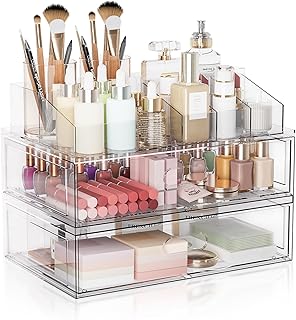
Clear Stackable Makeup Organizer with Drawer
Clear Stackable Makeup Organizer with Drawer punches above its price — 302 buyers rated it 4.5 stars. I would buy it again.
10. Focus on Sensorial Design and Macro Photography

In 2026, sensorial experiences are everything. We want to visually imply textures like fluffy foams or bouncy gels through soft lighting and subtle gradients, even without showing the actual bottle. I love using an extreme macro shot of a key ingredient. Imagine a massive, zoomed-in photo of a single pearl of a hydrating serum, or the intricate, cracked texture of a dried clay mask. It creates so much intrigue. I was washing my face with a 13.5 oz bottle of La Roche-Posay Toleriane Purifying Foaming Facial Wash ($17.99) from Target last night, and the way the foam caught the bathroom light was mesmerizing. That visual of thick, airy bubbles is exactly what you want on your screen. You can find inspiration for such shots on stock photo sites. Instead of a full product lineup, feature a macro shot. A close-up of a single drop of squalane oil catching the sunlight is a surprising and sophisticated visual. It highlights the essence of the routine rather than just the packaging. I’ve had a macro shot of a crushed rose petal as my background for three months, and I’m still not sick of it. It feels incredibly personal and tactile every time I pick up my phone. Visually implying texture is the ultimate way to make a flat screen feel alive.
I honestly can’t stress enough how much a clean digital space impacts your daily mood. You’re looking at your phone for hours a day, so make it a space that actually brings you peace instead of visual anxiety. I personally swear by the muted sage green and soft taupe color palettes. They completely changed how I feel when I check my morning emails. Take a weekend, download some high-res textures, play around with negative space, and build something that feels like a deep breath. Don’t be afraid to experiment with 3D renders or macro photography until you find the exact vibe that matches your routine. If you found these tips helpful, definitely save this post or pin it to your favorite aesthetic Pinterest board so you can reference the exact hex codes and dimensions later. Let’s keep our screens as glowing and fresh as our nighttime routines.
Frequently Asked Questions
What resolution should a skincare aesthetic wallpaper be?
For desktops, aim for 1920×1080 pixels (Full HD) or 3840×2160 pixels (4K). For mobile, 1170×2532 pixels works perfectly for newer iPhones, while 1080×1920 pixels is standard for Android devices to keep images crisp.
What are the best colors for a skincare aesthetic wallpaper?
Stick to the Gentle Power aesthetic using muted pastels like baby pink, mint green, and lavender. Neutral tones like crisp whites, warm beiges, and soft grays also convey calmness and purity without causing visual fatigue.
Where can I find high-quality images for my background?
You can source authentic, high-resolution stock photos from platforms like Getty Images or iStock. For free alternatives, Unsplash offers excellent abstract textures and macro shots of water ripples or cream swatches.
How do I make my wallpaper look less cluttered?
Adopt a minimalist design approach by utilizing ample negative space. Leave at least sixty percent of your screen blank to let your apps breathe, focusing on a single visual element like a 3D ingredient render.
