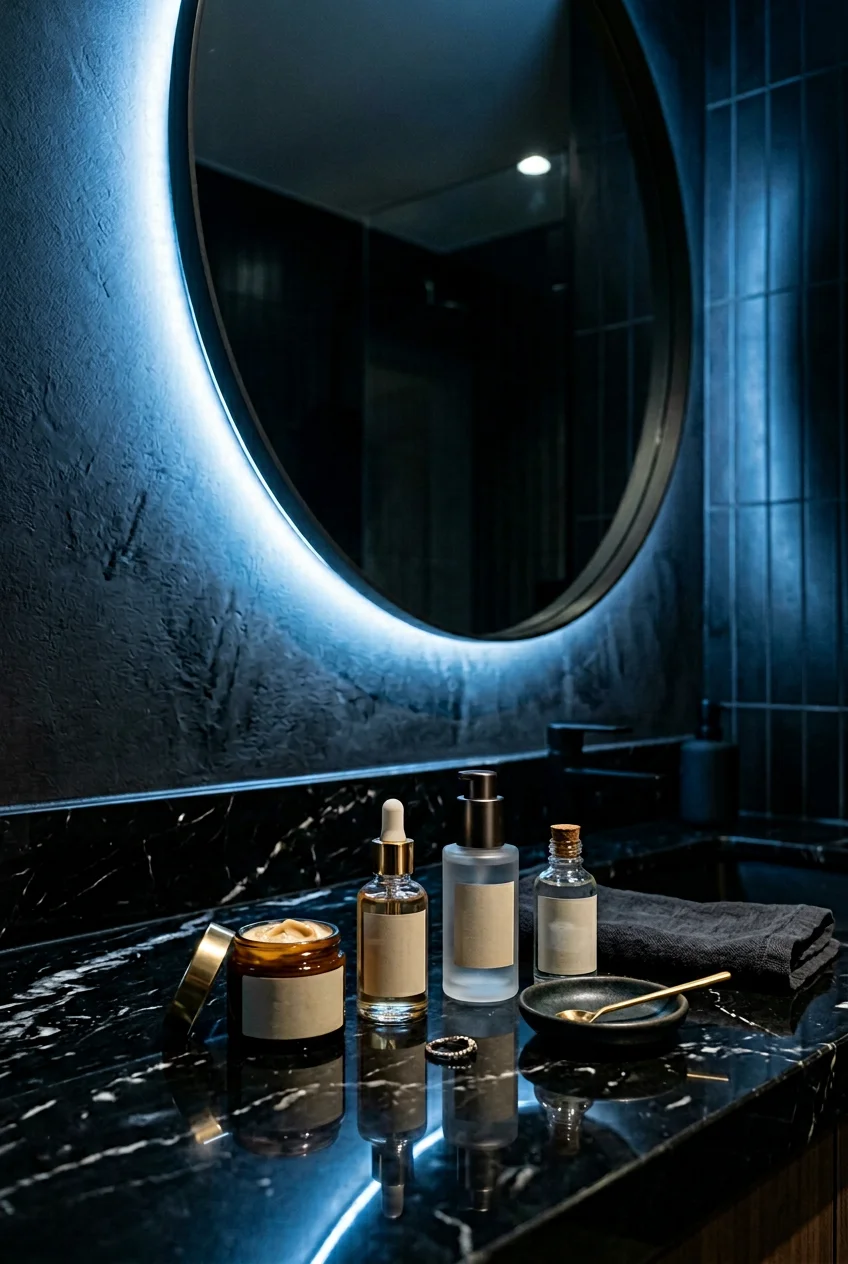
Last Tuesday at Target, I caught my reflection in the harsh fluorescent lighting of the skincare aisle and actually gasped. My face looked like a dull, flaky pastry after I tried to copy those perfect videos aesthetic night routine skincare setups I kept seeing online. I bought all the trendy bottles, slapped them on my wet face, and ended up with a burning red rash that took a full week to calm down. It turns out that achieving the glowing skin you see in those videos isn’t about buying the prettiest packaging. It’s about knowing exactly how much product to use and in what order. I’m Kailyn Cora, and I research skincare formulas for a living. I’ve ruined my moisture barrier enough times to know what actually works. I’m going to walk you through exactly how to build a routine that actually repairs your skin while you sleep. No fluff. Just real products, exact amounts, and the ugly truths behind those perfectly curated aesthetic clips. Let’s get into it.
1. Wash Your Face While the Sun Sets

I used to wait until 11 PM to wash my face. I’d drag myself into the bathroom, half-asleep, and lazily splash water on my eyes. Big mistake. Your skin actually has a circadian rhythm. Cellular turnover kicks into gear as the sun goes down. If you wait until right before bed, you’re missing the optimal window for repair. I started washing my face around 6 PM right after I get home from Sprouts. I grabbed a bottle of Byoma Creamy Jelly Cleanser for $11.99 (4 oz) last week just to have an early-evening wash at the ready. The texture is a bouncy, cooling gel that doesn’t strip my skin. Doing my routine early means my products actually sink into my face instead of rubbing off on my pillow. Plus, I’ve got way fewer excuses to skip steps when I’ve got energy. If you’re struggling to stay consistent, move your routine up by three hours. You won’t believe the difference. I tried forcing myself to do a ten-step routine at midnight for months before figuring this out. It’s exhausting and pointless. Your skin cells aren’t waiting for your bedtime to start repairing themselves. Catch them while they’re active. I’ve noticed my serums absorb much faster when I apply them at 6 PM versus midnight. It’s a small tweak that yields massive results. Took me years to figure that one out.
2. The Mandatory Double Cleanse

You can’t just slap a foaming wash over a full face of SPF and expect clean pores. I learned this the hard way after breaking out constantly on my chin. You have to double cleanse. Always start with an oil-based cleanser. I’m currently using the Estée Lauder Advanced Night Repair Cleansing Gelee. It’s pricey at $40.00 for 3.4 oz, but you only need a hazelnut-sized amount. I rub it onto dry skin for a full sixty seconds. It smells faintly of lavender and melts down into this milky, silky texture when you add water. It breaks down waterproof mascara like magic. After rinsing that off, I follow up with the CeraVe Hydrating Cream-to-Foam Cleanser. I buy the big 16 oz pump at Walmart for $14.97. I use exactly a dime-sized amount. It lathers up just enough to remove the oil residue without leaving my skin feeling tight or squeaky. If your skin feels like rubber after washing, your cleanser is too harsh. Skip the fat-free stuff. It tastes like wet cardboard, and the skincare equivalent is just as bad. Your skin needs a gentle, pH-balanced wash to prepare for the active ingredients coming next. I’ve completely stopped getting those painful under-the-skin bumps since I committed to this two-step process.
3. The Baby Washcloth Trick

Regular terrycloth towels are basically sandpaper for your face. I used to scrub my cheeks with those thick hotel-style towels until they were raw and red. I thought I was exfoliating. I was actually just destroying my skin barrier. Now, I only use baby washcloths. I bought a 10-pack of Burt’s Bees Baby organic cotton washcloths at Target for $8.99. They’re incredibly soft and thin. After I apply my second cleanser, I wet one of these little cloths with lukewarm water and gently wipe away the suds. It ensures every tiny bit of makeup and dirt is gone without any harsh friction. I use a fresh one every single night. Throwing them in the laundry is easy, and it prevents bacteria buildup. If you have sensitive skin, this step is non-negotiable. I’ve noticed a massive reduction in redness around my nose since I made the switch. Don’t use the same towel you use to dry your hands. It’s gross and it’s asking for a breakout. Trust me on this. Those hand towels harbor so much invisible grime. Treat your face like fragile silk, not a dirty kitchen counter. I’ve convinced all my friends to buy these cheap little cloths.

Yeamon Gua Sha Facial Tools and Face Roller Set
Honestly, Yeamon Gua Sha Facial Tools and Face Roller Set surprised me — sturdier than it looks in the photos, and over 1 buyers gave it 4.5 stars.
4. Skin Cycling Night 1: Chemical Exfoliation

The biggest trend for 2026 is skin cycling, and it’s completely saved my face. It’s a four-night rotation that stops you from burning your face off with too many acids. Night one is dedicated to chemical exfoliation. I use the Ole Henriksen Dewtopia 20% Acid Night Treatment. It costs $60.00 for 1 oz at Sephora. I use exactly a pea-sized amount. The texture is a thick, sticky gel that smells like sour lemon candy. It tingles quite a bit when you first put it on. I spread it evenly over my face, avoiding my eyes entirely. Chemical exfoliants like AHAs and BHAs dissolve the glue holding dead skin cells together. If you overdo it, your face will look like a peeled tomato. I used to use strong acids every single night and wondered why my face stung when I sweat. Stick to one night a week if you’re a beginner, or two if your skin is used to it. Don’t mix this with other strong actives. Let the acid do its job alone. I’ve found that giving my skin a chance to breathe between acid applications actually makes the exfoliation more effective. Dead skin sloughs off beautifully without the angry inflammation.
5. Skin Cycling Night 2: The Retinoid Step

Night two of the skin cycling routine is retinoid night. Retinoids are the absolute gold standard for texture and fine lines. I use the Olay Regenerist Retinol 24 Night Moisturizer. I grab the 1.7 oz jar at Kroger for $29.99. It’s a creamy, fragrance-free formula that sinks in fast. I use a pea-sized amount for my entire face. Don’t use more than that. More retinol doesn’t mean faster results. It just means more peeling. I applied a massive glob of strong prescription retinol a few years ago and my skin literally flaked off in sheets at a dinner party. It was horrifying. Start slow. Apply your retinol to completely dry skin to minimize irritation. If you apply it to damp skin, it absorbs too quickly and causes redness. I dab a tiny dot on my forehead, cheeks, and chin, then gently rub it in. This step is crucial for that smooth, glass-skin look everyone wants. Just be patient. It takes months to see real changes from retinoids. I’ve had friends quit after two weeks because they weren’t glowing yet. You can’t rush cellular turnover. Stick with it and you won’t regret it. You might also like: 15 Lovely Aesthetic Luxury Skincare to Inspire Your Next Project
6. Skin Cycling Nights 3 & 4: Barrier Repair

Nights three and four are recovery nights. This is where you focus entirely on hydration and barrier repair. The 2026 trend is all about barrier-first skincare. On these nights, I skip all acids and retinoids. I look for ingredients like ceramides, panthenol, and ectoin. Ectoin is a natural amino acid derivative that creates a moisture shield over your skin. I recently found the Biossance Squalane + Ectoin Overnight Rescue Treatment. It’s $68.00 for 1.7 oz, but it’s worth every penny. It has a rich, buttery texture that feels like a protective hug for your face. I scoop out a generous blueberry-sized amount and massage it in. If I want a cheaper option, I grab the CeraVe PM Facial Moisturizing Lotion for $13.97 (3 oz) at Target. It’s packed with essential ceramides and hyaluronic acid. Recovery nights are the reason I don’t have dry, tight skin anymore. You have to give your face a break to rebuild the collagen and moisture you’re stripping away with actives. I’ve noticed my makeup applies so much smoother on the days following a good, heavy recovery night. Don’t skip these rest days. They’re mandatory. You might also like: 20 Gorgeous Acne Skincare Routine for Any Style

Gua Sha Facial Tools Face Roller and Gua Sha Set for
A dependable everyday pick — Gua Sha Facial Tools Face Roller and Gua Sha Set for Puffiness and Red pulls in 8 ratings at 4.5 stars. Not flashy, just solid.
7. Targeted Serums for Videos Aesthetic Night Routine Skincare

If you want your bathroom counter to look like those aesthetic night routine clips, you probably have a dozen little dropper bottles. But you really only need one good serum. After cleansing and before moisturizing, I apply a targeted serum. I personally swear by the Estée Lauder Advanced Night Repair Synchronized Multi-Recovery Complex. It’s $85.00 for 1 oz. I know it’s expensive, but the syrupy, amber liquid just sinks right in and leaves a tacky finish that locks onto moisturizer perfectly. I use exactly one full dropper. I press it into my skin with my palms instead of rubbing it around. If my skin is feeling extra parched, I’ll layer the Vichy Minéral 89 Hyaluronic Acid Hydration Booster underneath. I buy the 1.69 oz bottle at Walgreens for $24.99. It’s a clear, bouncy gel that feels like a cool drink of water. Don’t mix too many serums at once. You’ll just end up with a sticky, pilling mess on your face. Stick to one or two targeted ingredients per night. I’ve definitely made the mistake of layering five serums and watching them roll off my face in little white balls. Less is more. You might also like: 20 Creative Aesthetic Korean Skincare Worth Trying This Year
8. The Eye Cream Reality Check

Most people get this wrong. They scoop out a massive dollop of eye cream and smear it all over their eyelids. I used to do this and ended up with tiny white bumps called milia right under my lash line. They had to be extracted by a dermatologist. You only need a grain-of-rice-sized amount of eye cream per eye. That’s it. I use the Estée Lauder Advanced Night Repair Eye Gel-Creme. It’s $72.00 for 0.5 oz. The texture is a lightweight gel that cools the skin on contact. I use my ring finger to gently tap the product along my orbital bone. I don’t put it directly on my eyelids or right up against my lower lashes. The product will travel upward as it warms to your body temperature. Look for formulas with peptides and hyaluronic acid to plump up fine lines. Don’t expect miracles for dark circles, as those are usually genetic. But a good eye cream will definitely help with puffiness and dryness. I’ve realized that applying it with my ring finger prevents me from pressing too hard. The skin around your eyes is incredibly fragile, so treat it gently. Heavy rubbing will only cause more wrinkles over time.
9. Sealing Hydration with a Rich Night Cream

Night creams are specifically formulated to be thicker than day creams to prevent transepidermal water loss while you sleep. If you have dry skin, you need something heavy. I picked up the Naturium Multi-Peptide Rich Cream at Target for $19.99 (1.7 oz) last month. It comes in a sleek purple pump bottle. I use a nickel-sized dollop. It’s thick, unscented, and spreads easily. I apply it as the very last step in my routine to seal everything in. If I’m feeling fancy, I’ll order the Liz Earle Skin Repair Night Cream online for around $35.00 (1.6 oz). It has a botanical, herbal smell that I find really relaxing. Don’t use a lightweight gel moisturizer at night if you run the heater or AC in your bedroom. You’ll wake up feeling like a dried-out sponge. The goal is to look like a glazed donut before your head hits the pillow. If your face isn’t slightly shiny, you aren’t using enough moisturizer. I’ve finally accepted that going to bed with a sticky, shiny face is the price you pay for waking up with plump, hydrated skin. It’s totally worth the slight mess.

EQQUALBERRY Vitamin Illuminating Serum | Niacinamide 4% +
Honestly, EQQUALBERRY Vitamin Illuminating Serum | Niacinamide 4% + Brightening surprised me — sturdier than it looks in the photos, and over 99 buyers gave it 4.5 stars.
10. The Peptide Trend You Can’t Ignore
Peptides are essentially little messengers that tell your skin cells to produce more collagen and elastin. They’re a massive trend right now, and for good reason. I’ve been incorporating them into my routine for six months and the firmness around my jawline is noticeably better. I use the Good Molecules Super Peptide Serum. It’s incredibly cheap. I buy the 1 oz dropper bottle at Ulta for $12.00. The liquid is slightly milky and absorbs in seconds. I use three drops for my whole face. I like to apply this on my recovery nights. You have to make sure the products you buy actually contain clinically effective levels of peptides. A lot of brands just sprinkle a tiny bit in so they can put the word on the label. Read the ingredient list. If the peptides are listed at the very bottom after the preservatives, you aren’t getting enough to do anything. I made the mistake of buying a $90 cream once that was basically just expensive petroleum jelly with a dash of peptides. I was furious. Now, I always check the label before I spend my money. Don’t get scammed by clever marketing.
11. The Hand Cream Breakout Mistake
I spent an entire winter battling deep, painful cysts on the side of my face. I changed my cleanser, my moisturizer, and even my laundry detergent. Nothing worked. Then I realized the culprit was my hand cream. I was slathering my hands in a thick, shea-butter cream right before bed. Because I sleep on my side with my hands tucked under my cheeks, that heavy cream was transferring directly onto my face and clogging my pores. It was a completely avoidable disaster. If you’re prone to breakouts, you have to be careful about what you put on your hands at night. I switched to a lightweight, fast-absorbing lotion. I use the Gold Bond Healing Hand Cream. I grab the 3 oz tube at Costco in a multi-pack, but it’s usually around $4.49 individually. It absorbs quickly and doesn’t leave a greasy film. If you absolutely need a heavy hand salve, wear cotton gloves to bed. It looks ridiculous, but it saves your face. I’ve completely cleared up my cheek acne since I stopped letting heavy body products touch my face while I sleep. It’s such a simple fix that most people completely overlook.
12. The Dirty Pillowcase Sabotage

You can spend three hundred dollars on serums, but if you’re sleeping on a dirty pillowcase, you’re wasting your money. Pillowcases absorb sweat, drool, hair oils, and dead skin cells. I used to change my sheets every two weeks. I look back at that and cringe. I was basically pressing my clean face into a petri dish of bacteria for eight hours a night. Now, I change my pillowcase every three days. I bought a set of Kitsch Satin Pillowcases at Whole Foods of all places for $19.00 each. They’re slippery, cool to the touch, and don’t absorb my skincare products like cotton does. The satin also reduces friction, so I wake up with fewer sleep creases on my cheeks. If you have acne-prone skin, you need to be militant about this. Buy a stack of cheap, white cotton pillowcases if you have to, and bleach them regularly. Honestly, this changed how I view my entire sleep environment. Your bed is part of your skincare routine. I’ve noticed a huge difference in my skin’s clarity just by doing extra laundry. It’s annoying, but you can’t argue with the results. Clean sheets equal clear skin.

Vtopmart 3 Tier Clear Makeup Organizer with Drawer
If you want something that just works, Vtopmart 3 Tier Clear Makeup Organizer with Drawer is a safe bet (19 reviews, 4.5 stars).
13. Sleeping on Your Back for Videos Aesthetic Night Routine Skincare

This is the hardest tip to actually follow, but it makes a massive difference. You need to sleep on your back. When you’re sleeping on your side or stomach, you’re physically smashing your face into a pillow. Over time, this repetitive pressure breaks down collagen and causes permanent sleep wrinkles. I used to be a dedicated stomach sleeper. I’d wake up with deep red creases etched into my forehead that took hours to fade. I trained myself to sleep on my back by putting a heavy pillow under my knees and small pillows tucked under my arms. It felt unnatural for a week, but now I can’t sleep any other way. It also keeps my expensive night creams on my face instead of rubbing off onto my pillow. If you want that flawless look you see in aesthetic night routine clips, you have to protect your face while you’re unconscious. I bought a special contoured memory foam pillow off Amazon for $45.00 that cradles my neck and stops me from rolling over. I’ve completely stopped waking up with puffy, squished eyes. No exaggeration. It’s just a really good habit.
Building a solid routine doesn’t happen overnight. It takes trial, error, and a lot of patience. I’ve wasted hundreds of dollars on products that broke me out, and I’ve learned that consistency matters way more than price tags. Stick to the basics: cleanse properly, cycle your actives, and protect your barrier. I’d love to hear what products are currently saving your skin. Save this guide, pin it to your skincare boards, and refer back to it the next time you’re standing in the beauty aisle feeling overwhelmed. You’ve got this.