What’s Inside
- Pap Belanja Skincare Step 1: Prioritize the Barrier First
- Step 2: Grabbing the Right Niacinamide at Kroger
- Step 3: Shopping for Multi-Weight Hyaluronic Acid
- Step 4: My Pap Belanja Skincare Rule for Retinol
- Step 5: Sourcing Advanced Peptides at Sprouts
- Step 6: The Unsexy SPF Restock at Costco
- Step 7: Avoiding Counterfeits on Amazon
- Step 8: Exfoliants at Whole Foods (Don’t Overdo It)
- Step 9: Matching Skin Type at Trader Joe’s
- Step 10: The Expensive Isn’t Better Reality Check
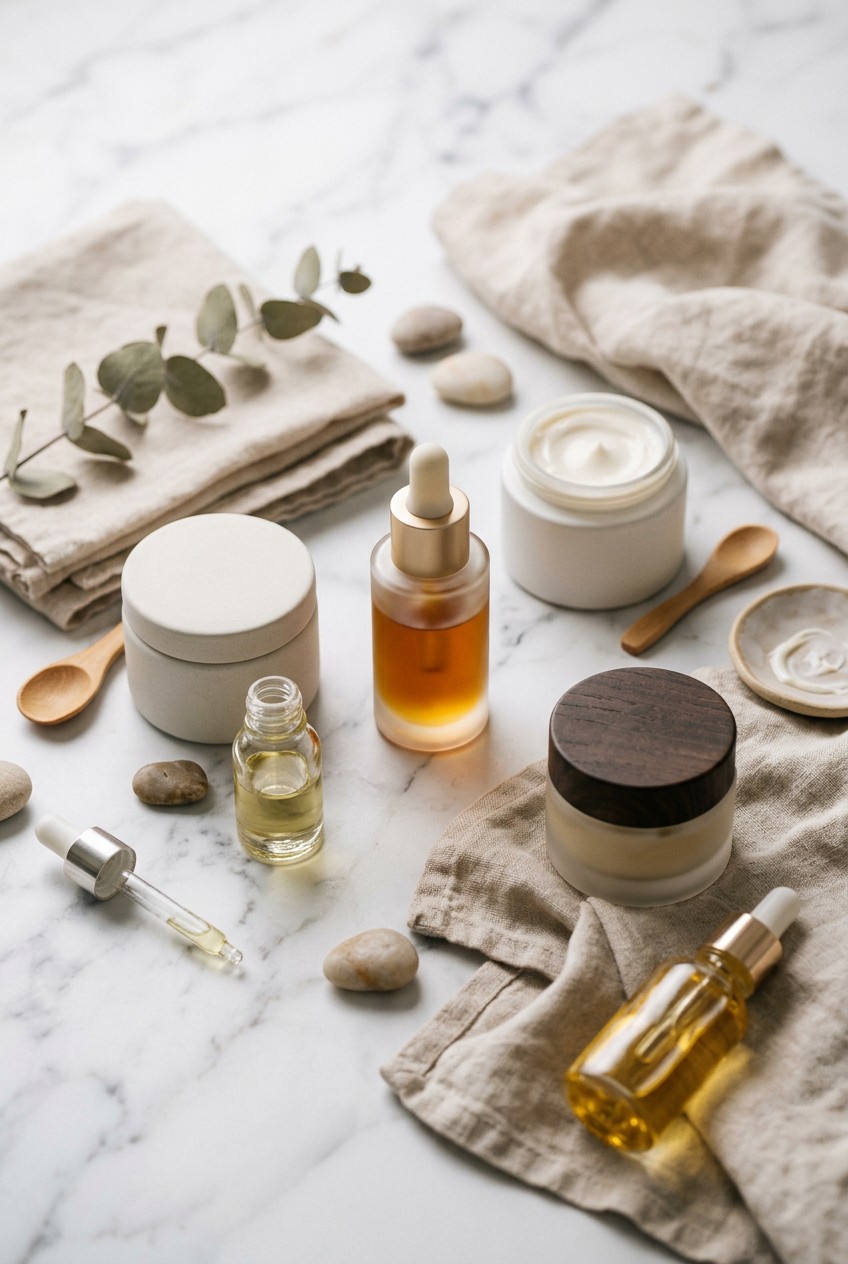
Last Tuesday at Target, I was sitting on the floor of the beauty aisle with a basket full of trendy serums that made my face burn just looking at them. I’d ruined my skin barrier the week before by slapping on three different exfoliating acids at once. That’s why I’m sharing my real pap belanja skincare haul with you. My cheeks felt like rough, hot sandpaper. I was desperate for a quick fix. That’s exactly why I decided to document this massive shopping trip. If you’re wondering what a routine actually looks like when a product researcher does it, you’re in the right place. I’m going to show you my exact receipts, the specific formulas I buy, and the painful mistakes I’ve made so you don’t repeat them. Shopping for products shouldn’t feel like a guessing game. You don’t need a hundred bottles on your counter. You just need the right ones. I’ve spent years testing formulas, reading ingredient lists, and burning my own face off so I can tell you exactly what works. Let’s look at my actual shopping routine, step by step, so you know what to grab on your next grocery run.
Pap Belanja Skincare Step 1: Prioritize the Barrier First

In 2026, we’re finally stopping the aggressive acid treatments. The new focus is entirely on strengthening your skin’s natural barrier. I used to scrub my face with apricot pits and harsh physical exfoliants until it bled. Huge mistake. I thought the tight, squeaky-clean feeling meant my products were working. In reality, I was stripping away all the essential oils my skin needed to protect itself. Now, I prioritize products packed with ceramides and lipids. Last Friday at Walmart, I picked up the CeraVe Hydrating Hyaluronic Acid Serum. It costs exactly $19.99 for a 1 fl oz pump bottle. The texture is this weirdly satisfying milky gel that instantly cools down hot, irritated skin. I apply exactly 2 pumps to my face and neck immediately after cleansing with lukewarm water. It contains ceramides and niacinamide to support the skin barrier and soothe sensitive skin. Honestly, if your skin feels tight or looks shiny but flaky, your barrier is crying for help. Skip the harsh stuff. Grab this instead. It smells like absolutely nothing, which is exactly what you want when your face is angry. I’ve learned the hard way that throwing more active ingredients at a damaged barrier just creates a red, peeling disaster. Just stick to the basics and let your skin heal. Your skin is an organ, not a piece of dirty Tupperware. Treat it gently.
Step 2: Grabbing the Right Niacinamide at Kroger

A lot of people mess up with niacinamide. I certainly did. I bought a cheap 10% serum online last year, slapped a full dropper on my face, and woke up looking like a boiled lobster. The itching was unbearable. I had to ice my face for two days. For beginners or those with sensitive skin, a 2% to 5% niacinamide serum is actually ideal for improving barrier function and reducing redness. I do my weekly grocery shopping at Kroger, and they surprisingly carry Palmer’s Skin Success Dark Spot Corrector. It’s $11.49 for a 1 oz bottle. It contains exactly 5% niacinamide, which is the perfect sweet spot for daily use. I use a pea-sized amount every single morning. The cream is thick and smells faintly of cocoa butter, which I personally love. It feels deeply nourishing. If you have really stubborn dark spots or significant hyperpigmentation, you can eventually work your way up to a 10% concentration, but don’t rush it. Your skin needs time to adjust. I always tell my friends to treat active ingredients like spicy food. You wouldn’t eat a ghost pepper on your first try. Start mild. Let your cells get used to the ingredient before you increase the strength. I stood in the Kroger checkout line reading the back of this box, and I’m so glad I decided to buy it.
Step 3: Shopping for Multi-Weight Hyaluronic Acid

Hyaluronic acid is tricky. If you apply it wrong, it actually dries your skin out worse. I tried this wrong for months before figuring it out. I was putting it on bone-dry skin, and my face felt like a raisin by noon. You have to apply skincare to damp skin for better absorption. I keep a tiny blue spray bottle of plain tap water on my bathroom counter. After cleansing, I mist my face with about 3 sprays of water so it’s visibly wet. Then I apply my serum. This helps humectants grab onto that water and pull it into your skin. For comprehensive hydration, you need multi-weight hyaluronic acid serums. This allows the hydration to penetrate both the surface and deeper layers. At Target, I always grab The Ordinary Hyaluronic Acid 2% + B5. It’s wildly cheap at $8.90 for a 30ml bottle. The texture is a bit tacky, almost like watery honey, but it sinks in completely after a minute. If I’m feeling fancy, I’ll splurge on the Glow Recipe Plum Plump Hyaluronic Serum for $45.00 (1 oz). It has five molecular weights and smells like fresh, juicy plums. But honestly, The Ordinary gets the job done just fine for a fraction of the price. You might also like: 15 Gorgeous Aesthetic Glass Skin That Changed Everything

COSRX Vitamin E Vitalizing Sunscreen
If you want something that just works, COSRX Vitamin E Vitalizing Sunscreen is a safe bet (42 reviews, 4.5 stars).
Step 4: My Pap Belanja Skincare Rule for Retinol

Retinol is another ingredient that terrifies people. I totally get it. My first experience involved my skin peeling off my chin in literal sheets at a fancy dinner party. It was mortifying. I couldn’t even cover it with concealer because the makeup just clung to the dead skin flakes. The secret is starting low and slow at 0.1% to 0.3%. If you’re new to retinol, begin with a low concentration to build tolerance and minimize irritation. Dermatologists recommend starting with 0.1% to 0.3% retinol, applying it just two to three times a week. I use a literal half pea-sized amount for my entire face. I recently bought the COSRX The Retinol 0.3 Cream for $29.00 (0.67 oz). It comes in this clinical-looking aluminum tube that keeps the air out. The cream is slightly yellow and smells a bit like rubber, which is completely normal for real, unfragranced retinol. Another great option I’ve tested is the Anua Nano Retinol 0.3% + Niacin Renewing Serum. It costs $32.00 for 1 oz. I always mix my retinol with a thick moisturizer to buffer it. Never apply it to wet skin. That just makes it penetrate faster and burn more. Wait until your face is completely dry. You might also like: 15 Inspiring Aesthetic Skincare Products to Transform Your Space
Step 5: Sourcing Advanced Peptides at Sprouts

We need to move beyond basic anti-aging claims and talk about true regenerative skincare. I’m obsessed with advanced peptides and growth factors right now. There’s even a massive trend involving PDRN (Polydeoxyribonucleotide), which is derived from salmon sperm. It sounds gross, but it activates repair pathways and optimizes cellular turnover like nothing else on the market. I was browsing the wellness aisles at Sprouts last week under those bright fluorescent lights and noticed a huge shift toward bio-adaptive skincare. These formulas actually respond to your environment or even your circadian rhythm. I picked up a basic peptide serum there for $16.99 (1.5 oz). It feels like a lightweight water gel that absorbs instantly. It doesn’t have the fancy salmon DNA, but the copper peptides in it give it a gorgeous pale blue tint. I apply exactly 3 drops every night before my moisturizer. I’ve noticed my skin bounces back from breakouts much faster now. Skip the fat-free, heavily fragranced lotions. They feel like wet cardboard on the skin and do absolutely nothing for cellular health. You want rich, peptide-heavy formulas that actually feed your cells and build collagen over time. You might also like: 15 Creative Photography Skincare Products Ideas That Make a Real Difference
Step 6: The Unsexy SPF Restock at Costco

Sunscreen’s non-negotiable. I don’t care if it’s raining, snowing, or you’re sitting in a dark office all day long. UV rays and blue light from screens cause long-term damage. I used to skip SPF indoors and ended up with weird, stubborn sunspots on my left cheek just from driving to work every morning. Now, I buy my SPF in bulk at Costco. I usually grab it while fighting for a parking spot on a Saturday morning. They sell a two-pack of La Roche-Posay Anthelios Melt-In Milk Sunscreen SPF 60 for $37.99 (5 oz each). It’s a massive steal for the amount you get. The texture is thick and white straight out of the tube, but it melts into the skin without leaving you looking like a powdery ghost. I use exactly 1/4 teaspoon for my face and another 1/4 teaspoon for my neck. If my skin is acting up and breaking out, I switch to EltaMD UV Clear Broad-Spectrum SPF 46. It’s $43.00 for a 1.7 oz airless pump bottle. It contains niacinamide and never clogs my pores. Yes, it smells faintly of chemicals, but I’ll take that over premature wrinkles and sun damage any day. Don’t skimp on this step. It’s the most important thing you’ll buy.

EQQUALBERRY Vitamin Illuminating Serum | Niacinamide 4% +
EQQUALBERRY Vitamin Illuminating Serum | Niacinamide 4% + Brightening has been one of the most consistently praised picks in this category. 101 reviewers averaged 4.5/5.
Step 7: Avoiding Counterfeits on Amazon

I have to confess something pretty embarrassing. Last year, I bought a discounted luxury serum on Amazon because it was 40% off the retail price. It arrived in a slightly crushed cardboard delivery box. When I opened it, the liquid was cloudy and smelled like rancid cooking oil. I put it on my face anyway because I didn’t want to waste the money. Huge mistake. I broke out in painful cystic acne for an entire month. You have to beware of counterfeit products and unofficial sellers online. Counterfeit products often contain ineffective or dangerous ingredients. Now, I only purchase directly from brand retailers or authorized sellers. Also, always check the PAO (Period After Opening) symbol on everything you buy. It’s that tiny open jar icon on the back of the bottle with a number like 12M. This indicates how many months the product is safe and effective after opening. Most products last 6 to 12 months once opened. If your moisturizer smells sour or the oil has separated into weird layers, throw it away immediately. Keeping expired skincare is a great way to give yourself a severe bacterial infection. Trust me, saving $15 isn’t worth a trip to the dermatologist.
Step 8: Exfoliants at Whole Foods (Don’t Overdo It)

Let’s talk about exfoliation. A few years ago, I honestly thought burning meant the product was working. I was using a harsh walnut scrub every single day in the shower. My face was constantly tight and shiny like a plastic doll, which I thought was a healthy glow. You can’t over-exfoliate. Aim for 1 to 2 times a week, maximum. Over-exfoliating damages your skin barrier, leading to breakouts, redness, and extreme dryness. I now only use gentle chemical exfoliants instead of physical scrubs. I found the Mad Hippie AHA Exfoliating Peel at Whole Foods for $31.99 (1 oz). I still have the crumpled receipt in my wallet. It uses a blend of glycolic and lactic acids. I apply exactly 4 drops to dry skin only on Tuesday and Saturday nights. It tingles slightly for about thirty seconds, then completely settles down. It smells faintly of citrus and white tea. If your skin feels raw or sensitive the next morning, you’re using way too much. Always follow an acid with a thick layer of plain, boring moisturizer. Don’t layer other active ingredients on top. Give your skin a break and let it process the exfoliation.
Step 9: Matching Skin Type at Trader Joe’s

A common mistake is buying products just because they went viral on social media. You have to understand your unique skin type before buying anything. I have combination skin, so heavy butter creams give me tiny closed comedones all over my forehead. I was at Trader Joe’s last Sunday, carrying my reusable bag, and grabbed their Nourish Oil-Free Antioxidant Facial Moisturizer. It’s only $6.99 for a 6 oz bottle. It’s a fantastic, basic moisturizer that doesn’t clog my pores at all. The texture is a thin, watery lotion that absorbs in five seconds. You also have to read ingredient lists carefully. Don’t just trust the front packaging. Natural or soothing labels can be misleading. Poison ivy is natural, but you wouldn’t rub it on your face. Always check the back. Avoid products where fragrance or denatured alcohol are high on the list, especially for sensitive skin. I once bought a soothing lavender sleep mask that was mostly alcohol. It stung my eyes so badly I had to wash it off immediately. Prioritize effective actives over cute marketing claims. Your skin doesn’t care how pretty the bottle is.

Masirs Clear Makeup Organizer
Honestly, Masirs Clear Makeup Organizer – 16-Compartment Cosmetic and Jewelry Ho surprised me — sturdier than it looks in the photos, and over 258 buyers gave it 4.5 stars.
Step 10: The Expensive Isn’t Better Reality Check

Don’t assume expensive equals better. I used to save up for $100 creams that came in heavy glass jars with gold lids. They looked gorgeous sitting on my vanity, but they were mostly just water, cheap silicones, and heavy perfume. I even dropped one once and shattered the glass everywhere. Many luxury skincare brands offer elegant packaging but lack the vital active ingredients found in much more affordable options. You want proven ingredients like retinol, hyaluronic acid, and ceramides. You can find all of these at highly accessible price points. For example, I buy the Good Molecules Niacinamide Brightening Toner for $14.00 (4 oz). It comes in a simple, heavy brown glass bottle. I pour a quarter-sized amount into my palms and pat it directly onto my face. It works ten times better than the $85 toner I used to buy at department stores. Stop paying for the brand name and the celebrity endorsement. Pay for the ingredients inside the bottle. Your wallet and your skin will be so much happier when you stop chasing luxury labels and start focusing on the actual chemistry of the product.
That wraps up my entire shopping routine. I hope this detailed breakdown helps you navigate the beauty aisles without destroying your skin barrier or your bank account. I’ve made all the painful, expensive mistakes so you don’t have to. Honestly, keeping things simple and focusing on hydration has changed the texture of my face. If you found this helpful, please pin this article to your skincare boards so you can reference these exact products during your next Target run. Let me know what you end up buying and if you find any amazing deals I missed.
Frequently Asked Questions
What does pap belanja skincare mean?
It’s slang for posting a picture or sharing your skincare shopping haul. I use it to show my exact receipts and the specific products I buy for my routine.
Should I apply hyaluronic acid to wet skin?
Yes. Always apply hyaluronic acid to damp skin. I mist my face with water first so the serum can pull that moisture into my skin instead of drying it out.
What’s the best retinol strength for beginners?
Start low and slow. I recommend a 0.1% to 0.3% retinol cream applied two to three times a week. It prevents the massive peeling and redness I’ve experienced in the past.
Do expensive skincare brands work better?
Not always. Many luxury creams are just water and heavy fragrance. I prefer affordable brands like CeraVe or The Ordinary because they use proven active ingredients without the massive markup.
