What’s Inside
- The Best Skincare Products For Dry Skin Start With Gentle Cleansers
- Apply Moisturizer To Damp Skin Immediately After Cleansing
- Prioritize Ceramides For Barrier Repair
- Layer With Hyaluronic Acid Serums For Multi-Depth Hydration
- Incorporate Occlusive Ingredients Like Healing Ointments
- Stop Over-Exfoliating And Choose Gentle Chemical Exfoliants
- Avoid Hot Showers And Upgrade Your Body Wash
- Integrate Face Oils For Added Nourishment
- Use A Humidifier And Urea-Based Creams For Flaky Skin
- Choose Fragrance-Free Products To Prevent Irritation
- The Best Skincare Products For Dry Skin Routines Include Daily Sunscreen
Last January, I walked out of Target with a face so tight it felt like a cheap Halloween mask cracking at the edges. Finding the right skincare for dry skin isn’t just a hobby for me. It’s a survival strategy. I smiled at the cashier, and I swear I felt my cheeks physically micro-tear from the lack of moisture. I’ve spent years fighting flakes, redness, and that awful tight feeling that hits you the second you step out of the shower. I used to buy whatever had the prettiest packaging or promised the most hydration. That was a mistake. I wasted hundreds of dollars on thick creams that just sat on top of my face like a greasy oil slick, doing nothing to actually fix my skin barrier. After a lot of trial and error (and a few angry, inflamed breakouts), I finally figured out what works. I’m going to share exactly what products saved my face. Skip the fat-free stuff. It tastes like wet cardboard, and the skincare equivalent is just as useless. You need rich, heavy, science-backed ingredients. Here’s my breakdown of what you actually need to buy.
1. The Best Skincare Products For Dry Skin Start With Gentle Cleansers

I tried this wrong for months. I used to scrub my face with a foaming salicylic acid wash, thinking I needed to get squeaky clean to clear out my pores. My skin felt like actual sandpaper. If you’re using a cleanser that leaves your skin feeling tight, throw it in the trash right now. You’re stripping away the exact natural oils your dry skin needs. Instead, you need a cream or oil-based cleanser. I swear by the CeraVe Hydrating Cream-to-Foam Cleanser. It costs $15.99 for a 12 oz bottle at Walmart, and it lasts forever. It comes out as a thick white lotion and barely foams up, which is what you want. It’s packed with ceramides and hyaluronic acid to clean your face without ruining your moisture barrier. Another great option is the Kiehl’s Ultra Facial Cleanser. It’s $24.00 for a 5 oz tube. It contains squalane and avocado oil, making it feel silky and rich when you rub it between your wet fingers. It smells slightly earthy, kind of like crushed vitamins, but it rinses off perfectly. Don’t fall for aggressive foaming gels. They aren’t your friend. Stick to these milky, creamy textures. You won’t regret making the switch.
2. Apply Moisturizer To Damp Skin Immediately After Cleansing

Most people get this wrong. I certainly did. I used to step out of the shower, grab a fluffy towel, and rub my face completely bone dry. Then I’d wander around my apartment for ten minutes before finally slapping on some lotion. That’s the worst thing you can do for dry skin. Humectants need water to hold onto. If your skin is completely dry, they’ve got nothing to grab. You need to apply your moisturizer within sixty seconds of washing your face, while it’s still visibly damp. I leave water droplets clinging to my chin and forehead. When you apply a thick cream to damp skin, it traps that surface water and pulls it down into the deeper layers. It feels a little slippery at first, but give it a minute. It absorbs beautifully. I keep a 1.7 oz jar of Neutrogena Hydro Boost Water Gel Extra-Dry ($19.99 at Target) on my bathroom counter so I don’t forget. If I miss the window and my face dries, I use a spray bottle to mist it with tap water before applying my creams. It makes a massive difference in how plump my cheeks feel by mid-afternoon. Learned that the hard way.
3. Prioritize Ceramides For Barrier Repair

Ceramides are the mortar that holds your skin cells together. When you’re dealing with dry skin, your barrier is compromised, meaning that mortar is crumbling and letting your hydration evaporate. You absolutely must put ceramides back into your skin. I buy the 16 oz tub of CeraVe Moisturizing Cream for $18.99 at Costco. I buy the two-pack because I go through it so fast. It’s a thick, heavy white paste that smells like nothing. You’ve got to scoop it out with your fingers. It contains ceramides 1, 3, and 6-II. I slather a solid tablespoon of this stuff all over my face and neck every night. If you want something that feels more luxurious, I highly recommend the Dr Jart+ Ceramidin Skin Barrier Moisturizing Cream. It’s pricier at $48.00 for a 1.69 oz tube, but the texture is incredible. It has a pale yellow color and a very faint, medicinal herbal scent that I love. Last Tuesday at Whole Foods, I saw a girl buying a cheap, thin, water-based lotion for her flaky skin. I had to bite my tongue to stop myself from telling her to buy ceramides instead. Thin lotions won’t fix a broken barrier. You need the heavy duty stuff. You might also like: 15 Gorgeous Aesthetic Glass Skin That Changed Everything

Yeamon Gua Sha Facial Tools and Face Roller Set
Yeamon Gua Sha Facial Tools and Face Roller Set punches above its price — 1 buyers rated it 4.5 stars. I would buy it again.
4. Layer With Hyaluronic Acid Serums For Multi-Depth Hydration

Hyaluronic acid is famous for a reason. It can hold up to 1,000 times its weight in water. But here’s the catch. If you use it wrong, it’ll dry your skin out even more. I learned this the hard way. I put a generic HA serum on a dry face while sitting in a dry, air-conditioned room. My skin shriveled up because the acid pulled water out of my deeper skin layers. Always apply it to a dripping wet face. I use The Inkey List Hyaluronic Acid Serum. It’s only $13.50 for a 1 oz bottle at Sephora. I squeeze 3 drops into my palm. It has a sticky, viscous texture, almost like pure aloe vera gel. I pat it into my wet cheeks and forehead, then immediately cover it with a thick cream to lock it in. You want a formula with multiple molecular weights so it penetrates different layers. Don’t spend $80 on a fancy hyaluronic acid. The cheap ones work just as well. Just remember the golden rule: never apply it dry. You might also like: 15 Brilliant Aesthetic Instagram Night Routine Skincare That Actually Work
5. Incorporate Occlusive Ingredients Like Healing Ointments

If you live in a dry climate, normal moisturizers just aren’t enough. You need an occlusive. Occlusives don’t add moisture; they form a seal over your face so the water inside can’t escape. I’m talking about slugging. I use a pea-sized amount of CeraVe Healing Ointment ($11.49 for a 3 oz tube at Walgreens). It’s a petrolatum-based gel that feels like Vaseline, but it’s packed with extra ceramides. I rub it between my fingers to melt it down, then press it over my driest patches as the last step of my routine. Honestly, this changed how I wake up. I used to wake up with tight, itchy cheeks. Now, my skin is bouncy. A word of warning: don’t do this if you’re prone to deep cystic acne, and don’t use a massive glob. I smeared a tablespoon on my face once and ruined a $40 silk pillowcase. It was a greasy, impossible-to-wash-out nightmare. Keep it to a thin, shiny layer. It’s not glamorous, but it works miracles for severe flakes. You might also like: 20 Beautiful Aesthetic Night Skincare for Any Style
6. Stop Over-Exfoliating And Choose Gentle Chemical Exfoliants

When you see dry, flaky skin, your instinct is to scrub it off. I get it. I used to buy those terrible apricot scrubs with crushed walnut shells and furiously sand down my face. My skin was red, raw, and even flakier the next day. Physical scrubs create micro-tears and destroy your moisture barrier. You can’t scrub away dryness. You’ve got to dissolve the dead skin gently. I switched to mild chemical exfoliants and it fixed my texture. Lactic acid is the best choice for dry skin because it exfoliates and hydrates at the same time. I love the Naked & Thriving Refresh Gentle Enzyme Cleanser. It’s $38.00 for a 4 oz glass bottle. It uses pineapple enzymes to eat away dead skin without any harsh rubbing. It smells faintly of tropical fruit and feels super smooth. I only use it twice a week. That’s it. If you’re exfoliating every day, you’re doing it wrong. Give your skin time to rest. If I notice a specific flaky patch, I’ll take a warm, damp washcloth and gently wipe it in a single circle. No aggressive scrubbing. Treat your face like a fragile silk shirt.
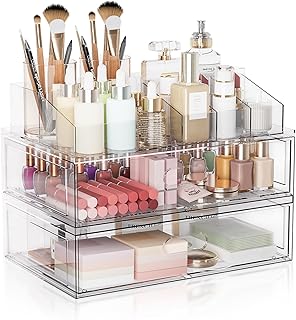
Clear Stackable Makeup Organizer with Drawer
If you want something that just works, Clear Stackable Makeup Organizer with Drawer is a safe bet (302 reviews, 4.5 stars).
7. Avoid Hot Showers And Upgrade Your Body Wash

I love a boiling hot shower. Standing in a cloud of steam is my favorite way to decompress. But it’s poison for dry skin. Hot water melts away your natural lipid barrier, sending your oils down the drain. I finally forced myself to turn the dial down to lukewarm. It sucks, but it’s necessary. I limit my showers to 7 minutes. To make up for it, I overhauled my shower products. Standard bar soaps are stripping. I switched to the La Roche-Posay Lipikar Wash AP+. It costs $16.99 for a 13.5 oz pump bottle at Target. It’s a creamy, foaming oil wash that feels like liquid silk. It contains shea butter and niacinamide. When I step out of the shower now, my skin doesn’t feel tight before I even reach for my towel. I also stopped using heavily fragranced body washes. They smell amazing, but the alcohol and perfumes were drying me out so badly my shins looked like snake skin. Stick to gentle, creamy body washes and lukewarm water.
8. Integrate Face Oils For Added Nourishment

Creams are great, but face oils are the secret weapon for parched skin. Oils mimic your skin’s natural sebum, sinking in to soften rough patches. I’m obsessed with The Ordinary 100% Organic Cold-Pressed Rose Hip Seed Oil. It’s cheap at $10.90 for a 1 oz dropper bottle at Ulta. It has a bright golden-yellow color and smells earthy. Some say it smells like tea leaves, but I think it smells like dry hay. It’s not a spa-like scent, but it works. I take 4 drops, warm them in my palms, and press them into my face over my nighttime moisturizer. It gives you an incredible, radiant glow. I tried using coconut oil from my kitchen once, and it was a disaster. It clogged every pore on my chin. Stick to oils high in linoleic acid, like rosehip, squalane, or jojoba, because they won’t clog your pores. If I’m wearing makeup, I’ll mix a single drop of squalane oil into my foundation. It stops the makeup from clinging to dry patches around my nose.
9. Use A Humidifier And Urea-Based Creams For Flaky Skin

Winter indoor heating is brutal. It sucks the moisture out of the air, which then sucks the moisture out of your skin. You can slather on heavy creams, but if the air is bone dry, you’re fighting a losing battle. I bought a $29.99 Crane drop humidifier from Target last year. I keep it on my nightstand, about three feet from my head, running on high all night. I aim for 50% humidity. The gentle hum is great white noise, and waking up without a sandpaper throat is priceless. For the stubborn, scaly patches that a humidifier can’t fix, you need urea. Urea is a natural moisturizing factor that dissolves dead skin while pulling in hydration. I use The Inkey List 10% Urea Moisturizer. It’s $29.00 for a 1.7 oz tube. It has a slightly gritty texture when it first comes out, but it melts instantly. I use a pea-sized amount on my elbows, knees, and the edges of my nose. It’s strong stuff, so don’t put it near your eyes. It literally eats away the dead flakes overnight.

Eclat Skincare Vitamin C Serum – Skin Care for Dark Spots
Eclat Skincare Vitamin C Serum – Skin Care for Dark Spots has been one of the most consistently praised picks in this category. 753 reviewers averaged 4.5/5.
10. Choose Fragrance-Free Products To Prevent Irritation

I’ve got a weakness for things that smell good. Two years ago, I bought a gorgeous, expensive lavender and vanilla night cream. I slathered it on, and within three minutes, my face felt like it was on fire. It turned bright red and started stinging. Dry skin has microscopic cracks, meaning artificial fragrances penetrate deeper and cause inflammation. You’ve got to stop buying scented skincare. And be careful, because “unscented” is a marketing trick. Unscented products often contain masking chemicals to hide the smell of raw ingredients. You must look for “fragrance-free” on the label. I strictly use the Vanicream Daily Facial Moisturizer now. It’s $13.99 for a 3 oz tube at Sprouts. It has a plain, clinical smell. It’s boring, but boring is exactly what dry, irritated skin needs. It’s formulated with hyaluronic acid and five different ceramides, and it never stings, even when my face is wind-chapped. Save the nice smells for your perfume, and apply it to your clothes. Your dry skin will thank you.
11. The Best Skincare Products For Dry Skin Routines Include Daily Sunscreen

If you think you don’t need sunscreen in the winter, you’re dead wrong. UV rays blast right through gray clouds and window glass, degrading your collagen and dehydrating your skin. Skipping SPF is a guaranteed way to make your dry skin worse. Finding a sunscreen that doesn’t pill over thick moisturizers is really tough. A lot of mineral sunscreens contain zinc oxide, which is naturally astringent and can suck the oil out of your face. I finally found the holy grail. I use the EltaMD UV Clear SPF 46. It’s $43.00 for a 1.7 oz airless pump bottle. It goes on like a rich hydrating serum and leaves zero white cast. It contains niacinamide and lactic acid, so it treats my dry skin while protecting it. I measure out 1/2 teaspoon for my face and neck every morning. If I’m on a budget, I grab the Black Girl Sunscreen Kids SPF 50 from Target for $9.99. It’s chemical-based, moisturizing, and leaves my skin looking dewy. Make it the final step of your routine. The best skincare products for dry skin are useless if you’re letting the sun bake the moisture out of your face.
Fixing dry skin isn’t about buying one magic cream. It’s about building a routine with gentle cleansers, heavy ceramides, and smart habits like damp skin application. I’ve ruined my skin enough times to know that cutting corners with cheap, fragranced lotions won’t work. Stick to the thick, boring, dermatologist-recommended stuff. I highly recommend starting with the CeraVe Healing Ointment if you can only afford one thing. It’s cheap and effective. Pin this article so you have the product names and prices next time you’re standing confused in the skincare aisle!
Frequently Asked Questions
What is the best moisturizer ingredient for dry skin?
Ceramides are absolutely essential. They act like mortar between your skin cells to lock in moisture and repair your damaged skin barrier. Look for thick creams rather than thin, water-based lotions.
Should I apply hyaluronic acid to dry skin?
No, you shouldn’t ever apply it to a dry face. Hyaluronic acid is a humectant that needs water to work. Always apply it to dripping damp skin, then seal it immediately with a rich moisturizer.
How often should I exfoliate dry skin?
Limit exfoliation to once or twice a week. Skip harsh physical scrubs with shells or beads, and opt for gentle chemical exfoliants like lactic acid, which hydrates while it dissolves dead skin.
Are face oils good for dry skin?
Yes, face oils like rosehip, squalane, and jojoba are incredible for dry skin. They mimic your natural sebum to soften rough patches. Apply 3-4 drops as the final step in your nighttime routine.
