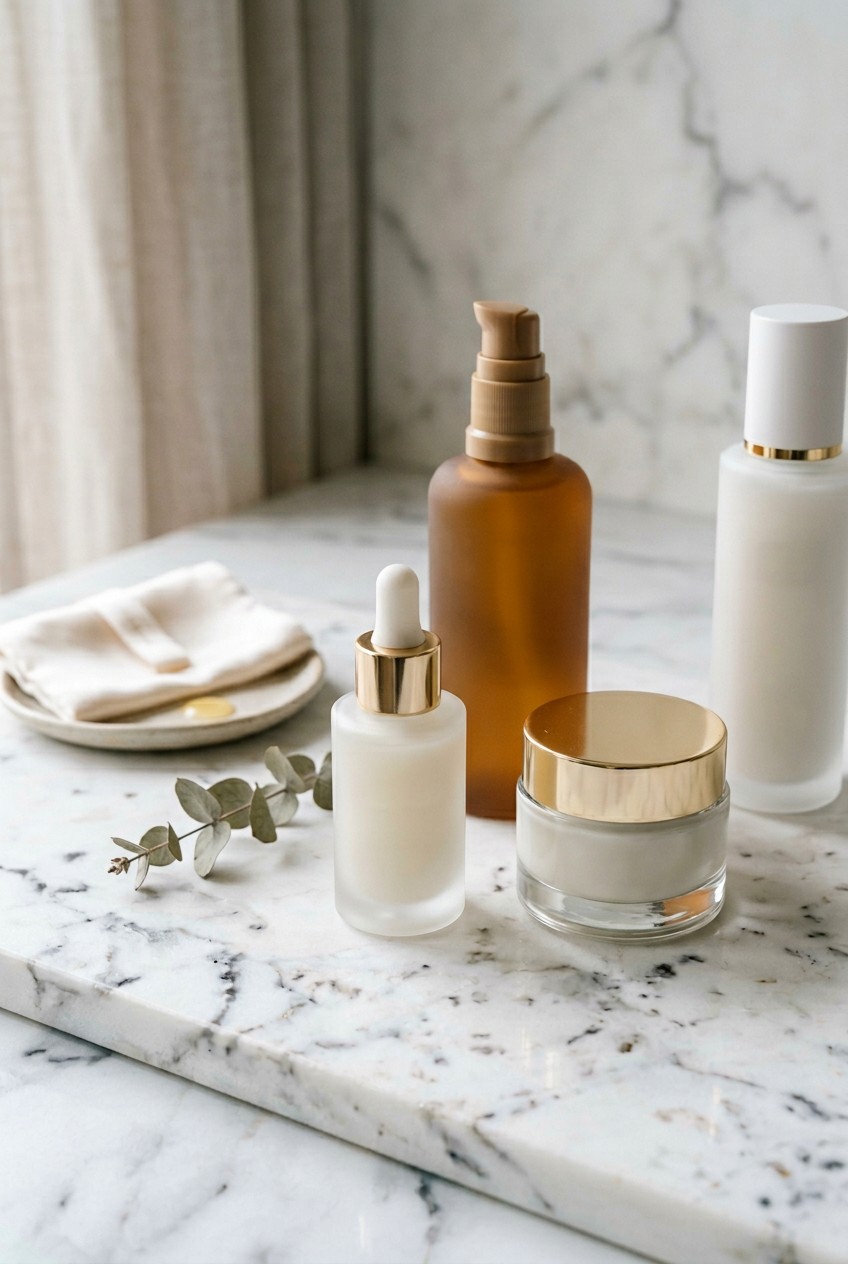
What’s Inside
- Prioritize Formula-First Packaging Selection
- Embrace Emotional Minimalism with Soft Palettes
- Rely on Tactile Textures for Premium Perception
- Invest in AI-Powered Personalization Tools
- Adopt a Skinimalism Approach for Hero Products
- Design for Inclusivity and Realism in Imagery
- Integrate Sensory Details Beyond Just Visuals
- Prioritize Sustainable and Refillable Options
- Budget Accurately for Quality Materials
- Ensure Packaging Protects Formula Integrity
- Define a Clear Brand Identity and Niche
- Consider Maximalist Branding for Visual Impact
- Utilize Naive and Hand-Drawn Design Elements
- Design for Extensibility Across Product Lines
- Craft a Delightful Shareable Unboxing Experience
Last Tuesday at Whole Foods, I stood in aisle four staring at a $34.99 vitamin C serum that had turned into a brown sludge inside its clear glass bottle. That garbage juice is exactly why skincare branding isn’t just about picking pretty fonts. Good design has to protect the goop inside while making you want to put it on your face. I’ve spent six years researching product development. I’ve seen brands waste fortunes on aesthetic choices that destroy their formulas. It’s heartbreaking to watch a chemist’s work get ruined by a cheap plastic pump that lets air in. We aren’t doing that here. Let’s break down fifteen ways to get your packaging and brand identity right the first time, without flushing your budget down the drain.
1. Prioritize Formula-First Packaging Selection

Don’t pick your bottles before your chemist finishes the formula. I made this mistake three years ago. We ordered 10,000 frosted glass jars at $1.15 each for a new night cream. Two weeks later, the lab added a retinol compound that degraded in light. We had to trash the whole run. It’s a brutal lesson in why chemistry must dictate your containers. If you’re selling a Vitamin C serum, you need an airless pump to stop oxidation. Look at the Paula’s Choice C15 Super Booster for $55.00 (0.67 oz). They use an opaque, air-restrictive bottle because Vitamin C dies when exposed to oxygen. Retinol needs airtight containers, too. Picking packaging early leads to unusable stock if the formula changes. Start with the science. Then find a container that keeps that 1 oz or 2 oz formula stable on a hot bathroom counter.
2. Embrace Emotional Minimalism with Soft Palettes

Neon pinks and loud graphics are exhausting before your morning coffee. In 2026, the trend is emotional minimalism. Think soft neutrals, warm beiges, seafoam greens, and deep algae blues. These colors feel calm and authentic. I was at Target last month under those harsh fluorescent lights, and my eyes went straight to the muted, earthy tones. Brands like Lernberger Stafsing use bronze and beige to reflect quiet style. Even mass-market favorites like Naturium get this right. Their Niacinamide Serum 12% Plus Zinc 2% retails for $16.00 (1.0 oz) and uses a clean white and grey label. It feels clinical but approachable. When you’re stressed out and breaking out, you don’t want your skincare yelling at you. You want it to whisper that everything is okay. Skip the primary colors. Stick to a palette that feels like a spa day.
3. Rely on Tactile Textures for Premium Perception

Consumers care about how a bottle feels in their hands. Tactile textures communicate quality instantly. Think matte finishes, soft-touch plastics, or recycled resin that feels like sand or smooth stone. I picked up the One Love Organics Skin Savior Balm for $49.00 (1.4 oz) at Sprouts recently. The heavy glass jar and textured label made it feel luxurious. You can use embossed or 3D-printed logos to improve the feel while cutting down on toxic inks. A slippery plastic bottle feels like a cheap $2.99 hand soap from a gas station. If you want people to pay top dollar for a 2 oz moisturizer, the jar needs weight. It’s a sensory cue that tells the brain the product is high quality. Don’t underestimate the power of touch. I’ve abandoned products because the thin plastic cap kept cracking in my hands.

Eclat Skincare Vitamin C Serum – Skin Care for Dark Spots
If you want something that just works, Eclat Skincare Vitamin C Serum – Skin Care for Dark Spots is a safe bet (753 reviews, 4.5 stars).
4. Invest in AI-Powered Personalization Tools

The days of guessing your skin type in the mirror are over. A massive shift for 2026 is AI-driven personalization. Brands are integrating AI diagnostics with their packaging and apps. L’Oréal and Amorepacific showed off accurate AI mirrors at CES 2026. This allows professional-level skin assessments in your own bathroom. I tried the Neutrogena Skin360 app (it’s free) that scans your face and recommends products like their Hydro Boost Water Gel ($19.99 for 1.7 oz). You can even find this tech in displays at Walmart. By linking your packaging to a digital tool via a QR code, you offer a relevant experience. This builds loyalty. People won’t switch brands if your app tracks their hyperpigmentation fading over 12 weeks. It stops customers from buying the wrong 4 oz cleanser for their skin.
5. Adopt a Skinimalism Approach for Hero Products

Launching with fifteen products is financial suicide. I’ve watched founders burn their budget trying to launch a cleanser, three serums, two moisturizers, and a mask all at once. The smartest strategy is skinimalism. Focus on one to three hero products. Prove the demand first. This lets you pour your budget into making that one 1.0 oz bottle perfect. Look at Dieux Skin. They launched with a few targeted items, like their Deliverance Serum for $69.00 (1.0 oz). Because they didn’t spread capital thin, they could afford premium glass and testing. A massive line just confuses customers. They don’t know what to buy, so they buy nothing. Give them one solution. Once you build trust, you can introduce a 4 oz face wash or a 0.5 oz eye cream. You might also like: 15 Brilliant Aesthetic Green Skincare You Haven’t Thought Of
6. Design for Inclusivity and Realism in Imagery

We’re done with the word “flawless.” It’s a toxic term that needs to die. Modern consumers want brutal realism. Glow Recipe stopped using words like “poreless” and started showing real skin with texture and blemishes. Fenty Beauty changed the industry with 40 foundation shades, proving beauty is for everyone. Fenty Skin carries that energy. Their Total Cleans’r retails for $26.00 (4.9 oz) and features diverse, real-looking people. If your imagery only features 19-year-olds with heavily filtered skin, you’re alienating 90% of your buyers. I’m in my thirties, and I won’t buy a $45.00 anti-aging cream if the model doesn’t have a single fine line. Show real results. Let the 2 tablespoons of product speak for itself. Authenticity sells faster than an airbrushed fantasy. You might also like: 15 Beautiful Aesthetic Vision Board Skincare to Inspire Your Next Project

Yeamon Gua Sha Facial Tools and Face Roller Set
Honestly, Yeamon Gua Sha Facial Tools and Face Roller Set surprised me — sturdier than it looks in the photos, and over 1 buyers gave it 4.5 stars.
7. Integrate Sensory Details Beyond Just Visuals

Branding isn’t just a logo on a box. It’s how the product smells, sounds, and feels. Rhode Skin nailed this with their “Strawberry Glazed Donut” campaign. Their Peptide Lip Treatment costs $16.00 for a 0.3 oz tube, but people buy it because it smells like a bakery. It uses food visuals to evoke nostalgia. I was walking through the bakery at Kroger last week, smelled a tart, and thought of my lip gloss. That’s powerful. Think about the auditory experience, too. Does the cap click when you close it? Does the 2 oz glass jar make a heavy thud when you set it down? These details make a routine feel like an indulgent ritual. Skip the unscented, silent, flimsy plastic tubes if you want to be remembered. You might also like: 15 Creative Aesthetic Rhode Skincare to Transform Your Space
8. Prioritize Sustainable and Refillable Options

Sustainability isn’t a bonus; it’s a requirement for 2026. Buyers will boycott brands that use excessive plastic. You must opt for recyclable or post-consumer recycled materials. Refillable capsules are the smartest route. I buy the Fenty Skin Hydra Vizor Refill for $35.00 (1.7 oz) instead of repurchasing the entire $39.00 casing. It saves money and reduces waste. Modular bottles made from glass or aluminum are great because aluminum is infinitely recyclable. I learned this from a vendor at Whole Foods who sells 4 oz body butters in aluminum tins. If you’re using sustainable materials, communicate it clearly on the front label. Don’t hide your eco-friendly choices in the tiny print. Make it a core piece of your identity.
9. Budget Accurately for Quality Materials

New founders underestimate how much packaging costs. I’ve seen people spend $500 on a logo and expect to look like a luxury brand. It won’t happen. Custom packaging design ranges from $8,000 to $18,000. You’ll pay an extra $500 to $2,000 per SKU for artwork files. Materials alone can eat up 40% of your retail price. Basic plastic pumps, like those on a 12 oz bottle of CeraVe ($14.99), might cost $0.50. But a heavy, frosted glass jar with a metal lid costs $5.00 or more. You have to budget for this. If your empty jar costs $5.00 and your formula costs $3.00, you can’t sell the 1.5 oz product for $15.00 and keep the business alive.

COSRX Vitamin E Vitalizing Sunscreen
If you want something that just works, COSRX Vitamin E Vitalizing Sunscreen is a safe bet (42 reviews, 4.5 stars).
10. Ensure Packaging Protects Formula Integrity

I can’t stress this enough. Your beautiful jar is useless if it lets oxygen and light destroy your peptides. Products are sensitive. You have to use opaque containers to block UV light. Airless pump jars are non-negotiable for active ingredients. Yes, an airless pump costs $1.50 to $4.00, but it’s the only way to preserve the ingredients. Drunk Elephant uses an airless pump for their Protini Polypeptide Cream, which costs $68.00 for a 1.69 oz jar. You press the top, and exactly 1/4 teaspoon comes out without exposing the rest to air. I used to buy vitamin C in dropper bottles, and they’d turn orange and smell like pennies within weeks. Functional design is crucial. If your product stops working, you’ll lose that customer forever.
11. Define a Clear Brand Identity and Niche

You can’t make a product for “everyone with skin.” That’s the fastest way to go bankrupt. A common mistake is launching without a niche. You have to know who you’re talking to. Are you targeting acne-prone teens? Or are you formulating for 50-year-olds? This clarity dictates every design choice. Look at Starface. They targeted Gen Z teens with acne. Instead of clinical patches, they made yellow, star-shaped hydrocolloid patches. Their Hydro-Stars cost $14.99 for a 32-count box at Target. The packaging is a yellow pod with a face on it. It’s fun and normalizes breakouts. If they’d made those look like a serious medical treatment, teens wouldn’t be taking selfies in them. Figure out whose bathroom counter your 2 oz serum belongs on and design for them.
12. Consider Maximalist Branding for Visual Impact

While minimalism dominated for a decade, maximalism is clawing back. This is huge for brands trying to stand out on TikTok. Gen Alpha and Gen Z crave bold impact. We’re talking intense color, holographic glitter, and chunky typography. Brands like Sincerely Yours and Daise Beauty are leaning into maximalist packaging. A neon pink, glittery 0.2 oz High Shine Lip Gloss tube for $18.00 stops a scroller faster than a beige tube. I used to hate loud packaging. I thought it looked tacky. But after seeing a neon green and chrome 4 oz body scrub go viral, I realized how effective it is. Maximalism tells a story of fun. If your brand personality is loud, don’t force it into a boring, minimalist white box.

Vtopmart 3 Tier Clear Makeup Organizer with Drawer
Vtopmart 3 Tier Clear Makeup Organizer with Drawer has been one of the most consistently praised picks in this category. 19 reviewers averaged 4.5/5.
13. Utilize Naive and Hand-Drawn Design Elements

There’s a trend for 2026, and I’m obsessed: the “naive” or hand-drawn style. Instead of perfect vectors, brands are using wobbly lines and scribbles. It feels honest. We’re fatigued by AI-generated perfection, so a messy, human touch feels like a breath of fresh air. It reminds me of the hand-painted signs at Trader Joe’s. It feels friendly. Lush Cosmetics captures this with their handwritten labels detailing who made the batch. Their Dream Cream is $33.00 for an 8.4 oz tub, and that little cartoon face of the compounder makes you feel connected to a human. If you’re an indie brand making small batches of a 1 oz face oil, a label with a hand-drawn botanical doodle communicates your roots perfectly.
14. Design for Extensibility Across Product Lines

When you design the label for your first 1 oz face serum, think about what your future 16 oz body wash will look like. You need a design language that extends across categories. I consulted for a brand that designed an intricate gold-foil pattern for their eye cream. It looked gorgeous on a 0.5 oz jar. But when they scaled it for an 8 oz lotion bottle, it looked warped and gaudy. They had to pay a designer to redo everything. Look at Ouai. Their block-text aesthetic looks chic on a $28.00 (10 oz) Body Cleanser and their hair oils. You need a font, a color palette, and a logo strategy that works on a tall tube, a flat jar, and a cardboard box. Consistency builds trust.
15. Craft a Delightful Shareable Unboxing Experience

The customer experience doesn’t end when they click purchase. The unboxing moment is your chance to lock in loyalty. A brown box with no padding and a loose 1.0 oz bottle is depressing. I order toilet paper from Costco for utility, not my skincare. I expect magic when I buy beauty products. Incorporate touches like branded tissue paper, thank-you notes, or QR codes on the inside flap. Cocokind does a great job. When you order their Ceramide Barrier Serum ($22.00, 1.0 oz), the shipping materials are recyclable but printed with educational details. Include a call to action encouraging them to share their haul on social media. If you spend $2.00 on a nice shipping box, the free user-generated content you’ll get on Instagram will pay for it ten times over.
I swear by keeping your packaging as functional as it is beautiful. Don’t sacrifice your formula for a trendy glass dropper. If you found these tips helpful, please save and pin this article so you don’t make the same mistakes I’ve seen a hundred times. Let’s make your brand unforgettable.

EQQUALBERRY Vitamin Illuminating Serum | Niacinamide 4% +
EQQUALBERRY Vitamin Illuminating Serum | Niacinamide 4% + Brightening punches above its price — 101 buyers rated it 4.5 stars. I would buy it again.
Frequently Asked Questions
Why is formula-first packaging so important in skincare branding design?
Selecting packaging before finalizing your formula can lead to ruined products. Ingredients like Vitamin C and retinol degrade when exposed to light or air, meaning you absolutely need opaque, airless pumps to keep the formula stable and effective.
What colors are trending for skincare branding design?
Emotional minimalism is huge right now. Soft neutrals, warm beiges, seafoam greens, and algae blues are incredibly popular because they evoke a sense of calm, authenticity, and eco-consciousness, helping your product stand out without being visually overwhelming.
How much does custom skincare packaging design usually cost?
Custom packaging concept design typically ranges from $8,000 to $18,000, plus extra fees for artwork preparation. The physical materials can eat up 10% to 40% of your retail price, so budgeting accurately is essential for survival.
Why should I use refillable packaging for my skincare brand?
Consumers actively look for sustainable options, and refillable packaging reduces single-use plastic waste while saving customers money on repurchases. Using modular glass or infinitely recyclable aluminum makes your brand much more appealing to eco-conscious buyers.
