What’s Inside
- Embrace the Double Cleanse with an Effective Oil Cleanser
- Follow Up with a Gentle Water-Based Cleanser
- Prioritize Hydrating Toners to Prep Your Skin
- Integrate PDRN Serums for Advanced Skin Regeneration
- Combat Dark Spots with Targeted Brightening Serums
- Strengthen Your Skin Barrier with Ceramide-Rich Moisturizers
- Essential Korean Skincare Routine Products: Daily Sunscreen
- Avoid Over-Exfoliation to Protect Your Skin Barrier
- Listen to Your Skin and Don’t Force the 10-Step Routine
- Embrace “Cloudglow” Over “Glass Skin” for a Modern Finish
- Incorporate Ectoin for “Stress-Proof” Skin
Last Tuesday at Whole Foods, I caught my reflection in the floral department mirrors and realized my cheeks were flaking off under the harsh fluorescent lights. I was trying to build a regimen using strong Western astringents I found on clearance, completely ignoring the hydrating Korean skincare routine products my dermatologist actually suggested. I bought a 12 oz bottle of alcohol-based toner for $3.99 and it basically melted my acid mantle. My skin barrier was destroyed. I spent months buying the wrong formulas, mixing conflicting active ingredients, and waking up with red, angry patches on my chin. I’ve ruined my skin barrier enough times to know exactly what works and what just looks pretty on a bathroom counter. You don’t need a massive, complicated cabinet of expensive jars. You need specific formulas with precise active ingredients applied in the right order. I’m going to walk you through the exact items I use, the exact amounts you need to apply, and the specific mistakes that left my face burning. Forget the marketing fluff. Let’s look at the actual textures, the annoying packaging flaws, and the specific reasons these formulas perform better than the generic drugstore options.
1. Embrace the Double Cleanse with an Effective Oil Cleanser

I used to think washing my face once was enough. I bought a cheap foaming wash at Walmart for $5.99 and scrubbed until my skin felt tight. That was a mistake. You can’t remove water-resistant sunscreen and excess sebum with just water. You need an oil-based cleanser first. I currently use the Ma:nyo Pure Cleansing Oil, which runs $18.50 for a 6.7 oz bottle. It contains jojoba and rice bran oils. I dispense exactly 2-3 pumps onto dry hands. The texture is dense, resembling olive oil, and it smells faintly of herbal tea. I massage it directly onto my dry skin for exactly 60 seconds. You have to let the oil break down your makeup. Then, I cup my hands, add a splash of lukewarm water, and rub my face again to emulsify the oil. I use lukewarm water, never hot, because hot water strips the skin. It turns into a thin, milky liquid that rinses away clean. The packaging is slightly annoying. The pump is stiff, so if I press too hard, it shoots oil across my sink. Despite the messy bottle, the formula works. It dissolves my waterproof mascara without stinging my eyes.
2. Follow Up with a Gentle Water-Based Cleanser

After you rinse off the oil, you’re left with water-soluble impurities like sweat and dirt. This is where the second cleanse comes in. I tried skipping this step for a month and ended up with tiny bumps along my jawline. Now, I use the COSRX Low pH Good Morning Gel Cleanser. It costs $14.00 for a 5.07 oz tube. The low pH formula is crucial because it doesn’t strip your skin’s natural acid mantle. I squeeze out a precise pea-sized amount onto wet fingers. The gel is clear and smells strongly of tea tree, which honestly reminds me of medicinal pine. It lathers up into a very light, airy foam rather than a thick lather. I gently wash my face for 30 to 60 seconds. Afterward, I pat my face dry with a clean microfiber towel instead of my regular bath towel to prevent bacterial transfer. The biggest negative here is the flip-cap on the tube. The plastic hinge is flimsy, and mine snapped off after three weeks, so now I have to balance the cap on top of the tube in my shower. But the actual cleanser leaves my face feeling clean without that awful squeaky, tight sensation.
3. Prioritize Hydrating Toners to Prep Your Skin

Western toners are usually packed with denatured alcohol that burns your face. I bought one at Target last year, applied it with a cotton pad, and my skin felt like it was on fire. I had to wash my face again just to stop the burning. Korean toners are entirely different. They’re designed to hydrate and balance your pH. I use the Round Lab 1025 Dokdo Toner, which costs $17.00 for a 6.76 oz bottle. After cleansing, I pour a precise coin-sized amount directly into my palms. I don’t use cotton pads because they waste too much liquid and drag across my sensitive cheeks. The texture is exactly like water, and it has absolutely no scent. I gently pat it onto my face until it absorbs completely. During the dry winter months, this step single-handedly keeps my face from cracking. If my skin feels exceptionally dry, I use the 7-skin method. I layer thin applications of the toner three to five times, waiting about 30 seconds between each layer. The bottle opening is just a small hole, which makes it hard to shake out the right amount when the bottle is almost empty. I usually have to bang it against my palm repeatedly to get the last few drops. Learned that the hard way.
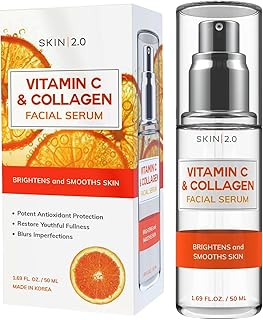
Skin 2.0 Vitamin C Serum – Dermatologist Tested
If you want something that just works, Skin 2.0 Vitamin C Serum – Dermatologist Tested is a safe bet (45 reviews, 4.5 stars).
4. Integrate PDRN Serums for Advanced Skin Regeneration

Bio-regenerative ingredients like PDRN, which is derived from salmon DNA, are moving from clinical treatments to daily routines. I started using these after noticing my cheeks looked deflated and dull. Clinical salmon DNA injections cost hundreds of dollars, so a $32.00 topical serum is a much better starting point. I picked up the Anua PDRN Hyaluronic Acid Capsule 100 Serum. It costs $32.00 for a 1.01 oz bottle. I apply exactly 2-3 drops after my toner. The serum has a thick, slightly viscous texture that feels slightly tacky when first applied. You have to gently press it into your skin rather than rubbing it, or it’ll foam up slightly. I wait a full two minutes for it to absorb. The glass dropper is frustrating. The formula is so thick that the dropper doesn’t pick up enough product on the first squeeze. I have to pump the rubber top three times to get my 3 drops. However, the plumping effect on my fine lines is noticeable within a few hours. My skin looks thicker and feels significantly more hydrated by the time I start my workday.
5. Combat Dark Spots with Targeted Brightening Serums

Hyperpigmentation requires specific active ingredients. I used to buy generic vitamin C creams that oxidized and turned orange before I could finish them. Now, I rely on formulas with Niacinamide and Tranexamic Acid. I use the Anua Niacinamide 10% + TXA 4% Dark Spot Correcting Serum. It retails for $35.00 for a 1 oz pump bottle. I dispense 2 drops onto my fingertips and focus specifically on the dark marks left behind by old breakouts on my chin. The serum has a watery gel consistency and a faint pink tint. It absorbs incredibly fast, leaving a matte finish. It took about four weeks of consistent use before I noticed the hyperpigmentation actually starting to fade. Last month, a cashier at Sprouts actually asked what I was using because my skin tone looked so even under the store lights. The downside is the smell. It has a slightly metallic, clinical scent that lingers for about ten minutes after application. You also have to follow this with a strong SPF in the morning, or the brightening actives won’t do you any good. You might also like: 15 Lovely Aesthetic Luxury Skincare to Inspire Your Next Project
6. Strengthen Your Skin Barrier with Ceramide-Rich Moisturizers

Your skin barrier is the shield that keeps moisture in and bacteria out. When I over-washed my face last winter, my barrier broke down, and every product I applied stung. Ceramides are the lipids that rebuild that shield. I use the AESTURA ATOBARRIER 365 Cream, which costs $25.00 for an 80ml tube. I squeeze out a generous, almond-sized amount as the last step of my evening routine. The texture is unique. It contains tiny, visible ceramide capsules that feel slightly gritty when you first spread the cream. You have to massage it for about 15 seconds until the capsules melt completely into your skin. It leaves a heavy, protective layer that feels like a thick blanket. It takes about ten minutes to sink in, so I have to apply it well before bed so it doesn’t rub off on my silk pillowcase. The plastic tube is incredibly rigid. When you get down to the last 15ml, it’s nearly impossible to squeeze the thick cream out. I ended up cutting the tube open with scissors to scrape out the rest. It’s annoying, but the formula calms my red, irritated skin overnight. Trust me on this. You might also like: 15 Gorgeous Aesthetic Glass Skin That Changed Everything

EQQUALBERRY Vitamin Illuminating Serum | Niacinamide 4% +
Honestly, EQQUALBERRY Vitamin Illuminating Serum | Niacinamide 4% + Brightening surprised me — sturdier than it looks in the photos, and over 108 buyers gave it 4.5 stars.
7. Essential Korean Skincare Routine Products: Daily Sunscreen

UV rays cause the majority of skin aging and dark spots. I learned this after getting a terrible sunburn in a Costco parking lot while loading groceries because I thought I didn’t need SPF for a quick 20-minute errand. You absolutely need daily protection. Finding the right Korean skincare routine products means finding a sunscreen you actually tolerate wearing. I use the Beauty of Joseon Relief Sun: Rice + Probiotics. It costs $18.00 for a 1.69 oz tube. I apply a precise nickel-sized amount every single morning. The formula feels exactly like a lightweight hydrating lotion. It spreads easily, leaves zero white cast on my skin, and doesn’t smell like typical beach sunscreen, which usually gives me a headache. I reapply it every 2-3 hours if I’m sitting near a window. The cap on this tube is tiny and smooth, which makes it very hard to unscrew if your hands have any leftover moisturizer on them. I’ve dropped the cap down my sink drain twice. But the 50 SPF rating means my dark spots aren’t getting darker, so I keep buying it.
8. Avoid Over-Exfoliation to Protect Your Skin Barrier

Exfoliating removes dead skin cells, but doing it too often destroys your face. I know this because two years ago, I used a harsh apricot scrub every single night. My skin felt like rough sandpaper and produced excess oil to compensate for the extreme dryness. You should only exfoliate 1 to 3 times a week, depending on how sensitive your face is. I completely abandoned physical scrubs. Now, I use a liquid BHA exfoliant. I measure out exactly 1/2 teaspoon into my palm and pat it over my nose and chin where my pores get visibly clogged. I apply it with my bare hands and let it sit for two minutes before adding my next layer. Liquid exfoliants are much gentler than gritty scrubs, but you still can’t use them daily. If your face feels tight, looks shiny like plastic, or stings when you apply your basic moisturizer, you’re over-exfoliating. I had to stop all active ingredients for two full weeks and just use plain Vaseline to fix the severe damage I caused. Skip the harsh scrubbing brushes and stick to gentle chemical exfoliants applied sparingly. Your skin barrier won’t survive daily scrubbing. You might also like: 15 Korean Skincare Products Worth Trying
9. Listen to Your Skin and Don’t Force the 10-Step Routine

There is a massive misconception that you have to apply ten different products every single night. I tried doing a full 10-step routine for a month. By week three, my face was breaking out because I was suffocating my pores with too many heavy layers. The 10-step concept is just a menu of options, not a mandatory daily checklist. Some nights, I do a late grocery run to Kroger, get home exhausted, and I just can’t bring myself to do ten steps. On those nights, a minimalist routine is perfectly fine. I use my oil cleanser, my water-based cleanser, 1/4 teaspoon of moisturizer, and I go to sleep. Buying ten different full-sized bottles is also incredibly expensive and mostly unnecessary. Applying 4 oz of different toners and essences in one sitting won’t magically give you better skin if your face can’t absorb it all. If your skin feels sticky or heavy after your routine, you’re using too much product. Pay attention to how your face feels each day. Adjust your layers based on the weather and your hydration levels, not a rigid internet checklist.

medicube No Cast Just Glow Collagen Sunscreen | SPF 50
Honestly, medicube No Cast Just Glow Collagen Sunscreen | SPF 50 Broad Spectrum surprised me — sturdier than it looks in the photos, and over 861 buyers gave it 4.5 stars.
10. Embrace “Cloudglow” Over “Glass Skin” for a Modern Finish

The “glass skin” trend focused on a highly reflective, almost wet-looking finish. I tried to achieve this for my office job by layering three different facial oils. The result wasn’t glowing skin. I just looked incredibly sweaty under the harsh office lights, and my makeup slid off my chin by noon. The current trend is “Cloudglow.” This is a soft-focus, dimensional radiance that looks like healthy skin rather than a greasy surface. To get this finish, I stopped using heavy oils. Instead, I use 1 pump of a milky, ceramide-based serum under my moisturizer. It blurs my skin texture and provides deep hydration without the high-shine finish. The key is focusing on barrier-strengthening ingredients that plump the skin from the inside. I apply 1/2 teaspoon of a lightweight emulsion and let it dry down completely for five minutes before applying my makeup. My foundation glides over this finish perfectly without separating. You get a subtle, healthy luminosity that actually lasts through a nine-hour workday without requiring constant powdering. It’s much more practical for daily wear.
11. Incorporate Ectoin for “Stress-Proof” Skin

Ectoin is an amino acid derivative that protects skin cells from environmental stress like pollution and severe temperature changes. I didn’t care about environmental stress until I spent an hour in the Trader Joe’s freezer aisle last December. The cold air sucked all the moisture out of my face, leaving my cheeks bright red and stinging. I started testing the Make P:rem Ectoin Hydrating Cream. It costs $28.00 for a 1.69 oz jar. I scoop out exactly 1/4 teaspoon using a small plastic spatula. The cream has a dense, buttery texture that melts instantly on contact with body heat. It forms an invisible protective shield over your face. The redness around my nose disappeared completely after three days of using this cream. The jar packaging is my biggest complaint. I hate dipping a spatula into a jar every day because it feels unsanitary, and I always end up losing the tiny plastic scoop. I wish it came in a pump tube. However, the Ectoin formula works so well at preventing moisture loss that I tolerate the jar. My skin no longer feels tight when I walk out into freezing wind. No exaggeration.
Building a routine doesn’t mean buying every single trending bottle you see online. I wasted so much money on products that broke me out before I learned to read ingredient labels and pay attention to textures. Always patch test new formulas on your jawline for 48 hours before smearing them all over your face. If I had to recommend just a starting point, I’d say prioritize the Ma:nyo Pure Cleansing Oil and the Beauty of Joseon sunscreen. Those two formulas alone will drastically change how your skin feels at the end of the day. Stick to specific measurements, don’t rush the absorption time between layers, and stop scrubbing your face with harsh physical exfoliants. If you found this breakdown helpful, pin this article to your skincare boards so you can reference these exact product names and prices during your next restock run.
Frequently Asked Questions
What are the essential Korean skincare routine products for beginners?
Beginners should focus on a simple four-step routine: an oil cleanser, a gentle water-based gel cleanser, a barrier-repairing moisturizer with ceramides, and a high-quality SPF 50 sunscreen. You don’t need ten steps to see results.
How long does it take for Korean skincare routine products to work?
Hydrating toners and rich moisturizers provide immediate relief for dry skin. However, active ingredients like Niacinamide or Tranexamic Acid for dark spots typically take four to six weeks of consistent daily use before showing visible fading.
Can I mix Korean skincare routine products with Western brands?
Yes, you can mix them. However, pay close attention to active ingredients. If your Western serum contains strong exfoliants like retinol or high-percentage AHAs, pair it with soothing, hydrating Korean toners and barrier creams to prevent irritation.
Are Korean skincare routine products safe for sensitive skin?
Many are formulated specifically for sensitive skin, focusing on barrier repair with ingredients like ceramides, PDRN, and Ectoin. Always check the ingredient list for artificial fragrances or essential oils if you are highly reactive, and patch test first.
