What’s Inside
- Mochi Skin Cleansers for a Cute Skincare Aesthetic
- Microbiome-Friendly Formulations
- The Thinnest to Thickest Rule
- Why SPF Matters for a Cute Skincare Aesthetic
- Incorporating Trending Regenerative Ingredients
- Getting Specific Measurements for Serums
- Skinimalism and Multi-Tasking Products
- Opting for Low-Dose Niacinamide
- Extending Products to the Neck and Chest
- Playful K-Beauty That Actually Works
- Wearable Accessories and Micro-Dosing Eye Cream
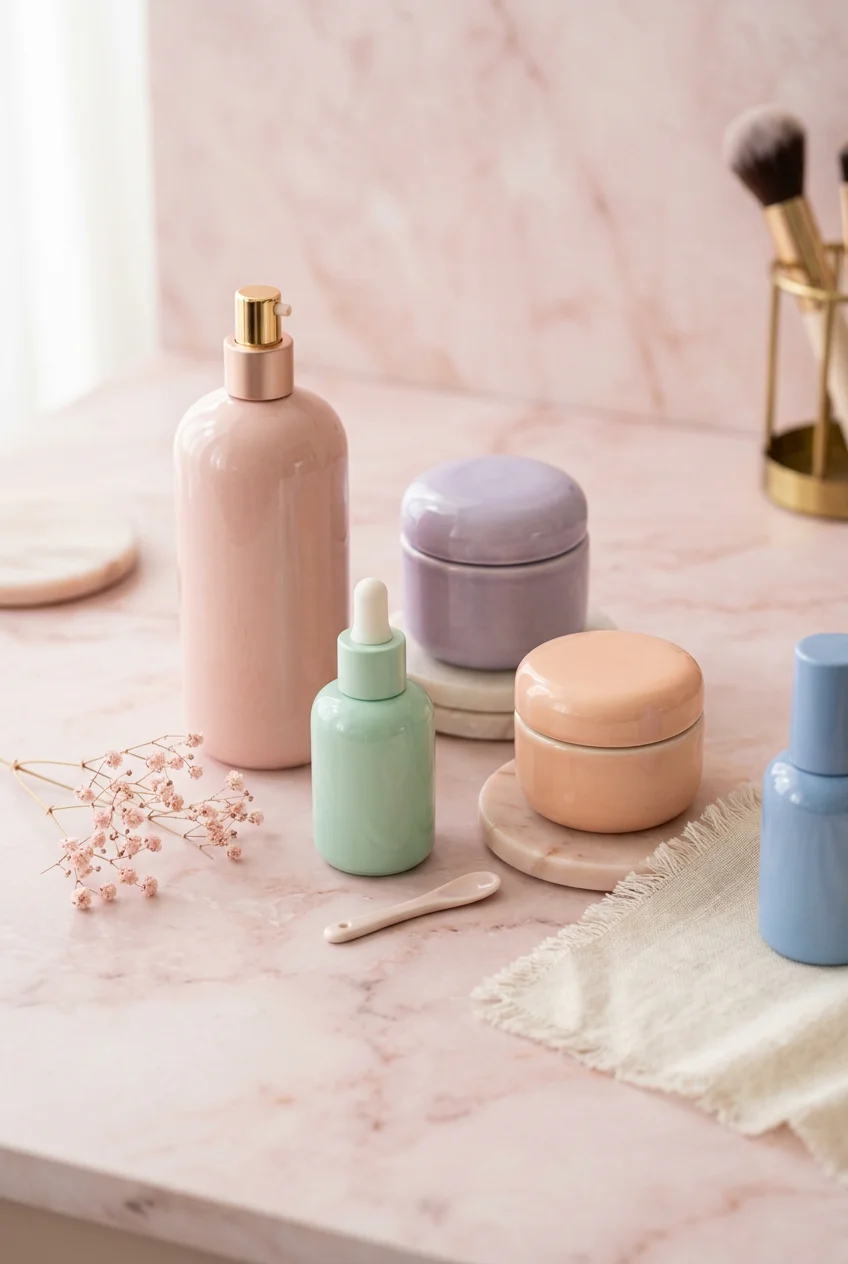
Last Tuesday at Target, I stood in the beauty aisle staring at a shelf of pastel bottles, trying to build a cute skincare aesthetic. I bought a neon pink exfoliating wash purely because the packaging matched my bathroom tiles. That was a massive mistake. The formula smelled like harsh, chemical floor cleaner and stripped my skin barrier so badly my cheeks felt like sandpaper for a week. A cute aesthetic doesn’t mean anything if the ingredients destroy your acid mantle. I’m an analytical buyer now. I read labels. I test pH levels. I don’t care how adorable a bottle looks if the formula inside is garbage. You can have a pretty vanity and healthy skin, but you have to know exactly what you’re buying. Let’s break down the products, measurements, and science behind a routine that looks good and works. I’ve spent the last three years testing these formulas. Here is what works, what fails, and how much you should be using. Learned that the hard way.
1. Mochi Skin Cleansers for a Cute Skincare Aesthetic

In 2026, the texture of your cleanser matters just as much as the active ingredients. You’ll see products claiming to give you “mochi skin,” which just means a bouncy, hydrated texture. The AprilSkin TXA Pink Bubble Gum Cleanser costs $24.00 for a 4.05 oz tube. The formula is literally chewy. It stretches like gum between your fingers. I bought this at a K-beauty pop-up in Los Angeles last month and tried it wrong for weeks. I used a massive handful, creating a sticky mess in my sink. You only need a nickel-to-quarter-sized amount. If you’re using a standard gel, stick to one or two pumps. Massage it onto wet skin for exactly one to three minutes. Anything less, and the tranexamic acid won’t have time to break down surface impurities. The pink packaging fits the aesthetic, but the real benefit is how the stretchy texture lifts dead skin cells without harsh scrubbing. The tube gets messy around the cap, though. You have to wipe the threads or the cap won’t twist shut. It’s an annoying flaw, but the barrier-protecting formula makes it worth the effort.
2. Microbiome-Friendly Formulations

Your skin has a delicate ecosystem of bacteria. Strip it with harsh alkaline soaps, and you’ll invite acne and inflammation. A major shift involves products that feed the good bacteria on your face. I picked up the AUNU Manuka Cleanser for $28.00 (5 oz) after reading clinical trials on manuka honey’s effect on the microbiome. It contains prebiotics like inulin and postbiotics from fermented extracts. These foster beneficial bacteria while killing the strains that cause breakouts. I’m critical of brands that slap “probiotic” on a label without stabilizing the formula, but AUNU actually balances pH correctly. You can also find microbiome-balancing body care from Luna Daily for about $18.00 at Target. For targeted acne, Phyla offers a system for $44.00 (1.7 oz) that uses bacteriophages to kill acne bacteria without harming healthy flora. I tested the Phyla serum last winter. The smell is earthy, like wet clay. It isn’t pleasant, but it knocked out my hormonal jawline acne in three weeks. Focus on the chemistry, not the scent.
3. The Thinnest to Thickest Rule

Most people get this wrong. I certainly did. Two years ago, I bought a watery essence for $14.99 and applied it after my thick ceramide cream. I wondered why it sat on my face like a greasy puddle. You have to apply skincare from the thinnest consistency to the thickest. If you put a heavy occlusive moisturizer on first, it creates a physical barrier. A watery toner or light serum can’t penetrate that wall of lipids. The correct order is cleanser, watery toner, liquid serum, lotion, and finally a thick cream or oil. This basic physics principle dictates how well your $40.00 serums actually absorb. When you use a toner, pour a quarter-sized puddle into your palm. Press it directly into your skin. Don’t waste product on a cotton pad; it absorbs half the liquid, meaning you’re throwing money in the trash. Once the toner is damp, apply your next layer. The slight dampness increases the permeability of your stratum corneum, pulling the heavier serum deeper. You might also like: 15 Gorgeous Aesthetic Glass Skin That Changed Everything

EQQUALBERRY Vitamin Illuminating Serum | Niacinamide 4% +
Honestly, EQQUALBERRY Vitamin Illuminating Serum | Niacinamide 4% + Brightening surprised me — sturdier than it looks in the photos, and over 112 buyers gave it 4.5 stars.
4. Why SPF Matters for a Cute Skincare Aesthetic

Skipping sunscreen is a critical error. UV degradation destroys collagen, causes hyperpigmentation, and ruins your skin barrier. I don’t care if you’re staying indoors. UVA rays penetrate window glass. I use the Medicube No Cast Just Glow SPF 50. It costs $29.00 for a 1.69 oz tube. The packaging is a sleek, minimalist silver that looks great on a vanity, but the formula is what matters. It provides broad-spectrum protection with a luminous finish. You have to apply a nickel-sized dollop every single morning. I measure this strictly. Two finger lengths is the standard dermatological recommendation. The Medicube formula has a slight chemical smell at first, like pool sunscreen. That scent dissipates after four minutes. I bought this in October after my old drugstore SPF started pilling under my foundation. The Medicube doesn’t pill, but it leaves a shiny finish. If you have oily skin, set your T-zone with translucent powder. Otherwise, you’ll look sweaty by 2:00 PM. Trust me.
5. Incorporating Trending Regenerative Ingredients

The industry is moving away from basic plumping and focusing on cellular repair. Regenerative aesthetics rely on ingredients that signal your cells to act young again. PDRN is currently dominating clinical research. It’s derived from salmon sperm DNA fragments, though you can find plant-based Phyto-PDRN. I know, it sounds unappealing. I was skeptical when I read the data. However, these biomimetic peptides work at a cellular level to restore function. I tested a PDRN ampoule from a specialty Asian beauty store for $45.00 (1 oz). The liquid is clear and feels like water. You only need three drops for your entire face. It doesn’t yield immediate cosmetic results like hyaluronic acid. Instead, after four weeks, I noticed the chronic redness around my nose had faded. The capillary walls seemed stronger. If you’re building a routine, you need at least one regenerative active. Look for exosomes or peptides in the top five ingredients. You might also like: 20 Gorgeous Aesthetic Products Korean Skincare for Every Budget
6. Getting Specific Measurements for Serums

Serums are concentrated. Using more doesn’t give better results; it just wastes expensive product and increases your risk of contact dermatitis. The Glow Recipe Watermelon Glow Niacinamide Dew Drops cost $35.00 for 1.35 oz. The pink teardrop bottle is cute. It functions as a brightening serum and highlighter. I use this, but the pump mechanism gets sticky after a month. Dried serum crusts around the nozzle, and you have to scrape it off or it squirts at weird angles. Charlotte Cho, co-founder of Soko Glam, suggests specific measurements. You need a dime-sized amount in the morning under sunscreen. At night, you can increase that to a nickel-sized amount to maximize efficacy while your skin repairs. I strictly adhere to the dime-sized rule. If you use a quarter-sized amount, the formula turns tacky and refuses to dry. It will glue your hair to your cheeks. Measure your actives precisely.

COSRX Vitamin E Vitalizing Sunscreen,SPF 50 Face Sunscreen
COSRX Vitamin E Vitalizing Sunscreen punches above its price — 43 buyers rated it 4.5 stars. I would buy it again.
7. Skinimalism and Multi-Tasking Products

Overcomplicated twelve-step routines are tedious and cause barrier damage from ingredient overload. I prefer pared-back, personalized approaches. You need skincare-makeup fusions. I buy foundations formulated with niacinamide or squalane. This reduces the number of layers on my face, which cuts down on product pilling. I picked up a tinted serum at Kroger last week for $12.99 (1 oz). It combines a mineral SPF 30 with pigment and hyaluronic acid. Using a multi-tasking product saves me seven minutes in the morning. The tradeoff is coverage. These hybrid formulas rarely provide full opacity. If you have active breakouts, a tinted serum won’t hide them. You’ll still need a high-pigment concealer. When shopping for these, check the concentration of the active ingredients. If a foundation claims to contain Vitamin C, but ascorbic acid is the last ingredient, it’s just marketing fluff. You aren’t getting any structural benefit from a concentration that low. Read the box. You might also like: 20 Stunning Tips Natural Skincare That Actually Work
8. Opting for Low-Dose Niacinamide

Niacinamide is excellent for regulating sebum and strengthening the lipid barrier. However, brands started pushing 10% and 15% concentrations a few years ago. I fell for it and bought a 10% serum. It burned my face. My skin turned bright red and peeled for three days. Clinical studies show niacinamide is effective at just 2% to 5%. Anything higher increases the risk of irritation without offering better results. BYOMA’s Brightening Serum costs $16.99 for 1.01 oz at Target. It uses a low-dose, high-purity niacinamide combined with ceramides. The square, pastel packaging fits a cute aesthetic, but the formula is functionally superior to the high-percentage acid burns. The serum has a milky texture. Apply three drops to your cheeks and forehead. It absorbs in thirty seconds. The BYOMA dropper is stiff. You have to squeeze the rubber bulb hard to draw up the liquid. It’s a minor annoyance, but the gentle, barrier-safe formula makes it a permanent fixture in my cabinet. Stick to the lower percentages.
9. Extending Products to the Neck and Chest

Stopping your skincare at your jawline is a massive oversight. The skin on your neck and décolletage is thin and lacks the sebaceous glands found on your face. This makes it susceptible to UV damage and moisture loss. Three years ago, I attended a summer wedding in a low-cut dress. I meticulously applied SPF 50 to my face but ignored my chest. I ended up with a blistering sunburn that faded into permanent sunspots. Now, I extend every product down to my collarbones. You need a separate, quarter-sized dollop of moisturizer for your neck and chest. Do not just drag the leftover residue from your face downward. It isn’t enough. I keep a 16 oz tub of CeraVe Moisturizing Cream ($19.99 at Costco) for this. It’s a thick, heavy cream. I scoop out one tablespoon using a clean spatula and massage it into my neck using upward strokes. Downward dragging pulls on the delicate tissue. Treat your chest exactly like you treat your face.

medicube Deep Vitamin C Capsule Serum | Hydrating Vitamin C
If you want something that just works, medicube Deep Vitamin C Capsule Serum | Hydrating Vitamin C Serum for is a safe bet (298 reviews, 4.5 stars).
10. Playful K-Beauty That Actually Works

Korean skincare dominates the market with innovative formulas and visual packaging. I Dew Care makes vegan formulas in bright, playful jars. I bought their wash-off face mask for $23.00 (2.82 oz) at Ulta. The texture looks like cake batter. However, I have a strict warning: the artificial fragrance is incredibly strong. It smells like synthetic vanilla. If you have reactive skin, this will cause a flare-up. I use it purely on my T-zone where my skin is less sensitive. For a functional approach, Charlotte Cho recommends the Then I Met You Living Cleansing Balm. It costs $38.00 for a 3.17 oz tub. The yellow packaging is striking. You scoop out a dime-sized amount with the included spatula and massage it onto dry skin for sixty seconds. It melts into an oil, breaking down waterproof mascara and sunscreen effortlessly. You must follow this with a water-based gel cleanser. If you skip the second cleanse, the oil residue will clog your pores within twenty-four hours.
11. Wearable Accessories and Micro-Dosing Eye Cream

The skin around your eyes is one-tenth the thickness of the rest of your face. You can’t slather heavy creams there. Over-applying heavy lipids causes milia, tiny white keratin cysts that require a dermatologist to extract. You only need a grain-of-rice-sized amount of eye cream for both eyes. BYOMA’s Barrier Repair Eye Cream costs $14.99 for a 0.67 oz pump. Dispense that tiny amount onto your ring finger. Gently pat it along the orbital bone. Do not rub. Do not apply it directly to your eyelids; the product will naturally migrate upward as it warms. Another trend is wearable beauty accessories. Skincare is a fashion statement. The Bubble Tell All Juicy Secret Lip Balm costs $9.00 for a 0.33 oz tube at Walmart. It comes with a keychain loop for your purse. I bought one last week. The balm is hydrating, using seed oils and shea butter. However, the plastic charm clip broke off my bag after three days. The hardware is cheap. Keep the balm in your pocket instead. No exaggeration.
Building a routine requires analytical thinking, not just a preference for pastel packaging. I’ve wasted hundreds of dollars on products that looked beautiful on my counter but destroyed my skin barrier. You have to read the labels, measure your serums precisely, and understand the chemistry of how these formulas interact. If you stick to the thinnest-to-thickest rule, measure your actives, and prioritize microbiome-friendly ingredients over harsh exfoliants, you’ll see actual structural changes. I’d recommend starting with a solid cleansing balm like the Then I Met You formula and a low-dose niacinamide serum from BYOMA. Those two products fundamentally repaired my damaged acid mantle. Stop buying things just because they look cute on social media. Demand clinical efficacy. Pin this guide to your skincare boards so you have these measurements and names the next time you’re standing in the beauty aisle trying to decode an ingredient list.
Frequently Asked Questions
How do I build a cute skincare aesthetic without damaging my skin?
Focus on clinical efficacy first. Look for microbiome-friendly ingredients and low-dose actives housed in minimalist or pastel packaging. Never buy a product solely for its appearance without reading the ingredient list to ensure it matches your skin type.
What is the correct order to apply aesthetic skincare products?
Always apply products from the thinnest consistency to the thickest. Start with a watery toner, follow with liquid serums, apply lotions, and finish with heavy creams or oils. This ensures proper ingredient penetration.
How much serum should I actually be using?
Serums are highly concentrated, so you only need two to three drops or a pea-sized amount. For active ingredients like Vitamin C or Niacinamide, use a dime-sized amount in the morning and a nickel-sized amount at night.
Are cute K-beauty skincare products effective?
Yes, many Korean skincare brands combine playful packaging with highly effective, innovative formulas. Look for products containing regenerative ingredients like PDRN or gentle barrier-repairing components like polyglutamic acid and ceramides.
