What’s Inside
- Setting Up a Realistic Toca Boca Skincare Fridge
- Temperature Control and Tracking
- Why Vitamin C Belongs in the Cold
- Constricting Blood Vessels with Eye Creams
- Maximizing Sheet Mask Efficacy
- Chilling Facial Tools Correctly
- What Never Goes in a Toca Boca Skincare Fridge
- Managing Condensation and Pooling Water
- Storing Aloe Vera and Sunburn Treatments
- Preserving Probiotic and Fermented Formulas
- Organizing the Restrictive Internal Layout
- Extending the Life of DIY Masks
- Midday Hydration with Cold Mists
- The Mandatory Deep Cleaning Routine
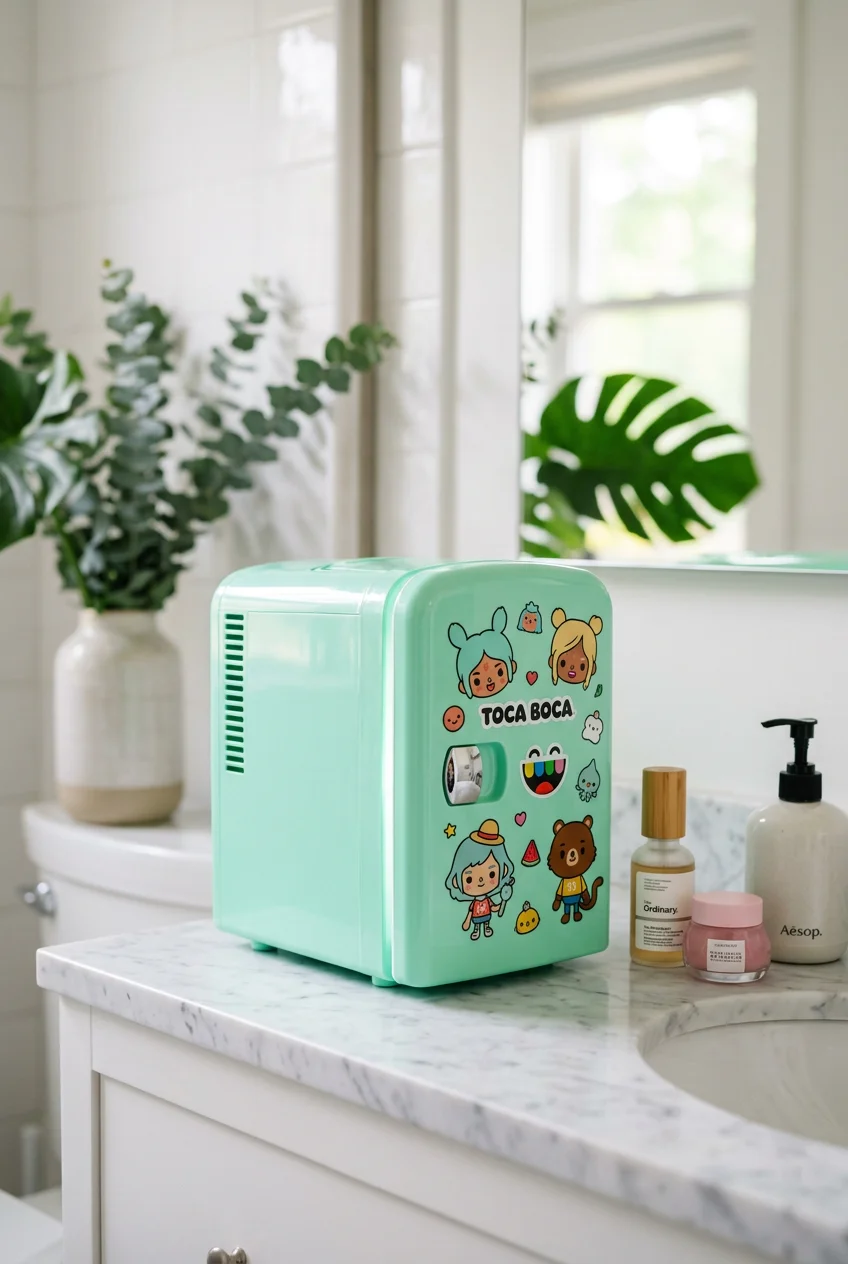
Last Tuesday at Target, my nine-year-old niece threw a fit in the electronics aisle because she wanted a Toca Boca skincare fridge for her birthday. I had to explain that Toca Boca is just a digital app company—they don’t make actual appliances. But the viral trend is real. It’s all about slapping cartoon stickers onto a standard mini fridge and filling it with pastel serums. I ended up buying a basic unit and testing exactly which formulas benefit from being kept at 40 degrees Fahrenheit. The results were specific. Some formulas thrived, while others separated and hit the trash. Here is a breakdown of what works, what fails, and how to manage a tiny cold box in a humid bathroom.
1. Setting Up a Realistic Toca Boca Skincare Fridge

Since a branded fridge doesn’t exist, you’ve got to build one. I bought the Cooluli 4L Mini Fridge for $49.99 at Target. It’s roughly 10 by 7 by 10 inches. The cooling mechanism is weak, usually dropping the temp about 30 degrees below room temperature. If your bathroom is 75 degrees, the fridge sits around 45. I ordered a pack of 50 vinyl Toca Boca stickers for $6.99 on Amazon to satisfy my niece. The plastic exterior takes stickers well, but you have to clean it with rubbing alcohol first. I skipped this, and the stickers peeled off in three days because of the shower humidity. Learned that the hard way. Keep the unit at least four inches from the wall. The back fan needs airflow to avoid burning out the motor. I killed a similar unit by shoving it against my bathroom mirror. The fan has a low-frequency hum, like a desktop computer at full speed. I sleep with a white noise machine, so it doesn’t bother me, but you won’t want this on your nightstand.
2. Temperature Control and Tracking

Don’t just plug it in and assume your stuff is safe. I keep a Taylor Precision Refrigerator Thermometer inside. It costs $9.48 at Walmart. I check it every morning. The ideal temp is between 40 and 50 degrees Fahrenheit. If it drops below 36, emulsions separate. If it goes above 55, you aren’t getting any preservation benefits. Last month, my apartment AC broke and the fridge hit 60 degrees. I had to move my high-end serums to the kitchen fridge next to the milk. Because a 4L fridge is tiny, temperature swings happen fast when you open the door. Keep it open for ten seconds tops. I grab my morning routine in one motion, shut the door, and apply my products. Leaving it wide open while you do a 15-minute mask forces the motor into overdrive. The plastic latch needs a firm push to click. I’ve left it ajar overnight before, which ruined the temp. Always listen for the click.
3. Why Vitamin C Belongs in the Cold

L-ascorbic acid is unstable. It degrades fast when hit by light, heat, or air. Storing it cold slows down oxidation. I use the Mad Hippie Vitamin C Serum, which costs $33.99 for a 1.02-ounce bottle at Whole Foods. I bought a bottle in January and left it on my warm vanity. By March, the pale yellow liquid turned dark amber. That color change means it lost its efficacy. I tossed it and bought a replacement. I put the new one in the fridge. Four months later, the serum is still clear. The cold noticeably extends the shelf life. The dropper feels a bit stiff when cold, but the serum applies perfectly. You’re wasting money if you buy premium antioxidants and leave them near a steamy shower. Thermal degradation happens faster than you can use the product. You might also like: 20 Stunning Tips Natural Skincare That Actually Work

COSRX Vitamin E Vitalizing Sunscreen,SPF 50 Face Sunscreen
If you want something that just works, COSRX Vitamin E Vitalizing Sunscreen is a safe bet (43 reviews, 4.5 stars).
4. Constricting Blood Vessels with Eye Creams

Puffiness under the eyes is usually fluid retention and dilated blood vessels. Applying a cold cream constricts those vessels, which reduces swelling. I keep the Good Molecules Yerba Mate Wake Up Eye Gel in my fridge. It costs $5.99 for a 0.5-ounce tube at Sprouts. The gel consistency holds temperature well. I tap a pea-sized amount along my orbital bone. The shock of the cold wakes me up at 6:00 AM. I used to keep heavy, lipid-rich eye creams in there, but they turn into rocks. A shea butter-based cream becomes a brick at 45 degrees, making it impossible to spread without dragging your skin. Stick to water-based gels for cold storage. The temperature drop does more for morning puffiness than the ingredients themselves. Trust me.
5. Maximizing Sheet Mask Efficacy

Sheet masks are just delivery vehicles for serums. Cooling them down adds a cryotherapy element. I buy TonyMoly I’m Real Sheet Masks for $3.00 each at Kroger. I keep three or four stacked flat on the bottom shelf. Applying a 45-degree mask to an inflamed face is instant relief. I did this last August after a minor chemical burn from over-exfoliating. The cold mask pulled the heat out of my skin within twenty minutes. Watch out for condensation, though. The foil packaging causes water to pool underneath. I found a puddle ruining my cardboard boxes once. Now, I put a folded paper towel under the stack. Don’t leave them in there for more than six months, or the essence can crystallize and get sticky.
6. Chilling Facial Tools Correctly

Stone rollers and gua sha tools stay cold longer than liquid cosmetics. I use a generic jade roller that came in a two-pack for $19.99 at Costco. The cold stone pushes stagnant lymphatic fluid away from the face. But don’t throw raw stone tools on a plastic shelf. The metal brackets will rust from the moisture. I wrap my roller in a dry washcloth before placing it on the top shelf. This stops condensation from hitting the metal. I tried an ice globe once; the liquid expanded in the cold and the glass shattered across my serums. Cleaning tiny glass shards out of a 4L fridge is a nightmare. Stick to stone or stainless steel and wrap them in fabric. You might also like: 20 Lovely Aesthetic Night Routine Skincare for a Fresh New Look

medicube No Cast Just Glow Collagen Sunscreen | SPF 50
If you want something that just works, medicube No Cast Just Glow Collagen Sunscreen | SPF 50 Broad Spectrum is a safe bet (939 reviews, 4.5 stars).
7. What Never Goes in a Toca Boca Skincare Fridge

Not everything belongs in the cold. Oils, balms, and heavy silicones will solidify or separate at 40 degrees. I use Trader Joe’s 100% Jojoba Oil to remove makeup. It costs $7.99 for a 4-ounce bottle. I left it in the fridge once. The next morning, it was a cloudy, solid lump of wax. I had to run the bottle under hot water for ten minutes to fix it. Clay masks fail, too. The cold makes the water evaporate or separate from the binders, leaving a dry paste. Sunscreen is another disaster. UV filters need a stable room temperature to stay evenly distributed. If you chill sunscreen, the formula breaks and you lose your SPF protection. Keep these on a room-temp shelf. You might also like: 15 Korean Skincare Products Worth Trying
8. Managing Condensation and Pooling Water

Thermoelectric cooling creates a lot of condensation. Warm air hits the cold back plate and turns into water. These droplets slide down and form a puddle. I ignored this and ended up with black mold under my jars. To fix it, I put a folded microfiber cloth on the bottom. I buy a three-pack of automotive microfiber towels for $4.99 at Target. The cloth absorbs the moisture. Every Sunday, I swap the damp one for a fresh, dry one. I also wipe the walls with a paper towel twice a week. You’re creating a dark, damp box. Without moisture management, it’s a breeding ground for bacteria, which defeats the point of sanitary skincare.
9. Storing Aloe Vera and Sunburn Treatments

Aloe vera gel is 99 percent water. It’s perfect for the fridge. I keep a bottle of Seven Minerals Aloe Vera Gel in the door. It costs $19.95 for a 12-ounce bottle at Whole Foods. Since it lacks harsh synthetic thickeners, the shelf life is short at room temperature. The cold prevents bacterial growth. Last July, I got a bad sunburn at a street festival. Applying aloe straight from the fridge provided a numbing sensation that killed the pain. The cold reduces blood flow, which limits inflammation. I apply a thick, 1/4-inch layer and let it sit until it evaporates.
Clear Stackable Makeup Organizer with Drawer
Clear Stackable Makeup Organizer with Drawer has been one of the most consistently praised picks in this category. 310 reviewers averaged 4.5/5.
10. Preserving Probiotic and Fermented Formulas

Skincare with live bacterial cultures needs strict temperature control. Fermented ingredients degrade fast in heat. I use the Beekman 1802 Milk Drops Probiotic Ceramide Serum. It costs $45.00 for a 0.95-ounce bottle. The formula relies on a milk-derived probiotic complex. When I kept it in my humid bathroom, it developed a sour, yeasty smell after six weeks. Heat accelerated the fermentation. I bought a fresh bottle and put it in the fridge. Now, it stays stable and odor-free for over six months. The milky consistency thickens at 45 degrees, so I shake the bottle for five seconds before using. It’s extra effort, but worth it to keep the cultures alive.
11. Organizing the Restrictive Internal Layout

A 4L capacity is basically a large men’s shoebox. The manufacturer includes a flimsy plastic shelf that cuts the space in half. I removed it on day one. Most serum bottles are four to six inches tall; with the shelf, you can only fit tiny jars. I use small acrylic drawer organizers to stop bottles from tipping. I found a narrow, clear plastic tray for $3.50 at Muji. It’s 3 by 6 inches and fits perfectly on the floor of the unit. I line up my glass droppers inside the tray. When I need something, I slide the whole tray out, grab what I need, and slide it back. This prevents me from knocking over my expensive vitamin C every time I reach for my eye cream.
12. Extending the Life of DIY Masks

If you mix your own treatments, refrigeration is mandatory. Food-grade ingredients lack synthetic preservatives. I make a weekly mask using 2 tablespoons of Greek yogurt and 1 teaspoon of honey. I buy both at Trader Joe’s for about $8.00. The lactic acid in the yogurt is a great exfoliant. If you leave this on a counter, it spoils and grows bacteria within twelve hours. I mix the batch in a small glass Pyrex container with an airtight lid. It sits on the top shelf. At 40 degrees, the yogurt stays safe for exactly three days. Don’t push it to a fourth day. I tried that once, and the separated whey caused a painful breakout along my jawline. Treat DIY skincare like actual food safety.

EQQUALBERRY Vitamin Illuminating Serum | Niacinamide 4% +
EQQUALBERRY Vitamin Illuminating Serum | Niacinamide 4% + Brightening punches above its price — 112 buyers rated it 4.5 stars. I would buy it again.
13. Midday Hydration with Cold Mists

Facial mists are often frivolous, but chilling them changes everything. I keep a bottle of Heritage Store Rosewater Spray in my unit. It costs $11.49 for an 8-ounce bottle at Sprouts. At room temperature, it just makes you wet. At 45 degrees, the mist constricts your pores and refreshes your skin. I work from home and stare at a monitor for nine hours. Around 3:00 PM, my skin feels tight and flushed from the heat of my equipment. I walk to the bathroom, grab the cold rosewater, and mist my face three times. The temp drop resets my focus. The 8-ounce bottle is too tall to stand up, so I lay it horizontally. Make sure the cap is tight, or it will leak everywhere.
14. The Mandatory Deep Cleaning Routine

You must sanitize the unit every thirty days. Spilled serums, pooling water, and dead skin cells create a biohazard. I unplug the unit on the first Sunday of every month. I empty everything onto a towel. I mix 1/2 cup of distilled white vinegar and 1/2 cup of warm water. I buy a gallon of vinegar for $3.48 at Walmart. I scrub the walls, the floor, and the rubber gasket. The gasket is where black mold hides. I use an old toothbrush to scrub the folds. After scrubbing, I wipe it dry with a paper towel. I leave the door open for an hour to let the vinegar smell dissipate before plugging it back in. If you skip this, your fridge becomes dirtier than your bathroom sink. No exaggeration.
It takes actual work to keep a fridge running safely in a humid bathroom. The aesthetic might be driven by a viral digital game, but the practical application of cold-storage for volatile ingredients is rooted in real chemistry. Stick to water-based formulas, manage the daily condensation, and keep your oils on a dry shelf. Save this breakdown to your Pinterest skincare boards so you don’t accidentally freeze your expensive moisturizers.
Frequently Asked Questions
What is a toca boca skincare fridge?
It is a viral aesthetic trend where people decorate a standard cosmetic mini fridge with stickers from the digital game Toca Boca. Toca Boca does not manufacture physical appliances, so you have to build the aesthetic yourself using a basic thermal electric cooler.
What temperature should my skincare fridge be?
The ideal temperature is between 40 and 50 degrees Fahrenheit. Temperatures below 36 degrees will cause emulsions to separate and freeze, while temperatures above 55 degrees fail to preserve active ingredients like vitamin C or probiotics.
Can I put facial oils in my mini fridge?
No. Facial oils, heavy balms, and lipid-rich creams will solidify and turn into a hard wax at 40 degrees. You must keep oil-based products at room temperature to maintain their spreadable texture.
How do I stop water from pooling in my skincare fridge?
Condensation is inevitable in thermoelectric coolers. Place a small, folded microfiber cloth flat on the bottom floor of the unit to absorb the dripping water. You must swap the cloth for a dry one weekly to prevent black mold.
