What’s Inside
- Prioritize Daily Sunscreen in Your Indian Skincare Routine
- Embrace Skin Minimalism for Barrier Health
- Double Cleansing Removes Pollution and Grime
- Add a 10% Vitamin C Serum Every Morning
- Use a Ceramide-Rich Moisturizer Twice Daily
- Introduce Retinol Slowly for Pigmentation
- Stop Using Raw Lemon and Baking Soda
- Exfoliate Gently With AHAs or BHAs
- Extend Your Indian Skincare Routine to Your Neck
- Upgrade Traditional Ingredients with Modern Formulas
I burned my upper lip with raw lemon juice three days before my cousin’s wedding in October 2019. Building a proper Indian skincare routine was the last thing on my mind when I decided a homemade bleaching paste would fix a minor dark spot. Instead, I showed up to the reception with a red, weeping chemical burn that no amount of heavy MAC concealer could hide. It felt like a sunburn mixed with a papercut. Figuring out an effective Indian skincare routine took me years of trial and error after that disaster. I stopped treating my face like a weekend chemistry experiment and started looking at the science of pigmentation, humidity, and barrier repair. It’s not about slapping raw turmeric on your face until your skin turns bright yellow. It’s about combining modern, stable formulations with daily habits that actually work for melanin-rich skin in varied climates. I’ve spent hundreds of dollars testing products that broke me out or did nothing. Learned that the hard way. Here is exactly what I do now to maintain clear skin without destroying my barrier.
1. Prioritize Daily Sunscreen in Your Indian Skincare Routine

Most people think they only need SPF at the beach. I thought the same thing until I noticed new sunspots forming on my left cheek just from driving to Costco every Tuesday. UV rays and blue light easily penetrate car windows, and skipping sunscreen is the fastest way to trigger hyperpigmentation. I spent months trying thick, chalky mineral sunscreens that left an embarrassing purple cast on my skin. I looked like a ghost in flash photography. I finally switched to the Fixderma Shadow SPF 50+ Gel Sunscreen. It costs about ₹350 (roughly $12.99 for a 1.5 oz tube) and fixed my morning routine. The gel formula absorbs in exactly twelve seconds. It doesn’t leave a greasy film, which is crucial when it’s 90 degrees outside and you’re already sweating before you reach your car. You need to apply a full 1/4 teaspoon for your face to get the actual SPF 50 protection. I measure it out on two fingers to be precise. One small negative is that the Fixderma tube is quite small, so I go through one every three weeks. I buy them in bulk now. If you have oily skin, stop using thick cream sunscreens that clog your pores and switch to a clear gel formula. Reapply it every four hours if you sit near a window at work.
2. Embrace Skin Minimalism for Barrier Health

Two years ago, I walked through the beauty aisle at Whole Foods and bought six different botanical serums just because the glass packaging looked clinical. I ended up with a twelve-step nighttime process that took forty minutes. By week three, my skin was angry, red, and covered in tiny closed comedones along my jawline. More products don’t equal better skin. The current trend of skin minimalism is exactly what an Indian skincare routine needs, especially when dealing with fluctuating humidity. Layering a toner, an essence, three serums, and a heavy face oil just suffocates the skin and traps sweat in your pores. I pared my routine down to a simple cleanser, one targeted treatment, and a basic moisturizer. When I stopped bombarding my face with twenty different raw plant extracts, my skin barrier finally healed. The constant redness faded. You’re much better off spending your budget on three high-quality, stable formulas than a dozen mediocre ones. I wash my face, apply my active ingredient, moisturize, and go to sleep. It takes four minutes. If your skin feels tight, itchy, or looks shiny but feels dry to the touch, you’re likely overdoing it. Strip your routine back to the basic three steps for 28 days and watch how your skin repairs itself.
3. Double Cleansing Removes Pollution and Grime

I used to wash my face once with a harsh foaming gel and dry it on a clean white towel. Every night, that towel came away with beige makeup stains and gray streaks of city pollution. A single pass with a basic water-based cleanser won’t break down waterproof sunscreen, long-wear foundation, or the exhaust fumes that cling to your face during a commute. You need to double cleanse. I start with micellar water. I buy the Garnier SkinActive Micellar Cleansing Water (the version with the pink cap) for $8.99 at Target. It comes in a 13.5 oz bottle that lasts me three months. I soak a flat cotton pad with exactly 1 tablespoon of the liquid and hold it over my closed eyes for ten seconds before wiping. This dissolves the stubborn waterproof mascara without tugging at my eyelashes. After rinsing that off with lukewarm water, I follow up with a gentle, sulfate-free face wash to remove the actual dirt from my pores. The mistake I made early on was using a gritty physical scrub for my second cleanse. That just creates micro-tears in the skin and invites bacteria. Stick to a basic, non-foaming cream cleanser for the second step. Your towels will stay bright white, and your pores won’t get clogged with leftover SPF residue.

Yeamon Gua Sha Facial Tools and Face Roller Set
Yeamon Gua Sha Facial Tools and Face Roller Set has been one of the most consistently praised picks in this category. 11 reviewers averaged 4.5/5.
4. Add a 10% Vitamin C Serum Every Morning

Fading dark spots on melanin-rich skin takes time and the right ingredients. Vitamin C is effective at inhibiting melanin production, but finding a stable formula is frustrating. I tried a cheap derivative once that oxidized and turned bright orange in the glass bottle within a week. Now I use the Dot & Key 10% Vitamin C + E Face Serum. It retails for about ₹695 (around $8.50 for a 1 oz dropper bottle). The addition of Vitamin E stabilizes the L-Ascorbic acid and makes it far more effective against environmental damage. I apply exactly 3 drops to clean, slightly damp skin every morning. It has a faint, metallic smell. That scent is a good sign because it means the L-Ascorbic acid is active and working. I wait about two minutes for it to fully absorb before applying my moisturizer. A quick tip: keep your Vitamin C serum in a dark drawer or the refrigerator. I once left a fresh bottle on my bathroom counter where the morning sun hit it, and it went bad in a month. I had to throw it in the Walmart parking lot trash can on my way to buy a replacement. Stick to a 10% to 15% concentration. Anything higher usually just causes stinging and redness for me.
5. Use a Ceramide-Rich Moisturizer Twice Daily

I have combination skin that gets oily in the T-zone by 2 PM. For years, I skipped moisturizer completely during the summer. I figured my skin produced enough oil on its own. That was a massive mistake. When you skip moisturizer, your skin senses the dehydration and pumps out even more sebum to compensate. I was causing my own greasy forehead. You need a lightweight moisturizer that contains ceramides to repair the lipid barrier. I currently use the Dot & Key Barrier Repair Moisturizer. It costs ₹599 (about $7.50 for a 2 oz tub). It contains ceramides and hyaluronic acid but has a whipped, gel-cream texture that doesn’t feel heavy. I apply a dime-sized amount to my face and neck while my skin is still damp from washing. This locks the water into the skin. The packaging is a bit annoying because I hate dipping my fingers into a jar and contaminating the product. I bought a tiny plastic spatula at Sprouts to scoop it out instead. Even if you live in a humid climate, you can’t skip this step. A compromised skin barrier leads to transepidermal water loss, which makes your skin look dull. Use a ceramide cream morning and night to keep the barrier intact. You might also like: 12 Facial Routine Skincare You Need to See
6. Introduce Retinol Slowly for Pigmentation

Retinol is the most thoroughly researched ingredient for increasing cell turnover and fading stubborn pigmentation. Naturally, I assumed more was better. When I first tried retinol, I bought a 1% clinical strength formula and applied a thick layer every night. By day four, the skin around my mouth was peeling off in visible sheets while I was in a meeting. It flaked onto my black blazer. It was humiliating. You have to introduce retinol slowly. I scaled way back and switched to the Pure Bubbles Retinol Face Cream. It has a gentle 0.3% concentration and costs $22 for a 1.7 oz pump bottle. The pump mechanism is fantastic because it dispenses exactly a pea-sized amount, which is all you need for your entire face. I use it only on Tuesday and Friday nights. I apply it over my moisturizer, not under it. This buffering technique slows down the absorption rate and prevents irritation. I’ve used this specific cream for eight months now, and the dark marks left behind by old hormonal breakouts are gone. Don’t rush the process. If you experience stinging when you apply your basic moisturizer the next morning, you’re using too much retinol or using it too often. You might also like: 20 Creative Aesthetic Korean Skincare Worth Trying This Year

Gua Sha Facial Tools Face Roller and Gua Sha Set for
Gua Sha Facial Tools Face Roller and Gua Sha Set for Puffiness and Red punches above its price — 11 buyers rated it 4.5 stars. I would buy it again.
7. Stop Using Raw Lemon and Baking Soda

I need to address the DIY masks that get passed around in family group chats. Mixing raw lemon juice, baking soda, and toothpaste to clear a pimple is a terrible idea. I mentioned my lemon juice burn earlier. Lemon juice is highly acidic, usually sitting at a pH of 2. Your skin barrier thrives at a pH of around 5.5. When you apply raw citrus to your face, you destroy the acid mantle. If you go out in the sun afterward, you risk phytophotodermatitis, which causes severe blistering and permanent dark patches. Baking soda is just as bad because it’s highly alkaline. It strips the natural oils and leaves your skin vulnerable to acne-causing bacteria. I spent an entire afternoon at Kroger buying plain yogurt, honey, and oatmeal to try and soothe the chemical burn I gave myself. It took three weeks of applying nothing but plain Vaseline for my skin to stop hurting. Put the kitchen ingredients down. Modern skincare has advanced to the point where you can buy a stable, safe, and effective chemical exfoliant for less than ten dollars. There is no reason to risk permanent scarring just to save a few dollars on a homemade scrub. Trust me. You might also like: 11 Makeup And Skincare That Actually Work
8. Exfoliate Gently With AHAs or BHAs

Physical scrubs made of crushed walnut shells or apricot pits create microscopic scratches on the skin’s surface. These scratches harbor bacteria and lead to more breakouts. I threw away all my gritty face scrubs three years ago and switched to chemical exfoliants. Alpha Hydroxy Acids (AHAs) like glycolic acid dissolve the glue holding dead skin cells together. Beta Hydroxy Acids (BHAs) like salicylic acid are oil-soluble, meaning they penetrate deep into the pores to clear out hardened sebum. I use The Derma Co 2% Salicylic Acid Serum. It costs $14 for a 1 oz bottle. I apply exactly 4 drops to a cotton pad and swipe it over my T-zone every Sunday night. It has a watery texture and absorbs instantly without any sticky residue. The biggest mistake I see is people using a BHA liquid every single day. I tried that for a month, and my nose became so dry it flaked constantly. Chemical exfoliants are potent. Once or twice a week is enough to keep your pores clear and your texture smooth. If you have active acne, a 2% salicylic acid treatment will reduce the inflammation overnight without popping or picking at the skin.
9. Extend Your Indian Skincare Routine to Your Neck

I spent years meticulously applying expensive serums to my face while completely ignoring my neck and jawline. Last winter, I caught my reflection in a harsh fluorescent dressing room mirror and noticed a stark line of demarcation. My face was bright and even, but my neck was three shades darker and visibly dry. The skin on your neck is thinner than the skin on your face, meaning it shows signs of aging and sun damage much faster. You don’t need to buy a separate, expensive neck cream. That’s just marketing designed to make you spend more money. You just need to bring your existing products downward. When I dispense my Vitamin C serum, I add 1 extra drop specifically for my neck. When I apply my ceramide moisturizer, I scoop an extra 1/2 teaspoon and massage it upward from my collarbones to my jawline. The most critical step is sunscreen. I was sitting in a Trader Joe’s parking lot when I realized my chest was completely exposed to the sun through my car windshield. Now, I apply a thick layer of SPF 50 all the way down to my shirt line. It takes an extra ten seconds in the morning, but it prevents the uneven pigmentation that is so common in melanin-rich skin.

EQQUALBERRY Vitamin Illuminating Serum | Niacinamide 4% +
A dependable everyday pick — EQQUALBERRY Vitamin Illuminating Serum | Niacinamide 4% + Brightening pulls in 112 ratings at 4.5 stars. Not flashy, just solid.
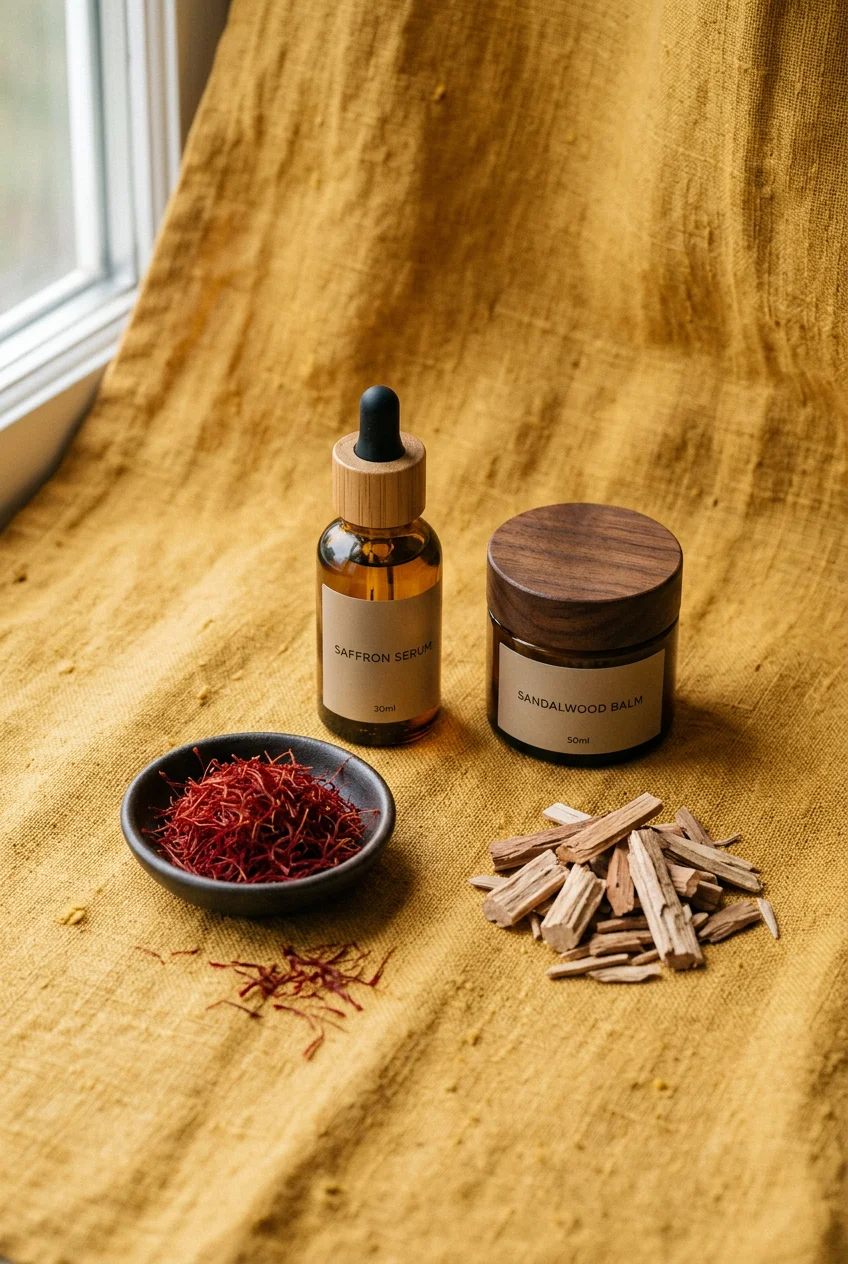
10. Upgrade Traditional Ingredients with Modern Formulas

Indian skincare has relied on turmeric, neem, and saffron for centuries. My grandmother used to mix raw turmeric powder with milk for a brightening paste. I tried doing that in my twenties. I ended up staining my fingernails, my bathroom sink, and three expensive white t-shirts yellow. The raw powder also severely irritated my cheeks. Today, you don’t have to deal with the mess. Cosmetic chemists have figured out how to extract the active compound in turmeric, called curcumin, and stabilize it in clear serums. You get the anti-inflammatory benefits without looking like a cartoon character. I also experimented with traditional oils like Nalpamaradi Thailam. I bought a bottle from Kama Ayurveda for $25 (3.4 oz). It smells strongly of earthy herbs and heavy sesame oil. I apply 1 tablespoon to my arms and legs thirty minutes before I shower. It works beautifully for body pigmentation, but it’s far too heavy and comedogenic for my face. I broke out in painful cystic acne when I tried using it as a facial night oil. Keep the heavy Ayurvedic oils for your body, and rely on modern, non-comedogenic serums for your face. This balance gives you the best results without the clogged pores. Took me years to figure out.
Building an effective routine doesn’t require fifty products or a chemistry degree. It requires consistency, patience, and a willingness to stop doing things that actively harm your skin barrier. I’ve wasted hundreds of dollars on things that didn’t work, but paring down to these specific steps finally gave me the clear texture I wanted. Stick to a gentle cleanser, a stable active ingredient, a solid ceramide moisturizer, and a strict sunscreen habit. It takes about a month for your skin cells to turn over, so don’t expect miracles in three days. Give these adjustments time to work. Pin this guide if you need a reminder of the correct order to apply your products, and skip the raw lemon juice.
Frequently Asked Questions
What is the most important step in an indian skincare routine?
Sunscreen is the most critical step. Daily application of a broad-spectrum SPF 30 or higher prevents hyperpigmentation, dark spots, and premature aging caused by UV rays and blue light.
Can I use raw turmeric and lemon on my face?
No. Raw lemon juice is highly acidic and causes chemical burns, while raw turmeric powder stains the skin and causes irritation. Use modern, formulated serums containing curcumin or stabilized Vitamin C instead.
How often should I exfoliate oily skin?
You should use a chemical exfoliant like 2% salicylic acid only once or twice a week. Over-exfoliating damages the skin barrier and causes your skin to produce excess oil to compensate.
Do I need moisturizer if I live in a humid climate?
Yes. Skipping moisturizer causes your skin to dehydrate and overproduce sebum. Use a lightweight, gel-based moisturizer with ceramides to protect your skin barrier without feeling heavy or greasy.
