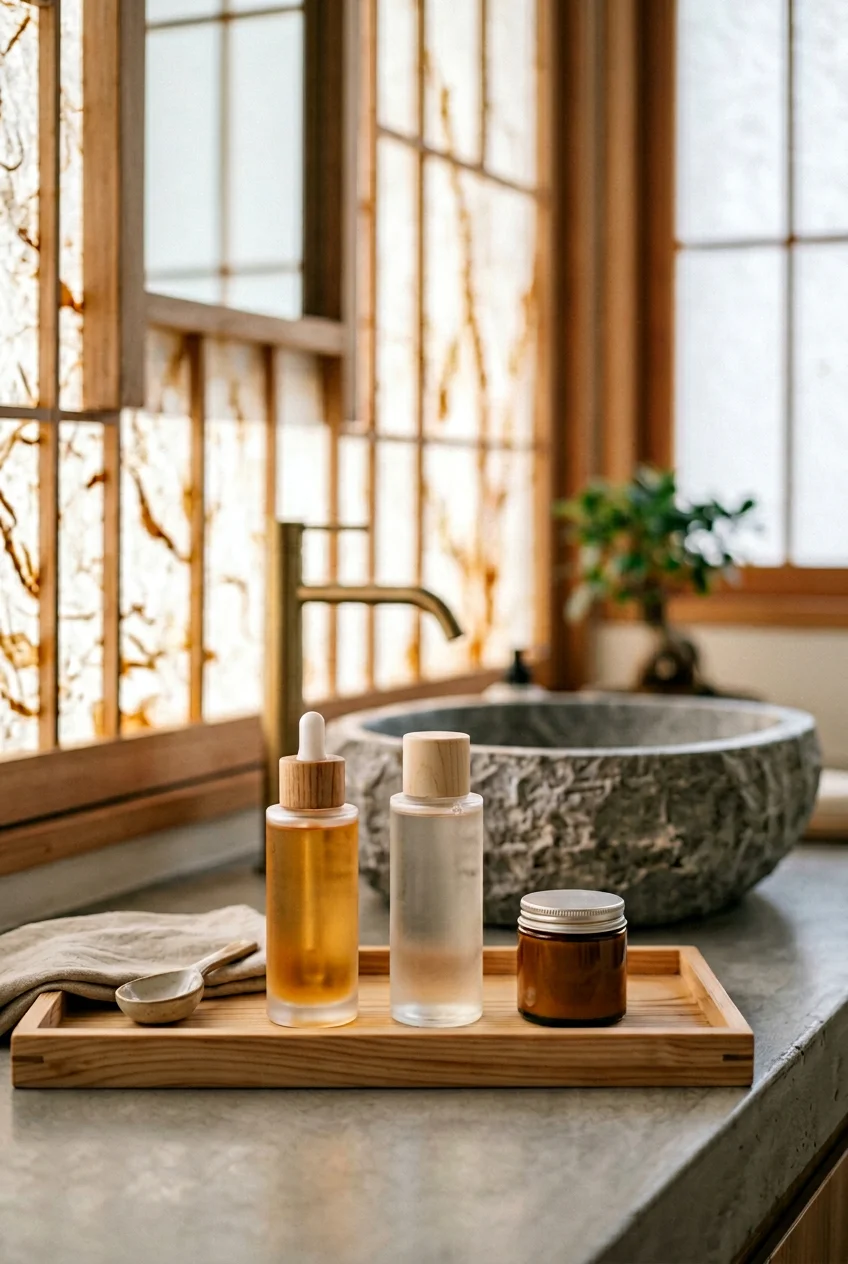
What’s Inside
- Embrace the Double Cleanse Every Evening in Your Japanese Skincare Routine
- Hydrate Deeply with a Japanese Lotion (Not an Astringent Toner)
- Master the 7-Skin Method for Maximum Barrier Repair
- Incorporate a Concentrated Essence for Targeted Treatment
- Apply Vitamin C Serum for Hyperpigmentation Defense
- Seal in Moisture with a Ceramide-Rich Facial Cream
- Apply Broad-Spectrum Sunscreen Daily Rain or Shine
- Avoid Over-Exfoliation and Opt for Gentle Enzyme Powders
- Prioritize Sustainability and Refillable Packaging Choices
- Incorporate Facial Massage for Lymphatic Drainage
Last February, I stood in the harsh fluorescent lighting of a Target bathroom, staring at my face in the mirror. My cheeks were covered in dry, flaky patches that stung when I smiled. I’d been using a 10% benzoyl peroxide wash twice a day, thinking I was clearing my pores. Instead, I’d stripped my skin barrier down to nothing. That night, I threw out four different harsh exfoliants and decided to completely rebuild my approach. I started researching the clinical mechanics of a Japanese skincare routine. It focuses heavily on gentle prevention and deep cellular hydration rather than aggressive chemical warfare. Building a proper Japanese skincare routine saved my face from chronic inflammation. It requires patience, specific liquid measurements, and highly targeted product formulations. I learned the hard way that throwing raw acids at your face just causes long-term structural damage. Your lipid barrier needs moisture to function properly. Here’s exactly how I structure my routine now, down to the exact drop counts and chemical components.
1. Embrace the Double Cleanse Every Evening in Your Japanese Skincare Routine

Let’s start with the cleansing phase. You need an oil-based cleanser to dissolve sunscreen and sebum. Water alone repels oil. I used to scrub my face with a generic foaming gel from Walmart and wonder why my waterproof mascara left dark raccoon rings under my eyes. Now, I start every single evening with exactly two pumps of DHC Deep Cleansing Oil. A 6.7 oz bottle costs $29.99. I buy the two-pack at Costco when it goes on sale. The oil has a thick, golden texture and smells faintly of crushed olives. You must apply it to completely dry skin. I massage it in small circles for exactly 60 seconds. You’ll actually feel gritty little plugs of sebum rolling out of your pores. It feels gross but physically proves the oil is working. After a minute, I wet my hands and massage my face again until the oil turns into a milky white liquid. That emulsification step is non-negotiable. If you just splash water on your face, the oil sits there and clogs your pores. After rinsing that off, I follow up with a water-based cleanser to remove the remaining residue. I use a two-dollop amount of Curél Foaming Facial Wash. A 5 oz pump bottle is $15.00 at Ulta. The foam is incredibly dense. It holds its shape in your hand like shaving cream. This two-step process leaves my skin feeling completely clean but never tight or squeaky. Squeaky skin means you’ve stripped your lipid barrier. Trust me on this.
2. Hydrate Deeply with a Japanese Lotion (Not an Astringent Toner)

Western toners are usually packed with denatured alcohol to dry out acne. Japanese lotions, called keshō-sui, do the exact opposite. They’re watery hydrators designed to pump moisture back into your cells immediately after cleansing. I bought a 5.7 oz bottle of Hada Labo Gokujyun Premium Hyaluronic Acid Lotion for $14.50 in the international aisle at Kroger last Tuesday. It contains five different molecular weights of hyaluronic acid. The texture is viscous. It feels a lot like raw egg whites slipping between your fingers. Don’t use a cotton pad for this step. Cotton pads just absorb the product and waste your money. I pour a quarter-sized puddle into my left palm. I rub my hands together and press the liquid firmly into my cheeks, forehead, and chin. The formula takes about forty seconds to fully absorb. Your face will feel slightly tacky to the touch. That tackiness means the hyaluronic acid is successfully binding to the water on your skin. I made the mistake of applying this to a bone-dry face for the first three weeks I owned it. Hyaluronic acid needs water to work. If your skin is completely dry, the acid pulls moisture out of the deeper layers of your skin instead of from the air. Always apply this to a slightly damp face. I keep a small 4 oz spray bottle of distilled water on my counter just to mist my face before this step.
3. Master the 7-Skin Method for Maximum Barrier Repair

The 7-Skin Method sounds completely excessive until you actually analyze the results. It involves applying your hydrating lotion in five to seven very thin layers instead of one thick glob. I learned about this technique from reading clinical breakdowns by aesthetician Natalia Tsujimoto. The science behind it is simple. Your skin can’t absorb a massive puddle of liquid at once. If you dump a heavy layer of serum on your face, most of it just evaporates into the air. By layering a few drops at a time, you force the hydration deeper into the stratum corneum. I use a 16.9 oz bottle of Naturie Hatomugi Skin Conditioner for this. It costs $9.99 at Target. The liquid is milky white and feels exactly like plain water. I dispense exactly three drops into my palms. I pat it in until my skin feels mostly dry. Then I repeat the process six more times. Yes, this takes about four minutes. I usually do this while I wait for my electric kettle to boil in the kitchen. I used to rush this and slap all seven layers on within sixty seconds. My face just ended up dripping wet and nothing absorbed. You have to wait for the slight tacky feeling between each layer. The result is skin that looks physically plumped up. The fine dehydration lines on my forehead completely disappear when I execute this properly. It provides significantly more hydration than a thick, heavy cream ever could. You might also like: 14 Simple Skincare Routine for Every Budget

Yeamon Gua Sha Facial Tools and Face Roller Set
Honestly, Yeamon Gua Sha Facial Tools and Face Roller Set surprised me — sturdier than it looks in the photos, and over 11 buyers gave it 4.5 stars.
4. Incorporate a Concentrated Essence for Targeted Treatment

Essences are thinner than serums but thicker than lotions. They deliver a high concentration of active ingredients right after your hydration steps. The most heavily researched option is the SK-II Facial Treatment Essence. A 2.5 oz bottle costs $99.00 at Sephora. I finally bought one after analyzing the clinical data on its main ingredient, Pitera. Pitera is a yeast fermentation extract packed with amino acids and minerals. I need to be completely honest about the sensory experience. It smells exactly like old beer mixed with saliva. The scent is genuinely unpleasant. The liquid is completely clear and feels weightless. I dispense exactly four drops into my palms and press it firmly into my skin. Despite the terrible smell, the chemical composition mimics your skin’s natural moisturizing factors perfectly. After using this daily for four months, the stubborn red post-acne marks on my chin faded by at least sixty percent. The cell turnover rate clearly accelerated. I store my bottle in a dark cabinet because light degrades the fermented ingredients rapidly. Don’t buy the massive 11 oz bottle for $290.00 unless you know you tolerate the formula. Ferment extracts trigger fungal acne in some people. I patch-tested this on my jawline for a full week before putting it all over my face. It’s an expensive mistake to make if your skin rejects yeast.
5. Apply Vitamin C Serum for Hyperpigmentation Defense

Serums tackle specific structural issues like hyperpigmentation and collagen degradation. I follow the advice of board-certified dermatologist Dr. Jenny Liu and use the Rohto Mentholatum Melano CC Vitamin C Premium Essence. A 0.67 oz tube costs $17.50 on Walmart’s website. The packaging on this product is brilliant from a chemical stability standpoint. Vitamin C degrades rapidly when exposed to oxygen and light. This serum comes in an opaque silver aluminum tube with a microscopic pinpoint dispenser. Air physically can’t get inside. The serum itself is a clear, slightly oily liquid that smells strongly of metallic oranges. I squeeze exactly three drops, which is roughly 0.15 mL, onto my fingertips. I tap it directly onto the sunspots on my cheekbones before spreading the remainder across my face. The oily texture takes a solid three minutes to sink in. If you apply your moisturizer too quickly over this, the ascorbic acid will pill up into tiny orange flakes. I stand in front of a fan to speed up the drying time. The low pH of the formula causes a mild stinging sensation for about ten seconds. That means the acid is successfully penetrating the lipid barrier. I tried a 20% L-ascorbic acid serum from a Western brand before this, and it burned my skin so badly I peeled for days. This Japanese formula uses a precise blend of ascorbic acid and ascorbyl palmitate to deliver results without the chemical burns.
6. Seal in Moisture with a Ceramide-Rich Facial Cream

All the watery layers you just applied will evaporate into the air if you don’t seal them in with an occlusive layer. This process is called preventing transepidermal water loss. I rely heavily on the Curél Intensive Moisture Facial Cream for this step. A 1.4 oz jar costs $30.00 at Ulta. The formula focuses entirely on pseudo-ceramides. Ceramides are the lipids that hold your skin cells together, like mortar between bricks. When your barrier is damaged, that mortar is physically missing. The texture of this cream is fascinating. It looks incredibly dense in the jar, like a heavy white paste. But when you scoop out a pea-sized amount, it feels whipped and airy. It melts into a thin, slippery film the second it touches the warmth of your skin. I apply it in downward strokes to avoid clogging my vellus hairs. I used to use a cheap, heavy lotion from Trader Joe’s to seal my skin at night. That just trapped sweat and caused massive cystic breakouts along my jawline. The Curél cream creates a breathable synthetic mesh over the skin. It locks in the hyaluronic acid without suffocating the pores. I go through a jar every two months. I scrape the very bottom with a tiny plastic spatula to get every last bit out because it isn’t exactly cheap for the volume you get. You might also like: 14 Clean Girl Skincare You Need to See

Gua Sha Facial Tools Face Roller and Gua Sha Set for
Honestly, Gua Sha Facial Tools Face Roller and Gua Sha Set for Puffiness and Red surprised me — sturdier than it looks in the photos, and over 11 buyers gave it 4.5 stars.
7. Apply Broad-Spectrum Sunscreen Daily Rain or Shine

Sun protection is the absolute core of a Japanese skincare routine. You can use all the expensive serums in the world, but UV rays will still destroy your collagen if you skip SPF. I use the Shiseido Anessa Perfect UV Sunscreen Skincare Milk SPF 50+ PA++++. A 2 oz bottle costs $34.00 at Mitsuwa Marketplace. This formula is a fluid suspension. You have to shake the bottle vigorously. You’ll hear a little metal ball rattling inside to mix the zinc oxide particles. The liquid is runny and smells faintly of baby powder. I use the two-finger rule for application. I draw two thick lines of sunscreen down my index and middle fingers. That equals exactly 1/4 teaspoon, which is the clinical volume required to actually get the SPF 50 protection listed on the bottle. I rub it firmly into my face, neck, and the tops of my ears. The Anessa milk dries down in sixty seconds to a completely matte, velvety finish. It contains silicone polymers that create a smooth canvas for makeup. I wore this to an outdoor wedding in July. The temperature hit ninety-five degrees. My foundation didn’t melt, and I didn’t get a single new freckle. Western sunscreens always feel like greasy spackle and leave a terrible white cast on my olive skin. This Japanese formula practically disappears into the epidermis. You might also like: 12 Skincare For Oily Skin Worth Trying
8. Avoid Over-Exfoliation and Opt for Gentle Enzyme Powders

Physical scrubs made of crushed walnut shells create microscopic lacerations in your skin barrier. Daily chemical peels lead to chronic cellular inflammation. Japanese skincare approaches exfoliation with extreme caution. The goal is to loosen dead skin cells, not rip them off forcefully. I use a chemical enzyme powder twice a week. Specifically, the Tatcha The Rice Polish Classic. A 2.1 oz jar costs $68.00 at Sephora. The price is steep, but one jar lasts me eight full months. The product is a dry, white powder made from finely ground rice bran and papaya enzymes. I pour exactly 1/2 teaspoon of the powder into my wet hands. I rub my palms together until the powder turns into a dense, creamy foam. The enzymes break down the keratin protein holding dead skin cells to your face. I massage the foam over my nose and chin for thirty seconds, then rinse with lukewarm water. My skin feels incredibly smooth afterward, but never raw or tight. I used to buy harsh apricot scrubs at Sprouts and scrub my face until it was bright red. That completely destroyed my moisture barrier. The papaya enzymes in the rice polish digest only the dead tissue on the surface. They don’t penetrate deep enough to cause chemical burns. It’s a much safer, more methodical way to manage rough texture.
9. Prioritize Sustainability and Refillable Packaging Choices

The mechanics of purchasing skincare are shifting heavily toward sustainability. You generate a massive amount of plastic waste if you buy a new plastic pump bottle every single month. I started paying attention to this after filling an entire recycling bin with empty serum bottles in under six months. Japanese brands are lightyears ahead of Western brands regarding refillable packaging. When I visited the Muji store in New York City last November, I noticed their entire skincare wall was organized around refill pouches. I use the Muji Sensitive Skin Toning Water. A standard 13.5 oz hard plastic bottle costs $14.00. But instead of buying a new bottle when I run out, I buy the 13.5 oz soft plastic refill pouch for $11.00. The pouch uses seventy percent less plastic than the rigid bottle. I just snip the corner with scissors and pour the liquid into my original bottle. Hada Labo operates on the exact same system. Their refill pouches are made of thin, flexible plastic that flattens completely when empty. This trend is expanding rapidly as we approach 2026. Brands are using biodegradable materials and ethically sourced ingredients like rice bran from local farms. Refill pouches save me money and reduce the sheer volume of hard plastic sitting in my bathroom cabinet. It’s a highly practical system.

medicube Deep Vitamin C Capsule Serum | Hydrating Vitamin C
Honestly, medicube Deep Vitamin C Capsule Serum | Hydrating Vitamin C Serum for surprised me — sturdier than it looks in the photos, and over 298 buyers gave it 4.5 stars.
10. Incorporate Facial Massage for Lymphatic Drainage

Fluid retention in the face causes physical puffiness, especially under the eyes and along the jawline. You can manually manipulate the lymphatic system to drain this excess fluid. I do a five-minute facial massage every single night as the final step of my routine. You absolutely need a slip agent for this. If you drag dry fingers across your face, you’ll stretch the skin and cause micro-tears. I use Oshima Tsubaki Camellia Oil. A 1.35 oz glass bottle costs $19.00 at Whole Foods. The oil is a pale yellow liquid with virtually no scent. It’s highly non-comedogenic, meaning it won’t clog your pores. I warm exactly three drops between my palms. I press my knuckles into the center of my forehead and drag them outward toward my temples. I repeat this motion from the sides of my nose out to my ears. Then, I drag my fingers down the sides of my neck. That downward motion on the neck is critical. The lymph nodes drain down into the collarbone. I skipped the neck drainage step for months, and the fluid just pooled at my jawline, making my face look completely square and swollen. The mechanical pressure also increases blood circulation to the surface of the skin. My face usually looks slightly flushed when I finish, but the morning puffiness is completely gone when I wake up. Took me years to figure out.
Implementing a proper routine takes time and consistency. You’re rebuilding your skin’s structural integrity, not burning off the top layer for a temporary glow. Stick to the thin hydration layers and never skip your SPF. I highly recommend starting with just the double cleanse and a good watery lotion to see exactly how your skin reacts before adding actives. Pin this guide to your skincare board so you can reference the exact product names, prices, and measurements the next time you go shopping.
Frequently Asked Questions
What is the 7-Skin Method in a Japanese skincare routine?
The 7-Skin Method involves applying a watery hydrating lotion in five to seven very thin layers. You pat a few drops into the skin, wait for it to feel tacky, and repeat. This forces hydration deeper into the stratum corneum without feeling heavy.
Do I really need to double cleanse every night?
Yes. An oil cleanser is chemically required to dissolve water-resistant sunscreen and excess sebum. A water-based cleanser follows to remove the emulsified oil residue. Skipping the oil cleanse leaves a film on your skin that clogs pores over time.
How is a Japanese lotion different from a Western toner?
Western toners often contain denatured alcohol to dry out oils and act as astringents. Japanese lotions, known as keshō-sui, are watery hydrators packed with ingredients like hyaluronic acid to pump moisture back into the skin immediately after cleansing.
Can I use physical scrubs in a Japanese skincare routine?
Japanese skincare avoids harsh physical scrubs like crushed walnut shells, which cause micro-tears. Instead, the focus is on gentle enzyme powders, like those made from rice bran and papaya, to chemically loosen dead skin cells without damaging the lipid barrier.
