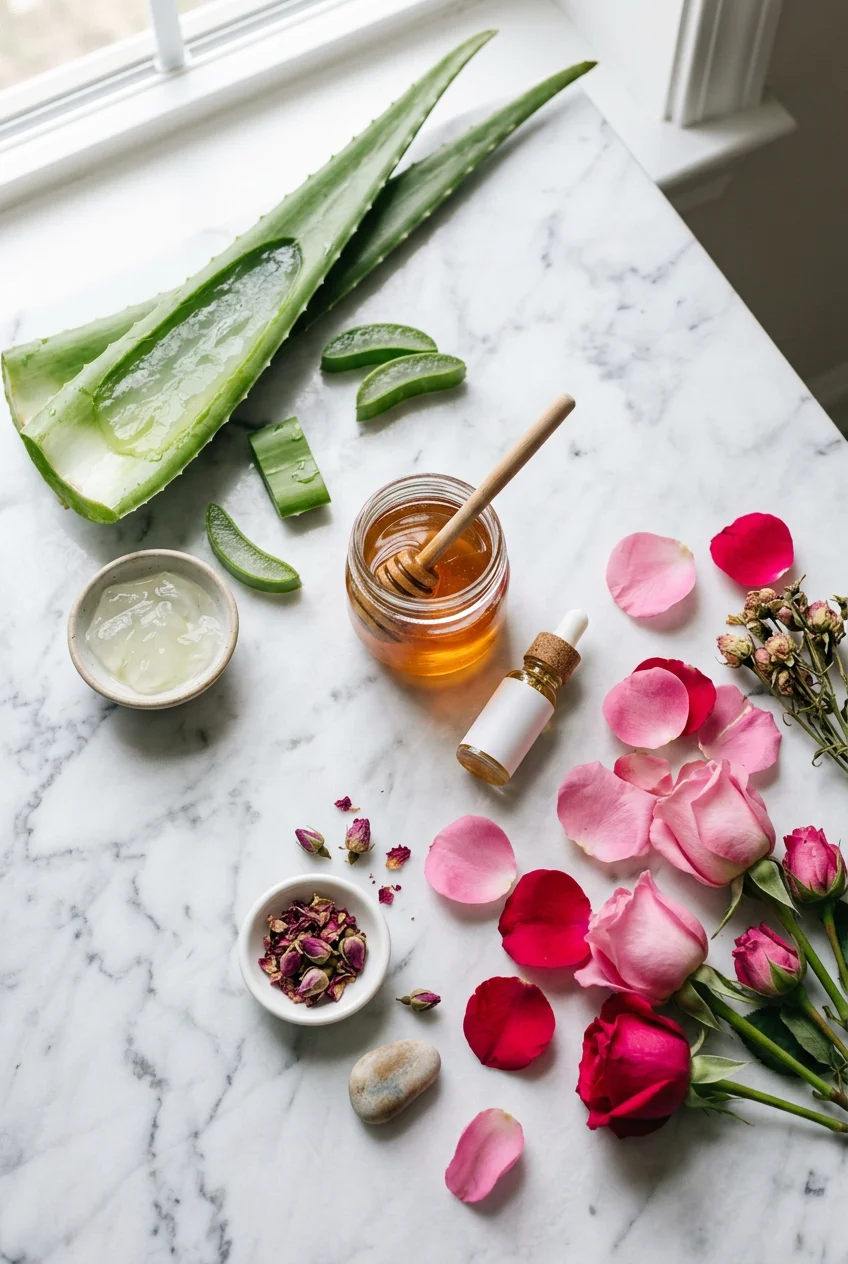
What’s Inside
- The Golden Rule for Skincare Caseiro Receitas: Sterilize Everything
- Fermented Rice Water Toner for Brightening
- Hydrating Hyaluronic Acid Serum
- Bakuchiol Serum as a Natural Retinol Alternative
- Exercise Extreme Caution with DIY Vitamin C Serums
- Soothing Matcha and Manuka Honey Mask
- Colloidal Oatmeal and Greek Yogurt Exfoliator
- Depuffing Coffee and Almond Oil Under-Eye Treatment
- Green Tea and Witch Hazel Clarifying Toner
- Aloe Vera and Glycerin Cooling Gel
- Brown Sugar and Coconut Oil Lip Polish
- Navigating Shelf Life for Skincare Caseiro Receitas
I burned my face last November trying to make a lemon juice and baking soda mask I found on Pinterest. That disaster taught me that formulating safe skincare caseiro receitas requires actual chemistry, not just raiding your fridge and hoping for the best. If you’re looking for genuine skincare caseiro receitas that won’t destroy your skin barrier, you need exact measurements, proper pH levels, and actual preservation methods. I’ve spent the last eight months testing these specific formulations to see what actually works. I tried the viral trends. I bought the raw cosmetic ingredients. I ruined a lot of expensive oils along the way. Let’s skip the generic advice and look at the exact formulas, prices, and mistakes you should avoid when making your own products at home.
1. The Golden Rule for Skincare Caseiro Receitas: Sterilize Everything

Before you mix a single drop of oil or water, you have to address hygiene. I ruined a $15 batch of bakuchiol serum last year because I just quickly rinsed a glass dropper bottle from Target with warm tap water. Three weeks later, there was a visible cloud of bacterial growth floating at the bottom. Always sterilize all tools and containers before preparing any homemade skincare recipe. This step prevents bacterial contamination and product spoilage, especially since DIY formulations typically lack commercial preservatives. You can sterilize glass items like spatulas, mixing bowls, and dropper bottles by boiling them in a large pot for 10 minutes. Use metal tongs to remove them, and let them air dry completely on a clean paper towel. If boiling isn’t an option, use a food-grade sanitizing solution like Star San. You can buy a 32 oz bottle of Star San for $16.99 on Amazon. It smells slightly acidic, but it evaporates clean. Don’t skip this step. Putting contaminated water on your face is a fast track to severe breakouts. Trust me on this.
2. Fermented Rice Water Toner for Brightening

Fermented rice water is trending, and for good reason. It provides brightening, anti-aging, and oil-controlling benefits. The fermentation process significantly increases its antioxidant content and vitamins, making it effective for reducing fine lines and evening skin tone. To prepare this, soak 1/2 cup of organic white rice in 1.5 cups of distilled water for 30 minutes. I use the Kirkland Signature Organic Jasmine Rice from Costco, which costs $17.99 for a 20-pound bag. After 30 minutes, strain the rice out and let the cloudy water sit in a glass jar at room temperature for 12 to 24 hours. You’ll know it’s fermenting when it develops a slightly sour smell, similar to a weak kombucha. Once fermented, store it in a clean spray bottle in the refrigerator. It lasts for up to one week. I spray this on my face right after cleansing. The cold temperature from the fridge feels great, and the slight acidity preps my skin for thicker serums.
3. Hydrating Hyaluronic Acid Serum

You can create a highly effective hydrating serum for pennies per ounce if you buy the raw powder. You need 1/4 teaspoon of high molecular weight hyaluronic acid powder. You can buy this online from cosmetic suppliers like MakingCosmetics for approximately $12 for a small jar, which is enough for dozens of batches. Combine the powder with 1 cup of distilled water. I buy the 365 brand distilled water at Whole Foods for $1.29 a gallon. Here is the trick that most people get wrong. You have to slowly sprinkle the powder into the water while stirring continuously. If you dump it all in at once, it forms massive, sticky clumps. I wasted half a cup of powder last Tuesday doing exactly that. Learned that the hard way. Once mixed, let the liquid sit overnight in the fridge until it transforms into a smooth, clear gel. Store this serum in a dark glass dropper bottle in the refrigerator for one to two weeks. To extend the shelf life up to three months, add 20 drops of a natural preservative like Leucidal Liquid SF. You might also like: 14 Clean Girl Skincare You Need to See

medicube No Cast Just Glow Collagen Sunscreen | SPF 50
medicube No Cast Just Glow Collagen Sunscreen | SPF 50 Broad Spectrum punches above its price — 939 buyers rated it 4.5 stars. I would buy it again.
4. Bakuchiol Serum as a Natural Retinol Alternative

For a gentler, plant-based alternative to retinol, you can formulate your own bakuchiol serum. This requires precise measuring with a digital kitchen scale. Combine 30 grams of organic rosehip seed oil, 19 grams of organic jojoba oil, 0.5 grams of 99% bakuchiol extract, and 0.5 grams of vitamin E mixed tocopherols. I use The Ordinary 100% Organic Cold-Pressed Rose Hip Seed Oil, which costs $10.90 for 30ml at Target. For the jojoba base, I use Cliganic Organic Jojoba Oil, priced at $9.99 for 4 oz at Sprouts. The bakuchiol extract usually costs around $25 for a 10ml bottle online. Mix the oils in a small glass beaker and transfer them to an amber glass dropper bottle. The amber glass protects the bakuchiol from UV light degradation. I’ve used this specific blend every night for four months. The earthy, slightly nutty smell of the rosehip oil fades quickly, and the jojoba oil absorbs into my dry skin in less than five minutes without leaving a greasy residue on my pillowcase.
5. Exercise Extreme Caution with DIY Vitamin C Serums

Homemade L-ascorbic acid serums are notoriously unstable. They rapidly lose up to 50% of their potency within a month due to oxidation. I tried making one last year and it turned orange in six days, smelling vaguely like hot dog water. If you choose to make one, you must be meticulous. Use 1/2 teaspoon of L-ascorbic acid powder (around $15 online) mixed with 2 tablespoons of distilled water. Add five drops of Vitamin E oil to enhance the stability. You must aim for a pH between 3.5 and 4.5. This requires buying cosmetic pH strips, which cost about $6 at Walmart. If the pH is too high, the serum won’t penetrate your skin. If the pH is too low, you’ll give yourself a chemical burn. Always use a dark glass bottle and store it in the refrigerator. Honestly, this is the one recipe where I usually tell people to just buy a commercial product. The hassle of measuring the pH every single week isn’t worth the savings for me. You might also like: 15 Gorgeous Aesthetic Anti Aging Skincare You Haven’t Thought Of
6. Soothing Matcha and Manuka Honey Mask

When my skin feels inflamed or red from testing too many products, I mix a simple green tea and honey mask. You need 1 teaspoon of ceremonial grade matcha powder and 1 tablespoon of Manuka honey. I use the Trader Joe’s ceremonial matcha, which costs $14.99 for a small tin. Do not use cheap culinary grade matcha for this. I tried a $4 baking matcha once, and the grit actually scratched my cheeks when I tried to wash it off. For the honey, I use Wedderspoon Raw Manuka Honey, which runs about $24.99 at Whole Foods. Mix them in a small ceramic bowl until it forms a thick, sticky green paste. Apply it to dry skin and leave it for 15 minutes. The honey clings tightly to your skin, so washing it off requires a warm, wet washcloth gently pressed against your face to melt the honey first. The matcha reduces redness visibly, while the honey acts as a natural humectant to draw moisture into the skin barrier. You might also like: 14 Foto Skincare Banyak You Need to See

medicube Deep Vitamin C Capsule Serum | Hydrating Vitamin C
Honestly, medicube Deep Vitamin C Capsule Serum | Hydrating Vitamin C Serum for surprised me — sturdier than it looks in the photos, and over 298 buyers gave it 4.5 stars.
7. Colloidal Oatmeal and Greek Yogurt Exfoliator

Before attempting any DIY recipe, accurately identify your skin type. As board-certified dermatologist Dr. Jennifer Vickers advises, tailoring recipes to individual skin requirements is key. For dry, flaky skin, physical scrubs like walnut shells cause micro-tears. Instead, use lactic acid from yogurt. Mix 2 tablespoons of plain, full-fat Greek yogurt with 1 tablespoon of colloidal oatmeal. I buy the Simple Truth Full Fat Greek Yogurt for $5.49 at Kroger. Skip the fat-free stuff. It feels like wet cardboard on your face and lacks the nourishing lipids your skin barrier needs. Stir the oatmeal powder into the yogurt until it looks like a thick paste. Apply it to your face and let the lactic acid work for 10 minutes. As you rinse it off with lukewarm water, gently massage the oatmeal in circular motions. The lactic acid dissolves dead skin cells chemically, while the soft oatmeal provides an incredibly mild physical exfoliation. My skin always feels plump and cold to the touch after using this.
8. Depuffing Coffee and Almond Oil Under-Eye Treatment

Caffeine constricts blood vessels, which helps reduce under-eye swelling temporarily. To make a coffee-infused oil, combine 1 tablespoon of finely ground coffee with 2 tablespoons of sweet almond oil. I use Folgers classic roast ($5.99 at Target) and Heritage Store Sweet Almond Oil ($7.99 at Walmart). Put the mixture in a small glass jar and let it sit in a dark cabinet for one week, shaking it daily. After a week, you must strain it. This is where I made a huge mistake on my first attempt. I used a regular wire mesh kitchen strainer. Tiny coffee grounds slipped through, and when I applied the oil, a sharp grain of coffee got stuck right in the corner of my eye. It hurt for hours. You must strain the oil through a fine cheesecloth or a paper coffee filter to ensure zero grit remains. Store the strained, coffee-scented oil in a small rollerball bottle. I swipe this under my eyes at 6 AM, and the rollerball provides a nice cooling pressure.
9. Green Tea and Witch Hazel Clarifying Toner

If you have oily skin that overproduces sebum by noon, this astringent toner helps control the shine. Steep one organic green tea bag in 1/2 cup of boiling water for 15 minutes. Remove the tea bag and let the liquid cool completely to room temperature. Once cool, add 2 tablespoons of alcohol-free witch hazel. I strictly use Thayers Unscented Witch Hazel, which costs $10.95 at Target. Never use the cheap drugstore witch hazel that contains 14% rubbing alcohol. The alcohol strips your skin entirely, causing your pores to panic and pump out even more oil to compensate. Pour the mixture into a spray bottle and keep it in the fridge. The tannins in the green tea act as a mild astringent, temporarily tightening the look of pores. I spray this onto a cotton pad and wipe it across my T-zone after cleansing. It picks up any leftover makeup the cleanser missed, and the cold liquid feels incredibly refreshing on hot summer mornings.
Clear Stackable Makeup Organizer with Drawer
If you want something that just works, Clear Stackable Makeup Organizer with Drawer is a safe bet (310 reviews, 4.5 stars).
10. Aloe Vera and Glycerin Cooling Gel

After a day in the sun, a basic aloe gel needs a hydration boost to actually repair the skin. Mix 2 tablespoons of pure aloe vera gel with 1/2 teaspoon of vegetable glycerin. I buy Lily of the Desert Aloe Vera Gel for $9.99 at Sprouts, and NOW Solutions Vegetable Glycerin for $6.50 at Whole Foods. You have to be extremely precise with the glycerin measurement. Glycerin is a powerful humectant, meaning it pulls water into the skin. If you use too much, your skin will feel like it’s coated in sticky syrup all day. I accidentally used a full tablespoon of glycerin once, and my hair kept sticking to my cheeks for hours. No exaggeration. When mixed correctly, the aloe provides immediate soothing relief, while the glycerin prevents the aloe from drying down into that tight, crusty film that pure aloe sometimes leaves behind. Keep this small jar in the refrigerator door. The chilled gel instantly drops the temperature of angry, red skin.
11. Brown Sugar and Coconut Oil Lip Polish

Lip skin is incredibly thin and lacks oil glands, which is why lips crack so easily in dry weather. A simple polish removes the dead flakes so your lip balm can actually penetrate. Mix 1 tablespoon of dark brown sugar with 1/2 tablespoon of unrefined coconut oil. I use C&H Dark Brown Sugar ($3.19 at Walmart) and Trader Joe’s Organic Virgin Coconut Oil ($6.99). Dark brown sugar contains more molasses than white sugar, making it softer and less abrasive. Mix it in a small tin until it looks like wet sand. I made a batch of this in July and left it on my bathroom counter. The coconut oil melted completely in the summer heat, and the sugar sank to a rock-hard layer at the bottom. Always store this scrub in the refrigerator if your house gets above 75 degrees. Take a pea-sized amount, rub it over your lips for thirty seconds, and wipe it off with a damp towel. It tastes slightly sweet and leaves a thin layer of protective oil behind.
12. Navigating Shelf Life for Skincare Caseiro Receitas

The biggest danger of making your own products is ignoring the shelf life. Commercial products contain preservative systems that allow them to sit in a hot warehouse for two years. Your homemade products don’t. Any recipe that contains water, aloe, tea, or milk is a breeding ground for mold and bacteria. If you don’t use a broad-spectrum preservative like Leucidal Liquid SF, your water-based creations must live in the refrigerator and be thrown away after seven days. No exceptions. I once found a fuzzy green patch of mold inside a jar of homemade oat lotion I left on my nightstand for two weeks. Oil-only products, like the bakuchiol serum or the coffee eye oil, don’t need preservatives because bacteria require water to grow. However, oils can go rancid. Adding a few drops of Vitamin E oil delays oxidation, but you should still smell your oil-based products before every use. If they start smelling like old crayons or used cooking oil, throw them in the trash immediately.
Creating your own formulas requires patience, sterile tools, and a willingness to measure ingredients properly. Start with the hydrating hyaluronic acid serum or the simple brown sugar lip polish before attempting the pH-sensitive vitamin C formulas. Save this article or pin it to your skincare board so you can reference the exact measurements and shelf-life rules next time you’re ready to mix a new batch.

Clear Acrylic Makeup Organizers for Vanity,Countertop
Clear Acrylic Makeup Organizers for Vanity has been one of the most consistently praised picks in this category. 208 reviewers averaged 4.5/5.
Frequently Asked Questions
How long do skincare caseiro receitas last?
Water-based homemade skincare products without preservatives last a maximum of seven days in the refrigerator. Oil-only products can last up to six months, provided you store them in dark glass away from direct heat and sunlight.
Do I need to sterilize jars for homemade skincare?
Yes. You must boil glass jars and dropper bottles for 10 minutes or use a food-grade sanitizer. Since DIY formulas lack commercial preservatives, any bacteria left in the container will rapidly multiply and ruin the product.
Can I use tap water in DIY skincare serums?
No. Always use distilled water. Tap water contains minerals, chlorine, and trace bacteria that can interfere with the chemical stability of your ingredients and cause rapid spoilage in homemade formulations.
Why did my homemade Vitamin C serum turn orange?
An orange or brown color indicates the L-ascorbic acid has oxidized and degraded. Once it turns color and smells slightly metallic, it is no longer effective and can actually cause free radical damage to your skin.
