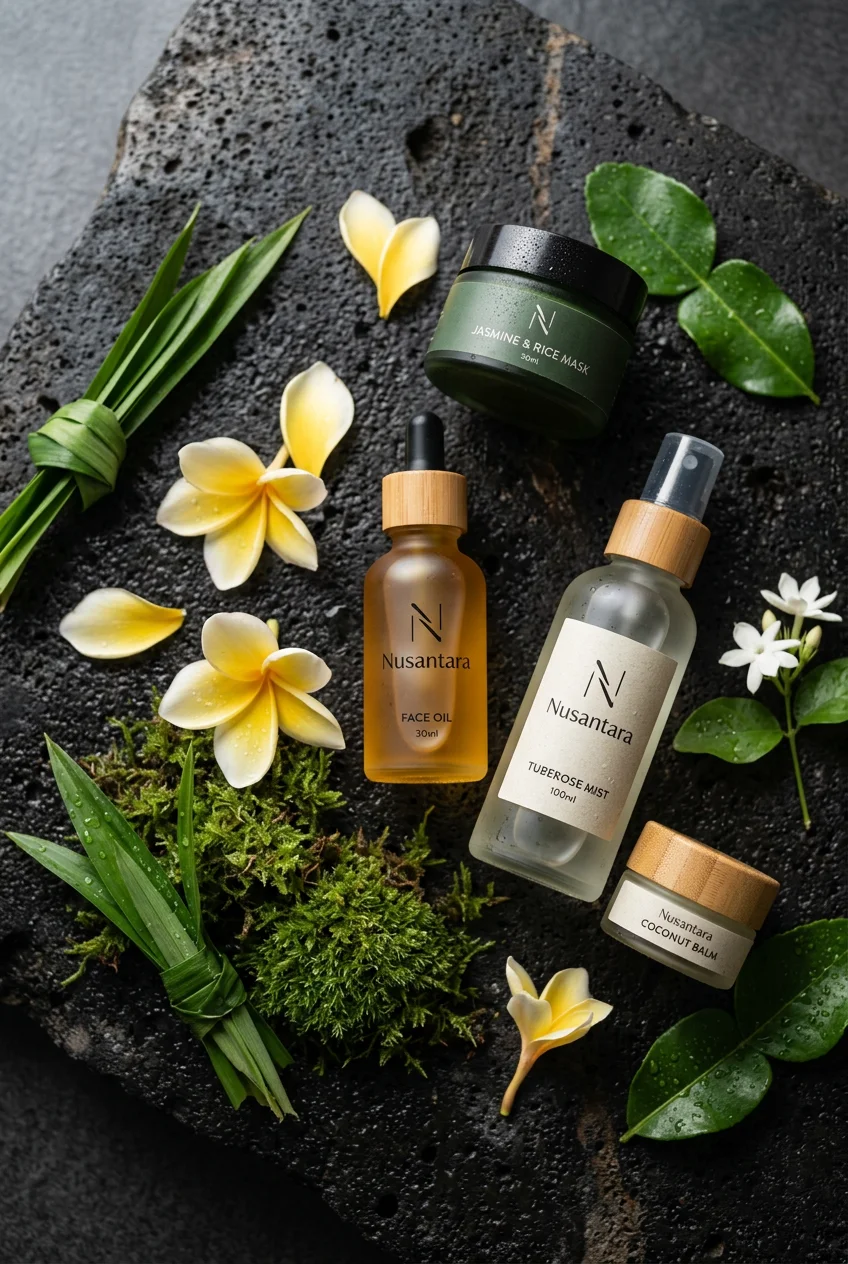
What’s Inside
- Double Cleanse Diligently, Especially in Humid Climates
- Opt for pH-Balanced, Gentle Cleansers
- Don’t Skip Toner – Hydrating, Not Stripping
- Incorporate Niacinamide for Multiple Benefits
- Prioritize Ceramide-Rich Moisturizers for Barrier Repair
- Sunscreen is Non-Negotiable: SPF 30+ PA+++ Daily
- Embrace Climate-Adaptive Skincare
- Integrate Traditional Indonesian Ingredients
- Avoid Over-Exfoliation – Less is More in the Tropics
- Listen to Your Skin: Adjust Routine Seasonally
- Don’t Forget the Neck-tensions
- Skinimalism and Dermocosmetic 2.0
- Apply Products from Thinnest to Thickest
Last July, I stood in a humid Jakarta hotel room peeling a literal sheet of sweat, melted foundation, and cystic acne off my face. That disaster forced me to overhaul my approach and build a proper skincare routine, Indonesia style. Before that trip, I’d naively packed my usual heavy creams from Whole Foods, thinking my dry skin needed the same thick layers in a tropical climate. I was wrong. The 90 percent humidity mixed with vehicle exhaust created a sticky film on my skin that my gentle cream cleanser couldn’t touch. My pores clogged within 48 hours. I spent the next week dealing with painful breakouts along my jawline. Learned that the hard way.
I realized that a tropical climate demands a different chemical approach to barrier maintenance. You can’t just apply fewer products. You need stuff formulated for high heat, intense UV exposure, and heavy pollution. I spent the next six months testing local formulations and tweaking my application methods. Some products pilled under makeup. Others melted into my eyes and stung for hours. But through trial and error, I figured out what works. Here are the steps, measurements, and products I use to maintain clear skin in one of the most demanding climates on earth.
1. Double Cleanse Diligently, Especially in Humid Climates

I start my evening routine with an oil-based cleanser or micellar water to break down sunscreen and daily grime. This is non-negotiable in Indonesia, where sweat and pollution bind together to clog pores fast. Before I shifted my routine, I used a basic $5.99 foaming wash from Target. That was a mistake. A water-based cleanser alone won’t dissolve sebum or water-resistant UV filters. I’d wipe my face with a toner pad afterward and still see gray dirt.
Now, I buy the Wardah Lightening Oil-Infused Micellar Water. It costs between Rp 20,500 and Rp 40,840 for a 100ml bottle. I pour exactly one tablespoon onto a textured cotton round and press it against my skin for five seconds before wiping. The oil phase breaks down my waterproof mascara, while the micellar water lifts the microscopic pollution. The bottle design is annoying because the dispensing hole is too large, meaning you waste product if you aren’t careful. But the formula doesn’t leave a greasy residue, which matters when your face already feels sticky from the climate.
2. Opt for pH-Balanced, Gentle Cleansers

After removing the heavy debris, I follow up with a water-based cleanser. The crucial detail is the pH level. You want a cleanser that sits between 4.5 and 5.5. I once grabbed a $6.48 generic acne scrub from Walmart, thinking the salicylic acid would prevent breakouts. It had a high pH and stripped my skin’s lipid barrier. My face felt tight and squeaky clean for ten minutes, followed by a massive overproduction of oil as my skin panicked to compensate.
In a tropical climate, you sweat so much that your instinct is to scrub your face with harsh foams. Don’t do this. A gentle, pH-balanced cleanser maintains your acid mantle, which is your primary defense against bacterial acne. I dispense a dime-sized amount into wet hands, rub them together until a light lather forms, and massage it into my skin for exactly sixty seconds. This gives the surfactants enough time to bind to the remaining dirt without compromising my skin barrier. I rinse with lukewarm water, never hot, to prevent broken capillaries.
3. Don’t Skip Toner – Hydrating, Not Stripping

When refining my skincare routine, I realized western astringent toners are terrible for tropical weather. Applying alcohol-based toners in high heat causes rapid evaporation, which pulls water out of your deeper skin layers. Instead, I use a hydrating toner to balance my skin’s pH and prep it for serums. I buy the Hada Labo Gokujyun Ultimate Moisturizing Lotion. It acts much more like a viscous essence than a traditional watery toner.
It costs around Rp 14,600 to Rp 77,900 for a 100ml bottle. I pour a quarter-sized pool into my left palm, dip my right fingers in, and gently pat it across my face and neck. I don’t use cotton pads for this because they absorb too much of the thick liquid. The formula contains multiple molecular weights of hyaluronic acid. The larger molecules sit on the surface to draw moisture from the humid air, while the smaller molecules penetrate deeper. My only complaint is the flip-cap lid, which gets crusty after a few weeks. I wipe it down with a tissue every Sunday to keep it sanitary.

Yeamon Gua Sha Facial Tools and Face Roller Set
A dependable everyday pick — Yeamon Gua Sha Facial Tools and Face Roller Set pulls in 11 ratings at 4.5 stars. Not flashy, just solid.
4. Incorporate Niacinamide for Multiple Benefits

Niacinamide, or Vitamin B3, is the most stable active ingredient you can use near the equator. I used to buy a $19.99 natural vitamin C serum at Sprouts, but the heat and humidity caused it to oxidize and turn orange before I even finished half the bottle. Niacinamide doesn’t degrade easily in warm environments. It brightens skin tone, controls oil, minimizes pores, and reduces heat-induced inflammation.
I use the Somethinc Niacinamide + Moisture Beet Serum, which runs about Rp 89,000 to Rp 120,000. I dispense exactly a pea-sized amount onto my fingertips. If you use more, it creates a sticky film that pills under sunscreen. I tap it onto my T-zone and cheeks where my pores are largest. Niacinamide works by inhibiting the transfer of melanosomes, which prevents hyperpigmentation from forming after sun exposure. I’ve used this for over a year now. The beet extract adds a slight earthy smell that fades after ten seconds, but the sebum control lasts for a solid eight hours. You might also like: 15 Lovely Tips Korean Skincare That Changed Everything
5. Prioritize Ceramide-Rich Moisturizers for Barrier Repair

Environmental stressors in Indonesia, like moving from 18-degree air-conditioned malls to 32-degree humid streets, wreak havoc on your skin. Ceramides are lipids that act like mortar between your skin cells. Without them, moisture escapes and irritants enter. I previously bought a 16 oz tub of heavy cream at Costco for $14.99. I applied it in Bali, stepped outside, and immediately sweat the entire layer off. It felt like wearing a wet wool blanket on my face. You might also like: 14 Glass Skin Routine for Every Budget
I switched to local brand Skintific, which formulates their ceramide barrier repair moisturizers for this climate. They use a lightweight gel-water texture that absorbs instantly. I apply a nickel to quarter-sized dollop for my entire face. The formula contains five types of ceramides. It doesn’t sit on the surface waiting to melt off. The blue plastic jar feels a bit cheap, and I’d prefer a pump for hygiene, but the performance justifies the packaging. My skin stays hydrated without looking like an oil slick by noon. Trust me on this. You might also like: 15 Brilliant Aesthetic Instagram Night Routine Skincare That Actually Work
6. Sunscreen is Non-Negotiable: SPF 30+ PA+++ Daily

In Indonesia’s intense sun, where the UV index frequently hits 11 or higher, a broad-spectrum sunscreen with at least SPF 30 and PA+++ is mandatory. The PA rating indicates protection against UVA rays, which penetrate glass and cause deep cellular aging. I measure out exactly 1/2 teaspoon for my face and neck. I tried a $8.99 sport sunblock from Kroger once. It left a chalky white cast and smelled aggressively like artificial coconuts.
Now, I alternate between two specific products. The Azarine Hydrasoothe Sunscreen Gel SPF45 PA++++ ranges from Rp 30,999 to Rp 125,000. It has a lightweight, non-greasy gel texture that feels cooling on contact. My other staple is the Biore UV Aqua Rich Watery Essence SPF50+ PA++++, priced between Rp 25,000 and Rp 248,000. The Biore version contains a high amount of denatured alcohol. This makes it dry down to a beautiful matte finish, but if you apply it too close to your eyes and then sweat, it will sting. I keep the Biore for my cheeks and forehead, and use the alcohol-free Azarine around my eyes.

Clear Acrylic Makeup Organizers for Vanity,Countertop
Clear Acrylic Makeup Organizers for Vanity punches above its price — 208 buyers rated it 4.5 stars. I would buy it again.
7. Embrace Climate-Adaptive Skincare

A major trend for 2026 is climate-adaptive skincare. This means products are engineered to remain stable across wildly fluctuating environmental conditions. When you walk around Jakarta, you deal with intense UV exposure, high humidity, and severe air pollution. Your skincare needs to fight oxidative stress.
Climate-adaptive products utilize micro-encapsulation technology. This prevents the active ingredients from degrading when exposed to heat. I look for moisturizers and serums that explicitly mention pollution defense or antioxidant complexes. The goal isn’t just to moisturize, but to create a shield against particulate matter. If your skin feels gritty at the end of the day, your barrier is failing to repel pollutants. I’ve noticed that products formulated in colder climates simply melt and separate in the bottle here. Buying local ensures the emulsion remains stable, so you get the active ingredients you paid for.
8. Integrate Traditional Indonesian Ingredients

Beyond modern lab formulations, I incorporate traditional local ingredients. Indonesian beauty heritage relies on botanicals that thrive in this climate. Turmeric, known locally as kunyit, contains potent anti-inflammatory and brightening properties. Sandalwood, or cendana, provides a natural soothing effect for heat rashes. Rice extract, or beras, offers gentle enzymatic exfoliation and subtle brightening.
I frequently buy masks and toners from heritage brands like Sariayu and Mustika Ratu. They cost a fraction of imported brands and use these raw materials effectively. I mix a tablespoon of dry traditional rice powder with a few drops of water to create a paste. I leave it on my skin for ten minutes before rinsing. The smell of real sandalwood is intensely earthy and woody, different from the synthetic fragrances used in western drugstore products. One warning: real turmeric will temporarily stain your skin and permanently stain your white towels yellow. I only use turmeric-based products at night and sleep on a dark pillowcase.
9. Avoid Over-Exfoliation – Less is More in the Tropics

While removing dead skin cells is important, over-exfoliating in a hot, humid environment destroys your skin barrier fast. I learned this the hard way. I used a $5.99 blueberry physical scrub from Trader Joe’s three days in a row while living in a coastal town. The physical friction caused micro-tears. When I walked outside, the salty, humid air hit my compromised skin and burned.
I now limit all chemical exfoliants, like AHAs and BHAs, to two or three times a week. I use a dime-sized amount of a 2% BHA liquid on a cotton pad and sweep it only over my nose and chin where I get blackheads. I don’t touch my cheeks with it. In a tropical climate, your skin is already dealing with heat-induced vasodilation and UV stress. Adding daily acid exfoliation to that mix triggers severe contact dermatitis. If your skin looks shiny but feels tight, you’ve over-exfoliated. Stop all actives immediately and return to plain moisturizer for two weeks.

EQQUALBERRY Vitamin Illuminating Serum | Niacinamide 4% +
If you want something that just works, EQQUALBERRY Vitamin Illuminating Serum | Niacinamide 4% + Brightening is a safe bet (112 reviews, 4.5 stars).
10. Listen to Your Skin: Adjust Routine Seasonally

Even within a consistently tropical climate, your skin’s needs change based on micro-seasons and daily activities. A rigid skincare routine doesn’t work if you ignore environmental context. During the rainy season, the humidity spikes, and my skin feels saturated before I even apply a product. On those days, I skip my heavy ceramide cream and use my hydrating toner as my sole moisturizer under my sunscreen.
Conversely, if I’m taking a flight or spending ten hours in a heavily air-conditioned office, my skin dries out rapidly. I adjust my product usage dynamically. I assess my skin every morning after splashing it with water. If it feels tight, I add an extra layer of the Hada Labo lotion. If it feels oily, I skip the serum and go straight to a matte sunscreen. Sticking stubbornly to a seven-step routine just because a blog told you to will lead to product buildup and closed comedones. You have to treat your routine like a buffet, selecting only what your skin requires that specific morning.
11. Don’t Forget the Neck-tensions

Most people stop their skincare routine abruptly at their jawline. I did this for years until I noticed the skin on my neck looking duller and more textured than my face. The skin on your neck and décolletage is thin, has fewer sebaceous glands, and is constantly exposed to the same UV rays and pollution as your face. This area is highly prone to showing early signs of aging, often called tech-neck from looking down at phones.
I now extend every product down to my collarbones. I apply an extra quarter-sized amount of toner, a second pea-sized drop of niacinamide, and a full extra 1/2 teaspoon of sunscreen for my neck and chest. Sunscreen is the most critical step here. The collarbone area catches direct overhead sunlight. Failing to protect it results in deep hyperpigmentation spots that are nearly impossible to reverse with over-the-counter products. It means I go through my products about thirty percent faster, but the structural integrity of my neck skin has improved dramatically.
12. Skinimalism and Dermocosmetic 2.0

The beauty industry in 2026 is shifting toward skinimalism and dermocosmetics. Consumers are exhausted by arbitrary ten-step routines that cost hundreds of dollars and cause product pilling. Instead, the focus is on clinical-level performance using multifunctional products. I look for formulations backed by scientific validation, containing peptide complexes, advanced antioxidants, and glutathione.
This minimalist approach reduces the risk of contact dermatitis, which spikes when you layer too many preservatives and emulsifiers. I prefer a single, highly effective serum that combines niacinamide, zinc, and a peptide complex over applying three separate single-ingredient dropper bottles. It saves time, money, and sits better on the skin in high humidity. Layering six different sticky serums creates a thermal trap on your face, causing you to sweat more underneath the products. By condensing my routine to three or four high-performance products, my skin breathes better and my makeup stays attached to my face.
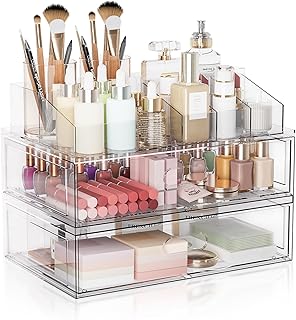
Clear Stackable Makeup Organizer with Drawer
Clear Stackable Makeup Organizer with Drawer has been one of the most consistently praised picks in this category. 310 reviewers averaged 4.5/5.
13. Apply Products from Thinnest to Thickest

The physical mechanics of how you apply products matter just as much as what you apply. I follow the rule of layering from thinnest to thickest consistency. I start with watery toners, move to viscous serums, follow with gel lotions, and finish with creams or sunscreens. If you apply a thick ceramide cream first, it creates an occlusive barrier. Any watery serum applied afterward will just pool on top of that barrier and evaporate into the air.
Beyond the order of operations, a growing 2026 trend is neuro beauty, which links tactile skincare application to mental well-being. I force myself to wait exactly 30 to 60 seconds between each layer. I use this time to mindfully press the product into my skin rather than frantically rubbing it in. Rubbing causes friction and micro-exfoliation, which leads to product pilling. Cupping my hands and firmly pressing the toner and serum into my cheeks ensures proper absorption. It turns a rushed chore into a calming daily ritual that lowers my cortisol levels before I face the Jakarta traffic. Took me years to figure out.
Building this routine took time, money, and a lot of frustrating breakouts, but standardizing these steps transformed my skin texture. If you’re struggling with the tropical heat melting your products, I recommend stripping your routine back to these basics, starting with a solid double cleanse and a reliable gel sunscreen. Pin this guide for the next time you’re packing your toiletry bag for a humid climate.
Frequently Asked Questions
Why is a step skincare routine indonesia style different from western routines?
Western routines often rely on heavy, occlusive creams and strong chemical exfoliants suited for dry, cold climates. An Indonesian routine focuses on lightweight hydration, rigorous double cleansing to remove pollution, and stable antioxidants that won’t degrade in high heat and humidity.
Can I skip moisturizer in a humid climate?
No, you shouldn’t skip moisturizer. High heat and indoor air conditioning can dehydrate your skin, causing it to overproduce oil. Instead of heavy creams, switch to a lightweight, gel-based moisturizer containing ceramides to repair your barrier without feeling greasy.
How much sunscreen do I actually need for my face?
You need exactly 1/2 teaspoon, or roughly two thick finger-lengths of product, to cover your face and neck adequately. Applying less than this drastically reduces the SPF protection listed on the bottle, leaving you vulnerable to intense equatorial UV rays.
What are the best local Indonesian skincare ingredients?
Traditional Indonesian botanicals are excellent for the climate. Look for turmeric (kunyit) for its anti-inflammatory properties, sandalwood (cendana) to soothe heat rashes, and rice extract (beras) for gentle, non-irritating exfoliation and skin brightening.
