What’s Inside
- Start With A Gentle Morning Cleanse (Or Just Water)
- Apply Vitamin C Serum For Antioxidant Defense
- Lock It In With A Lightweight Moisturizer
- Never Skip Broad-Spectrum SPF 30+
- Incorporate A Two-Minute Facial Massage
- Double Cleanse Away The Day
- Target Texture With A Retinoid
- Add A Peptide Serum To Your Day And Night Skincare Routine
- Pat On A Hydrating Eye Cream
- Seal Everything With A Rich Night Cream
- Common Mistake: Skipping Nighttime Moisturizer
- Adopt A Barrier-First Approach
- Change Your Pillowcase Weekly
- Stop Over-Exfoliating Your Face
- Control Your Water Temperature For Your Day And Night Skincare Routine
Last Tuesday at Whole Foods, I caught my reflection in the bulk bin glass and gasped. My face looked like a dull, flaky pastry. It was time to overhaul my skincare routine. I’ve spent years digging into ingredients, but I still mess up. You’d think a researcher would have perfect skin, but my barrier was wrecked from testing too many harsh acids. I needed to strip things back. In 2026, the focus has moved away from aggressive treatments. We’re looking at a skin-first approach that prioritizes barrier support. If your face feels tight, red, or looks like an oil slick by noon, you’re doing too much. I’ll walk you through what dermatologists actually recommend. No fluff. Just the products, measurements, and embarrassing mistakes I’ve made so you don’t have to repeat them. Let’s fix that skin.
1. Start With A Gentle Morning Cleanse (Or Just Water)

In the morning, your goal is just removing overnight buildup. If your skin isn’t oily, rinsing with lukewarm water is fine. It keeps you from stripping your skin’s natural oils. I scrubbed my face every morning for years, and it just made my cheeks chronically red. Learned that the hard way. Now, I grab the CeraVe Hydrating Facial Cleanser (16 oz, $15.49) during my weekly Target run. It’s an amino acid-based gel that feels slippery and doesn’t foam. I use 1 pump in my wet palms. The texture is like a thick, non-lathering lotion. That confused me at first. I thought it wasn’t working because there were no bubbles. But it’s saving my skin barrier. I massage it in for thirty seconds, then rinse. My face feels plump, not tight. If your cleanser makes your face feel squeaky clean, throw it away. Squeaky means stripped. You want your skin to feel like a hydrated sponge, ready for the next steps.
2. Apply Vitamin C Serum For Antioxidant Defense

Vitamin C is a powerful antioxidant that protects against environmental stressors and brightens your skin. Dermatologists recommend using 2-3 drops for your face and neck. I apply it to clean, damp skin before my moisturizer. Look for stabilized L-ascorbic acid formulas, ideally mixed with vitamin E and ferulic acid. For the high-end stuff, dermatologists swear by SkinCeuticals C E Ferulic (1 oz, $169). I tried a sample once. It smells like hot dog water, but it works. For a budget option, I grabbed the Mad Hippie Vitamin C Serum (1.02 oz, $19.99) at Sprouts last month. It smells earthy and absorbs fast. I once made the mistake of applying a full dropper of a cheap serum and not letting it dry. It permanently stained my white collar bright orange. Don’t do that. Stick to 3 drops maximum. Pat it gently into your skin and give it a minute to sink in.
3. Lock It In With A Lightweight Moisturizer

Even oily skin needs hydration. I can’t stress this enough. If you skip moisturizer, your skin overcompensates by pumping out more oil. Choose an oil-free, non-comedogenic moisturizing gel or a rich cream with ceramides. I usually grab the Neutrogena Hydro Boost Water Gel (1.7 oz, $19.99) at Walmart. I scoop out 1/4 teaspoon. It has a bouncy, blue gel texture that feels like a cool drink of water. It absorbs instantly without sticky residue. Another amazing option is Stratia Lipid Gold (2 oz, $27). It’s packed with ceramides, fatty acids, and cholesterol to support your barrier. It’s bright yellow and smells like plain yogurt. I used to use heavy creams during the day, and my makeup would slide off by 2 PM. Switching to a lightweight gel stopped the midday grease. Gently smooth it over your face and neck.

Yeamon Gua Sha Facial Tools and Face Roller Set
A dependable everyday pick — Yeamon Gua Sha Facial Tools and Face Roller Set pulls in 1 ratings at 4.5 stars. Not flashy, just solid.
4. Never Skip Broad-Spectrum SPF 30+

This is the most crucial anti-aging step. You need a broad-spectrum SPF 30 or higher daily, even indoors. The recommended amount is a nickel-sized dollop (about 1/4 teaspoon) for your face and neck. Most people use too little. I use EltaMD UV Clear Broad-Spectrum SPF 46 (1.7 oz, $41). It’s a favorite among dermatologists because it doesn’t cause breakouts. It feels like a standard lotion. If you prefer a clear finish, Supergoop! Unseen Sunscreen SPF 40 (1.7 oz, $38) feels like a velvety primer. I learned my lesson about sunscreen the hard way. Last summer, I sat in the shade at brunch and thought I’d be fine without SPF. I ended up with a peeling, bright red nose that took a week to heal. No exaggeration. Now, I never skip it. Look for formulas that also protect against blue light and pollution. Apply it last.
5. Incorporate A Two-Minute Facial Massage

While applying your moisturizer or serum, take two minutes to gently massage your face. This improves circulation and reduces morning puffiness. I like to use 3 drops of Trader Joe’s 100% Jojoba Oil (4 oz, $7.99) if I’m doing a longer massage on a Sunday. The oil provides enough slip so I’m not dragging my skin. I use my knuckles to sweep upward along my jawline and under my cheekbones. It’s incredibly relaxing. I definitely messed this up when I first started. I was pressing way too hard, dragging my skin down, and I gave myself a massive breakout on my chin from the friction. You have to be gentle. Think of it as moving fluid, not deep tissue work. If your skin gets bright red, you’re pressing too hard. Light, upward strokes are all you need. You might also like: 15 Creative Aesthetic Rhode Skincare to Transform Your Space
6. Double Cleanse Away The Day

Cleansing at night is essential to remove dirt, oil, and makeup. You need a clean slate. I start with an oil or balm-based cleanser. I use the Banila Co Clean It Zero Cleansing Balm (3.38 oz, $19.00). I scoop out 1 almond-sized amount. It starts as a waxy balm but melts into a silky oil on warm skin. It smells faintly of berries. I massage it over my dry face for sixty seconds to dissolve my mascara and sunscreen. Then, I rinse and follow up with a water-based cleanser like the La Roche-Posay Toleriane Purifying Foaming Cleanser (13.52 oz, $16.99). One mistake I made was opening my eyes while rinsing the balm. It leaves a blurry, milky film over your eyeballs that lasts for ten minutes. Keep your eyes shut until every drop is rinsed off. Double cleansing ensures your pores aren’t clogged overnight. You might also like: 20 Lovely Aesthetic Night Routine Skincare for a Fresh New Look

EQQUALBERRY Vitamin Illuminating Serum | Niacinamide 4% +
Honestly, EQQUALBERRY Vitamin Illuminating Serum | Niacinamide 4% + Brightening surprised me — sturdier than it looks in the photos, and over 101 buyers gave it 4.5 stars.
7. Target Texture With A Retinoid

Retinoids are the gold standard for anti-aging. They promote cell turnover. If you’re a beginner, start with a low concentration, like the Medik8 Crystal Retinal 1 Serum (1 oz, $53). It has 0.01% retinaldehyde. I apply a pea-sized amount 2-3 times a week. It’s a yellow cream that smells clinical. If you’re on a budget, The Ordinary Retinol 0.5% in Squalane (1 oz, $9.00) is affordable and feels like a light oil. I burned my face off my first time using retinol. I thought more was better, so I slathered a huge glob on every night. By day four, my chin was peeling in sheets, and it burned to smile. Trust me. Gradually increase frequency as your skin builds tolerance. Apply it to dry skin after cleansing. If your skin is damp, the retinoid pulls in too fast and causes irritation. You might also like: 15 Creative Photography Skincare Products Ideas That Make a Real Difference
8. Add A Peptide Serum To Your Day And Night Skincare Routine

Peptides signal your skin to produce more collagen and elastin. They improve texture, hydration, and resilience. I love using them to plump up fine lines. The Ordinary Multi-Peptide + HA Serum (1 oz, $19.90) is a fantastic budget option. I use 4 drops for my face and neck. It has a slightly sticky, watery texture that takes a minute to dry. It doesn’t have much of a scent. Trending right now are advanced peptide formulations that are more stable, like signal peptides or copper peptides. I pat the serum gently into my skin rather than rubbing it. I noticed a difference in the firmness of my cheeks after three months. It’s a non-irritating step that fits into a day and night skincare routine. Just don’t mix copper peptides with direct acids like vitamin C in the same routine, or they cancel each other out.
9. Pat On A Hydrating Eye Cream

The delicate skin around your eyes benefits from targeted care. Eye creams are a staple for prevention. I use the CeraVe Eye Repair Cream (0.5 oz, $14.99) from Kroger. I squeeze out half a pea size for both eyes. It’s a thick, opaque cream that feels soothing. It contains peptides and hyaluronic acid to lock in moisture. I use my ring finger to tap it along my orbital bone. A big mistake I made early on was applying eye cream too close to my lash line. The product migrated into my eyes overnight, and I woke up with puffy, stinging eyes. Keep it on the bone, not the eyelid. I also used to apply too much, which caused my concealer to pill into tiny white balls. Half a pea size is all you need.

PM Facial Moisturizing Lotion
A dependable everyday pick — PM Facial Moisturizing Lotion pulls in 609 ratings at 4.5 stars. Not flashy, just solid.
10. Seal Everything With A Rich Night Cream

Nighttime is when your skin repairs itself. A thicker moisturizer helps prevent water loss while you sleep. I swear by the CeraVe Skin Renewing Night Cream (1.7 oz, $19.99). I scoop out 1/2 teaspoon. It has a texture like thick cake frosting and smells medicinal, but it works miracles. It contains peptides, ceramides, niacinamide, and hyaluronic acid. I warm it between my fingers before pressing it into my skin. It leaves a protective film. If you use a thin lotion at night, you’ll wake up with dry, tight skin because the air pulls the moisture out. You need that heavy occlusive layer to seal in your serums. I wake up with glowing skin when I use this.
11. Common Mistake: Skipping Nighttime Moisturizer

I hear this from friends with oily skin: they wash their face at night and sleep bare-faced because they hate feeling greasy. This is a mistake. Even oily skin needs moisturizer at night to support the barrier. If you let your skin dehydrate overnight, your body panics and produces double the oil the next day. I learned this the hard way. I skipped moisturizer for a week in college, and I woke up looking like a grease slick. If you hate thick creams, use a gel. The Versed Dew Point Moisturizing Gel-Cream (2 oz, $14.99) is perfect. I use a dime-sized amount. It feels like a burst of cool water and leaves zero residue. Your skin heals while you sleep, and it needs hydration to do that. Don’t skip this.
12. Adopt A Barrier-First Approach

In 2026, the industry is obsessed with strengthening the skin barrier. We’re stepping away from burning our faces with daily peels. The focus is on ceramides, cholesterol, and fatty acids. This reduces sensitivity and enhances your other products. I use the KraveBeauty Great Barrier Relief (1.52 oz, $28.00) whenever my skin feels irritated. I use 1 pump. It smells earthy, like tamanu nut oil, which some people hate, but I think it smells like a spa. It has a creamy texture that feels like a hug for your face. If your skin stings when you apply moisturizer, your barrier is compromised. Stop all exfoliants and retinoids immediately and focus on hydration for two weeks. I do this reset twice a year, and it transforms my skin’s resilience.

Eclat Skincare Vitamin C Serum – Skin Care for Dark Spots
Eclat Skincare Vitamin C Serum – Skin Care for Dark Spots punches above its price — 753 buyers rated it 4.5 stars. I would buy it again.
13. Change Your Pillowcase Weekly

Your pillowcase accumulates dirt, dead skin, hair oil, sweat, and old product every night. It’s a breeding ground for bacteria that leads to breakouts. I change my pillowcase once a week, sometimes more. I bought a Kitsch Satin Pillowcase (Standard size, $19) and it changed everything. You need 1 clean pillowcase per week. I used to sleep on the same cotton pillowcase for a month, and I couldn’t figure out why I had acne on my left cheek. It was because I always slept on my left side, mashing my face into a dirty fabric. Satin and silk are gentler, reducing the friction that causes sleep wrinkles. Plus, they don’t absorb your expensive night creams like cotton does. Wash your pillowcases every Sunday.
14. Stop Over-Exfoliating Your Face

Exfoliation is great for removing dead skin, but doing it too often destroys your barrier. Only exfoliate 2-3 times a week, maximum. I use the Paula’s Choice 2% BHA Liquid Exfoliant (4 oz, $35.00). I pour 1/2 teaspoon onto a cotton pad. It feels like water and smells clinical. I sweep it over my T-zone to clear my blackheads. A few years ago, I got obsessed with the smooth feeling and used it twice a day. Within a week, my face was red, raw, and stinging. I couldn’t even put on sunscreen without crying. Over-exfoliating strips your skin’s natural oils and causes sensitivity. If you’re using a retinoid, be careful with additional exfoliation. Pick one active ingredient per night. Never mix a strong chemical exfoliant with a strong retinol.
15. Control Your Water Temperature For Your Day And Night Skincare Routine

This tip makes a huge difference. Use tepid water for cleansing. Extremely hot water strips your skin, and ice-cold water shocks the skin and doesn’t dissolve cleansing balms. I used to wash my face in the shower under scalding water. My skin was constantly dry and covered in broken capillaries. Now, I wash my face at the sink with lukewarm water. If I don’t feel like splashing water, I use the Simple Water Boost Micellar Cleansing Water (13.5 oz, $7.99). I pour 1 tablespoon onto a reusable cotton round and wipe my face. It’s refreshing and requires no rinsing. Controlling your water temperature is a free way to protect your skin barrier. It keeps your skin calm and prevents redness.
Dialing in your routine takes patience, but sticking to these dermatologist-recommended steps will change your skin. I’m glad I stopped punishing my face with harsh scrubs and started focusing on hydration. If you found this helpful, pin this article to your skincare board so you can reference these measurements later. Your future glowing skin will thank you!
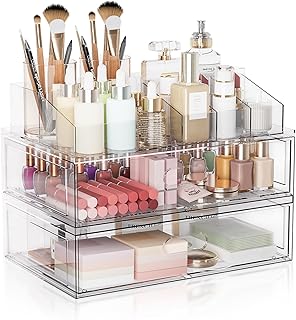
Clear Stackable Makeup Organizer with Drawer
Honestly, Clear Stackable Makeup Organizer with Drawer surprised me — sturdier than it looks in the photos, and over 302 buyers gave it 4.5 stars.
Frequently Asked Questions
Do I need to wash my face in the morning?
Not necessarily. If your skin is dry or sensitive, rinsing with lukewarm water is enough. Oily skin types might prefer a gentle, non-foaming cleanser to remove overnight sebum buildup.
What order should I apply my day and night skincare routine?
Always apply products from thinnest to thickest. Start with cleansers, then liquid serums like Vitamin C, followed by moisturizers, and always finish your morning routine with broad-spectrum SPF.
Can I use retinol every night?
I don’t recommend it for beginners. Start by applying a pea-sized amount of retinol 2-3 times a week to avoid severe peeling. Gradually increase frequency as your skin’s tolerance builds.
Why does my skin feel tight after cleansing?
Your cleanser is likely too harsh and is stripping your skin barrier. Switch to an amino acid-based hydrating gel cleanser and ensure you’re using tepid water, not hot water.
