What’s Inside
- Embrace Refillable Systems as a Standard, Not a Niche
- Prioritize Mono-Material Packaging for Enhanced Recyclability
- Integrate Digital Interaction with QR Codes and NFC Chips
- Utilize Airless Pump Technology for Sensitive Formulations
- Master Minimalist Design with Thoughtful Details
- Incorporate Sensory and Textured Elements for Emotional Resonance
- Choose Dropper Bottle Sizes Strategically for Product Type
- Avoid the Common Mistake of Overcomplicating Design
- Don’t Neglect User Experience: Ensure Functionality Over Aesthetics
- Use Color Psychology for Skincare Packaging Design Inspiration
- Consider Small Batch Sampling for New Product Launches
- Embrace Personalization and Limited Runs
- Beware of Incompatible Packaging Materials
Last Tuesday at Whole Foods, I shattered a $45 glass bottle of rosehip oil all over the tile. It slipped right out of my lotion-slicked hands because the brand chose a sleek but impossibly slippery frosted finish. That sticky, fragrant mess is exactly why I’m obsessed with skincare packaging. Good design isn’t just pretty. It protects your expensive serums, keeps actives stable, and most importantly, keeps your bathroom floor safe. I’ve spent years analyzing what works and what fails in the real world. I used to buy products just for the vanity appeal, only to find the pump broken or the ingredients degraded a week later. Good design solves problems you didn’t even know you had. Let’s look at 13 specific ideas that actually make sense. Skip the junk. It’s not worth the headache.
1. Embrace Refillable Systems as a Standard, Not a Niche

Last month at Target, I noticed something cool. By 2026, refillable packaging has moved from a rare, pricey concept to a basic expectation. I’m here for it. Brands like L’Oréal and The Body Shop are finally offering glass jars with recyclable inner pods. I recently grabbed The Body Shop’s Shea Body Butter. The heavy outer jar costs $24.00 for 6.7 oz. When it’s empty, you just buy the thin plastic refill pod for $18.00. You keep the premium base while replacing only the product. This cuts way down on plastic. It also builds serious brand loyalty. Recent surveys show 67% of buyers prefer refill options. I agree. I did this wrong for months; I’d toss the whole heavy jar, not realizing I could pop the middle out. The sensory experience of locking a fresh pod into a heavy base is satisfying. It clicks with a sharp, loud snap. Skip the brands that force you to buy bulky plastic every month. It’s a waste of money and cabinet space.
2. Prioritize Mono-Material Packaging for Enhanced Recyclability

If you’re confused by those tiny recycling symbols, you aren’t alone. To actually help the planet, brands need to aim for mono-material packaging. This usually means all-PP or all-PE, making up 90 to 95% of the component’s weight. I’m a huge fan of APC Packaging’s Mono-Material Airless System. It’s 100% recyclable polypropylene. A great example at Whole Foods is the Ren Clean Skincare Evercalm Global Protection Day Cream. It costs $50.00 for a 1.7 oz bottle. The entire pump and bottle are made from the same plastic. I spent years doing this wrong. I’d toss mixed-material pumps with metal springs into the blue bin, thinking I was helping. Turns out, those metal springs ruin the whole batch. You literally have to rip the spring out with pliers if it’s not mono-material. It’s a nightmare. Mono-material feels a bit lighter, but it performs just as well. It’s a relief to rinse a bottle and toss it in the bin without performing surgery first.
3. Integrate Digital Interaction with QR Codes and NFC Chips

I hate opening a moisturizer and having a giant, folded paper fall out with instructions in twenty languages. It always ends up soggy on my counter. Smart brands use digital interaction to fix this. They link you to product details and usage guides through QR codes. You can just tap your phone to the bottle. Good Light Cosmetics does this beautifully. Their We Come In Peace Probiotics Serum is $24.00 for 1 oz. You scan the box for authenticity checks and sustainability info. Some brands even use AR for unboxing. This eliminates paper waste. I was at Sprouts last week trying to see if a serum had niacinamide. The label text was microscopic. I scanned the QR code, and a clear ingredient list popped up. It’s so convenient. If a brand isn’t using this tech, they’re falling behind. I won’t buy products with massive paper inserts anymore. They just clutter my trash.
Clear Stackable Makeup Organizer with Drawer
Clear Stackable Makeup Organizer with Drawer has been one of the most consistently praised picks in this category. 302 reviewers averaged 4.5/5.
4. Utilize Airless Pump Technology for Sensitive Formulations

I wasted a $50 Vitamin C serum last year because it oxidized in a clear dropper bottle. Within three weeks, it turned dark brown and smelled like hot dog water. Gross. For actives like Vitamin C, retinol, or antioxidants, airless pumps are crucial. They preserve potency by preventing air exposure. Skincare Junkie’s Megadose Super Antioxidant Face Moisturizer nails this. It’s in an opaque airless pump and costs $68.00 for 1.7 oz. The tech uses a small disk at the bottom that pushes the product up. No air gets in. Every pump dispenses the exact same amount. The mechanism feels smooth and firm. While airless pumps cost more, the value outweighs the price. You won’t throw away half-used, degraded product ever again. I swear by these for anti-aging. If a retinol comes in a jar you have to dip your fingers into, run the other way. You might also like: 15 Beautiful Aesthetic Vision Board Skincare to Inspire Your Next Project
5. Master Minimalist Design with Thoughtful Details

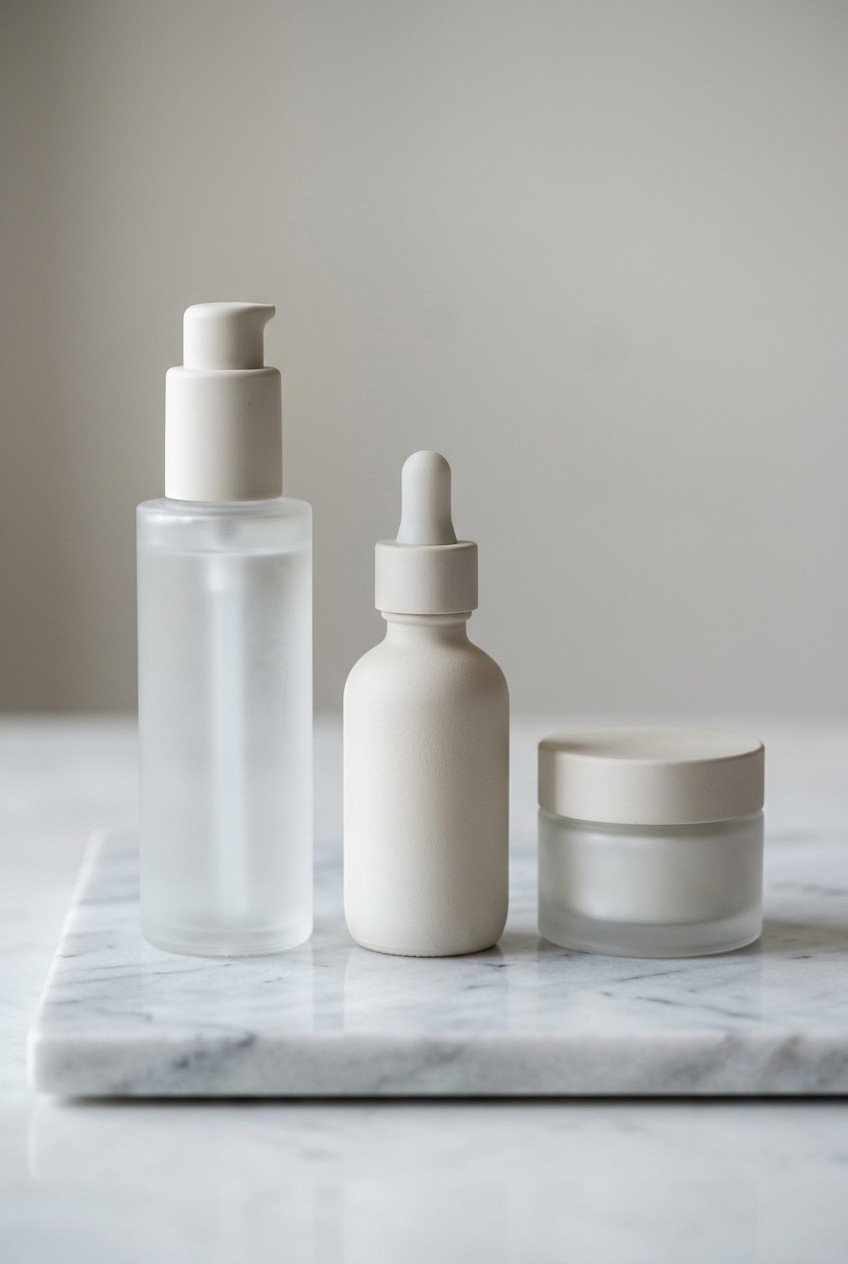
Clean lines and clear typography create a sophisticated look that appeals to design-conscious shoppers. I can’t stand a counter full of neon bottles screaming at me. Brands like Henua Organics use sturdy boxes with magnetic lids and custom inserts. They use black-and-white minimalism to convey quality. Immupure also uses a striking, uncomplicated blend of black and white. Their lifting eye serum is $95.00 for 0.5 oz, and the frosted white bottle looks like art. I recently did a bulk run at Costco and noticed even Kirkland skincare is leaning into this minimalist vibe. The visual quietness makes me feel calmer during my routine. I’ve bought jewel-encrusted bottles in the past, thinking they looked luxe. They just looked cheap and collected dust in the rhinestones. A simple cylinder with a matte cap always looks better. It’s easy to wipe clean and never goes out of style. You might also like: 15 Creative Aesthetic Makeup And Skincare for Any Style
6. Incorporate Sensory and Textured Elements for Emotional Resonance

In a crowded market, how a product feels in your hand is as important as how it looks. Trending approaches include soft-touch finishes, recycled resin with grit, and embossed logos. These textures feel authentic. They also serve a practical purpose. As I said, dropping a glass bottle is a painful, expensive mistake. I need grip. Fenty Skin’s Fat Water Pore-Refining Toner Serum is a perfect example. It costs $34.00 for 5 oz. The bottle has a rubberized, matte finish that feels secure in wet hands. It doesn’t slip, even in the shower. I’ve noticed other brands using a rough, stone-like texture made from recycled ocean plastic. Running your thumb over an embossed logo feels grounding. I won’t buy high-gloss, smooth glass for the shower anymore. It’s a disaster waiting to happen. The tactile feedback of a soft-touch cap clicking shut is deeply satisfying. It makes the routine feel intentional. You might also like: 20 Charming Aesthetic Videos Night Routine Skincare You’ll Want to Bookmark

EQQUALBERRY Vitamin Illuminating Serum | Niacinamide 4% +
If you want something that just works, EQQUALBERRY Vitamin Illuminating Serum | Niacinamide 4% + Brightening is a safe bet (101 reviews, 4.5 stars).
7. Choose Dropper Bottle Sizes Strategically for Product Type

For concentrated serums and oils, small dropper bottles are the industry standard. They ensure precise dosing. The ideal size is 15ml to 30ml. A 15ml bottle is usually 2.8 to 3 inches tall, fitting perfectly in your palm. The Ordinary’s Niacinamide 10% + Zinc 1% is a classic example. It costs $9.90 for 1 oz and uses a high-quality glass pipette. I prefer carrier oils in larger bottles. Last week, I picked up a 4 oz bottle of 100% Jojoba Oil at Trader Joe’s for $7.99. The larger dropper is perfect for body moisturizing. However, using a massive dropper for a potent facial serum is a huge mistake. I tried a jumbo-sized retinol once, and the giant pipette dispensed way too much. I burned my skin for a week. Small droppers give you control. You can count out exactly three drops, ensuring you don’t waste product or overwhelm your skin barrier.
8. Avoid the Common Mistake of Overcomplicating Design

Overcrowded packaging with too many fonts and colors overwhelms consumers. It makes it impossible to understand what the product does. You have to design for impact at a glance. A classic example of a cluttered label is Dr. Bronner’s Peppermint Pure-Castile Liquid Soap. It’s $16.99 for 32 oz at Walmart. I love the soap, but reading that label gives me a headache. There are thousands of tiny words crammed onto the plastic. When I’m shopping for a delicate face acid, I don’t want to read a novel. I want the ingredient percentage and usage info. I’ve skipped products just because the label was too busy. If I can’t find ‘fragrance-free’ within three seconds, I put it back. Keep the front clean. Put the marketing text on the back, and use a QR code for the rest. Simple, breathable design implies that the ingredients are pure and focused.
9. Don’t Neglect User Experience: Ensure Functionality Over Aesthetics

Packaging must work perfectly in real life. I’ve seen so many mistakes, like difficult-to-open containers and terrible ergonomics. Choosing the wrong pump for a product’s thickness is the worst. If a thick cream is in a bottle with a narrow pump, you’ll never get it out. I bought a gorgeous body lotion last year that looked stunning on my nightstand. But the plastic was so rigid I couldn’t squeeze it, and the pump was too weak to pull the shea butter up. I had to bang it against my palm like a ketchup bottle every night. It was exhausting. Glossier’s Milky Jelly Cleanser gets this right. It’s $19.00 for 6 oz, and the pump is wide, sturdy, and dispenses the right amount of gel without sputtering. I also hate caps that require sharp fingernails to pry open. I’ve broken two thumbnails trying to open cheap flip-cap toners. Functionality comes first. If I have to fight with a bottle at 6 AM, it’s going in the trash.

Intensive Moisturizing Cream
Intensive Moisturizing Cream punches above its price — 16 buyers rated it 4.5 stars. I would buy it again.
10. Use Color Psychology for Skincare Packaging Design Inspiration

Colors evoke specific emotions. Soft neutrals and warm beiges convey calm, which is why they dominate the clean beauty space. Seafoam greens suggest freshness. Brands use this strategically. Clinique uses pale yellow and green to look clinical. Nivea uses deep blue for stability and cleanliness. I was walking through Kroger and grabbed a classic Nivea Creme tin. It’s $1.19 for a 1 oz tin. That dark blue immediately makes me think of thick, protective winter moisture. Botanique uses vibrant green to emphasize plant-based ingredients. I fall for this all the time. If I have a breakout, I reach for white or light blue bottles because they feel sterile. If my skin is dry, I look for amber or gold because it feels nourishing. Brands should stop using neon colors for soothing products. I bought a calming cica cream once that came in a bright, aggressive red tube. My brain refused to believe it would soothe my skin. Color matters.
11. Consider Small Batch Sampling for New Product Launches

Offering samples lets brands test new products and refine packaging before full-scale production. This flexibility makes it easier to adjust labels based on feedback. For consumers, it’s a lifesaver. I refuse to buy an $80 exfoliating acid without testing a mini version. Paula’s Choice is incredible at this. Their 2% BHA Liquid Exfoliant Mini is $14.00 for 1 oz. The tiny grey bottle is an exact replica of the full-size version. I can test the formula for two weeks to see if it breaks me out. I’ve made the mistake of buying giant tubs of cream, only to realize the fragrance gave me migraines. Minis are also perfect for travel. I keep a stash in my gym bag. Brands that don’t offer samples are missing out on thousands of hesitant customers who want to try a product without a huge financial commitment.
12. Embrace Personalization and Limited Runs

Gen Z craves individuality. In 2026, brands are using AI data and customer selfies to create packaging that feels personal. This includes custom colors or limited drops that celebrate self-expression. Curology is a pioneer here. Their Custom Formula costs $29.95 for a 1 oz bottle. When it arrives, your name is printed directly on the white pump bottle. It says ‘Kailyn’s Custom Formula’ on the front. It feels tailored. I’ve also seen brands collaborate with indie artists for the label art. It turns an ordinary moisturizer into a collector’s item. I bought a limited-edition cleansing balm last spring simply because the jar had a beautiful floral pattern painted by a local artist. It looked stunning on my counter. Personalization makes you feel seen. It proves they aren’t just pumping out millions of identical tubes. They’re making something specifically for you.

COSRX Vitamin E Vitalizing Sunscreen
Honestly, COSRX Vitamin E Vitalizing Sunscreen surprised me — sturdier than it looks in the photos, and over 42 buyers gave it 4.5 stars.
13. Beware of Incompatible Packaging Materials

A massive, invisible mistake is picking packaging based on looks without considering chemical compatibility. Active ingredients can degrade fast if the material isn’t stable. This leads to reduced efficacy. Some essential oils and strong acids can literally melt cheap plastics. I once bought a generic tea tree oil toner at a discount store. After a month, the bottle started warping and caving in. The ingredients were eating through the PET plastic. It was terrifying. You have to use high-density glass, aluminum, or chemically stable plastics for strong actives. Uni, a sustainable brand, champions a ‘Forever Dispenser’ made from aluminum. It’s designed to be separated from the bottle and reused. Their Body Serum is $40.00 for a 12 oz refillable aluminum system. Aluminum is endlessly recyclable and blocks UV light, which protects the ingredients. It feels cold to the touch, which is refreshing in the morning. Never trust a potent active ingredient in a flimsy, clear plastic bottle. It won’t work, and it might even be dangerous.
Finding the right packaging inspiration changed how I build my routine. I don’t settle for leaky pumps, oxidizing serums, or slippery glass jars anymore. Good packaging protects your investment and makes your daily routine feel effortless. Take a closer look at the bottles on your counter right now. If you fight with a sticky lid or a broken dropper, it’s time to upgrade. Pin this article to your beauty boards so you can reference these tips next time you’re shopping for a new serum!
Frequently Asked Questions
Why is skincare packaging design inspiration important?
Good packaging design protects active ingredients from air and light degradation. It prevents bacterial contamination, ensures precise dosing, and uses sustainable materials to reduce environmental waste.
What are airless pump bottles used for?
Airless pumps are crucial for sensitive formulations like Vitamin C and retinol. They prevent air exposure, which stops oxidation and keeps the ingredients potent and fresh for much longer.
What is mono-material skincare packaging?
Mono-material packaging is made entirely from a single type of plastic, like 100% polypropylene. This makes the bottle and pump infinitely easier to recycle without separating parts.
Why do serums come in small dropper bottles?
Small dropper bottles, usually 15ml to 30ml, allow for precise dosing of highly concentrated actives. This prevents you from over-applying strong acids or expensive facial oils.
