What’s Inside
- Prioritize Post-Consumer Recycled Plastics
- Embrace Refillable Systems to Cut Waste
- Invest in Airless Pump Technology
- Consider Aluminum for Superior Recyclability
- Explore Home-Compostable Packaging
- Switch to Bamboo Body Wash Bottles
- Address Hard-to-Recycle Components
- Opt for Waterless Formulations
- Use Glass Jars with Metal Lids
- Try Plant-Derived Bioplastics
- Pick Paperboard Deodorant Tubes
- Buy Metal Tins for Salves
- Look for Naked Packaging and Minimalist Boxes
- The Future of Sustainable Design
Last Tuesday at Whole Foods, I accidentally knocked a heavy $34.99 glass bottle of facial oil off the shelf. It shattered everywhere. The sharp, crisp smell of cold-pressed rosehip oil and pure regret filled aisle four. That embarrassing mess made me rethink natural skincare packaging. I’m tired of heavy glass that breaks or cheap plastic that ruins our planet. You need to know what actually works. I’ve spent months testing different eco-friendly containers, and I’ve found the best options for your vanity. Here are the materials and products you should be looking for.
1. Prioritize Post-Consumer Recycled Plastics

Post-consumer recycled plastics are essential for a circular economy. PCR means we aren’t creating new plastic. I’m a fan because it stops virgin plastic production. I learned that the hard way—virgin plastic is everywhere. Last month, I bought a 16 oz bottle of Naturium body wash for $15.99 at Target. It uses PCR plastic. The plastic feels slightly softer than normal bottles. OSEA Malibu is another great brand. They target 50 percent PCR content in their plastic components. I’ve used their 5 oz Undaria Algae Body Butter, which costs $48.00. The tub is sturdy but eco-friendly. I used to buy cheap virgin plastic lotions at Walmart. I’d grab a massive 32 oz pump bottle for $4.99. It felt so wasteful. Now, I look for that PCR label. Clinique also incorporates at least 39 percent PCR and 28 percent plant-derived plastic in their tubes. Their caps use 25 percent PCR. It’s a big shift. Aveda also utilizes 100 percent PCR for many products, using old milk jugs. You don’t have to sacrifice luxury for sustainability. Pro tip: Check the bottom of the bottle. If you don’t see a PCR percentage, it’s likely virgin plastic.
2. Embrace Refillable Systems to Cut Waste

Refillable systems drastically cut waste. I tried this wrong for months before figuring it out. I bought a cheap refillable plastic compact online, and the hinge broke in two days. It was a waste of $15.00. Then I discovered Kjaer Weis. Their Intelligent Refill System features metal “Iconic Packaging” designed to last. I bought their Cream Foundation for $68.00. The compact weighs a solid 4 oz. When you run out, the refills only cost around $32.00. You just pop the old metal pan out and snap the new one in. It makes a satisfying metallic click. It’s much more cost-effective than buying a brand new product every three months. I also buy L’Occitane eco-refills. I found a massive 16.9 oz refill pouch of their Almond Shower Oil at Costco for $39.99. These pouches reduce plastic use by 60 to 90 percent. I just pour the thick, golden oil into my existing glass pump bottle. Pouring it can be messy, though. I spilled about 2 tablespoons on my bathroom tiles last week. It was a slippery disaster. Trust me—use a funnel.
3. Invest in Airless Pump Technology

Invest in airless pump technology for your skincare. I used to buy serums in those cute glass dropper bottles. Last year, I bought a 1 oz bottle of Mad Hippie Vitamin C serum for $33.99 at Sprouts. The dropper let air into the bottle every morning. By week three, the bright yellow liquid turned a muddy brown. It smelled like rusty pennies. The oxygen ruined the sensitive ingredients. Airless bottles fix this. They protect ingredients like Vitamin C, retinol, Vitamin E, green tea extract, and rosehip oil from oxidation. The pump mechanism pushes a small plastic disc up from the bottom. It dispenses exactly 0.2ml of product per pump. This extends shelf life and minimizes the need for synthetic preservatives. Plus, you get to use up to 98 percent of the product. No more scraping the bottom of the jar with a tiny plastic spatula. I’m currently using a 1.7 oz Drunk Elephant Protini Polypeptide Cream that costs $68.00. The airless push-top is incredibly satisfying. Just don’t press too hard, or you’ll squirt lotion across the room.

6Pcs Jade Roller for Face
If you want something that just works, 6Pcs Jade Roller for Face is a safe bet (28 reviews, 4.5 stars).
4. Consider Aluminum for Superior Recyclability

Consider aluminum for its superior recyclability. It’s infinitely recyclable and provides an excellent barrier against UV light, air, and moisture. I love the aesthetic of a crinkled metal tube. It looks apothecary and chic. REN Clean Skincare developed 100 percent recycled aluminum sample tubes. They’re made from 95 percent PCR aluminum and 5 percent post-industrial recycled aluminum. I stepped on a tiny 0.1 oz plastic sample packet in my bathroom last month. It exploded white cream all over my rug. REN saved 900 kg of plastic by switching to metal. They even shared this technology with their competitors. I buy the 3.3 oz Summer Fridays Jet Lag Mask for $49.00. It comes in a gorgeous blue aluminum tube. The thick, white cream stays perfectly cool inside. You’ve got to be careful when rolling it up, though. If you squeeze from the middle, the metal can crack and leak. Always roll from the bottom. I use a little metal key I bought for $4.99 to squeeze out every last drop. It’s satisfying. You might also like: 15 Charming Tips For Clear Skin Natural Skincare for a Fresh New Look
5. Explore Home-Compostable Packaging

Explore home-compostable packaging for true end-of-life solutions. We need to move beyond merely recyclable materials. Most plastic just ends up in a landfill. Home-compostable materials return to the earth. Ethique is leading the charge here. Their entire product line utilizes home-compostable, plant-based materials. I bought their 0.28 oz Sugarplum tinted lip balm for $11.00. The tube is made from cardboard lined with plant wax. It feels sturdy in your hand. When I finished the balm, I buried the tube in my backyard compost pile. Six months later, it was gone. It broke down into soil nutrients. It’s a fantastic alternative to plastic lip balm tubes. I used to buy a 0.15 oz plastic tube of generic lip balm at Kroger for $1.99. I’d lose it in my car, buy another, and contribute to the plastic crisis. The compostable tubes force you to be mindful. One small negative is that the push-up mechanism can be stiff. If you push the balm up too far, you can’t twist it back down. Just tap the bottom on a hard surface. You might also like: 15 Brilliant Skincare Routine Ideas That Make a Real Difference
6. Switch to Bamboo Body Wash Bottles

Bamboo is taking over the eco-friendly beauty space. It grows fast and requires little water. Wild offers a 100 percent plastic-free, compostable body wash bottle made from bamboo. I ordered their 16.9 oz starter kit for around $30.00. The outer shell is made of sleek, smooth bamboo. It looks stunning in my shower. The inside contains a compostable refill made from potato starch. When you finish, you just toss the inner liner in your compost bin. The bamboo shell lasts forever. I did drop the shell on my shower floor once. It made a loud clacking sound, but it didn’t crack. Bamboo is water-resistant, but don’t let it sit in a puddle. I keep mine on a high shelf away from the direct spray of the showerhead. I’ve also seen bamboo lids on glass jars. I bought a 2 oz jar of organic face cream for $45.00 with a bamboo lid. The lid swelled a bit from the steam in my bathroom, making it hard to unscrew. Keep your bamboo products in a well-ventilated area to prevent this. You might also like: 20 Brilliant Aesthetic Pink Skincare You Can Try Today

EQQUALBERRY Vitamin Illuminating Serum | Niacinamide 4% +
A dependable everyday pick — EQQUALBERRY Vitamin Illuminating Serum | Niacinamide 4% + Brightening pulls in 108 ratings at 4.5 stars. Not flashy, just solid.
7. Address Hard-to-Recycle Components


Address hard-to-recycle components through collective action. A common mistake is assuming everything goes in the blue bin. Small, mixed-material packaging often ends up in landfills because it isn’t captured by traditional recycling facilities. Things like pumps, droppers, and tiny plastic caps fall through the sorting grates. I used to spend hours sorting trash on my kitchen floor, trying to rip glass droppers apart from their plastic collars. Now, I partner with organizations like Pact Collective. They’re a non-profit that unites beauty brands to collect and process these challenging items. They’ve diverted over 1 million pounds of hard-to-recycle beauty packaging to date. You can drop off your clean, empty containers at participating retail locations. I take a small paper bag filled with my empty 0.5 oz eye cream jars and broken pump dispensers to my local beauty store once a month. It feels good to know they aren’t going to a landfill. Pro tip: Clean your empties thoroughly. I use a tiny bottle brush and hot soapy water to scrub out the last 1/2 teaspoon of lotion. If they’re dirty, they can’t be recycled.
8. Opt for Waterless Formulations

Opt for waterless formulations to reduce packaging and emissions. Concentrated solid or powder products decrease packaging size and weight. This is a big trend right now. Waterless skincare reduces material use and lowers transportation emissions. It also extends shelf life because bacteria need water to grow. Ethique’s solid bars eliminate the need for water in the product. This saves millions of gallons and reduces shipping weight. I bought their 3.88 oz Pinkalicious solid shampoo bar for $15.00. It came in a tiny, recyclable cardboard box. The bar itself is bright pink and smells like sweet grapefruit and vanilla. It lathers up well. I rub it directly onto my wet hair. One bar equals three 11.8 oz bottles of liquid shampoo. I travel a lot, and TSA confiscated my 4 oz liquid face wash last year because it was over the liquid limit. I was furious. Solid bars are TSA-approved. You just toss them in your carry-on. The only downside is storage. You need a draining soap dish. If you leave a solid bar in a wet puddle, it melts into a gooey mess.
9. Use Glass Jars with Metal Lids


Glass jars with metal lids are a classic choice for eco-conscious buyers. Glass is inert, so it won’t leach chemicals into your organic face creams. I love the heavy, luxurious feel of a frosted glass jar. I currently use a 2 oz jar of Herbivore Botanicals Pink Cloud Cream that costs $44.00. The glass jar has a sleek white metal lid. Glass is infinitely recyclable, just like aluminum. You can melt it down forever without losing quality. But there are drawbacks. Glass is heavy, which increases shipping emissions. And it breaks easily. Last Tuesday at Whole Foods, I accidentally knocked a heavy $34.99 glass bottle of facial oil off the shelf. It shattered everywhere. The smell of cold-pressed rosehip oil and regret filled aisle four. It was a nightmare to clean up. If you drop a glass jar on your bathroom tile, you’ll lose your product and possibly cut your foot. I only buy glass packaging for products I keep securely on my vanity. I never take glass into the shower. Metal lids can also rust. Keep the threads clean and dry to prevent that annoying brown crust.
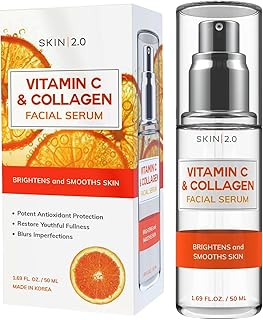
Skin 2.0 Vitamin C Serum – Dermatologist Tested
A dependable everyday pick — Skin 2.0 Vitamin C Serum – Dermatologist Tested pulls in 45 ratings at 4.5 stars. Not flashy, just solid.
10. Try Plant-Derived Bioplastics

Plant-derived plastics are an interesting alternative to fossil fuels. These bioplastics are made from renewable resources like sugarcane or cornstarch. Clinique incorporates 28 percent plant-derived plastic in some of its tubes. I recently bought a 5 oz tube of sugarcane-derived face wash at Target for $14.99. The packaging feels exactly like traditional plastic. It’s flexible, durable, and waterproof. The manufacturing process for sugarcane plastic captures carbon dioxide from the atmosphere. It’s a much better option than drilling for oil. However, there is a catch. Plant-derived plastic isn’t necessarily biodegradable or compostable. It’s chemically identical to regular plastic. It still takes hundreds of years to break down in a landfill. You still have to recycle it in your curbside bin. I used to think I could just toss a bioplastic tube into my garden. I was wrong. It just sat in the dirt for six months looking the same. Always read the labels. If it says recyclable bioplastic, treat it exactly like regular plastic. It’s a step in the right direction, but it isn’t perfect.
11. Pick Paperboard Deodorant Tubes

Paperboard tubes are taking over the deodorant aisle. I’m here for it. Traditional plastic deodorant sticks are a nightmare to recycle because of the mixed plastic dial at the bottom. Paperboard eliminates that issue. I bought a 2 oz tube of Raw Sugar Natural Deodorant at Kroger for $7.99. The entire tube is made from thick, sturdy cardboard. The deodorant itself smells like coconut and sweet agave. You push the product up from the bottom using your thumb. The first time I used it, I pushed way too hard. About an inch of deodorant popped out, and I couldn’t get it back down. I had to awkwardly smash it against my armpit. You only need to push up about 1/4 inch of product at a time. The cardboard can get a bit greasy over time as the natural oils seep into the paper. It doesn’t look pristine after a month. But honestly, I don’t care. When the tube is empty, I just rip it up and throw it in my compost bin. It’s better than adding another plastic stick to a landfill.
12. Buy Metal Tins for Salves

Metal tins are the unsung heroes of eco-friendly beauty. They are cheap, durable, and plastic-free. I buy the 1.5 oz Head to Toe Balm at Trader Joe’s for just $3.99. It comes in a cute yellow metal tin. I keep one in my purse, one in my car, and one on my nightstand. You just twist the lid off, scoop out a pea-sized amount, and rub it into your dry cuticles. Metal tins are also fantastic for solid perfumes and lip balms. Rosebud Salve is a classic example. I buy the 0.8 oz tin for $7.00. The only negative is that the lids can get stuck. If you screw the lid on too tight, or if the tin gets dented, it becomes impossible to open. I’ve had to use pliers to pry a tin open before. Make sure you wipe the threads clean before closing the tin. If you get sticky balm on the metal rim, it acts like glue. Despite that small flaw, metal tins are infinitely recyclable and reusable. I clean out my empty tins and use them to store bobby pins and small earrings when I travel.

Jade Roller & Gua Sha Set for Face
Jade Roller & Gua Sha Set for Face – 4PCS Natural Facial Massage Tools punches above its price — 9 buyers rated it 4.5 stars. I would buy it again.
13. Look for Naked Packaging and Minimalist Boxes

Sometimes the best packaging is no packaging at all. Naked products are completely devoid of plastic wrappers or containers. Lush pioneered this movement with their bath bombs and solid massage bars. You just walk into the store, pick up a naked product, and drop it into a small paper bag. I bought a 1.7 oz solid facial oil serum for $18.00. It looks like a tiny bar of soap. It melts perfectly into my skin when I rub it on my cheeks. If a brand can’t go entirely naked, minimalist cardboard boxes are the next best thing. I hate buying a tiny 1 oz bottle of serum that comes packed inside a massive, oversized box filled with plastic foam. It’s deceptive. I recently ordered a 2 oz moisturizer for $35.00 from a sustainable brand. It arrived in a small, unbleached corrugated cardboard box that perfectly fit the jar. There was no tape, no glue, and no glossy plastic coating. The box was printed with soy-based ink. It felt earthy and authentic. That’s the standard we should be demanding from all beauty brands. Skip the excessive plastic.
14. The Future of Sustainable Design


The future of sustainable design is exciting. We’re moving away from the toxic throwaway culture of the past. Brands are finally realizing that consumers want eco-friendly options. I’m seeing a rise in mushroom packaging. Companies are growing packaging from mycelium and agricultural waste. It looks like styrofoam, but it’s 100 percent biodegradable. You can break it apart and toss it in your garden. I received a 4 oz bottle of body oil for $55.00 packed in mycelium foam. It smelled faintly of damp earth and protected the glass bottle during shipping. We’re also seeing innovations in seaweed-based wrappers that dissolve in water. Imagine buying a single-dose face mask encased in a seaweed pod that melts down your drain. The beauty industry produces over 120 billion units of packaging globally every year. We can’t keep doing things the old way. I challenge you to look at your bathroom counter right now. Count the virgin plastic bottles. It’s probably a lot. Don’t feel guilty; just start making better choices. Swap out one plastic bottle for a solid bar or a refillable metal compact. Small changes add up to a big impact.
I personally swear by airless pumps and solid waterless bars. They’ve completely revolutionized my routine. Honestly, this took me years to figure out, but it changed how I view my entire bathroom cabinet. I won’t go back to cheap virgin plastic pumps. You don’t have to overhaul your entire collection overnight. Just pick one of these natural skincare packaging options the next time you run out of your favorite moisturizer or shampoo. Your skin and the planet will thank you. Pin this guide to your eco-beauty board so you have it ready for your next shopping trip. Let’s make sustainable beauty the standard.
Frequently Asked Questions
What does PCR mean in natural skincare packaging?
PCR stands for Post-Consumer Recycled. It means the plastic used in the packaging comes from recycled materials, like old milk jugs, rather than newly manufactured virgin plastic. It’s a key component of sustainable beauty.
Are plant-derived bioplastics biodegradable?
Not necessarily. While they are made from renewable resources like sugarcane instead of fossil fuels, many bioplastics are chemically identical to regular plastic. They still need to be recycled properly in a curbside bin, not composted.
Why are airless pumps better for natural skincare?
Airless pumps prevent oxygen from entering the bottle, which stops sensitive ingredients like Vitamin C and retinol from oxidizing and turning brown. They also dispense exact amounts and let you use up to 98 percent of the product.
How do you recycle small beauty packaging components?
Small items like droppers, pumps, and tiny caps often fall through sorting grates at standard recycling centers. You should clean them thoroughly and drop them off at specialized collection bins run by organizations like Pact Collective.
