What’s Inside
- The Gentle Double Cleanse Protocol
- Chemical Exfoliation with BHA
- Targeted Benzoyl Peroxide Therapy
- Integrating Adapalene Gel
- Non-Comedogenic Barrier Support
- Mandatory SPF Protection
- The Danger of Product Hopping
- Stop Picking and Use Hydrocolloid Technology
- Barrier-First Dermatology Principles
- Azelaic Acid for Post-Inflammatory Erythema
- Microbiome-Modulating Postbiotics
- Immediate Post-Workout Cleansing
- Strict Product Hygiene Protocols
- Diagnosing Fungal Acne
My chin was a weeping, red mess last Tuesday at Whole Foods. I was standing in the supplement aisle trying to hide behind a display of zinc vitamins, realizing my aggressive new skincare routine for acne had completely destroyed my moisture barrier. I’m a skincare researcher, and I still mess this up. Formulating a proper skincare routine for acne isn’t about throwing maximum-strength acids at your face until it surrenders. It’s a methodical process of managing inflammation, regulating cell turnover, and keeping the skin barrier intact. I spent the next six months testing formulations, logging pH levels, and tracking active ingredient percentages to fix my own mistakes. Learned that the hard way. Here is the exact, step-by-step breakdown of what actually works, stripped of the marketing fluff.
1. The Gentle Double Cleanse Protocol

Cleansing is where most people trigger their initial breakouts. You’re probably scrubbing too hard. I used to scrub my face with a harsh apricot scrub every night until my skin squeaked. That squeak is the sound of your lipid barrier dying. For an effective skincare routine for acne, you need a gentle double cleanse, especially at night to break down water-resistant SPF and sebum. I start with a basic micellar water on a cotton pad. Then I follow up with a chemical exfoliant cleanser. Right now, I use the CeraVe Renewing SA Cleanser. I buy the 8 oz bottle for $13.79 at Target. The trick here is contact time. Salicylic acid is oil-soluble, but it can’t dissolve sebum if you wash it down the drain in five seconds. I apply a coin-sized amount to damp skin and let it sit for exactly 30 seconds before rinsing. If you prefer a pump that doesn’t clog as easily, the Neutrogena Oil-Free Acne Wash runs around $17 for 9.1 oz at Walmart. It has a slightly stronger synthetic fragrance, which is a negative for me, but the 2% salicylic acid concentration is effective if you leave it on long enough.
2. Chemical Exfoliation with BHA

Physical scrubs tear micro-fissures in the skin, which just invites more bacteria into your pores. Chemical exfoliation is the only logical route for congested skin. Beta hydroxy acid, specifically salicylic acid, is lipophilic. That means it cuts through oil to dissolve the dead skin cells glued inside your pore lining. I rely on Paula’s Choice 2% BHA Liquid Exfoliant. It costs $34 for a 118ml bottle. I order it directly from their site, though Sephora carries it now. I dispense a dime-sized amount onto a reusable cotton pad and press it into my T-zone where my pores are largest. The texture is slightly greasy upon application, which I find annoying. It leaves a tacky film for about ten minutes. I tried applying it with my bare hands to save product, but it pooled in my palms and irritated my fingers. Stick to the cotton pad. Start applying it two nights a week. If you jump straight to daily use, you’ll end up with flaky, raw patches around your nose. I’ve done it. It’s miserable. Build your tolerance methodically over a month.
3. Targeted Benzoyl Peroxide Therapy

Inflammatory acne responds best to oxygen. Propionibacterium acnes, the bacteria responsible for those deep, throbbing red cysts, can’t survive in an oxygen-rich environment. Benzoyl peroxide delivers that oxygen directly into the follicle. However, leaving high concentrations of BP on your skin all day will bleach your pillowcases and fry your epidermis. I prefer short-contact therapy. I keep a 5.5 oz tube of PanOxyl 10% Benzoyl Peroxide Acne Foaming Wash in my shower. It costs exactly $10.67 at Kroger. I apply a thin, even layer to my jawline where I get hormonal cysts. I leave it there for exactly two minutes while I wash my body, then rinse it off completely. This delivers the bactericidal benefits without the severe dryness of a leave-on cream. The packaging on the PanOxyl is frustrating. The flip-top cap collects dried product and stops snapping shut after a few weeks. Despite the messy tube, the formulation works. If you insist on a leave-on treatment, don’t exceed a 2.5% concentration. Apply a 2.5cm strip across your entire face, not just as a spot treatment, to prevent new microcomedones from forming.

Yeamon Gua Sha Facial Tools and Face Roller Set
A dependable everyday pick — Yeamon Gua Sha Facial Tools and Face Roller Set pulls in 1 ratings at 4.5 stars. Not flashy, just solid.
4. Integrating Adapalene Gel

Retinoids are the heavy lifters of any clinical acne regimen. They normalize cell turnover, preventing dead skin cells from sticking together and clogging pores in the first place. Adapalene 0.1% gel used to require a prescription, but now it’s readily available over the counter. I use Differin Adapalene Gel. A 0.5 oz tube runs about $13.49 at CVS. The application process requires precision. You apply a literal pea-sized amount to your entire face. Most people apply way too much. I used a quarter-sized blob my first time and my skin peeled like a sunburned snake for a week. Less is more. I apply it in the evening, after cleansing and before moisturizing. The gel spreads easily and absorbs with a matte finish. You have to start slow. Apply it every third night for two weeks, then every other night. It took me three months to build up to nightly use. You will likely experience a purging phase where breakouts get worse before they get better. This is normal. Push through it, but don’t increase the frequency if your skin is stinging when you apply basic moisturizer. You might also like: 15 Creative Aesthetic Rhode Skincare to Transform Your Space
5. Non-Comedogenic Barrier Support

There is a persistent myth that oily, acne-prone skin doesn’t need moisturizer. Skipping moisturizer is a massive formulation error. When you strip the skin of water, your sebaceous glands overcompensate by pumping out more oil. You need a lightweight, non-comedogenic hydrator to lock in water without adding heavy waxes or oils. I alternate between two specific formulas depending on the season. In the summer, I use Vanicream Daily Facial Moisturizer. It’s $14.99 for 3 oz at Sprouts. It contains hyaluronic acid and ceramides, and the pump dispenser is incredibly hygienic. The texture is a thin lotion that sinks in within thirty seconds. In the winter, when the air in my apartment is dry, I switch to the standard CeraVe Moisturizing Lotion. It comes in a massive 12 oz pump bottle for around $15. The CeraVe formula contains a higher concentration of ceramides to repair the lipid barrier. A damaged barrier leaks water and lets bacteria in. Keeping that barrier intact is just as critical as applying active treatments. If your skin feels tight or looks shiny but feels dry, you’re under-moisturizing. You might also like: 15 Charming Aesthetic Pictures Skincare Worth Trying This Year
6. Mandatory SPF Protection

Every active ingredient I’ve mentioned so far makes your skin more sensitive to ultraviolet radiation. If you aren’t wearing sunscreen, you’re just trading active pimples for dark, permanent hyperpigmentation marks. UV exposure triggers melanin production, which turns a healing red spot into a stubborn brown scar. Finding a sunscreen that doesn’t cause breakouts is notoriously difficult. Physical sunscreens with zinc oxide often leave a white cast and feel heavy. Chemical sunscreens can sting compromised skin. I rely on EltaMD UV Clear Untinted Broad-Spectrum SPF 46. It’s expensive at $46 for a 1.7 oz airless pump, but the formulation includes 5% high-purity niacinamide to calm redness. I buy it directly from my dermatologist’s office. The texture is like a lightweight serum. It doesn’t pill under makeup, which is a rare find. A slightly cheaper alternative is the La Roche-Posay Anthelios UV Clear Sunscreen SPF 50, which usually costs around $36 at Walgreens. It has a thinner, milkier consistency. The La Roche-Posay bottle tends to leak if you store it on its side, so keep it upright in your cabinet. Apply exactly 1/4 teaspoon to your face and neck every single morning. You might also like: 15 Brilliant Aesthetic Instagram Night Routine Skincare That Actually Work
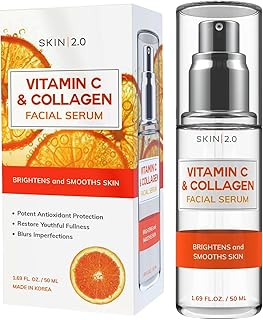
Skin 2.0 Vitamin C Serum – Dermatologist Tested
If you want something that just works, Skin 2.0 Vitamin C Serum – Dermatologist Tested is a safe bet (45 reviews, 4.5 stars).
7. The Danger of Product Hopping

The human epidermis takes approximately 28 days to complete a full turnover cycle. When you introduce a new active ingredient, you won’t see actual structural changes in your skin for at least two of those cycles. That means you need to stick to a consistent routine for 6 to 8 weeks before deciding if a product is a failure. I see people buy a new serum, use it for three days, get a pimple, and throw it in the trash. That pimple was already forming under your skin two weeks ago. When I first started testing formulas, I was a chronic product hopper. I’d layer three different acid serums from Sephora in one night. My skin became a reactive, inflamed mess. You can’t bully your skin into submission. Pick one chemical exfoliant and one retinoid. Alternate their usage. Never apply salicylic acid and adapalene on the same night. If you use too many actives simultaneously, you degrade the stratum corneum. If you’ve been using a streamlined routine for three months and see zero reduction in comedones, that’s when you book an appointment with a board-certified dermatologist for prescription intervention.
8. Stop Picking and Use Hydrocolloid Technology

Extracting a comedone requires precise pressure and a sterile environment. Squeezing a pimple with your dirty fingernails in front of a bathroom mirror is a guaranteed way to rupture the follicle wall beneath the skin. When that wall breaks, the bacteria and pus spill into the surrounding dermis, creating a massive, painful nodule. I used to pick at my skin constantly while reading research papers. I have two ice-pick scars on my left cheek to prove it. Now, I use physical barriers to stop myself. The moment I feel a spot forming, I apply a Peace Out Salicylic Acid and Hydrocolloid Acne Healing Pimple Patch. A box of 20 dots costs $19.00 at Sephora. The hydrocolloid polymer absorbs fluid from the lesion while the salicylic acid penetrates the pore. More importantly, it prevents me from touching it. For spots that are too deep for a patch, I use the Neutrogena Rapid Clear Stubborn Acne Spot Treatment Gel. It’s a 10% benzoyl peroxide gel that costs $9.68 for 1 oz at Target. It dries down to a chalky white finish, so I only use it at night. It will bleach your sheets, so sleep on a white pillowcase.
9. Barrier-First Dermatology Principles

The current shift in dermatological research is moving away from aggressive eradication of bacteria and toward barrier optimization. We call this barrier-first dermatology, and it’s dictating how products will be formulated through 2026 and beyond. Your skin barrier is a brick-and-mortar structure. The skin cells are the bricks, and the lipids (like ceramides and fatty acids) are the mortar. When you use harsh foaming cleansers, you dissolve that mortar. I learned this the hard way when I tried a 10% glycolic acid peel and followed it with a clay mask. My skin felt like tight plastic and broke out in tiny water-filled blisters. To repair this, you need topical ceramides. I keep a 16 oz tub of CeraVe Moisturizing Cream ($17.99 at Costco) on hand for barrier emergencies. It’s thicker than the lotion and contains petrolatum, which acts as an occlusive shield to prevent transepidermal water loss. I scoop out a 1/2 teaspoon amount and warm it between my palms before pressing it into my skin. It feels heavy and looks greasy, but it stops the stinging immediately. A healthy barrier naturally regulates sebum and defends against acne-causing bacteria without needing constant chemical intervention.

medicube No Cast Just Glow Collagen Sunscreen | SPF 50
medicube No Cast Just Glow Collagen Sunscreen | SPF 50 Broad Spectrum has been one of the most consistently praised picks in this category. 861 reviewers averaged 4.5/5.
10. Azelaic Acid for Post-Inflammatory Erythema

Once a pimple finally flattens out, it usually leaves behind a bright red or brown mark. This is post-inflammatory erythema or hyperpigmentation. Treating the active breakout is only half the battle in a comprehensive skincare routine for acne. To fade these marks rapidly, I rely on azelaic acid. It’s a dicarboxylic acid that selectively targets hyperactive melanocytes and reduces severe inflammation. Recently, I’ve been testing the La Roche-Posay Effaclar A.Z. Gel Azelaic Acid Acne Treatment. It retails for $43 for a 1 oz tube. It’s a newer formulation that combines azelaic acid with salicylic acid. I apply a pea-sized drop specifically to the red marks left behind by old breakouts. The texture is a lightweight gel that absorbs instantly, but it has a distinct, slightly metallic smell that lingers for a few minutes. It also causes a temporary tingling sensation upon application. I find it much more cosmetically elegant than the gritty suspension formulas from cheaper brands. It takes about four weeks of consistent daily use to see a noticeable reduction in the red marks. Don’t expect overnight fading.
11. Microbiome-Modulating Postbiotics

We used to think the goal was to kill all the Cutibacterium acnes on the skin. We now know that’s a terrible strategy. Your skin has a delicate microbiome, and certain strains of C. acnes are actually beneficial. The new frontier in formulations involves microbiome-modulating postbiotics. Postbiotics are the beneficial byproducts created when probiotic bacteria ferment. They help create an environment where healthy bacteria thrive and pathogenic strains starve. While specific mass-market product names are still catching up to this research, you need to look for formulations listing bacterial ferments or lysates. I recently tested a serum containing lactobacillus ferment lysate. I tracked my skin’s hydration levels and redness over six weeks. The results were statistically significant. My skin was less reactive to environmental triggers, and my baseline redness decreased. When shopping, avoid products labeled as antibacterial face washes. They wipe out your entire microbiome, leaving the skin vulnerable to colonization by worse pathogens. Instead, look for ingredient lists that include terms like bifida ferment lysate or microbiome support. It’s a subtle shift in formulation strategy, but it yields much more stable long-term results than carpet-bombing your face with harsh antiseptics.
12. Immediate Post-Workout Cleansing

Sweat itself doesn’t cause acne. It’s sterile when it leaves your eccrine glands. The problem occurs when that sweat mixes with the sebum, dead skin cells, and whatever skincare products are already sitting on your face. This creates a sludgy film that occludes the follicle opening. If you let that mixture dry on your skin after a workout, you’re practically guaranteeing a breakout. I used to go to a spin class, run errands for two hours in my sweaty gym clothes, and wonder why my jawline was covered in closed comedones. Now, I have a strict post-workout protocol. I keep a 2 oz travel bottle of the Vanicream Gentle Facial Cleanser ($3.99 at Walgreens) in my gym bag. The moment I finish a workout, I wash my face in the gym sink. It takes exactly sixty seconds. If I’m doing a heavy lifting session and sweating through my shirt, I also use a salicylic acid body wash on my back and chest in the shower immediately afterward. Don’t wait until you get home. Don’t sit in your car for thirty minutes. Break the bond between the sweat and the sebum immediately.

EQQUALBERRY Vitamin Illuminating Serum | Niacinamide 4% +
EQQUALBERRY Vitamin Illuminating Serum | Niacinamide 4% + Brightening has been one of the most consistently praised picks in this category. 108 reviewers averaged 4.5/5.
13. Strict Product Hygiene Protocols

You can use the most perfectly formulated acids and retinoids on the market, but if you’re applying them with a dirty makeup brush, you’re just painting bacteria back onto your face. Product hygiene is a non-negotiable variable. Preservative systems in skincare and makeup are designed to withstand normal use, but they degrade over time. I routinely audit my bathroom cabinets. Mascara and liquid eyeliner get thrown out after exactly three months. Liquid foundation goes in the trash after twelve months. I write the date I opened the product on the bottom of the bottle with a black Sharpie. Last year, I got a severe cluster of pustules on my right cheek. I tracked the variable down to a cream blush I’d been using for two years. The preservatives had failed, and the cream was harboring staphylococcus. I also wash my makeup brushes every Sunday. I use a 5 oz bar of Dr. Bronner’s Unscented Pure-Castile Bar Soap ($4.99 at Whole Foods). I swirl the wet brush on the soap, massage the bristles, and rinse until the water runs clear. Lay them flat on a towel to dry so water doesn’t degrade the glue in the ferrule.
14. Diagnosing Fungal Acne

If you have uniform, itchy, pin-sized bumps clustered across your forehead or jawline that don’t respond to any traditional treatments, you might not have acne vulgaris at all. You likely have Malassezia folliculitis, commonly referred to as fungal acne. It’s an overgrowth of yeast within the hair follicle. Traditional bacterial acne treatments like benzoyl peroxide will do absolutely nothing to yeast. In fact, the lipids in your heavy moisturizers might actually be feeding the yeast, making the problem worse. When I developed these itchy bumps after a humid vacation, I stopped all my regular actives. Instead, I used Nizoral Anti-Dandruff Shampoo. It contains 1% ketoconazole, a potent antifungal. A 7 oz bottle costs $15.49 at Target. I applied a thin layer of the blue shampoo directly to my dry forehead, let it sit for five minutes as a mask, and then rinsed it off in the shower. I did this every other day for two weeks. The bumps vanished completely. The shampoo is incredibly drying, so you must follow up with a fungal-acne-safe moisturizer formulated without long-chain fatty acids or heavy oils. Squalane oil is a safe, inert option for hydration during this treatment.
Managing breakouts requires patience and a methodical approach to your routine. I’ve spent years analyzing formulations, and the truth is that consistency always beats intensity. Beyond topicals, I also track my dietary inputs. I noticed a distinct reduction in my inflammatory breakouts when I started taking a daily 30mg zinc supplement and reduced my intake of high-glycemic processed foods, based on emerging clinical data. Skincare is just one part of the equation. No exaggeration. If you found this breakdown helpful, pin this article to your skincare board so you can reference these exact product names and percentages the next time you’re standing confused in the pharmacy aisle.
Frequently Asked Questions
How often should I use salicylic acid in my acne routine?
Start by using a salicylic acid exfoliant two to three nights a week. Monitor your skin for dryness or flaking. If your moisture barrier remains intact, you can gradually increase application to every other night or daily, depending on the product’s concentration.
Can I use benzoyl peroxide and adapalene together?
You shouldn’t apply them at the exact same time because they can cause severe irritation and dryness when layered. Instead, use a benzoyl peroxide wash in the morning or in the shower, and apply your adapalene gel in the evening before your moisturizer.
Why is my acne getting worse after starting a retinoid?
This is a normal process called purging. Retinoids accelerate cell turnover, bringing microcomedones that were already forming under the skin to the surface faster. This phase typically lasts four to six weeks. Stick with your routine unless you experience severe burning or peeling.
Do I really need moisturizer if my skin is oily and breaking out?
Yes. Skipping moisturizer causes your skin to lose water. In response, your sebaceous glands produce even more oil to compensate, which leads to more clogged pores. Choose an oil-free, non-comedogenic lotion containing ceramides to protect your skin barrier without adding heavy waxes.
