What’s Inside
- Always Prep Your Skin Thoroughly Before A Skincare Face Mask
- Choose The Right Active Ingredients For Your Skin Type
- Adhere Strictly To Recommended Application Times
- Avoid Over-Masking With Potent Formulas
- Master Gentle Clay Mask Removal To Protect Your Barrier
- Embrace Multi-Molecular Hyaluronic Acid For Deep Moisture
- Target Acne With Specific Active Ingredients Like Sulfur
- Brighten Your Complexion With Stabilized Vitamin C
- Leverage Overnight Treatments For Enhanced Skin Renewal
- Refrigerate Sheet Masks For A Depuffing Effect
- Explore Multi-Masking For Targeted Combination Skin Care
Last Tuesday at Whole Foods, I caught my reflection in the bulk bin glass and realized a patch of dried green clay was flaking off my jawline. I’d been testing a new skincare face mask during my morning commute, which was a terrible logistical decision. Most people treat these masks like a relaxing spa accessory. I treat them like targeted chemical delivery systems. If you don’t understand the active ingredients, you’re just smearing expensive mud on your face. I’ve spent six years analyzing ingredient lists for freshfaceroutine.com. I’ve burned my moisture barrier, clogged my pores, and stained my pillowcases trying to find formulas that actually do what the packaging claims. I’ve tried trendy magnetic masks that just left iron filings in my pores. I’ve used bubbling masks that caused severe contact dermatitis. The industry relies on us buying products based on aesthetics rather than efficacy. I refuse to participate in that cycle. Let’s break down the actual mechanics of how these treatments work on a cellular level, because you’re probably making at least three major mistakes right now.
1. Always Prep Your Skin Thoroughly Before A Skincare Face Mask

Applying any treatment over unwashed skin is counterproductive. You’re just trapping a layer of daily grime, oxidized sebum, and environmental pollutants under a thick paste. I tried this wrong for months before figuring it out. I’d slap a mask on right after work without washing my face first. The result was a massive cystic breakout on my chin that took three weeks to heal. Learned that the hard way. Now, I always prep my skin in the shower. The warm water and steam soften the upper layer of the epidermis, making it more permeable for active ingredients. I keep the water lukewarm. Hot water strips natural oils before the mask even touches your face. I use the La Roche-Posay Toleriane Hydrating Gentle Cleanser. It costs exactly $17.99 for a 13.5 oz bottle at Target. I massage a quarter-sized amount into my skin for sixty seconds. If you’re using a skincare face mask, you need a completely blank canvas. Don’t use a harsh physical scrub before masking. A simple, non-foaming cleanser is enough. I once used a crushed walnut scrub before an acid mask and my face felt like it was on fire for two days. Just stick to a basic wash. The steam from a five-minute shower does the heavy lifting for pore preparation.
2. Choose The Right Active Ingredients For Your Skin Type

Selecting a mask based on packaging is a fast track to contact dermatitis. You need to match the chemical composition to your current skin state. If you have oily skin, you need ingredients that absorb sebum without stripping essential lipids. If your skin is dehydrated, you need humectants. Last winter, I bought a random charcoal mask at Kroger because it was on clearance for $4.50. I applied a thick 2 oz layer. My dry cheeks started peeling by morning. I learned my lesson. Now I check the ingredient deck meticulously. For dry skin, I strictly use formulas heavy in ceramides and squalane. Squalane mimics your skin’s natural sebum, making it highly biocompatible. Plain hyaluronic acid isn’t always enough if your barrier is compromised. If I need oil control, I look for kaolin or bentonite clay. I recently picked up the Cetaphil Pro DermaControl Purifying Clay Mask for $14.97 at Walmart. It comes in a 3 oz tub. It uses bentonite clay and apple fruit extract to absorb oil without aggressive drying. I apply exactly 1 tablespoon to my T-zone only. You have to read the back of the jar. Skip the fragrance-heavy gels. They smell like synthetic roses and do absolutely nothing for cellular turnover.
3. Adhere Strictly To Recommended Application Times

Leaving a mask on longer doesn’t increase its efficacy. It usually just damages your acid mantle. Most formulas are calibrated to work within a specific 10 to 15-minute window. I used to think leaving an exfoliating mask on for an hour would give me better results. Instead, I ended up with chemical burns on my forehead. I had to hide them under a beanie in July. If the instructions say ten minutes, you wash it off at nine minutes and fifty-nine seconds. I use the physical timer on my microwave if my phone is in the other room. Clay masks are particularly notorious for this. As the clay dries, it absorbs oil. If you leave it on until it turns into a hard, cracked desert, it starts pulling water out of your deeper skin layers. I use the Good Molecules Clarify and Cleanse Bar as a quick one-minute mask sometimes. It costs $5.00 for a 3.15 oz bar. I’ll lather it up and let the foam sit on my nose. Even then, I set a timer. Never trust your internal clock when active acids are sitting on your face. If you remove a mask too quickly, your skin won’t absorb the humectants. It’s a precise mathematical balance.

EQQUALBERRY Vitamin Illuminating Serum | Niacinamide 4% +
Honestly, EQQUALBERRY Vitamin Illuminating Serum | Niacinamide 4% + Brightening surprised me — sturdier than it looks in the photos, and over 108 buyers gave it 4.5 stars.
4. Avoid Over-Masking With Potent Formulas

More isn’t better when you’re dealing with concentrated actives. Dermatologists consistently advise using treatment masks only one to three times per week. I ignored this advice during my first year researching for the blog. I used a different mask every single night. By day six, my skin was shiny, tight, and painfully sensitive to plain water. I had severely over-exfoliated. If you’re using a sulfur-based mask for acne, you should limit application to twice a week. Over-drying blemish-prone skin just triggers your sebaceous glands to produce more oil. It creates a vicious cycle. For chemical exfoliants containing AHAs or BHAs, once a week is the absolute maximum. I currently use The Ordinary Salicylic Acid 2% Masque. It costs $13.30 for a 1.7 oz tube. I apply a thin, even layer (about 1/2 teaspoon) every Sunday night. That’s it. I don’t touch it the rest of the week. Hydrating masks are slightly more forgiving, but even they can cause milia if you overload your pores with heavy silicones daily. Milia are those tiny, hard white bumps that form when keratin gets trapped under the skin. Stick to a strict schedule. Your skin needs time to rest and rebuild its natural lipid barrier between aggressive treatments.
5. Master Gentle Clay Mask Removal To Protect Your Barrier

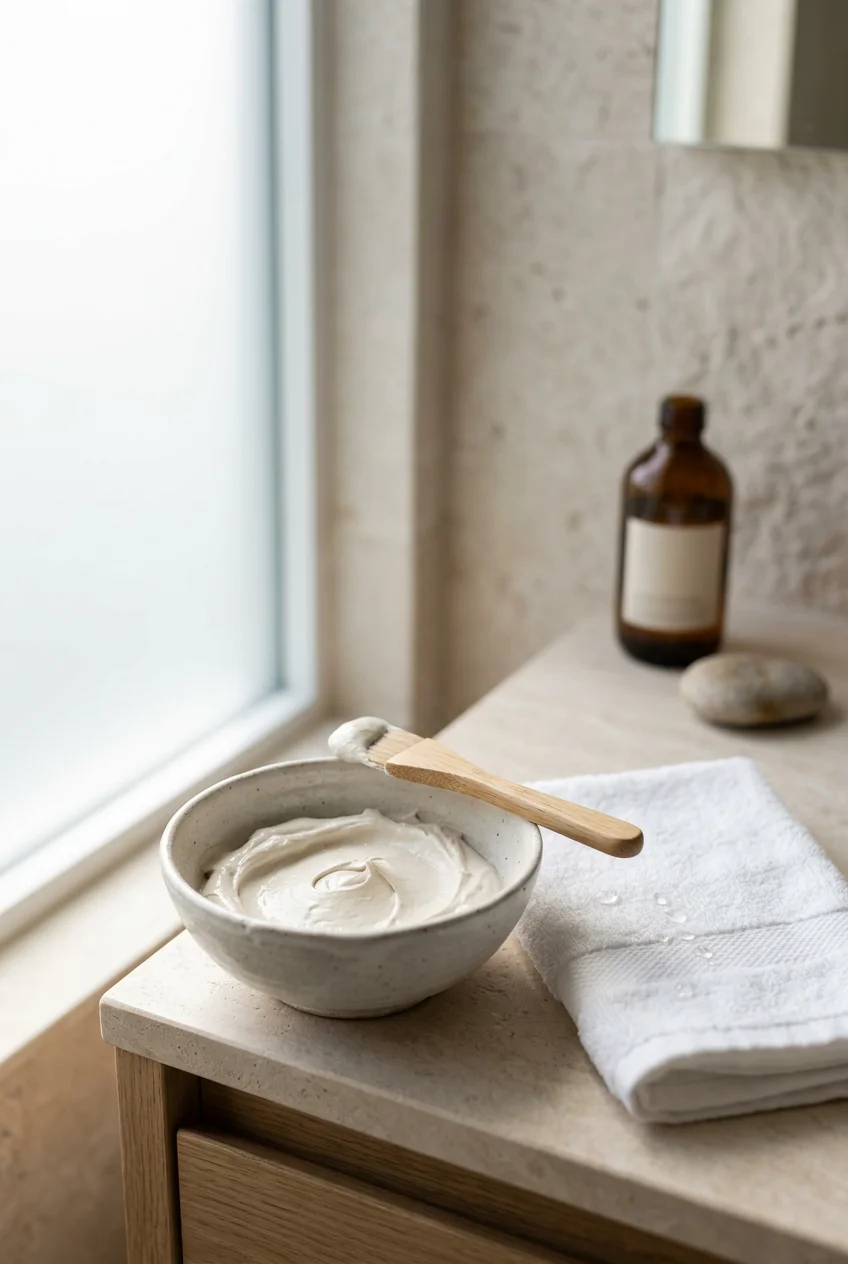
The removal process is where most people cause microscopic damage to their skin. You shouldn’t ever let a clay mask dry completely. If you can’t move your facial muscles without the mask cracking, you’ve waited too long. I used to chisel dried mud off my face with a rough towel. My skin would be bright red for hours afterward. Now, I remove clay masks while they are still slightly damp and sticky to the touch. To take it off, I lean over the sink and splash my face with lukewarm water. I gently massage the damp clay with my fingertips using small circular motions. If it’s stubborn, I use a soft microfiber cloth. I buy the MakeUp Eraser cloths at Costco. They sell a 7-pack for $19.99. I soak one in warm water and press it against my face for ten seconds to rehydrate the clay before wiping it away. I wash the cloths in hot water with unscented detergent to prevent bacteria buildup. Do not use hot water on your face. Hot water strips lipids and causes vasodilation, which leads to unnecessary redness. Gentle friction is all you need. If you’re scrubbing hard enough to stretch your skin, you’re doing it wrong.
6. Embrace Multi-Molecular Hyaluronic Acid For Deep Moisture

Hydration technology has advanced significantly in recent years. The current standard is multi-molecular hyaluronic acid. This means the formula contains different sizes of HA molecules. Low-molecular-weight HA penetrates deeply into the epidermis for internal hydration. High-molecular-weight HA sits on the surface to form a breathable barrier that prevents trans-epidermal water loss. I tested the Hada Labo Tokyo Moisturizing Sheet Mask last month. I found a box of 4 masks at Sprouts for $14.99. The serum inside is thick and viscous. I applied one after a long flight from Denver. The difference in my skin’s texture was measurable. The dry patches around my nose disappeared completely. These masks are safe to use two to three times per week. I sometimes use them nightly if the winter air is particularly brutal. A major mistake people make with hydrating sheet masks is leaving them on until the sheet is completely dry. If the cotton or hydrogel dries out, it will actually start pulling moisture back out of your skin through osmosis. I take the mask off after fifteen minutes while it’s still damp. Then I pat the remaining 1/4 teaspoon of serum into my neck and chest. Your neck has fewer sebaceous glands than your face and needs the extra hydration.

COSRX Vitamin E Vitalizing Sunscreen,SPF 50 Face Sunscreen
Honestly, COSRX Vitamin E Vitalizing Sunscreen surprised me — sturdier than it looks in the photos, and over 42 buyers gave it 4.5 stars.
7. Target Acne With Specific Active Ingredients Like Sulfur

Treating inflammatory acne requires specific chemical interventions, not generic soothing gels. For active breakouts, sulfur is highly effective. It reduces sebum and inhibits the growth of acne-causing bacteria. I keep the Murad Rapid Relief Acne Sulfur Mask in my medicine cabinet. It retails for exactly $44.00 for a 1.7 oz tube. It has a strong, medicinal scent that reminds me of struck matches, but the formula is worth it. The smell lingers on your skin for a few hours, so I only use it at night. I apply a tiny dab, maybe 1/8 of a teaspoon, directly onto cystic spots. I don’t smear it all over my face. I made that mistake once and my cheeks flaked for a week. For general pore congestion, salicylic acid is a better choice because it’s oil-soluble. It can actually penetrate the pore lining to dissolve trapped sebum and dead skin cells. I also occasionally use the Sonage Tulsi Soothing Tri Clay Mask. It costs $52.00 for a 1.69 oz jar. It combines three types of clay with salicylic acid. The jar is annoying because the screw top often gets stuck if clay dries in the threads. However, the formulation effectively flattens minor breakouts overnight without causing severe dehydration.
8. Brighten Your Complexion With Stabilized Vitamin C

Dullness and hyperpigmentation require ingredients that inhibit melanin production and increase cell turnover. Stabilized Vitamin C derivatives and Niacinamide (Vitamin B3) are the most reliable options. Niacinamide is clinically proven to reduce inflammation and regulate sebum production when used at concentrations between 2 and 5 percent. Anything higher than 10 percent usually just causes irritation. I tried a 15 percent niacinamide serum once and broke out in tiny red bumps. Now I stick to lower, effective percentages. I use the Mary&May Niacinamide Vitamin C Brightening Mask. I bought the bulk pack of 30 sheets for $22.50 online. They come in a plastic tub that looks like a container of wet wipes. The lid latches one-handed, which matters when I’m trying to do my routine quickly in the morning. Vitamin C degrades quickly when exposed to light and air, so opaque, airtight packaging is non-negotiable. I pull out one sheet and leave it on for exactly twelve minutes. The combination of Niacinamide and Vitamin C visibly evens out my skin tone. I’ve used this specific product for six months now. You have to be consistent. A brightening mask won’t fade a dark spot after one use. It takes at least four weeks of regular application to see structural changes in pigmentation. You might also like: 10 Teen Skincare Routine That Actually Work
9. Leverage Overnight Treatments For Enhanced Skin Renewal

Overnight masks, or sleeping masks, are engineered to deliver active ingredients slowly over an eight-hour period. Your skin’s renewal rate peaks while you sleep, making it the ideal time for heavy hydration and peptide delivery. These formulas are usually thicker and contain occlusives to trap moisture. I rely on the L’Oréal Paris RevitaLift Triple Power Anti-Aging Overnight Mask. I buy it at Target for $21.49. It comes in a heavy 1.7 oz glass jar. It contains pro-retinol, vitamin C, and hyaluronic acid. I apply a 1/2 teaspoon layer over my regular moisturizer as the final step in my routine. I only use it two to four times per week. The first time I tried an overnight mask, I applied way too much. I woke up with my hair plastered to my face and grease stains on my cotton pillowcase. If you sleep on your stomach, you’ll just end up moisturizing your sheets instead of your face. You only need a thin layer. It should absorb slightly before your head hits the pillow. If your face feels like an oil slick after ten minutes, you’ve applied too much product. These masks are particularly useful during the winter when indoor heating systems destroy ambient humidity and sap moisture from your skin. You might also like: 13 Aesthetic Korean Skincare That Actually Work

Yeamon Gua Sha Facial Tools and Face Roller Set
Yeamon Gua Sha Facial Tools and Face Roller Set has been one of the most consistently praised picks in this category. 1 reviewers averaged 4.5/5.
10. Refrigerate Sheet Masks For A Depuffing Effect

Temperature manipulation is a valid skincare tactic. Storing unopened sheet masks in the refrigerator provides a mechanical cooling effect that constricts blood vessels. This temporarily reduces facial redness and morning puffiness. I keep a dedicated butter compartment in my fridge just for skincare. My fridge is set to 37 degrees, which is cold enough to depuff without freezing the serum. Last Sunday, I woke up with a swollen face after eating too much sodium at dinner. I grabbed a cold sheet mask from the fridge. The immediate temperature drop felt incredibly soothing. However, there are strict rules for this. You should only refrigerate masks in their original, sealed pouches. Never put them in the freezer. I accidentally froze a hydrogel mask once. When it thawed, the serum viscosity was completely ruined. It turned into a watery, separated mess that wouldn’t adhere to my skin. You also need to check the specific product instructions. Some formulas containing heavy oils or waxes will solidify at low temperatures. If the serum looks cloudy or chunky when you open the packet, let it return to room temperature before applying. The cooling effect is just a temporary physical benefit, but it’s highly effective for morning inflammation.
11. Explore Multi-Masking For Targeted Combination Skin Care

Treating combination skin with a single product is inefficient. If you have an oily T-zone and dry cheeks, a full-face clay mask will dehydrate your cheeks. A full-face hydrating mask might clog the pores on your nose. The solution is multi-masking. This technique involves applying different formulas to specific zones simultaneously. I do this every Wednesday night. I apply exactly 1/2 teaspoon of a kaolin clay mask to my nose and chin to extract sebum. I apply the clay first, wait two minutes, then apply 1 teaspoon of a thick ceramide cream mask to my cheeks and forehead so they finish at the same time. I buy the Trader Joe’s Watermelon Overnight Face Mask for $6.99 (it comes in a 2 oz tube) and use it exclusively for the dry zones during these sessions. It smells a bit synthetic, but the squalane content is excellent for the price. I leave both formulas on for ten minutes and wash them off together. This method ensures each area receives the exact chemical intervention it requires. It looks ridiculous in the mirror, but it prevents the collateral damage of over-treating or under-treating specific zones. Always follow up immediately with a moisturizer to lock in the hydration.
Finding a skincare face mask that actually works requires reading ingredient labels and ignoring marketing claims. I’ve wasted hundreds of dollars on pretty jars that did nothing but irritate my skin barrier. My current routine is strictly utilitarian. If a product doesn’t have a proven active ingredient at an effective concentration, I won’t buy it. Start by identifying your primary skin concern, whether that’s excessive sebum, compromised barrier function, or hyperpigmentation. Then, choose a formula that targets that specific issue. Don’t buy a clay mask just because it looks fun on social media. Buy it because you understand how bentonite interacts with lipid production. I highly recommend starting with a basic, affordable option like the Cetaphil clay mask or the Hada Labo sheets before investing in luxury brands. Your skin responds to consistent, calculated care, not sporadic, aggressive treatments. Skincare is a marathon, not a sprint. If you expect a single 15-minute treatment to erase years of sun damage, you’re setting yourself up for disappointment. If you found this breakdown useful, pin this article to your skincare board for reference the next time you’re standing in the beauty aisle trying to decipher an ingredient list.
Frequently Asked Questions
How often should I use a skincare face mask?
You should use treatment masks one to three times per week. Exfoliating or clay masks are best used once or twice weekly to prevent barrier damage, while hydrating masks can be applied more frequently depending on your skin’s moisture levels.
Should I wash my face before applying a skincare face mask?
Yes, always apply masks to freshly cleansed skin. Applying a mask over unwashed skin traps daily dirt, sebum, and sunscreen under the product, which can lead to clogged pores and severe breakouts.
How long do you leave a skincare face mask on?
Most masks are formulated to work within 10 to 15 minutes. Never leave a clay mask on until it cracks, and don’t let sheet masks dry completely on your face, as this pulls moisture out of your skin.
Do I need to moisturize after using a skincare face mask?
Yes, you must follow up with your regular moisturizer immediately after rinsing off a mask. This locks in the active ingredients and hydration while protecting your skin’s natural lipid barrier from excessive moisture loss.
