What’s Inside
- Prioritize Skin Longevity and Barrier Health
- Embrace Skin Cycling 2.0 for a Balanced Routine
- Incorporate Biotech-Driven Regenerative Ingredients
- Practice Slugging for Intense Hydration with Caution
- Use Retinoids Wisely and Sparingly
- Stop Over-Exfoliating to Protect Your Barrier
- Sunscreen Application in Skincare Tiktok Videos
- Extend Skincare to Your Neck and Chest
- Prevent Product Contamination with Proper Dispensing
- Double Cleansing Removes Stubborn Sunscreen
- Apply Pimple Patches on Completely Dry Skin
- Keep Your Vitamin C Serum in the Fridge
- Hyaluronic Acid Goes on Damp Skin Only
- Hypochlorous Acid in Skincare Tiktok Videos for Post-Workout
Last Tuesday night I sat on my bathroom rug with a bright red, burning face after leaving a chemical peel on for twenty minutes instead of ten. That failure made me realize that while most skincare TikTok videos show the shiny end result, they completely skip the actual instructions. I spent the next three days icing my cheeks and researching where I went wrong. I’ve tested hundreds of products for freshfaceroutine.com, and I see the same mistakes repeatedly. You don’t need a fifty-step routine. You just need to know the measurements, the order, and the science behind the ingredients. Let’s look at the methods that work, the products you need, and the techniques you should skip entirely.
1. Prioritize Skin Longevity and Barrier Health

The focus is finally shifting away from aggressive anti-aging toward strengthening your skin’s natural defenses. You want to prioritize long-term cellular health over a temporary tight feeling. I used to buy harsh astringents that left my face feeling like dry paper. I learned that the hard way. Now I look for products rich in ceramides, peptides, and antioxidants. Brands like Byoma emphasize barrier support. I bought the Byoma Hydrating Milky Toner for $14.99 for a 5.07 oz bottle at Target last month. It has a slightly thick, cloudy texture that feels like watered-down lotion, and it smells faintly of plain oatmeal. They’ve sold over two million units for a reason. I pour exactly a quarter-sized amount into my palm and press it into my cheeks every morning. It stops that tight, itchy feeling I usually get around 2 PM in my dry office. The plastic bottle has a square shape that fits perfectly in my medicine cabinet, and the pump dispenses the right amount without spitting product everywhere. I apply this under my makeup, and it doesn’t cause my foundation to pill. If your skin feels squeaky clean after washing, your barrier is already compromised. You need to add lipids back into the surface layer immediately. This toner does exactly that without leaving a sticky film on my forehead.
2. Embrace Skin Cycling 2.0 for a Balanced Routine

You need to move away from overwhelming your skin with daily active ingredients. The new dermatologist-endorsed approach is a flexible four-night routine. Night one is for exfoliation. Night two is for your retinoid. Nights three and four are purely for recovery and hydration. I tried using salicylic acid every single night last winter. I ended up standing in the produce aisle at Trader Joe’s with visible flakes of skin peeling off my chin. It was embarrassing and entirely my fault. Now I use the Paula’s Choice 2% BHA Liquid Exfoliant, which costs $35.00 for a 4 oz bottle, strictly on night one. I apply exactly five drops to a cotton pad and swipe it over my T-zone. I use a reusable bamboo cotton round because the standard disposable ones soak up too much of the expensive liquid. The BHA leaves a slightly oily residue on the skin for about five minutes before it sinks in. This method prevents irritation and promotes skin barrier repair. The recovery nights are crucial. I skip all actives and just layer basic moisturizers. My skin handles the exfoliation much better when it gets a two-day break to rebuild its natural oils. If your face stings when you apply a basic moisturizer, you’re overdoing the actives and need another recovery night.
3. Incorporate Biotech-Driven Regenerative Ingredients

Advanced ingredients like exosomes and PDRN are transitioning from clinical treatments into daily skincare. PDRN is often derived from salmon DNA, which sounds strange but has massive clinical backing for wound healing. I started testing the Medicube PDRN Pink Peptide Serum in October. It costs $39.00 for a 1.01 oz bottle. It has a distinct metallic pink color and a slightly viscous, stringy texture that takes about forty-five seconds to fully absorb. The serum comes in an airless pump bottle, which keeps the active ingredients stable. It smells faintly of botanical extracts, but the scent fades immediately. I apply two pumps to my face and neck after my toner dries. I don’t use this on the same night as my chemical exfoliants because I want the peptides to work without interference. The biotech ingredients signal your cells to repair damage faster than basic peptides do. I noticed a specific change in my old acne scars on my jawline after six weeks of consistent use. They faded from dark purple to a light pink. It’s not a quick fix, but the science behind regenerative ingredients is solid. You won’t see results in three days. You have to commit to finishing the entire bottle before judging the efficacy.

Vtopmart 3 Tier Clear Makeup Organizer with Drawer
Vtopmart 3 Tier Clear Makeup Organizer with Drawer has been one of the most consistently praised picks in this category. 2 reviewers averaged 4.5/5.
4. Practice Slugging for Intense Hydration with Caution

For those with dry or irritated skin, applying a thin layer of an occlusive product as the final step in your nighttime routine seals in moisture. This technique is dermatologist-approved, but it’s not recommended for oily or acne-prone skin because it can trigger breakouts. I bought a standard tub of Vaseline Healing Jelly for $4.29 for 3.75 oz at Kroger. You only need a pea-sized amount for your entire face. I tried this wrong for months before figuring it out. I used to scoop out a tablespoon and slather it on like a mask. I ended up with greasy pillowcases and clogged pores along my hairline. Now I warm a tiny amount between my fingers until it melts, then gently press it over my moisturizer. It acts like a physical lid, preventing water loss while you sleep. I only do this on nights when the heater is running full blast. When you wake up, you can’t just splash water on your face. You have to use a gentle gel cleanser to remove the Vaseline residue, or your morning sunscreen won’t adhere properly. It takes an extra minute in the morning, but the hydration retention is worth the effort. You might also like: 15 Brilliant Aesthetic Instagram Night Routine Skincare That Actually Work
5. Use Retinoids Wisely and Sparingly

When applying retinoids, you must use only a pea-sized amount for your entire face. You need to avoid the trending mistake of applying millions of dots directly from the tube onto your cheeks, forehead, and chin. That method deposits way too much product and will lead to adverse reactions like redness, swelling, and severe damage to your skin barrier. I use the CeraVe Resurfacing Retinol Serum, which I grab for $17.99 for a 1 oz pump bottle at Walmart. I dispense exactly one pump onto my index finger. I dab it once on my forehead, once on each cheek, and once on my chin, then spread it out. The formula has a lightweight, gel-cream texture that spreads easily, so you don’t need excess product. I apply my retinol after my moisturizer has completely dried. This is called the sandwich method, and it creates a buffer that reduces the harshness of the active ingredient. The CeraVe formula contains niacinamide, which helps calm the skin. Retinoids work by speeding up cell turnover. More product doesn’t mean faster results; it just means more irritation. I learned this the hard way when I applied two full pumps and woke up with eyelids so swollen I could barely open them. Keep it away from your eye area and stick to the pea-sized measurement.
6. Stop Over-Exfoliating to Protect Your Barrier

You need to limit chemical exfoliation to one to three times per week, maximum. Potent products like The Ordinary AHA 30% + BHA 2% Peeling Solution, priced at exactly $8.00 for a 1 oz dropper bottle, should be used strictly once weekly for no more than ten minutes. It’s not meant for daily use. It has a dark red color and a thin, watery consistency that smells faintly of sour berries. I apply exactly one dropper full across my dry face. Do not apply this to damp skin, or the acid will penetrate too quickly and burn you. As I mentioned earlier, I once left this on for twenty minutes while distracted by a phone call. My skin felt like it was on fire, and it took a full week of plain moisturizer to fix the damage. Set a physical timer on your phone for eight minutes just to be safe. I use a soft microfiber towel soaked in cool water to gently wipe the peeling solution away. Don’t scrub your face with a rough cotton washcloth while the acid is still active. You’re just asking for micro-tears and redness. Over-exfoliating strips the protective lipids from your skin, leaving you vulnerable to bacteria and environmental damage.

COSRX Vitamin E Vitalizing Sunscreen,SPF 50 Face Sunscreen
If you want something that just works, COSRX Vitamin E Vitalizing Sunscreen is a safe bet (42 reviews, 4.5 stars).
7. Sunscreen Application in Skincare Tiktok Videos

You must apply at least half a teaspoon of sunscreen for your face and neck, or follow the two-finger rule. You need to apply it daily regardless of the weather or your indoor activity. I use the Blue Lizard Sensitive Mineral Sunscreen, which costs $14.98 for a 5 oz bottle at Sprouts. It contains zinc oxide and titanium dioxide for broad-spectrum protection. Mineral sunscreens sit on top of the skin to reflect UV rays, which means they often leave a slight white cast. I squeeze two thick lines of lotion down the lengths of my index and middle fingers. It looks like a massive amount of product. It takes a solid two minutes of rubbing to get the thick, white cream to absorb. I make sure to drag the sunscreen all the way down to my collarbones and the back of my neck. If I’m wearing a ponytail, the back of my neck gets direct sunlight all day while I’m driving. The Blue Lizard formula doesn’t stain my dark car seats, which is a massive bonus. Never attempt dangerous sunscreen contouring, where you apply SPF only to certain areas to get a natural tan on your cheekbones. That just gives you targeted sun damage and premature wrinkles. The 50 SPF means I don’t reapply at lunch if I’m just sitting at my desk, but if I’m outside, I reapply every two hours. You might also like: 12 Facial Routine Skincare You Need to See
8. Extend Skincare to Your Neck and Chest

A common mistake seen in fifty-four percent of skincare TikTok videos is completely neglecting the neck and décolletage. You always need to apply all your skincare products, including cleansers, serums, moisturizers, and especially SPF, to these delicate areas to prevent premature aging. The skin on your neck is thinner than the skin on your face and has fewer oil glands, making it more prone to creping and sagging. I use the Gold Bond Age Renew Neck & Chest Firming Cream, which is $11.97 for a 2 oz tube at Target. It has a thick, velvety texture that doesn’t feel sticky under my shirt collar. I dispense a nickel-sized amount and massage it upward from my collarbone to my jawline. If you sleep on your side, the skin on your chest gets crushed together for eight hours a night. Keeping that area heavily moisturized with the Gold Bond cream helps prevent those deep vertical sleep wrinkles from becoming permanent. I used to stop all my skincare right at my chin. Last summer, I noticed my face was smooth but my chest had red, sun-damaged patches that looked ten years older than the rest of me. Now, whatever goes on my face goes on my neck. This includes my vitamin C serum and my evening retinol. Just remember to use the same gentle touch you use on your face. You might also like: 14 Simple Skincare Routine for Every Budget
9. Prevent Product Contamination with Proper Dispensing

To maintain product efficacy and hygiene, dispense serums onto clean fingertips rather than touching the dropper directly to your skin. This prevents the transfer of acne-causing bacteria back into the bottle. I see people dragging glass droppers across their cheeks in almost every video, and it makes me cringe. I use the COSRX Snail Mucin Power Essence, which I buy in a dual pack for $25.00 (amounting to 3.38 oz per bottle) at Costco. It has a highly viscous, stringy texture that resembles egg whites. I pump it two times into the palm of my left hand, then use my right fingertips to tap it onto my face. I rub my fingertips together to warm the snail mucin, then gently pat it onto my cheeks, forehead, and chin. I don’t rub it in circles because the stringy texture gets frothy and turns white if you create too much friction. If you touch the dispensing nozzle or dropper to an active breakout, you’re just introducing that bacteria into a dark, wet environment where it will multiply. I ruined a perfectly good bottle of expensive face oil this way last year. It started smelling sour after a month because I contaminated it. Keep the dropper at least an inch away from your face if you insist on dispensing it directly, or just use your clean hands.
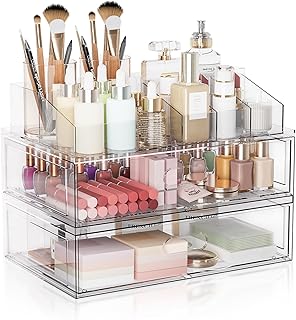
Clear Stackable Makeup Organizer with Drawer
A dependable everyday pick — Clear Stackable Makeup Organizer with Drawer pulls in 306 ratings at 4.5 stars. Not flashy, just solid.
10. Double Cleansing Removes Stubborn Sunscreen

If you wear water-resistant sunscreen or makeup, a single pass with a water-based cleanser isn’t going to cut it. You need an oil-based cleanser first to break down the heavy silicones and waxes. I use the Kose Softymo Speedy Cleansing Oil, which costs exactly $9.50 for a 7.8 oz pump bottle online. I dispense two full pumps into dry hands and massage it onto my completely dry face for sixty seconds. The oil has a slick, thin consistency and smells faintly of olive oil. It dissolves the heavy mineral sunscreen I mentioned earlier without any aggressive scrubbing. The Kose cleansing oil is also incredibly effective at breaking down waterproof mascara. I gently massage it over my closed eyelids for ten seconds, and it dissolves the mascara without me having to tug at my eyelashes or use harsh makeup wipes. After a minute, I add a splash of warm water. The oil emulsifies into a milky white fluid that rinses away clean. Then I follow up with my regular gel cleanser. I skipped the oil cleanse for a week while traveling last month, and I ended up with six painful closed comedones along my jawline. Mineral sunscreen clings to the skin aggressively. You can’t just wipe it off with a wet washcloth. You have to dissolve it first, and oil attracts oil.
11. Apply Pimple Patches on Completely Dry Skin

Hydrocolloid patches are incredibly effective for drawing fluid out of whiteheads, but you have to apply them correctly. I buy the Hero Cosmetics Mighty Patch Original for $12.99 for a 36-count box at Whole Foods. The patches are small, translucent, and slightly rubbery. The biggest mistake I see is people applying their entire skincare routine—toner, serum, heavy moisturizer—and then trying to stick a patch on top of the pimple. The adhesive won’t stick to a greasy surface. I tried doing that, and the patch slid down my cheek into my hair while I slept. You need to cleanse your face, dry it completely, and apply the patch directly to the bare skin over the blemish. Press it down firmly for three seconds. After the patch is secure, you can carefully apply the rest of your skincare around it. Leave it on for at least six hours. When you peel the patch off, pull it parallel to your skin rather than ripping it straight up like a bandage. This prevents you from tearing the delicate healing skin underneath. I throw the patch away and immediately wash my face as usual. It flattens the blemish without you having to pop it and risk scarring.
12. Keep Your Vitamin C Serum in the Fridge

L-ascorbic acid is notoriously unstable and oxidizes quickly when exposed to light, heat, and air. I use the Timeless 20% Vitamin C + E Ferulic Acid serum, which is $25.95 for a 1 oz pump bottle. It has a watery texture and a very distinct, metallic scent that most people compare to hot dog water. When you first open it, the liquid should be completely clear or slightly cloudy. If it turns dark yellow or brown, it has oxidized and is no longer effective. I kept my first bottle on my warm bathroom counter next to the shower. It turned dark orange within three weeks and stained my hands. Now, I keep my bottle in the butter compartment of my kitchen fridge. The cold temperature significantly slows down the degradation process. The Timeless serum comes with a standard dropper, but you have to make sure you screw it on tightly every single time. If you leave it slightly loose in the fridge, the air exposure will oxidize the liquid just as fast as heat would. I apply exactly three drops to my face every morning right after cleansing. The cold liquid feels shocking first thing in the morning, but my bottle now stays clear for a full three months. Don’t stock up on vitamin C serums. Buy one bottle at a time and use it consistently until it’s gone.

EQQUALBERRY Vitamin Illuminating Serum | Niacinamide 4% +
Honestly, EQQUALBERRY Vitamin Illuminating Serum | Niacinamide 4% + Brightening surprised me — sturdier than it looks in the photos, and over 108 buyers gave it 4.5 stars.
13. Hyaluronic Acid Goes on Damp Skin Only

Hyaluronic acid is a humectant, meaning it draws moisture from its surroundings. I use the Good Molecules Hyaluronic Acid Serum, which is incredibly affordable at $6.00 for a 1 oz glass dropper bottle. It has a slippery, slightly viscous texture that spreads very easily. If you apply it to a bone-dry face in a dry room, it doesn’t have any moisture in the air to pull from. Instead, it will actually pull water from the deeper layers of your skin, leaving your face feeling tighter and drier than before. I made this mistake constantly during the winter of 2021. My skin felt like it was shrinking. Now, I wash my face and barely pat it with a towel, leaving visible water droplets on my cheeks. I apply three drops of the serum to the damp skin, massage it in, and immediately seal it with a heavy moisturizer. I seal the Good Molecules serum in with a thick layer of Vanicream Daily Facial Moisturizer. The combination of the humectant pulling water and the emollient trapping it creates a plump, glassy look that lasts through a full eight-hour workday. This specific layering technique takes the serum from being completely useless to making my skin look plump and hydrated all day.
14. Hypochlorous Acid in Skincare Tiktok Videos for Post-Workout

If you work out and can’t wash your face immediately afterward, sweat and bacteria will sit on your skin and cause breakouts. I use the Tower 28 SOS Daily Rescue Facial Spray, which costs $28.00 for a 4 oz spray bottle. The active ingredient is hypochlorous acid, which is naturally produced by your white blood cells to fight infection. The spray feels exactly like water but smells faintly of a swimming pool. I keep a bottle in my gym bag. Last summer, I was getting terrible cystic acne on my chin from sitting in traffic for forty minutes after my spin class. Now, the second I get to my car, I spray my face four times until it’s dripping wet. The Tower 28 bottle has a very fine mist nozzle, so it doesn’t feel like you’re spraying yourself with a water gun. I let it dry for about two minutes before I put my sunglasses on and drive home. It’s a highly specific step, but it completely stopped my post-gym chin breakouts. The hypochlorous acid neutralizes the bacteria on contact. You just let it air dry. It won’t bleach your clothes or irritate your skin. It’s a highly specific, functional step that actually solves a mechanical problem. You don’t need it if you wash your face right after sweating, but if you have a commute, this spray is the exact product you need to prevent those deep, painful sweat pimples.
I’ve spent enough time and money fixing my own skin barrier to know that most viral trends skip the crucial details. Took me years to figure out. You don’t need to try every single product that pops up on your feed. Stick to the specific measurements, respect your skin barrier, and always patch-test new ingredients. I highly recommend starting with the Byoma toner if your skin feels tight right now. Pin this article so you have the exact product prices and instructions the next time you’re standing confused in the skincare aisle.
Frequently Asked Questions
How much sunscreen should I actually use on my face?
You need to apply at least half a teaspoon of sunscreen for your face and neck. You can also use the two-finger rule, squeezing thick lines of lotion down your index and middle fingers.
Should I apply hyaluronic acid to dry skin?
No, you should never apply hyaluronic acid to dry skin. It is a humectant that pulls moisture from its surroundings. Apply it to damp skin so it pulls that water into your face, then seal it with moisturizer.
What is the correct way to apply a pimple patch?
You must apply hydrocolloid patches to completely dry, clean skin. If you apply your serums and moisturizers first, the adhesive won’t stick and the patch will slide off your face.
How often should I use a strong chemical exfoliant?
You should limit strong chemical exfoliants to one to three times per week. Potent peeling solutions should only sit on your skin for a maximum of ten minutes to prevent severe barrier damage.
