What’s Inside
- Master The Art Of Double Cleansing, Even Without Makeup
- Opt For Gentle, pH-Balanced Water-Based Cleansers
- Exfoliate Strategically With Chemical Exfoliants 1-2 Times Weekly
- Rebalance With A Hydrating, Alcohol-Free Toner
- Layer Targeted Serums For Specific Concerns
- Adopt A Zone Treatment Approach For Moisturizing
- Prioritize Daily Broad-Spectrum Sunscreen (SPF 30+)
- Embrace Skinimalism For Smarter Layering
- Strengthen Your Skin Barrier With Key Ingredients
- Avoid Over-Cleansing And Harsh Alcohols
- Stop Expecting Instant Results; Consistency Is Key
- Try The Skin Method For Toners On Dry Zones
- Customize Your Routine Seasonally
- Incorporate Niacinamide And Patch Test Diligently
Last October, I stood in my bathroom at 11 PM staring at a forehead that looked like an oil slick and cheeks that were peeling. My standard routine was destroying my acid mantle. Figuring out Korean skincare for combination skin isn’t about buying popular pastel bottles. It requires an analytical approach to balancing two opposite skin conditions on one face. I spent months cataloging pH levels, tracking ingredient lists, and testing viscosity. I tried this wrong for months before I figured it out. I stripped my skin with harsh foaming agents and suffocated my pores with heavy creams. You can’t treat combination skin with a one-size-fits-all product. You have to isolate the zones, measure your active ingredients, and pay attention to how formulas interact chemically. Here is the data-driven framework I use to manage combination skin.
1. Master The Art Of Double Cleansing, Even Without Makeup

When building a foundation for Korean skincare, double cleansing is non-negotiable. I used to skip oil cleansing if I didn’t wear makeup. Big mistake. I’d wake up with hard sebum plugs on my nose because water-based cleansers can’t dissolve oil-based impurities like sunscreen and daily sebum. You need a lipid to dissolve a lipid. I use the Haruharu Wonder Black Rice Deep Cleansing Oil, which costs $16.00 for a 5.1 oz bottle. The texture is thin, almost like a dry oil, and it smells faintly of rice bran. I massage 2 pumps onto dry skin for 60 seconds. It dissolves stubborn mineral SPF without leaving a heavy film. Afterward, I follow up with the ROUND LAB Birch Juice Moisturizing Cleanser, which runs $18.00 for 5.07 oz. Years ago, I bought cheap makeup wipes at Target in a moment of laziness. The friction and alcohol wrecked my moisture barrier for three weeks. Skip the wipes. Stick to the chemistry of oil dissolving oil, followed by a gentle surfactant. Trust me.
2. Opt For Gentle, pH-Balanced Water-Based Cleansers

The pH scale dictates the health of your skin barrier. Healthy skin is slightly acidic, usually around a pH of 5.5. If you use an alkaline cleanser, you strip the lipids from your dry cheeks while triggering a panic response in your T-zone that produces even more oil. Last year, I forgot my travel bag and bought a generic foaming soap at Walmart for $3.99. It felt like washing with laundry detergent. My skin squeaked when I rubbed it, which is the sound of a compromised barrier. Now, I strictly use the AXIS-Y Sunday Morning Refreshing Cleansing Foam. It costs $24.37 for a 120ml tube. I measure out a pea-sized amount, roughly 1/4 teaspoon. It contains Centella Asiatica and green tea, but more importantly, it maintains a pH between 5.0 and 6.0. The lather is dense but not bubbly. It rinses completely clean with lukewarm water, leaving my cheeks feeling normal instead of tight. You won’t achieve balanced skin if your second cleanser is aggressively alkaline.
3. Exfoliate Strategically With Chemical Exfoliants 1-2 Times Weekly

Physical scrubs are a liability for combination skin. I was at Sprouts last Tuesday and saw a wall of apricot and walnut shell scrubs. The jagged edges create micro-tears, which invite bacteria into oily pores and exacerbate flaking on dry cheeks. Chemical exfoliation is precise. For combination skin, you need to clear the keratin buildup in your oily areas without irritating the dry zones. I use the Cosrx BHA Blackhead Power Liquid, priced at $25.00 for a 100ml bottle. The primary active is willow bark water paired with niacinamide. The liquid is slightly viscous. I dispense 2 pumps onto a thin cotton pad and press it only into my T-zone and chin. I don’t drag it across my dry cheeks. I leave it on for 15 minutes before my next step, letting the beta hydroxy acid penetrate the lipid layer. I do this on Tuesdays and Fridays. Over-exfoliating won’t clear your skin faster; it will just induce inflammation. Learned that the hard way.
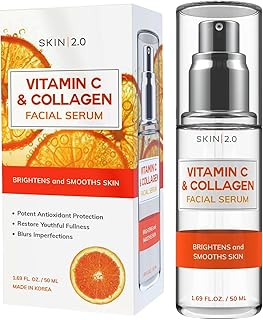
Skin 2.0 Vitamin C Serum – Dermatologist Tested
If you want something that just works, Skin 2.0 Vitamin C Serum – Dermatologist Tested is a safe bet (45 reviews, 4.5 stars).
4. Rebalance With A Hydrating, Alcohol-Free Toner

After cleansing and exfoliating, your skin’s surface is bare. A hydrating toner functions like a primer, lowering surface tension so serums can penetrate deeply rather than evaporating. Many western toners rely on denatured alcohol for a temporary matte finish. That’s a chemical illusion that dehydrates the tissue. I rely on the S.NATURE Aqua Oasis Toner, which costs $13.60 for a 210mL bottle. It’s completely alcohol-free. The liquid is clear and lacks synthetic fragrance. I pour 4 drops into my left hand, rub my hands together, and press my palms firmly into my cheeks, then my forehead. The slight tackiness disappears in 30 seconds. If my cheeks are particularly dry from indoor heating, I’ll layer 3 drops strictly on the perimeter of my face. Another sound option is the Torriden DIVE-IN Low Molecular Hyaluronic Acid Toner, around $19.00 for 300ml. It uses different molecular weights of hyaluronic acid to bind water at varying depths. You want hydration, not astringents.
5. Layer Targeted Serums For Specific Concerns

Combination skin requires a modular approach to serums. You can’t expect one bottle to fix both excess sebum and flaking skin. I use a targeted zone strategy. For my T-zone, I use the Beauty of Joseon Glow Deep Serum, which costs $17.00 for a 30ml dropper bottle. It contains 60% Propolis Extract and 2% Niacinamide. I researched propolis after buying raw honey at Whole Foods. The serum is a pale yellow, slightly sticky fluid. I apply 2 drops to my forehead and nose to regulate oil and calm redness. For my cheeks, I switch to the Torriden DIVE-IN Hyaluronic Acid Serum, priced at $22.00 for 50ml. I apply 3 drops to my cheeks and jawline. This formula is slippery and cooling, providing water retention without adding heavy oils. By separating the active ingredients geographically, I give each zone what it chemically requires. Mixing them in your palm dilutes the concentrations and defeats the purpose.
6. Adopt A Zone Treatment Approach For Moisturizing

The most common failure point in treating combination skin is using a single moisturizer. A cream thick enough to heal dry cheeks will clog the pores on an oily nose. A gel light enough for a greasy forehead will leave cheeks feeling parched within two hours. The secret is treating your face as two distinct biomes. I keep two moisturizers on my vanity. For the perimeter of my face, I use the S.NATURE Aqua Squalane Moisturizing Cream. It costs $19.04 for a 60mL tube. I squeeze out a nickel-sized amount. The squalane mimics human sebum, locking in moisture without triggering acne. It has a dense, smooth texture. For my T-zone, I apply the Beauty of Joseon Red Bean Water Gel, which is $18.00 for a 100ml jar. I use a tiny spatula to scoop out a dime-sized amount. The red bean extract absorbs excess sebum throughout the day. Applying two different moisturizers takes an extra 15 seconds, but it eliminates the midday oil slick and the afternoon flaking. You might also like: 15 Brilliant Skincare Routine Ideas That Make a Real Difference

EQQUALBERRY Vitamin Illuminating Serum | Niacinamide 4% +
Honestly, EQQUALBERRY Vitamin Illuminating Serum | Niacinamide 4% + Brightening surprised me — sturdier than it looks in the photos, and over 108 buyers gave it 4.5 stars.
7. Prioritize Daily Broad-Spectrum Sunscreen (SPF 30+)

UV radiation accelerates collagen degradation and hyperpigmentation. Sunscreen is mandatory, but finding one for combination skin is frustrating. I’ve thrown away dozens of bottles that felt like a greasy mask or pilled under makeup. The formulation matters. I currently use the Skin1004 Madagascar Centella Hyalu-Cica Water-Fit Sun Serum SPF50 PA++++. It costs $19.00 for a 50ml pump tube. I measure out 1/4 teaspoon for my face and neck. The texture is like a lightweight lotion. It dispenses white but rubs in clear within 10 seconds, leaving zero white cast. It relies on chemical filters like Diethylamino Hydroxybenzoyl Hexyl Benzoate, which don’t leave a chalky residue. Because it contains hyaluronic acid and Centella, it doubles as a light daytime moisturizer for my oily zones. Alternatively, the Beauty of Joseon Relief Sun: Rice + Probiotics SPF 50+ PA++++ ($18.00 for 50ml) offers a slightly more moisturizing finish. I apply this at 7:30 AM and don’t need to blot until 3:00 PM. Skipping SPF isn’t an option if you want to maintain an intact barrier.
8. Embrace Skinimalism For Smarter Layering

The 2026 trend in Korean skincare is a pivot away from the exhausting 10-step routine. The industry is moving toward intelligent minimalism. Layering ten different extracts on combination skin usually results in pilling and contact dermatitis. I used to buy bulk skincare sets at Costco, assuming more products meant better skin. I’d layer essence, ampoule, serum, lotion, and cream. My skin couldn’t absorb it all; the excess sat on the surface trapping heat. Now, I focus on multi-functional formulas. I limit my morning routine to four steps: water cleanse, hydrating toner, targeted serum, and SPF. That’s it. Every product must serve a measurable purpose. If a product claims to do everything, it usually does nothing well. By reducing the total number of ingredients, I lowered the risk of irritation and made it easier to identify which compound was causing a breakout. Smarter layering means understanding the molecular weight of your products and applying them from thinnest to thickest. It took me years to figure out. You might also like: 15 Brilliant Aesthetic Instagram Night Routine Skincare That Actually Work
9. Strengthen Your Skin Barrier With Key Ingredients

Your stratum corneum is the brick-and-mortar structure keeping water inside your body and bacteria outside. When you have combination skin, that barrier is often compromised in the dry zones and overcompensating in the oily ones. You must reinforce the mortar. I look for ceramides, panthenol, and beta-glucan. I use the Anua 3 Ceramide Panthenol Moisture Barrier Cream at night. It is $42.43 for a 100ml tube, but the formulation is dense and effective. It has a thick, ointment-like texture that requires warming between the fingers. I apply a pea-sized amount strictly to my cheeks and jawline. I don’t put this on my nose. I ruined my barrier three years ago by overusing a harsh glycolic acid, and my cheeks wept clear fluid for two days. Ceramides were the only topical compound that rebuilt the lipid matrix. When your barrier is intact, your skin stops overproducing oil to compensate for water loss.

COSRX Vitamin E Vitalizing Sunscreen,SPF 50 Face Sunscreen
COSRX Vitamin E Vitalizing Sunscreen punches above its price — 42 buyers rated it 4.5 stars. I would buy it again.
10. Avoid Over-Cleansing And Harsh Alcohols

The instinct with an oily T-zone is to scrub it until it feels dry. This is a misunderstanding of skin biology. Using stripping cleansers disrupts the barrier, leading to a rebound effect where the sebaceous glands produce double the oil. In high school, I used to wash my face three times a day with a harsh salicylic acid wash. My forehead was shiny, yet flaking at the eyebrows. It’s a miserable combination. You must avoid products containing SD alcohol, denatured alcohol, or isopropyl alcohol high up on the ingredient list. They evaporate rapidly, taking your skin’s natural hydration with them. I check the ingredient deck of every product I buy. If alcohol is in the top five, I put it back. I strictly wash my face twice a day: a full double cleanse at night, and a quick 30-second water-based cleanse in the morning. If I work out midday, I rinse with lukewarm water. I don’t use surfactants a third time. You might also like: 15 Lovely Aesthetic Luxury Skincare to Inspire Your Next Project
11. Stop Expecting Instant Results; Consistency Is Key

Human epidermal cell turnover takes approximately 28 days for adults in their twenties, and slows down to 45 days or more as you age. Expecting a topical serum to permanently alter your skin chemistry in 48 hours is biologically impossible. I see people discard a $30 serum after three days because they didn’t wake up with glass skin. I used to do this too. I’d cycle through products weekly, causing inflammatory responses. Now, I mandate a strict 6-week trial period for any new active ingredient. I take a photo in harsh bathroom lighting on day one, and I don’t evaluate the results until day 42. The only exception is an immediate allergic reaction, like hives or severe burning. If a product isn’t showing dramatic results yet, wait. The cellular matrix needs time to process active compounds, rebuild lipid layers, and shed dead keratinocytes. Patience is a mandatory ingredient in any functional skincare regimen.
12. Try The Skin Method For Toners On Dry Zones

When my cheeks are dehydrated but my T-zone is oily, adding a heavy cream isn’t always the right mechanical solution. Sometimes the skin lacks water, not oil. In these instances, I use the Korean ‘Skin’ method, which involves localized, intensive hydration. I use the Dear Klairs Supple Preparation Unscented Toner, which runs $22.00 for a 180ml bottle. It has a bouncy texture. I used to buy cheap, scratchy cotton rounds at Kroger that absorbed all the liquid. Now I use thin, spongy toner pads specifically designed to release liquid back onto the skin. I saturate two pads with 1 teaspoon of the Klairs toner. I place one pad on my left cheek and one on my right, leaving my T-zone bare. I set a timer for 5 minutes. The pads force the hyaluronic acid and beta-glucan into the stratum corneum through occlusion. When I remove them, my cheeks are physically cooler and visibly plumped, without adding heavy oil to my face.

medicube No Cast Just Glow Collagen Sunscreen | SPF 50
If you want something that just works, medicube No Cast Just Glow Collagen Sunscreen | SPF 50 Broad Spectrum is a safe bet (861 reviews, 4.5 stars).
13. Customize Your Routine Seasonally

Combination skin is highly reactive to environmental humidity and temperature. The routine that balances your skin in a humid July will destroy your barrier in a dry, freezing January. You have to adjust your lipid ratios based on the dew point. During the summer, ambient humidity does a lot of the heavy lifting. I swap out my cream moisturizers entirely and use only the Beauty of Joseon Red Bean Water Gel all over my face. I skip the squalane cream because the heat increases my sebum excretion. In late November, when indoor heaters turn on and humidity drops below 30%, water loss accelerates. That’s when I bring back the heavy Anua Ceramide cream for my cheeks and switch my morning cleanser to a non-foaming milk. You can’t rigidly adhere to the same products 365 days a year. You have to read the weather report and adjust your topical applications. Skin is an organ; it responds to its environment.
14. Incorporate Niacinamide And Patch Test Diligently

Niacinamide, or Vitamin B3, is the most useful compound for combination skin. It’s one of the few ingredients proven to down-regulate sebum production in oily zones while simultaneously up-regulating ceramide synthesis in dry zones. It is chemically stable and plays well with most other actives. I use the Anua Niacinamide 10 + TXA 4 Serum, which costs $24.00 for a 30ml pump. It contains 10% niacinamide and 4% tranexamic acid. However, 10% is a high concentration. I learned the hard way that you can’t just slather a new active all over your face. I always patch test. I dispense 1 drop behind my left ear and 1 drop on my lower jawline. I leave it alone for 48 hours. I don’t wash it off, and I don’t apply anything over it. I monitor for erythema, itching, or small pustules. If the area remains clear, I introduce it to my face twice a week, slowly scaling up to daily use. Niacinamide balances the skin beautifully, but only if you respect the chemistry and introduce it methodically.
Managing combination skin is an exercise in precision and patience. Stop buying products based on marketing claims and start looking at pH levels, lipid ratios, and active ingredient concentrations. Pin this guide so you have a factual reference next time you’re standing in the skincare aisle trying to decode an ingredient list. No exaggeration.
Frequently Asked Questions
What is the best cleanser for combination skin?
A low-pH water-based cleanser is ideal. Look for formulas with a pH between 5.0 and 6.0, like the AXIS-Y Sunday Morning Refreshing Cleansing Foam, to avoid stripping dry cheeks while adequately cleaning oily zones.
Should I use different moisturizers on different parts of my face?
Yes. Using a zone treatment approach is highly effective. Apply a lightweight gel, like a red bean water gel, to your oily T-zone, and a richer squalane or ceramide cream to your dry cheeks.
How often should I exfoliate combination skin?
Limit chemical exfoliation to 1-2 times per week. Use a targeted BHA liquid strictly on your oily T-zone to clear pores, avoiding the drier cheek areas to prevent barrier damage and flaking.
Is niacinamide good for combination skin?
Yes, niacinamide is highly effective for combination skin. It chemically down-regulates sebum production in oily areas while simultaneously up-regulating ceramide synthesis to hydrate and repair dry patches.
