What’s Inside
- Master Pre-Mask Cleansing for a True Skincare Face Mask Aesthetic
- Stop the One-Size-Fits-All Approach
- Multi-Masking for Targeted Treatment
- Apply with Precision and the Exact Right Quantity
- Adhere Strictly to Recommended Timings
- Cryo-Masking for Instant De-Puffing
- Boost Skin Health with Probiotic Formulas
- Leverage Overnight Masks for Intensive Repair
- Perfecting the Sheet Mask Skincare Face Mask Aesthetic
- Don’t Forget Lip Hydration and Post-Mask Care
Last Tuesday at Whole Foods, I caught a glimpse of myself in the dairy aisle glass. My attempt at a skincare face mask aesthetic had turned into a flaky, red disaster. I walked in thinking I looked like a dewy spa model, but the harsh lights revealed dried clay clinging to my eyebrows and a fried skin barrier. This look isn’t just about slapping on pink goo for a photo. It takes chemistry, timing, and knowing what your skin needs on a given Tuesday. I did this wrong for months. I used to buy whatever looked pretty, smear it on with unwashed hands, and leave it until it cracked. My face paid the price with cystic breakouts and peeling cheeks. Let’s break down the formulas, measurements, and methods that actually work, skipping the marketing fluff.
1. Master Pre-Mask Cleansing for a True Skincare Face Mask Aesthetic

Starting a mask on an unwashed face is a waste of time and money. I used to wipe my face with a cheap makeup wipe and apply a $70 mask over the chemical residue. Huge mistake. A mask can’t penetrate a layer of day-old SPF, sweat, and sebum. You need a bare canvas. I bought the Paula’s Choice CALM Nourishing Cleanser ($19 for 6.7 oz) in October after my old foaming cleanser from Target started stripping my skin, making my masks sting. I dispense exactly 1/2 teaspoon of the cleanser into wet palms. It has a milky texture that doesn’t foam much, which threw me off at first. I actually thought it wasn’t working. Learned that the hard way. But it dissolves my mineral sunscreen without leaving my cheeks feeling tight. I massage it for 60 seconds before rinsing with lukewarm water. Once a week, I use a mild chemical exfoliant before masking. Removing dead skin cells means the active ingredients don’t just sit on the surface. If you skip this prep, you’re pouring expensive serums down the drain. You want a clean base. Otherwise, you’re just hydrating dead skin.
2. Stop the One-Size-Fits-All Approach

Your skin isn’t static. It changes based on the weather, your cycle, and what you ate for dinner. Slapping on the same mask every Sunday is a massive rookie error. I learned this the hard way last winter. I kept using a heavy, oil-absorbing clay mask I grabbed at Sprouts for $8.99 (the Aztec Secret Indian Healing Clay, 1 lb tub) even though it was 20 degrees outside. I mixed 1 tablespoon of powder with 1 tablespoon of raw apple cider vinegar. It bubbled up, but my skin ended up so dry it cracked around my nose. That mask is brilliant for July when I’m sweating, but it’s a disaster for January. Read your skin daily. If your forehead feels slick, reach for clay or charcoal. If your cheeks feel tight, you need a hydrating cream or hydrogel mask. I keep three different formulas in my bathroom. This isn’t excessive. It’s necessary for targeted treatment. Assessing your face before choosing your product dictates whether you fix an issue or create a new one.
3. Multi-Masking for Targeted Treatment

Multi-masking sounds like a gimmick, but the logic holds up. Your T-zone has a different profile than your cheeks. Treating them with the same formula makes no sense. I started this after buying a 10x magnifying mirror at Costco for $19.99 and realizing my nose was congested while my jawline was flaking. Now, I apply the SkinCeuticals Clarifying Clay Masque ($70 for 2.4 oz) to my nose, chin, and center forehead. It uses kaolin and bentonite to absorb sebum without stinging. For the perimeter of my face, I use the SkinCeuticals Hydrating B5 Masque ($70 for 2.5 oz). The B5 mask has a cooling gel texture that smells like cucumber. Applying them at once saves 15 minutes. The tradeoff? You have to be careful washing them off. If you smear the wet clay into the gel, you create a sticky paste that takes forever to rinse. I use a damp microfiber cloth, wiping the clay off first, rinsing the cloth, and then removing the gel. It takes coordination, but the results beat a single-mask application.

Jade Gua Sha and Face Roller
Jade Gua Sha and Face Roller has been one of the most consistently praised picks in this category. 12 reviewers averaged 4.5/5.
4. Apply with Precision and the Exact Right Quantity

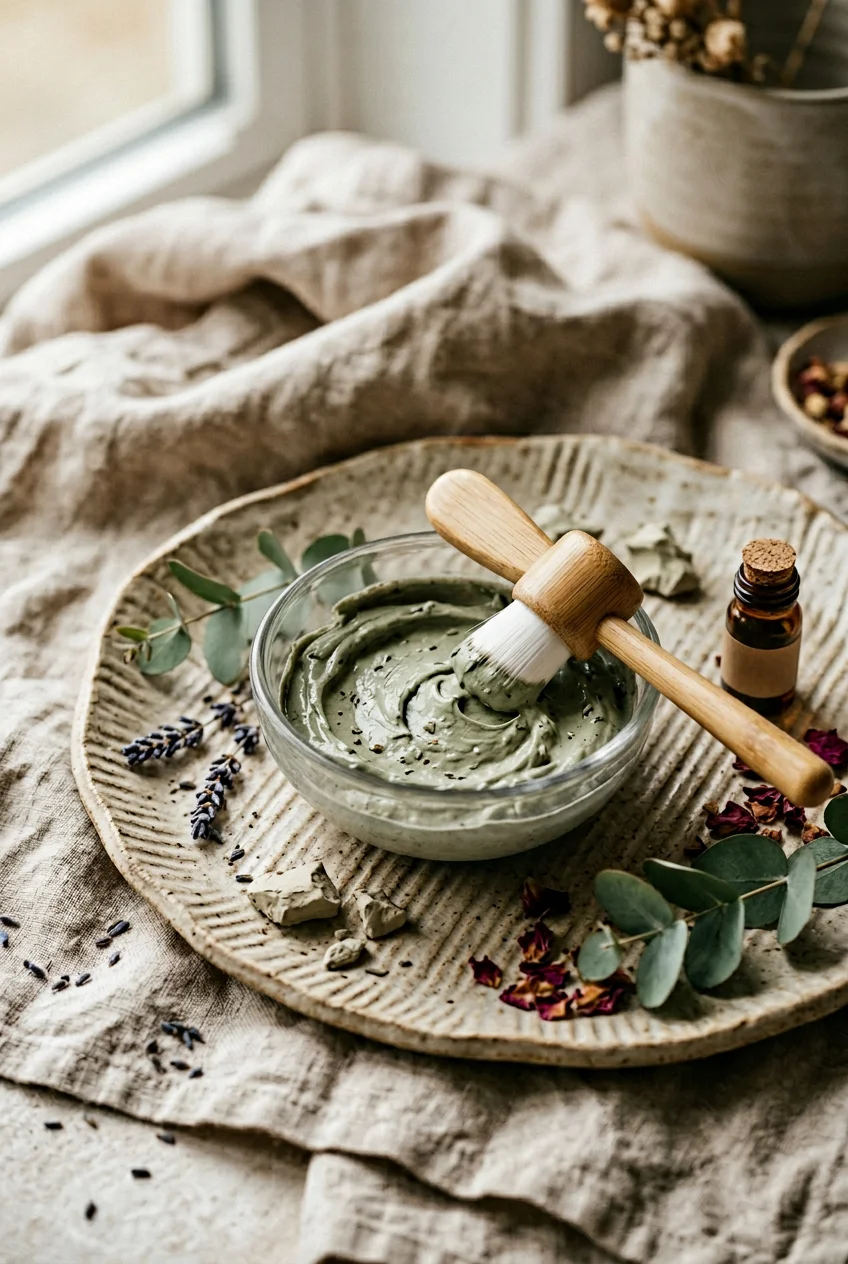
Applying a thick layer of product looks great in photos, but it’s wrong. Too much clay means the surface dries while the layer touching your skin stays wet, trapping heat and causing irritation. Too much cream just wastes product on your pillow. You need a thin, uniform layer. I use exactly 2 teaspoons of the Tatcha The Clarifying Clay Mask ($70 for 1.7 oz) for my whole face. This mask has a warming sensation and a gritty texture from Japanese konjac. I apply it using a flat silicone brush I found at Walmart for $3.99. Using my fingers led to a patchy application. The brush ensures an even 1-millimeter thickness. It also keeps bacteria from my hands out of the jar. The Tatcha jar is beautiful, but the opening is narrow, making a brush mandatory. Avoid the eye area. The skin there is a tenth of the thickness of the rest of your face. Clay will dehydrate it instantly, leaving you with fine lines by morning. I brought a charcoal mask to my lower lash line once, and my concealer creased horribly for three days.
5. Adhere Strictly to Recommended Timings

There’s a myth that leaving a mask on longer yields better results. This is chemically false and physically damaging. I used to fall asleep in exfoliating masks, thinking I’d wake up with baby-smooth skin. Instead, I woke up with chemical burns. Read the back of the jar. The Tatcha mask mandates a 3-minute application. Three minutes. Not fifteen. I use a magnetic kitchen timer I bought at Kroger for $5.49 because I know I’ll get distracted. If you leave a clay mask on until it turns into a desert landscape, you’ve waited too long. Clay absorbs impurities during the damp phase. Once it dries, it pulls moisture out of your skin barrier. Wash it off while it’s still tacky. For acid-based masks, exceeding the time limit risks your acid mantle, leading to redness and breakouts. Set a timer. Respect the chemistry. You might also like: 12 Facial Routine Skincare You Need to See
6. Cryo-Masking for Instant De-Puffing

Cold therapy constricts blood vessels, reducing inflammation and puffiness. I tested the Dr. Jart+ Cryo Rubber with Moisturizing Hyaluronic Acid ($14 for a single-use kit) after a salty dinner left my face swollen. The kit comes with a serum ampoule and a two-piece rubber mask. The trick is to put the mask in the fridge for 30 minutes before use. I keep mine next to my oat milk. First, massage the serum into your skin. Then, apply the cold rubber pieces. The rubber creates a seal, forcing the serum down while the cold tightens the skin. It’s intensely cold for five minutes. The main negative is the price. At $14 per use, it’s a special occasion treatment, not a weekly staple. But for a morning where you need to look awake in 40 minutes, the cold therapy works better than just splashing water on your face. You might also like: 20 Charming Aesthetic Videos Night Routine Skincare You’ll Want to Bookmark

EQQUALBERRY Vitamin Illuminating Serum | Niacinamide 4% +
EQQUALBERRY Vitamin Illuminating Serum | Niacinamide 4% + Brightening punches above its price — 112 buyers rated it 4.5 stars. I would buy it again.
7. Boost Skin Health with Probiotic Formulas

We spend so much time stripping our skin with acids that we ignore the microbiome. The bacteria on your face dictate your barrier health and acne risk. Probiotic masks aim to repopulate good bacteria. I started by breaking open a probiotic capsule and mixing 1/4 teaspoon of the powder into a basic, unfragranced cream mask. It smells like yeast, but the results are undeniable. My cheek redness diminished after a month of doing this twice a week. The live cultures help lower the skin’s pH, making it a tough environment for acne-causing bacteria. If you don’t want to mix your own, look for masks containing Lactobacillus ferment. These offer anti-inflammatory benefits without the risk of live cultures spoiling. Check expiration dates. Probiotic ingredients degrade quickly, meaning that jar you’ve had open for a year is just expensive, inactive cream now. Keep them in a cool, dark place. You might also like: 15 Gorgeous Aesthetic Glass Skin That Changed Everything
8. Leverage Overnight Masks for Intensive Repair

Water loss peaks while you sleep. This is why you wake up with skin that feels tighter than when you went to bed. An overnight mask acts as a breathable sealant, locking in serums. I’ve been testing the Estée Lauder Advanced Night Repair Overnight Treatment ($98 for 2.2 oz). It has a balm-like texture that melts into an oil. You only need a pea-sized amount—about 1/4 teaspoon—for your entire face. I massage it in as the final step. The price is a drawback, but the tub lasts me six months with bi-weekly use. A more affordable alternative is the Dr. Jart+ Vital Hydra Sleeping Mask ($25 for 4 oz). It’s a lighter gel-cream that doesn’t leave grease marks. The key is timing. Apply it at least 20 minutes before your head hits the pillow. If you lie down immediately, 80 percent of the product ends up on your pillowcase rather than your skin.
9. Perfecting the Sheet Mask Skincare Face Mask Aesthetic

The biggest crime with sheet masks is washing your face after peeling them off. The point of a sheet mask is to deliver a concentrated dose of serum without evaporation. The sheet is just a delivery vehicle. I used to buy cheap paper masks that dried out in ten minutes, leaving my face feeling sticky. Now, I use hydrogel or biocellulose. They adhere like a second skin. The Sarah Chapman Skinesis 3D Moisture Infusion Sheet Mask ($24 for one) is brilliant. The material holds 100 times its weight in fluid and doesn’t slip. For a cheaper option, the L’Oréal Paris Revitalift Glass Skin Hydrogel Glow Mask ($13) delivers a similar plumping effect. It comes soaked in 1 ounce of serum. When you take the mask off after 20 minutes, don’t reach for a towel. Pat the remaining liquid into your skin until it absorbs. It takes three minutes of tapping. If it feels too tacky, apply a light moisturizer over it.

COSRX Vitamin E Vitalizing Sunscreen,SPF 50 Face Sunscreen
If you want something that just works, COSRX Vitamin E Vitalizing Sunscreen is a safe bet (43 reviews, 4.5 stars).
10. Don’t Forget Lip Hydration and Post-Mask Care

A masking routine doesn’t end when you toss the sheet. Consider your lips. Most face masks taste terrible. I use the Femmue Lip Sleeping Mask ($28 for 0.52 oz) while my face mask sets. It has a thick texture that smells like roses, and I apply a 1/8 teaspoon layer. It smooths out dry patches from matte lipsticks. Another trick from a clinical esthetician is prepping the skin with warm water before a clay mask. Press a hot, damp washcloth to your face for 30 seconds. This softens sebum, allowing the clay to extract it efficiently. Once the mask is removed, you have a 60-second window to apply your next product. I immediately press in a toner, followed by a ceramide moisturizer. If you go to bed with bare skin, you’ve wasted your time. The mask treats the condition, but the moisturizer seals it in. Never skip hydration. Trust me.
Finding the right balance takes patience and label reading. I highly recommend saving this guide and pinning it to your board so you can reference the timing and measurements the next time you’re standing in the beauty aisle trying to decide between clay and hydrogel.
Frequently Asked Questions
Should I wash my face after a sheet mask?
No. The purpose of a sheet mask is to deliver concentrated serum. Washing your face removes these active ingredients. Instead, gently pat the remaining serum into your skin until fully absorbed, then follow with a light moisturizer.
How long should I leave a clay mask on?
Follow the exact package instructions, usually between 3 to 10 minutes. Wash it off while it is still slightly tacky. If you wait until it fully cracks and dries, it pulls moisture directly from your skin barrier.
Can I use the same mask all over my face?
You can, but multi-masking is often better. Your T-zone usually requires oil-absorbing clay, while your cheeks may need hydrating gel. Applying different formulas to different zones prevents over-drying sensitive areas.
What is the best way to apply a cream or clay mask?
Use a flat silicone brush to apply a thin, even 1-millimeter layer. This prevents patchy application, avoids wasting product, and keeps bacteria from your fingers out of the jar.
