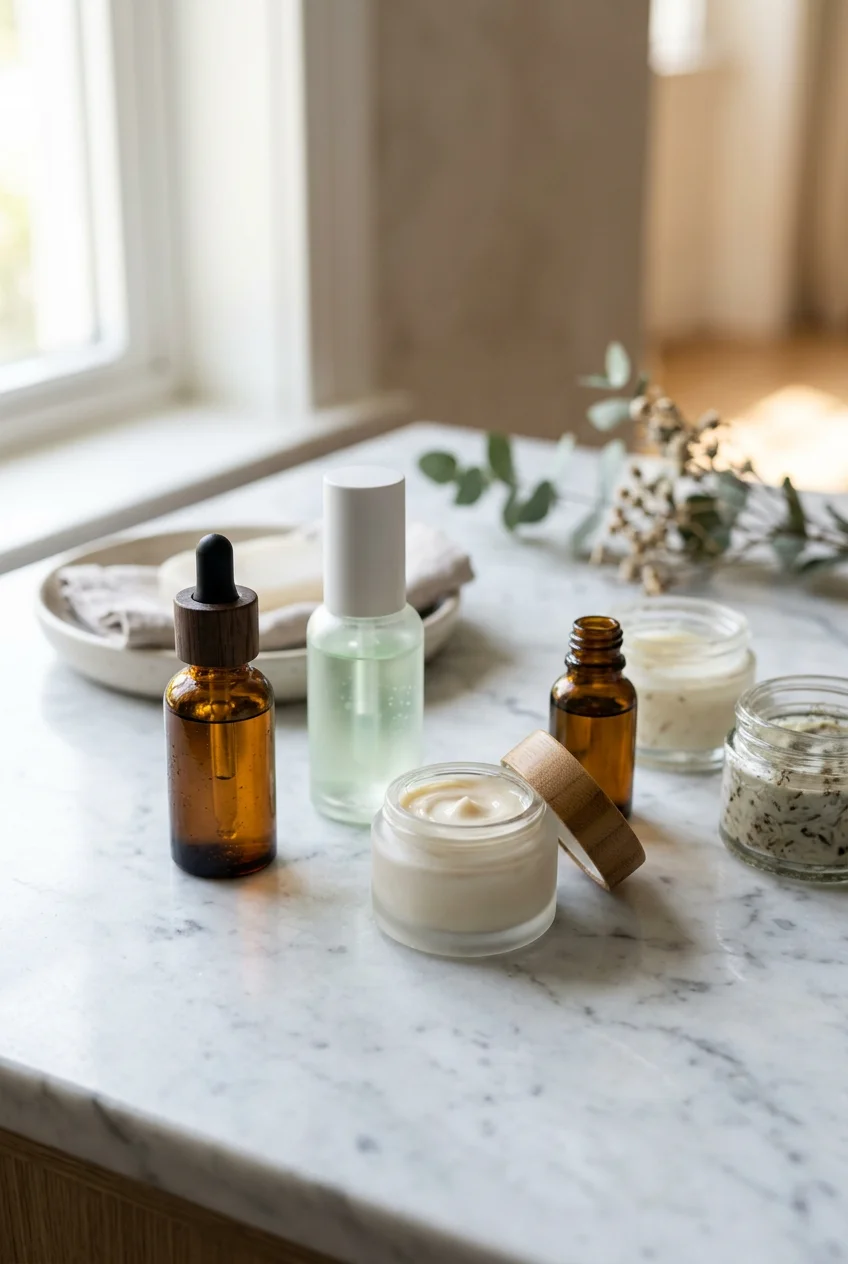
What’s Inside
- Prioritize Barrier Repair Over Scorched-Earth Tactics For Your Gentle Magic Skincare Routine
- Wash With A pH-Balanced Formula Instead of Suds
- Implement Skin Cycling for Your Actives
- Exfoliate With Acids, Not Walnut Shells
- Apply Serums to Damp Skin Only
- Trap Moisture Within Three Minutes
- Stick to Dermatologist-Recommended Basics For A Gentle Magic Skincare Routine
- Wear Broad-Spectrum SPF 30+ Every Single Day
- Switch to Mineral Sunscreen if Chemical Burns
- Stop Over-Applying Eye Cream
- Wash Your Makeup Brushes Weekly
- Patch Test Every Single New Bottle
- Adopt a Minimalist Approach to Actives
- Use a Chilled Roller to Drain Fluid
Last winter, my face was peeling so badly after using a 10% benzoyl peroxide wash that it looked like a shedding snake. I tried covering it with a thick layer of liquid foundation, which just highlighted the dry, white flakes clinging to my jawline. That embarrassing Tuesday morning forced me to completely rethink my approach and build a gentle magic skincare routine from scratch. This routine relies on basic chemistry, not marketing hype. I spent months researching clinical data and testing formulas to figure out what actually repairs a damaged skin barrier. Most regimens push you to buy twenty different acids. I learned the hard way that doing less actually yields better results. No exaggeration. Here’s exactly how I structure my regimen now.
1. Prioritize Barrier Repair Over Scorched-Earth Tactics For Your Gentle Magic Skincare Routine

In 2026, skin barrier health remains the primary focus for dermatologists, and for good reason. When you strip your skin with harsh astringents, moisture escapes and bacteria enters. You need ingredients like ceramides, niacinamide (Vitamin B3), and fatty acids to physically patch the microscopic holes in your stratum corneum. I use CeraVe Moisturizing Cream ($17.99 for a 16 oz tub). I bought my current tub at Target last November when my skin was stinging from just splashing plain tap water on it. It contains three essential ceramides and hyaluronic acid. The texture is thick, almost like frosting, and it takes a full minute to rub into the hot, sensitive skin. The tub packaging is slightly annoying because dipping your fingers in daily isn’t the most sanitary practice, but the formula itself is highly effective. I scoop out exactly 1/2 teaspoon for my face and neck every evening. If your skin feels tight or looks red after washing, your barrier’s compromised. You can’t fix that with more exfoliation. You fix it by applying a thick layer of ceramides and leaving your skin alone to heal. I’ve found that skipping active ingredients entirely for a week while using this cream resets my texture completely.
2. Wash With A pH-Balanced Formula Instead of Suds

Most people get this wrong right out of the gate. If your cleanser foams up like dish soap, it’s likely too alkaline for your face. Human skin naturally sits at a slightly acidic pH of around 5.5. Using highly alkaline soaps disrupts this acid mantle. I switched to the CeraVe Hydrating Cream-to-Foam Cleanser ($16.99 for 12 oz) after noticing my cheeks felt tight and itchy post-wash. You only need a dime-sized amount (about the size of a US 10-cent coin). Another solid option is the Cetaphil Gentle Skin Cleanser ($11.49 for 16 oz). The trick is the application method. I apply it to wet skin and gently massage it in circles for exactly 60 seconds. This gives the surfactants enough time to break down sebum and daily grime without stripping the lipids your skin actually needs. Then, rinse with lukewarm water. Hot water melts your natural oils right off. I used to scald my face in the shower, thinking the heat opened my pores. Pores aren’t doors. They don’t open and close. The hot water just caused broken capillaries around my nose that I can’t erase without expensive laser treatments. Stick to tepid water.
3. Implement Skin Cycling for Your Actives

Skin cycling is a method popularized by dermatologist Dr. Whitney Bowe, and it involves rotating active ingredients with recovery nights. A typical four-night cycle looks like this: Night 1 is for exfoliation, Night 2 is for a retinoid, and Nights 3 and 4 are strictly for recovery. I started doing this last spring. I bought a tube of Differin Gel 0.1% Adapalene ($14.97 for 0.5 oz) at Walmart. I tried applying it every single night initially. By day four, my chin was red, peeling, and painful to the touch. That was a clear mistake. Learned that the hard way. Now, I stick strictly to the four-day cycle. Giving your skin two full days to rest and rebuild its lipid barrier prevents the chronic inflammation that leads to premature aging. On recovery nights, I wash my face, apply a basic hydrating serum, and seal it with a heavy ceramide cream. That’s it. No acids, no scrubs, no treatments. This structured rotation maximizes the benefits of your active ingredients while keeping irritation at zero. I’ve noticed my breakouts heal twice as fast when I’m not constantly bombarding them with drying chemicals every single night.

Yeamon Gua Sha Facial Tools and Face Roller Set
If you want something that just works, Yeamon Gua Sha Facial Tools and Face Roller Set is a safe bet (11 reviews, 4.5 stars).
4. Exfoliate With Acids, Not Walnut Shells

Physical scrubs containing walnut shells or apricot pits create microscopic tears in your skin. I used those gritty scrubs throughout my teens and constantly battled redness. Chemical exfoliants are far more controlled and predictable. I use Paula’s Choice 2% BHA Liquid Exfoliant ($34.00 for 4 oz). It uses salicylic acid to dissolve the glue holding dead skin cells together, allowing them to shed naturally. Salicylic acid is oil-soluble, meaning it actually penetrates inside the pore to clear out sebum. I dispense a pea-sized to dime-sized amount onto my fingertips and pat it directly onto my T-zone 1-2 times a week on my designated exfoliation night. I don’t use cotton rounds because they absorb half the product, wasting a $34 liquid. The formula smells slightly medicinal, almost like vinegar, and leaves a slightly tacky finish for about five minutes. Let it dry completely before applying your next layer. Over-exfoliation is a massive problem. If your face looks shiny like a polished apple, you’re missing a layer of skin. Back off the acids immediately. I’ve ruined my barrier more than once by ignoring that warning sign.
5. Apply Serums to Damp Skin Only

Hyaluronic acid is a humectant. It functions by drawing water molecules to itself. If you apply a hyaluronic acid serum to a bone-dry face in a dry room, it’ll pull moisture from the deeper layers of your own skin, leaving you more dehydrated than before. I learned this the hard way during a dry January trip to Colorado. My skin felt like parchment paper. Now, I leave my face dripping wet after washing. I apply 2-3 drops (roughly a pea-sized amount) of Vichy Mineral 89 Prebiotic Recovery and Defense Concentrate ($39.99 for 1 oz) directly to the damp skin. The water acts as a vehicle, allowing the serum to pull that surface hydration deeper into the epidermis. The Vichy formula is slightly viscous, like a thin gel, and spreads incredibly easily. It doesn’t contain fragrance or alcohol. After patting it in, my skin feels instantly plump and cool to the touch. You must immediately follow this step with a moisturizer to trap that water, or it’ll just evaporate into the air. I’ve tested this serum on dry skin versus damp skin, and the difference in plumpness is drastic.
6. Trap Moisture Within Three Minutes

Dermatologists call this the three-minute rule. You have a very short window after cleansing or applying water-based serums to lock that hydration into your skin. If you wait until your face’s completely dry to apply lotion, you’ve missed the opportunity. I keep my moisturizer directly on the bathroom counter so I don’t get distracted. Last Tuesday, I was at Whole Foods and got talking to a friend in the supplement aisle about this exact timing issue. She was complaining about dry patches, but admitted she waits twenty minutes after showering to apply her face cream. I use a nickel-sized amount of moisturizer for my entire face and neck. I rub it between my palms first to warm it up, then press it firmly into my skin rather than aggressively rubbing it around. Pressing ensures an even layer and prevents pulling on delicate areas. If you use a lightweight lotion, you might need a slightly larger amount. The goal is to create a physical seal over the humectants you just applied. Transepidermal water loss happens quickly, especially in air-conditioned rooms, so speed is your best defense against dry skin.

Gua Sha Facial Tools Face Roller and Gua Sha Set for
Gua Sha Facial Tools Face Roller and Gua Sha Set for Puffiness and Red has been one of the most consistently praised picks in this category. 11 reviewers averaged 4.5/5.
7. Stick to Dermatologist-Recommended Basics For A Gentle Magic Skincare Routine

When you walk down the skincare aisle, the brightly colored bottles with botanical extracts are tempting. Ignore them. Essential oils and artificial fragrances are common irritants that serve no functional purpose in a routine. They just make the product smell nice while quietly triggering contact dermatitis. I rely on La Roche-Posay Toleriane Double Repair Face Moisturizer ($23.99 for 2.5 oz). It contains niacinamide, ceramides, and glycerin. It has zero scent and a very creamy, opaque white texture. There’s a specific tradeoff with this product, though. It has a tendency to pill (roll up into little white balls) if you try to layer a heavy silicone-based primer or foundation over it too quickly. I wait a full ten minutes for it to absorb before attempting makeup. Despite the pilling issue, the barrier-repairing properties are undeniable. My skin rarely turns red when I use this consistently. Keep your core routine boring and clinical. You don’t need lavender oil on your face. I’ve thrown away dozens of expensive, perfumed creams because they caused stinging around my eyes.
8. Wear Broad-Spectrum SPF 30+ Every Single Day

Sunscreen isn’t optional. It’s the most critical step for preventing premature aging, hyperpigmentation, and collagen degradation. UV rays penetrate through clouds and glass, meaning you need protection even if you work indoors near a window. The biggest mistake people make is under-applying. You need a quarter-sized amount (exactly 1/2 teaspoon) to adequately cover your face and neck. I measure it out on my index and middle fingers (two full finger lengths of sunscreen). Most people apply a tiny pea-sized drop, which drops the actual protection of an SPF 50 down to about an SPF 15. I apply my sunscreen every single morning at 7:30 AM as the final step of my routine. Chemical sunscreens work by absorbing UV rays and converting them into heat, while mineral sunscreens physically block the rays. I prefer mineral options because chemical filters like avobenzone sting my eyes terribly by mid-afternoon. If your eyes water constantly at your desk, your sunscreen’s likely migrating down your forehead and into your tear ducts. I’ve had to wash my face in public restrooms just to stop the burning. You might also like: 20 Gorgeous Acne Skincare Routine for Any Style
9. Switch to Mineral Sunscreen if Chemical Burns

If you have rosacea, active acne, or generally reactive skin, chemical UV filters can cause a low-grade burning sensation. I experienced this with a popular drugstore chemical SPF. My cheeks felt hot for hours after application. I switched to mineral sunscreens, which use zinc oxide and titanium dioxide. These sit on top of the skin rather than being absorbed. I use EltaMD UV Clear Broad-Spectrum SPF 46 ($43.00 for 1.7 oz). I originally bought this at my dermatologist’s office, but I recently saw it available through Costco online. It’s a hybrid formula designed specifically for sensitive and acne-prone skin. It contains 5% high-purity niacinamide to actively calm inflammation while protecting you from the sun. The texture is surprisingly lightweight for a high-zinc product, and it pumps out easily. The bottle mechanism is an airless pump, which means you get every last drop, but you also can’t tell when you’re about to run out until it suddenly stops working. I always keep a backup in my drawer. It does leave a very faint white cast on darker skin tones, which is a common drawback for zinc-based formulas.

Jade Gua Sha and Face Roller
If you want something that just works, Jade Gua Sha and Face Roller is a safe bet (12 reviews, 4.5 stars).
10. Stop Over-Applying Eye Cream

The skin around your eyes is significantly thinner than the skin on the rest of your face. It lacks the same number of oil glands, making it prone to dryness, but it also can’t absorb heavy, occlusive creams. If you slather thick moisturizers under your eyes, you risk developing milia (tiny, hard white cysts caused by trapped keratin). I used to pack on a thick layer of shea butter eye cream at night, thinking it’d prevent wrinkles. Instead, I got three stubborn milia bumps that my dermatologist had to extract with a tiny needle. Now, I use a grain-of-rice-sized amount of product per eye. I dispense this tiny amount onto my ring finger because it applies the least amount of pressure. I gently tap the product along the orbital bone, starting from the outer corner and moving inward. Do not apply it directly to the lash line, as the product will naturally migrate upward as it warms to your body temperature. If it gets in your eyes, it causes puffiness the next morning. I’ve woken up looking like I cried all night just from applying eye cream too close to my water line. You might also like: 15 Gorgeous Aesthetic Anti Aging Skincare You Haven’t Thought Of
11. Wash Your Makeup Brushes Weekly

You can use the most expensive, clinical skincare in the world, but if you’re applying concealer with a dirty brush, you’re just grinding bacteria directly into your pores. Dirty bristles harbor old makeup, dead skin cells, and sebum. This is a massive trigger for localized breakouts. I wash my brushes every Sunday evening. I use a very simple mixture: 1 tablespoon of baby shampoo mixed into 1 cup of warm water. I buy the generic store-brand baby shampoo at Sprouts ($4.99 for 16 oz). I swirl the bristles in the soapy water, gently massage the base to release trapped foundation, and rinse under the tap until the water runs completely clear. The drying process is critical. If you dry brushes standing upright, water seeps into the ferrule (the metal band) and rots the glue holding the bristles together. I lay them flat on a clean towel with the bristles hanging slightly over the edge of the counter so air can circulate around them. I’ve ruined a $40 foundation brush by letting water soak into the handle, causing the bristles to shed all over my face. You might also like: 12 Facial Routine Skincare You Need to See
12. Patch Test Every Single New Bottle

Patience isn’t my strong suit. When I buy a new product, I want to slather it on my face immediately. Three years ago, I bought a highly concentrated Vitamin C serum, skipped the patch test, and applied it all over my face. By morning, my skin was covered in a raised, itchy rash that took a week of hydrocortisone cream to resolve. Now, I test everything. To properly patch test, apply a small smear of the new product to a discrete area of skin. I use my inner forearm or the skin right behind my ear. Leave it there for 24 to 48 hours. Watch for redness, itching, or small bumps. If nothing happens, you’re generally safe to apply it to your face. Keep in mind that active ingredients like retinoids or AHAs might cause mild tingling, which is normal, but they shouldn’t cause a burning sensation or a rash. Patch testing requires a few days of delay, but it prevents weeks of repairing chemical burns. I’ve learned that a minor reaction on my arm is a clear warning that the formula will destroy the sensitive skin on my cheeks.

medicube Deep Vitamin C Capsule Serum | Hydrating Vitamin C
medicube Deep Vitamin C Capsule Serum | Hydrating Vitamin C Serum for has been one of the most consistently praised picks in this category. 298 reviewers averaged 4.5/5.
13. Adopt a Minimalist Approach to Actives

The trend for 2026 is skincare minimalism. The era of the 12-step routine is over. Overloading your skin with multiple serums, essences, ampoules, and acids simultaneously disrupts your natural pH and weakens the acid mantle. Your skin doesn’t need to be shocked into submission; it needs consistency. I used to layer a Vitamin C serum, a niacinamide liquid, a peptide complex, and a BHA toner every single morning. My skin looked constantly flushed and felt tight. I stripped my routine down to just a cleanser, a single targeted serum, moisturizer, and sunscreen. By doing less, my skin actually cleared up. Focus on a few high-quality products that address your specific concerns. If you’re dealing with dryness, prioritize hyaluronic acid and ceramides. If you’re tackling texture, use a BHA and a gentle retinoid. You don’t need every ingredient on the market. The interaction between too many synthetic chemicals often neutralizes their efficacy anyway. Took me years to figure out. I’ve found that using a retinoid and a strong acid on the same night just creates a chemical reaction that leaves my face raw.
14. Use a Chilled Roller to Drain Fluid

Facial puffiness, especially in the morning, is often just stagnant lymphatic fluid. Your lymphatic system doesn’t have a pump like your circulatory system does; it relies on muscle movement to drain. I use a jade facial roller to manually push this fluid toward my lymph nodes. I bought a basic stone roller in the beauty aisle at Kroger for $9.99. I keep it stored inside my refrigerator next to the butter. The cold stone constricts blood vessels, immediately reducing redness and morning swelling. I apply my hydrating serum first to give the roller some slip. Then, I roll outward from the center of my face toward my hairline, and down my neck toward my collarbones. Never roll aggressively back and forth like you’re painting a wall. Always roll in one direction, lifting the tool off your face before starting the next stroke. It takes exactly two minutes, feels incredibly soothing, and noticeably sharpens my jawline before I apply my SPF. I’ve skipped this step on busy mornings and my face definitely looks much softer and more swollen in photos.
Building a reliable regimen takes patience. You won’t see results overnight, but sticking to these clinical basics prevents the chronic irritation that ruins your skin barrier. I highly recommend starting with the CeraVe hydrating cleanser and a basic ceramide cream before introducing any exfoliants. If you found this breakdown helpful, pin this article to your skincare boards so you can reference these exact product names and measurements the next time you’re standing confused in the drugstore aisle.
Frequently Asked Questions
What is a gentle magic skincare routine?
A gentle magic skincare routine focuses on repairing the skin barrier using pH-balanced cleansers, ceramides, and minimal active ingredients. It prioritizes hydration and protection over harsh exfoliation to maintain healthy, resilient skin.
How often should I exfoliate in a gentle routine?
You should only use a chemical exfoliant like a 2% BHA liquid 1 to 2 times a week. Over-exfoliating strips the lipid barrier and causes chronic redness and dehydration.
Do I apply hyaluronic acid to wet or dry skin?
Always apply hyaluronic acid serums to damp skin. If applied to a dry face, the humectant will pull water from the deeper layers of your skin, leaving it more dehydrated.
Why does my moisturizer pill under makeup?
Pilling occurs when products don’t absorb properly or when silicone-based primers clash with water-based moisturizers. Wait a full ten minutes for your barrier cream to absorb before applying foundation.
