What’s Inside
- The Foundation of the Red Skincare Aesthetic: Ultra-Gentle Cleansing
- Patch Your Moisture Barrier with Ceramides
- Apply Azelaic Acid for Multi-Benefit Redness Reduction
- Utilize the Calming Power of Centella Asiatica
- Invest in At-Home Red Light Therapy
- Integrate Astaxanthin for Antioxidant Protection
- Soothe Acute Flare-Ups with Hypochlorous Acid
- Use Sulfur Ointment for Localized Inflammation
- Shield Your Barrier with Mineral Sunscreen (Crucial for the Red Skincare Aesthetic)
- Eliminate Essential Oils and Artificial Fragrances
- Apply Colloidal Oatmeal for Immediate Eczema Relief
- Control the Temperature of Your Skincare Routine
- Exfoliate Cautiously with Polyhydroxy Acids (PHAs)
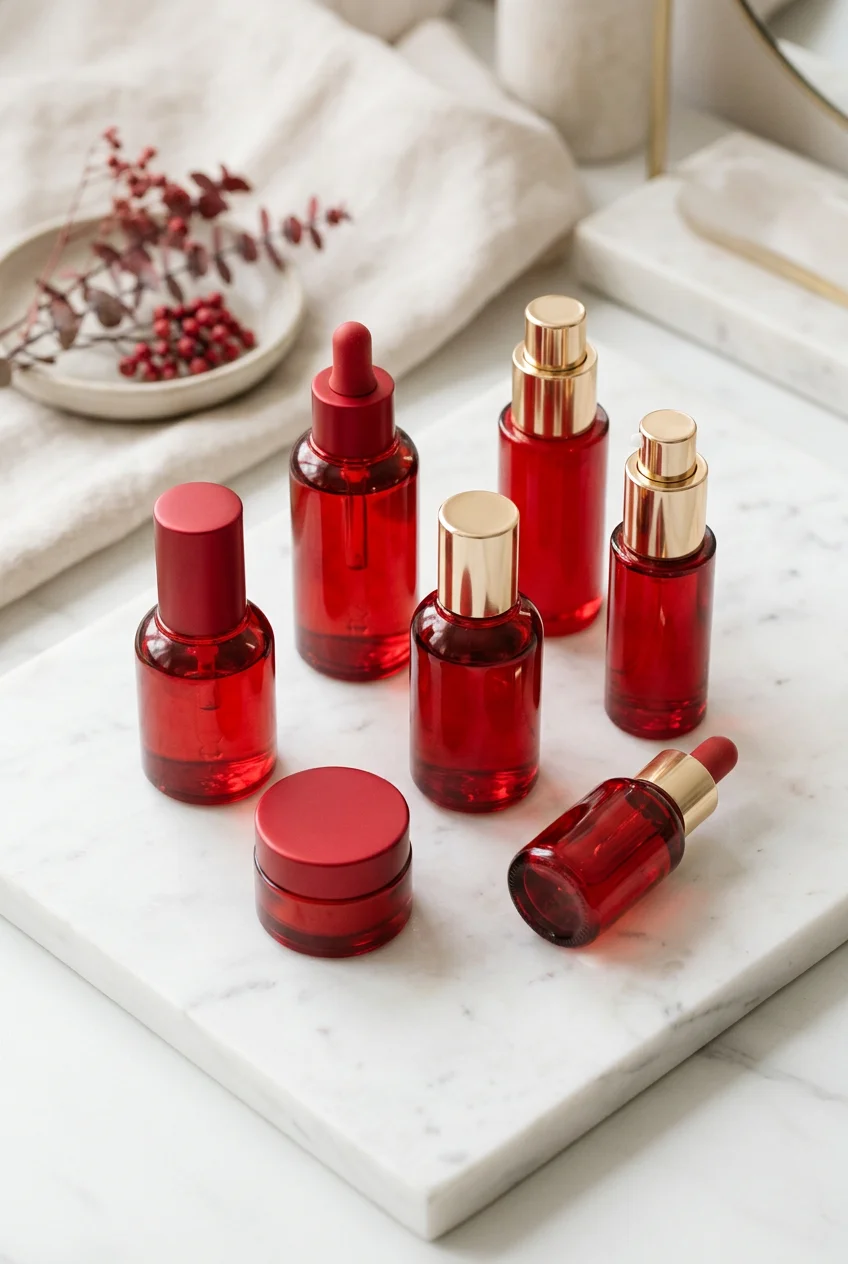
Last November, I stood in the harsh fluorescent lighting of a Target bathroom trying to scrub a vibrant crimson peeling solution off my face with cheap paper towels. My attempt at achieving the perfect red skincare aesthetic resulted in a chemical burn that took three weeks to heal. I bought into the visual hype of blood-colored serums without understanding the chemistry. Trust me on this. The red skincare aesthetic isn’t just about pretty bottles on your bathroom counter. It’s actually about ingredients that either target chronic redness or use naturally red compounds to repair a compromised barrier. I’ve spent the last two years researching clinical data and testing formulas to find out what actually works. I’ve ruined plenty of pillowcases. I’ve also learned that most of the viral red liquids are just basic AHA peels loaded with artificial dye Red 40. We aren’t going to look at those today. We’re going to look at the actual compounds that reduce inflammation, stimulate cellular function, and rebuild your acid mantle. Let’s get into the exact formulas, prices, and applications you need to fix your skin barrier.
1. The Foundation of the Red Skincare Aesthetic: Ultra-Gentle Cleansing

I used to think a tight, squeaky-clean feeling meant my face was actually clean. I spent years buying aggressive foaming washes from Walmart, wondering why my cheeks always looked sunburned. The red skincare aesthetic starts with stopping the damage you’re doing at the sink. Harsh surfactants strip the natural lipids from your stratum corneum. This triggers an inflammatory cascade, leaving you with chronic erythema. You need a baseline cleanser that does nothing but remove debris. The Vanicream Gentle Facial Cleanser costs exactly $10.49 for an 8 oz pump bottle at Target. It contains no dyes, fragrance, masking fragrance, lanolin, parabens, or formaldehyde releasers. It’s a boring formula. That’s exactly why it works. Dispense a single pea-sized amount onto wet fingertips. Don’t use a washcloth. Massage it into your skin using lukewarm water for sixty seconds. I used hot water for years. It dilates capillaries and makes baseline redness worse. Rinse thoroughly. The texture’s a slightly cloudy gel that barely lathers. Your skin won’t feel tight afterward; it’ll just feel like skin. If you’re using prescription topicals, this is the only cleanser you should use.
2. Patch Your Moisture Barrier with Ceramides

A compromised moisture barrier’s essentially a microscopic chain-link fence with missing links. Water escapes, and irritants enter. This is the physiological root of most facial redness. You have to patch the holes. I tried relying on straight hyaluronic acid serums for a year. I bought them in bulk from Costco. My skin got drier. Hyaluronic acid needs an occlusive layer over it, or it just evaporates and pulls water out of your skin. You need ceramides and niacinamide to rebuild the lipid matrix. The La Roche-Posay Toleriane Double Repair Face Moisturizer costs $24.99 for 2.5 oz at Walgreens. It uses Ceramide-3, niacinamide, and glycerin. The texture’s a dense white cream that absorbs without a greasy finish. Apply a dime-sized amount to slightly damp skin twice daily. A small negative: the formula tends to pill if you apply mineral sunscreen immediately after. You have to wait a full five minutes for it to dry down. I set a timer on my phone while I brush my teeth. Once it sets, it forms a protective film that drastically reduces trans-epidermal water loss.
3. Apply Azelaic Acid for Multi-Benefit Redness Reduction

Azelaic acid’s an FDA-approved dicarboxylic acid synthesized by yeast naturally living on normal skin. It’s highly effective for rosacea because it decreases the production of reactive oxygen species. It stops inflammation at a cellular level. It also kills the bacteria that cause acne-like bumps. I started using The Ordinary Azelaic Acid Suspension 10% last October. A 1 oz tube costs $12.20 at Ulta. The texture’s a thick, silicone-heavy paste. It feels slightly gritty coming out of the tube. You only need a pea-sized amount for your entire face. I apply a thin layer to my cheeks and chin once every evening. A common mistake’s applying it to wet skin. Azelaic acid on wet skin causes a severe itching sensation. I learned that the hard way after rushing my routine. It feels like tiny ants crawling on your cheeks for about ten minutes. Always let your moisturizer dry completely first. The silicone base also means it doesn’t layer well under water-based makeup. It separates your foundation. I strictly use it at night for this reason.
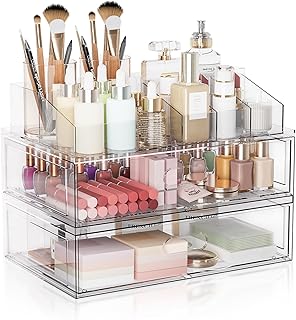
Clear Stackable Makeup Organizer with Drawer
Honestly, Clear Stackable Makeup Organizer with Drawer surprised me — sturdier than it looks in the photos, and over 310 buyers gave it 4.5 stars.
4. Utilize the Calming Power of Centella Asiatica

Centella Asiatica’s a botanical extract known clinically for its wound-healing properties. It contains madecassoside, which inhibits inflammatory mediators in the skin. If your face’s actively breaking out, cica speeds up tissue repair. The Erborian Centella Red Serum’s a solid option if you want a targeted treatment. It retails for $46 for a 1 oz glass dropper bottle. I picked this up at Sephora last month. It contains 2% Centella Asiatica extract and bisabolol. The serum has a watery, lightweight texture that absorbs in seconds. The liquid’s slightly viscous, resembling a thin syrup. It has a faint herbal scent, which comes from the extract itself. Dispense exactly three drops into the palm of your hand. Press it gently into clean, damp skin twice daily. I tried rubbing it in vigorously at first, but patting it prevents friction micro-tears on sensitive skin. One downside’s the price per ounce. It’s expensive for a single-ingredient focus. However, the clinical formulation’s stable and won’t oxidize quickly. I keep mine in a dark cabinet to protect the active compounds.
5. Invest in At-Home Red Light Therapy

Photobiomodulation uses specific wavelengths of light to stimulate mitochondrial function. It’s a scientifically backed method to increase ATP production, which speeds up cellular turnover and reduces inflammation. The CurrentBody Skin LED Face Mask (Series 2) uses 633nm red light and 830nm near-infrared light. It costs $380 directly from their website. I bought mine during a Black Friday sale. It’s a flexible silicone mask that straps to your head. You use it for exactly 10 minutes per session, three to five times a week. The device needs to sit flush against bare, clean skin. Don’t apply serums before using it. The light can’t penetrate thick layers of skincare. I tried using it over a sheet mask once because I saw it on TikTok. The mask blocked the diodes, rendering the session completely useless. The battery pack requires charging after every three uses, which is slightly annoying. The silicone mask’s also slightly heavy on the bridge of the nose. After two months of consistent use, the baseline redness around my nose significantly faded. You might also like: 15 Charming Tips For Clear Skin Natural Skincare for a Fresh New Look
6. Integrate Astaxanthin for Antioxidant Protection

Astaxanthin’s a naturally occurring red carotenoid found in microalgae. It’s the compound that gives salmon their pink color. Clinically, it’s an exceptionally powerful antioxidant. Studies show it’s up to 6,000 times stronger than Vitamin C at neutralizing singlet oxygen radicals. This makes it highly effective at protecting your skin from UV-induced oxidative stress. I buy the DHC Astaxanthin Collagen All-in-One Gel for $49. It comes in a 4.2 oz heavy glass jar with a screw-top lid. I found it at a Japanese specialty market. The gel’s a bright, translucent orange-red color. It looks exactly like jello. Apply a quarter-sized scoop to your face and neck every morning. The texture’s sticky initially. It takes a full ten minutes to absorb. This is a major negative if you’re in a rush. I’ve got to factor in extra drying time before applying sunscreen. Unlike L-ascorbic acid, astaxanthin’s highly stable. It won’t oxidize and turn brown in the jar after a month. It provides a sheer, protective layer that defends against environmental pollutants. You might also like: 10 Teen Skincare Routine That Actually Work

Masirs Clear Makeup Organizer
A dependable everyday pick — Masirs Clear Makeup Organizer – 16-Compartment Cosmetic and Jewelry Ho pulls in 258 ratings at 4.5 stars. Not flashy, just solid.
7. Soothe Acute Flare-Ups with Hypochlorous Acid

Hypochlorous acid’s naturally produced by your white blood cells to fight off invasive bacteria and reduce inflammation. It’s antimicrobial and highly soothing for angry, reactive skin. I used to buy the Tower 28 SOS Daily Rescue Facial Spray for $28 at Sephora. It comes in a 4 oz plastic spray bottle. It works perfectly. However, you’re paying a massive markup for the packaging. I switched to the Briotech Topical Skin Spray. It’s the exact same active ingredient. It costs $14.99 for an 8 oz bottle on Amazon. The spray nozzle dispenses a very fine, even mist. The liquid smells faintly like swimming pool water. This is the natural scent of hypochlorous acid. Spray a fine mist over your entire face immediately after cleansing. Let it air dry completely before applying any other products. If you apply a Vitamin C serum while the hypochlorous acid’s still wet, the acid neutralizes the antioxidant. I ruined a $90 bottle of Skinceuticals doing this. I now wait a full two minutes.
8. Use Sulfur Ointment for Localized Inflammation

Sulfur’s an abundant mineral that acts as a keratolytic and mild antibacterial agent. It’s exceptionally good at drying out inflammatory papules associated with rosacea and hormonal acne. I use the De La Cruz 10% Sulfur Ointment. It costs $6.49 for a 2.6 oz plastic tub at Kroger. The ointment’s a thick, yellow paste. It smells strongly of matches and rotten eggs. The smell lingers on your skin even after you wash it off. This is the main drawback. Apply a thin, targeted dot directly onto active red bumps. Leave it on for exactly ten minutes. Don’t leave it on overnight. I slept with it on my chin once in college. I woke up with a chemical burn and peeling skin that lasted a week. Sulfur’s highly drying. You’ve got to use warm water and gently massage it off, otherwise a faint yellow film remains. It reduces the size and redness of a papule by half within 24 hours. I strictly use it as a short-contact therapy. You might also like: 14 Foto Skincare Banyak You Need to See
9. Shield Your Barrier with Mineral Sunscreen (Crucial for the Red Skincare Aesthetic)

Ultraviolet radiation degrades collagen and triggers angiogenesis, which is the formation of new blood vessels. If your skin’s prone to facial redness, UV exposure permanently dilates your capillaries. Chemical sunscreens work by absorbing UV rays and converting them to heat. This heat triggers flushing in sensitive skin. You need a physical mineral sunscreen containing zinc oxide or titanium dioxide. These sit on top of the skin and reflect the light. The EltaMD UV Clear Broad-Spectrum SPF 46 costs $43 for a 1.7 oz airless pump bottle. I buy mine from my dermatologist’s office. It contains 9% transparent zinc oxide and 5% niacinamide. Dispense two full pumps for your face and neck. The airless pump ensures you get every last drop out of the bottle, but it sometimes clogs if you don’t use it daily. The formula’s lightweight and leaves minimal white cast on light to medium skin tones. The zinc oxide physically blocks the UV rays and actively soothes existing redness while you wear it.

Yeamon Gua Sha Facial Tools and Face Roller Set
Honestly, Yeamon Gua Sha Facial Tools and Face Roller Set surprised me — sturdier than it looks in the photos, and over 11 buyers gave it 4.5 stars.
10. Eliminate Essential Oils and Artificial Fragrances

A major component of reducing skin redness is eliminating known sensitizers. Botanical extracts and essential oils are volatile compounds. They smell nice, but they cause allergic contact dermatitis in a significant percentage of the population. I used a lavender-infused night cream from Whole Foods for six months. I thought the natural ingredients were helping my skin. My cheeks were constantly flushed and warm to the touch. I threw the $35 jar in the trash once I read the clinical literature on linalool and limonene. These are fragrant components of essential oils that oxidize when exposed to air, becoming potent allergens. You must read ingredient labels. Avoid products containing lavender, eucalyptus, peppermint, citrus oils, or anything listed simply as fragrance. Stick to clinically formulated, bland products. Unscented products often smell slightly like glue or plastic. That’s the smell of raw ingredients. If a product smells like a spa, it’s likely damaging your acid mantle. I now strictly purchase products with zero added scent.
11. Apply Colloidal Oatmeal for Immediate Eczema Relief

Colloidal oatmeal’s finely milled oat kernel. It’s an FDA-approved skin protectant. It contains avenanthramides, which are potent anti-inflammatory compounds that interrupt the inflammatory cycle in the skin. It’s highly effective for eczema and acute irritation. The Aveeno Calm + Restore Oat Gel Moisturizer costs $19.99 for a 1.7 oz glass jar at Target. It contains prebiotic oat and feverfew extract. Feverfew’s a botanical extract that specifically targets the pathways causing visible facial redness. The texture’s a lightweight, translucent gel that feels instantly cooling on application. Scoop out a nickel-sized amount and spread it evenly over your face. I use this specifically during the winter when the dry air from my heater causes my cheeks to flake. It absorbs quickly without any sticky residue. One negative’s the packaging. I hate dipping my fingers into open jars because it introduces bacteria. I bought a cheap plastic cosmetic spatula from Amazon to scoop it out. The gel formula isn’t occlusive enough for extremely dry skin on its own.
12. Control the Temperature of Your Skincare Routine

Temperature fluctuations cause your blood vessels to rapidly expand and contract. This is called vasodilation and vasoconstriction. If your skin’s sensitive, your blood vessels lose their elasticity over time. They dilate and stay dilated, resulting in permanent visible redness. I used to wash my face in the shower under steaming hot water. I thought the steam was opening my pores. Pores don’t have muscles. They don’t open and close. The hot water was simply scalding my epidermis and expanding my capillaries. You must use lukewarm water for all facial cleansing. I test the water on the inside of my wrist first, just like I’d test a baby’s bottle. Additionally, avoid storing your skincare products in a skincare fridge. Applying freezing cold serums to your face causes immediate vasoconstriction, followed by a rebound flush as the skin rapidly warms back up. Keep your products at room temperature in a dark cabinet. Managing the physical temperature of your skin requires zero dollars and makes a massive difference.

6Pcs Jade Roller for Face
If you want something that just works, 6Pcs Jade Roller for Face is a safe bet (29 reviews, 4.5 stars).
13. Exfoliate Cautiously with Polyhydroxy Acids (PHAs)

Sensitive skin still needs exfoliation to remove dead corneocytes, but traditional glycolic acid’s too small on a molecular level. It penetrates too quickly and causes severe stinging. Polyhydroxy acids like gluconolactone and lactobionic acid have much larger molecular structures. They sit on the surface of the skin, gently dissolving the bonds between dead cells without penetrating deeply enough to cause inflammation. They also act as humectants, drawing moisture into the skin. The Inkey List PHA Toner costs $12.99 for a 3.4 oz plastic bottle at Sephora. It contains 3% PHA and 3% niacinamide. The liquid’s completely clear and feels like water. Dispense half a teaspoon onto a cotton round. I use a reusable bamboo cotton pad because it absorbs less product than disposable ones. Swipe it gently across your face once a week. I tried using it every other day when I first bought it. My skin started feeling tight and shiny, which is a classic sign of over-exfoliation. Even gentle acids destroy your barrier if used too frequently.
Achieving a calm, resilient complexion takes methodical consistency, not a cabinet full of trendy red liquids. I wasted hundreds of dollars on harsh peels before I understood the chemistry of my own skin barrier. If you’re dealing with chronic inflammation, strip your routine down to the Vanicream cleanser, the La Roche-Posay moisturizer, and a solid mineral SPF. Add actives like azelaic acid or astaxanthin only after your barrier’s fully repaired. Be patient. Cellular turnover takes 28 days. You won’t see results overnight. Save this guide and pin it to your skincare boards so you’ve got these exact product names and prices the next time you’re standing in the skincare aisle trying to make a decision.
Frequently Asked Questions
What exactly is the red skincare aesthetic?
It refers to using products that either feature naturally red ingredients like astaxanthin, or focus on reducing chronic facial redness through barrier repair and inflammation control.
Can I use chemical peels if I have facial redness?
You shouldn’t use harsh AHA or BHA peels if your barrier is compromised. Stick to gentle polyhydroxy acids (PHAs) once a week to avoid triggering further inflammation.
How long does red light therapy take to work?
You’ll typically see a reduction in baseline redness after six to eight weeks of consistent use, assuming you’re using the device three to five times per week.
Why does hyaluronic acid make my face red and dry?
If you apply hyaluronic acid without a heavy occlusive moisturizer on top, it pulls water out of your skin and evaporates, causing dehydration and irritation.
