What’s Inside
- PDRN Serums: The Blue Bottle Everyone’s Obsessing Over
- ZO Soothing Hydro Mist: The $65 Splurge That’s Actually Worth It
- Blue Tansy Face Oils: Not Just for Hippies Anymore
- Ceramide Moisturizers in Blue Packaging: Barrier Repair Heroes
- Reef-Safe Blue Bottle SPF: The Environmental Win
- Azulene Ampoules: The K-Beauty Blue Skincare Secret
- Blue LED Light Therapy Masks: Beyond the Gimmick
- Centella Asiatica Toners in Blue Bottles
- Niacinamide Serums with Blue Aesthetic Packaging
- Blue Spirulina Face Masks: The Superfood Trend
- Copper Peptide Serums: The Blue Tint Science Nerds Love
- Blue Chamomile Hydrosols: The Gentle Toner Alternative
- Marine Collagen Creams in Ocean-Blue Jars
- Blue Skincare Aesthetic Tools: Jade Rollers and Gua Sha
- Blue Light Protection Serums: The Digital Age Essential
- Blue Agave-Based Skincare: The Hydration Powerhouse
- Probiotic Toners in Blue Bottles: Microbiome Support
- Blue Tansy Cleansing Balms: The Makeup Remover That Doesn’t Suck
- Blue Seaweed Sheet Masks: The Single-Use Treat
- Blue Skincare Aesthetic Refrigerators: The Ultimate Organization Tool
I spent three months hunting down every blue-tinted skincare product I could find, and honestly, I wasn’t expecting half of them to actually work. The blue skincare aesthetic has exploded this year, but most people don’t realize that the blue color often comes from genuinely calming ingredients like azulene and blue tansy, not just pretty packaging.
What started as me wanting Instagram-worthy shelf appeal turned into discovering some of the most effective barrier-repair products I’ve ever used. The blue aesthetic isn’t just about looks—it’s become synonymous with soothing, anti-inflammatory formulas that actually deliver results.
Here are 20 blue skincare picks that earned their permanent spot in my routine.
PDRN Serums: The Blue Bottle Everyone’s Obsessing Over

PDRN (polydeoxyribonucleotide) is officially the standout skincare ingredient of 2026, and I get why. Derived from salmon sperm—yes, really—this stuff promotes cell regeneration like nothing else I’ve tried. Most PDRN serums come in those gorgeous frosted blue bottles, which initially attracted me before I understood what I was buying.
I personally swear by the Dr. Althea PDRN Essence, which runs about $48 at Sephora. You only need 2-3 drops for your entire face, so the 1.35 oz bottle lasts me almost three months. The texture is slightly viscous, not watery like typical essences, and it absorbs within 30 seconds without any tackiness.
Common mistake: people apply this on damp skin thinking it’ll absorb better, but PDRN actually penetrates more effectively on completely dry skin. I learned this the hard way after wasting half a bottle. Apply it after cleansing and toning, wait until your face is totally dry, then pat it in with your fingertips. The blue tint disappears immediately, leaving zero residue.
ZO Soothing Hydro Mist: The $65 Splurge That’s Actually Worth It

I fought buying this for months because $65 for a face mist seemed ridiculous. But the ZO Soothing Hydro Mist has become my non-negotiable calming staple, especially after chemical exfoliation or retinol nights. It contains blue tansy oil, which gives it a subtle azure tint when you spray it against light.
The 1.7 oz bottle lasts about six weeks with twice-daily use. I keep mine in the fridge and spritz it 4-5 times from about 8 inches away, holding my breath so I don’t inhale the mist. It contains hyaluronic acid and glycerin, so it actually hydrates instead of just feeling refreshing for thirty seconds like most mists.
Pro tip: spray this immediately after cleansing while your skin is still slightly damp, then apply your PDRN serum once it dries. This layering technique has completely eliminated the tightness I used to feel after washing my face. I bought mine at my dermatologist’s office, but it’s also available through ZO’s website and select medical spas.
Blue Tansy Face Oils: Not Just for Hippies Anymore

Blue tansy oil used to be this niche ingredient only wellness influencers talked about, but it’s everywhere now. The deep indigo color comes from chamazulene, the same compound that makes chamomile calming. Herbivore’s Blue Tansy Resurfacing Clarity Mask ($48 for 2 oz at Nordstrom) is technically a mask, but I use it as an overnight treatment.
I apply a thin layer—about a quarter teaspoon—to clean skin and sleep in it twice a week. My skin looks noticeably calmer and more even-toned by morning. The smell is intensely herbal, almost medicinal, which I personally love but my partner absolutely hates. Fair warning if you share a bed with someone sensitive to strong scents.
Most people get this wrong by using too much product. Blue tansy is potent, and a little goes incredibly far. I once slathered on a thick layer thinking more would work better, and I woke up with blue-stained pillowcases and skin that looked weirdly grey in photos. Start with a sheer application and increase only if needed.

6Pcs Jade Roller for Face
A dependable everyday pick — 6Pcs Jade Roller for Face pulls in 27 ratings at 4.5 stars. Not flashy, just solid.
Ceramide Moisturizers in Blue Packaging: Barrier Repair Heroes

The “skin calm” trend focusing on barrier repair with ceramides, peptides, and antioxidants is huge right now, and brands have caught on that blue packaging signals soothing formulas. CeraVe’s Skin Renewing Night Cream ($19.99 for 1.7 oz at Target) isn’t blue-tinted, but the packaging screams calming aesthetic and the formula delivers.
I use about a nickel-sized amount every night, which makes the jar last roughly two months. It contains three essential ceramides plus peptides, and honestly this changed how I think about drugstore skincare. My skin barrier was completely wrecked from over-exfoliating last year, and this was the first product that actually repaired the damage instead of just temporarily soothing it.
Pro tip: apply this on slightly damp skin for better absorption, but wait at least 20 minutes after any active ingredients like retinol or acids. Layering it too soon can dilute the effectiveness of your actives. I learned this from my esthetician after wondering why my tretinoin suddenly seemed weaker.
Reef-Safe Blue Bottle SPF: The Environmental Win

Reef-safe SPF searches have risen 86% year-over-year since 2024, and I’m here for it. Blue Lizard Australian Sunscreen ($15.99 for 5 oz at Walgreens) has been my go-to mineral SPF since I started caring about ocean-safe formulas. The bottle actually turns blue in UV light, which is a gimmick but also genuinely helpful for remembering to reapply.
I use about a quarter teaspoon for my face and neck, reapplying every two hours when I’m outside. The white cast is real—this is zinc oxide and titanium dioxide, so it’s not going to disappear like chemical sunscreens. But I’ve made peace with looking slightly ghostly at the beach because I’m not contributing to coral reef destruction.
Common mistake: people think reef-safe automatically means it won’t leave a white cast. Mineral sunscreens will always have some level of white cast because that’s literally how they work—they sit on top of your skin and reflect UV rays. If you want zero white cast, you’ll need to compromise on the reef-safe aspect or find a tinted formula.
Azulene Ampoules: The K-Beauty Blue Skincare Secret

Korean beauty brands have been doing blue skincare way before it became trendy in the West. Azulene, extracted from chamomile, is a staple in K-beauty for calming irritated skin. I’m obsessed with the Aestura Atobarrier 365 Cream ($28 for 2.7 oz on Amazon), which has subtle blue undertones from its azulene content.
The texture is rich but not greasy, and I use it as my final step on nights when my skin feels reactive or inflamed. About a dime-sized amount covers my entire face. It’s particularly amazing after dermaplaning or microneedling—I apply it immediately after treatment and my redness disappears within hours instead of lasting days.
I discovered this at a Korean beauty store in Los Angeles after my usual post-facial moisturizer ran out. The shop owner convinced me to try it, and I’m so glad she did. It’s become my emergency skin-saver for everything from sunburns to allergic reactions to new products.

EQQUALBERRY Vitamin Illuminating Serum | Niacinamide 4% +
If you want something that just works, EQQUALBERRY Vitamin Illuminating Serum | Niacinamide 4% + Brightening is a safe bet (99 reviews, 4.5 stars).
Blue LED Light Therapy Masks: Beyond the Gimmick

I was skeptical about LED masks until I tried the CurrentBody Skin LED Light Therapy Mask ($380 at Nordstrom). The blue light specifically targets acne-causing bacteria, and while the mask itself isn’t blue-tinted, the blue light aesthetic fits perfectly into this category. I use it for 10 minutes every other day, and my hormonal breakouts have decreased by at least 60%.
The investment is steep, but consider that professional LED treatments run $150-300 per session. After three sessions, you’ve basically paid for the at-home device. I do my treatments while catching up on emails or scrolling TikTok—the mask is hands-free with an adjustable strap.
Pro tip: always use LED therapy on completely clean, product-free skin. I made the mistake of doing it after applying serum once, and the light couldn’t penetrate effectively. Save your skincare routine for after the treatment. Also, consistency matters more than duration—10 minutes every other day beats 30 minutes once a week.
Centella Asiatica Toners in Blue Bottles

Centella asiatica (also called cica or tiger grass) is another calming superstar, and brands love putting it in blue bottles. The Purito Dermide Cica Barrier Sleeping Pack ($22 for 2.82 oz at YesStyle) is technically a sleeping mask, but the gel-cream texture works beautifully as a morning moisturizer for my oily T-zone.
I use about a pea-sized amount, which seems tiny but spreads surprisingly far. The blue-green tint comes from the high concentration of centella extract, and it absorbs within seconds without any stickiness. My skin looks noticeably plumper and more hydrated by morning when I use this as my final nighttime step.
Common mistake: assuming all centella products are created equal. The concentration and extraction method matter enormously. Look for products listing centella asiatica extract (not just leaf water) within the first five ingredients. I’ve tried cheap centella toners that did absolutely nothing because the concentration was too low to be effective.
Niacinamide Serums with Blue Aesthetic Packaging

Niacinamide has become so mainstream that brands are getting creative with packaging to stand out. The Glossier Super Pure ($28 for 1 oz) comes in a frosted blue bottle and contains 5% niacinamide plus zinc to control oil and minimize pores. I personally prefer lower niacinamide concentrations because 10% formulas make my skin feel tight and weird.
I use 3-4 drops morning and night, applying it after cleansing but before heavier serums or moisturizers. The texture is thin and watery, absorbing almost instantly. My pores look smaller and my skin texture is smoother after about six weeks of consistent use. I bought mine directly from Glossier’s website during a 20% off sale, which made it feel slightly less painful.
The blue bottle isn’t just aesthetic—it’s actually functional. Niacinamide can degrade with light exposure, so the tinted glass provides some UV protection. Store it in a cool, dark place (I keep mine in my bathroom cabinet, not on the counter) to maximize shelf life.

Masirs Clear Makeup Organizer
Masirs Clear Makeup Organizer – 16-Compartment Cosmetic and Jewelry Ho has been one of the most consistently praised picks in this category. 258 reviewers averaged 4.5/5.
Blue Spirulina Face Masks: The Superfood Trend

Blue spirulina (phycocyanin) is having a moment in both ingestible and topical skincare. The Youth to the People Superberry Hydrate + Glow Dream Mask ($48 for 2 oz at Sephora) contains blue-green algae and has this gorgeous turquoise tint that photographs beautifully. I use it once a week as an overnight treatment.
Apply a thin, even layer to clean skin—about half a teaspoon for your whole face. The mask dries down slightly but stays tacky, so definitely save this for nights when you’re not sleeping next to anyone. I wake up with genuinely glowing skin, not just the temporary plumpness you get from any occlusive mask.
Honestly, I’m not convinced the blue spirulina itself is doing much beyond looking pretty and providing some antioxidants. The real workers here are the hyaluronic acid and squalane. But I can’t deny that using a bright blue mask makes skincare feel more fun and intentional, which keeps me consistent with my routine.
Copper Peptide Serums: The Blue Tint Science Nerds Love

Copper peptides naturally have a blue tint because of the copper ions, and they’re incredible for wound healing and collagen production. The Drunk Elephant Protini Polypeptide Cream ($68 for 1.69 oz at Sephora) isn’t purely a copper peptide product, but it contains signal peptides that work similarly and has subtle blue undertones.
I use about a quarter teaspoon twice daily, and my skin genuinely looks firmer after two months of use. The texture is bouncy and gel-like, absorbing quickly without pilling under makeup. It’s expensive, but the jar lasts me almost three months with consistent use, which works out to roughly $23 per month.
Pro tip: don’t use copper peptides with vitamin C or direct acids in the same routine. The pH difference can destabilize the peptides and make them less effective. I use this in my morning routine and save my vitamin C for nighttime, or alternate days entirely. My skin has never looked better since I started paying attention to ingredient interactions.
Blue Chamomile Hydrosols: The Gentle Toner Alternative

Hydrosols (also called floral waters) are the water-based byproduct of essential oil distillation, and blue chamomile hydrosol is incredibly soothing for reactive skin. I buy mine from Mountain Rose Herbs ($14 for 4 oz), and it’s become my favorite gentle toner for mornings when my skin feels sensitized.
I soak a cotton pad with about a teaspoon of hydrosol and sweep it across my face after cleansing. The scent is subtle and herbaceous, nothing like the overpowering chamomile tea smell you might expect. It doesn’t have the deep blue color of chamomile essential oil, but there’s a faint azure tint if you look closely.
Common mistake: expecting hydrosols to perform like treatment toners with actives. They’re purely for soothing and light hydration, not exfoliation or pore-refining. I use this on days when my skin is angry from retinol or when I’ve been traveling and exposed to dry airplane air. It’s gentle enough to use multiple times daily without any irritation.
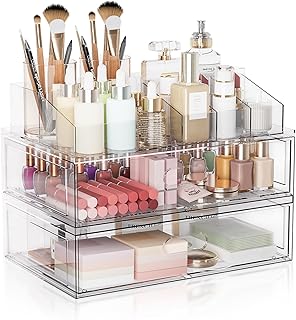
Clear Stackable Makeup Organizer with Drawer
If you want something that just works, Clear Stackable Makeup Organizer with Drawer is a safe bet (300 reviews, 4.5 stars).
Marine Collagen Creams in Ocean-Blue Jars

Marine collagen products often come in blue packaging to emphasize their ocean origins, and while topical collagen can’t actually penetrate deep enough to boost your own collagen production, these creams are usually loaded with other beneficial ingredients. The La Mer Crème de la Mer ($190 for 1 oz at Neiman Marcus) is absurdly expensive, but the blue-green jar is iconic.
I received a sample size (0.24 oz) as a birthday gift from Sephora, and I made it last six weeks by using the tiniest amount—literally a rice grain-sized dollop—warmed between my palms before pressing into my skin. Did it perform better than my $30 moisturizer? Honestly, not really. But the ritual of using it felt luxurious, which isn’t nothing.
If you want the blue aesthetic without the price tag, try the Acure Radically Rejuvenating Day Cream ($19.99 for 1.7 oz at Target). It comes in a blue tube, contains peptides and antioxidants, and performs just as well as prestige brands I’ve tried. Sometimes drugstore products are genuinely as good as luxury options, and this is one of those times.
Blue Skincare Aesthetic Tools: Jade Rollers and Gua Sha

While traditional jade rollers are green, blue sodalite and blue aventurine rollers have become popular for the calming blue aesthetic. I bought a blue sodalite roller from TJ Maxx for $12.99, and honestly it’s identical in function to the $60 one I saw at Goop. The cooling sensation feels amazing on puffy morning skin.
I store mine in the fridge and roll for about 3-5 minutes after applying serum, using gentle upward and outward motions. Start at your neck and work up toward your forehead, using the larger end for cheeks and forehead, the smaller end for under eyes. The blue stone supposedly promotes emotional balance, but I’m mainly here for the depuffing effects.
Pro tip: always clean your roller with soap and water after each use and let it air dry completely. I made the mistake of storing mine wet once, and it developed this gross film that took forever to clean off. Also, don’t press too hard—the weight of the stone provides enough pressure. You’re not trying to iron your face flat.
Blue Light Protection Serums: The Digital Age Essential

Blue light from screens is a controversial topic in skincare, but several brands have released blue light protection products in—you guessed it—blue bottles. The Murad City Skin Age Defense Broad Spectrum SPF 50 ($68 for 1.7 oz at Ulta) claims to protect against blue light, pollution, and UV rays.
I use about a quarter teaspoon every morning, and while I can’t definitively say it’s blocking blue light damage, it’s a solid mineral SPF that doesn’t pill under makeup. The slight blue tint from iron oxides actually helps counteract redness, giving my skin a more even tone before I apply foundation.
Honestly, the jury’s still out on whether blue light from screens actually damages skin significantly. I’m more concerned about UV protection and pollution defense, which this product definitely provides. If the blue light protection is real, that’s a bonus. If it’s marketing hype, I’m still getting excellent sun protection, so I’m not mad about it.

Vtopmart 3 Tier Clear Makeup Organizer with Drawer
If you want something that just works, Vtopmart 3 Tier Clear Makeup Organizer with Drawer is a safe bet (19 reviews, 4.5 stars).
Blue Agave-Based Skincare: The Hydration Powerhouse

Blue agave isn’t just for tequila anymore. The plant’s extract is incredibly hydrating and rich in inulin, a prebiotic that supports your skin’s microbiome. The Biossance Squalane + Marine Algae Eye Cream ($54 for 0.5 oz at Sephora) contains blue-green algae and comes in a frosted blue tube that fits the aesthetic perfectly.
I use a tiny dot—about half a grain of rice—for both eyes, tapping it gently around the orbital bone. This is one area where less is genuinely more. Too much eye cream can migrate into your eyes overnight and cause puffiness. The texture is lightweight and absorbs quickly, which I appreciate because I hate when eye creams feel heavy or greasy.
Common mistake: applying eye cream too close to your lash line. The heat from your skin will cause products to migrate, and you’ll end up with irritated eyes by morning. I stay about a quarter inch away from my lashes and let the natural movement of my skin distribute the product where it needs to go.
Probiotic Toners in Blue Bottles: Microbiome Support

The skin microbiome trend has exploded, and probiotic skincare often comes in blue packaging to signal its balancing, calming properties. The Tula Skincare Purifying Face Cleanser ($28 for 6.7 oz at Ulta) is technically a cleanser, but I use it as a second cleanse after oil cleansing, and the blue bottle looks gorgeous on my shelf.
I use about a dime-sized amount, which creates a decent lather without stripping my skin. It contains probiotics and blueberry extract, though I’m skeptical about whether probiotics can survive in a cleanser long enough to benefit your skin. They’re typically rinsed off within 60 seconds, which doesn’t seem like enough contact time to do much.
That said, my skin does feel balanced and calm after using this, so something is working. Maybe it’s the probiotics, maybe it’s the gentle surfactants, maybe it’s placebo effect. I don’t particularly care as long as my skin looks good. Sometimes you don’t need to understand the science to appreciate the results.
Blue Tansy Cleansing Balms: The Makeup Remover That Doesn’t Suck

Oil cleansing balms have become my preferred first cleanse, and blue tansy versions are everywhere now. The Farmacy Green Clean Makeup Removing Cleansing Balm ($24 for 3.2 oz at Sephora) isn’t blue-tinted, but they make a Blue Tansy version ($38 for 3.4 oz) that I splurged on during the sale.
I scoop out about a quarter-sized amount with the included spatula, massage it onto dry skin for 30-60 seconds, then add water to emulsify before rinsing. It removes everything—waterproof mascara, long-wear foundation, sunscreen—without leaving an oily residue. My skin feels clean but not stripped, which is exactly what I want from a first cleanse.
Pro tip: always use a spatula or clean spoon to scoop out balm cleansers, never your fingers. Introducing bacteria from your hands into the jar can cause the product to break down faster or even grow mold. I learned this after my first tub developed weird spots after three months of finger-scooping.
Blue Seaweed Sheet Masks: The Single-Use Treat

I know sheet masks are environmentally questionable, but I still use them occasionally as a treat. The Tonymoly Pureness 100 Mask Sheet in Marine ($3.50 at Ulta) has a blue tint from seaweed extract and fits the blue skincare aesthetic perfectly. I use these before events when I want my skin to look extra glowy.
Leave it on for 15-20 minutes, then massage the remaining essence into your skin. Don’t rinse it off—that’s wasteful and defeats the purpose. I usually do a sheet mask while taking a bath, which helps the ingredients absorb better in the humid environment. My skin looks plump and hydrated for about 24 hours afterward.
Common mistake: using sheet masks daily. They’re meant to be an occasional boost, not a replacement for your regular routine. I use them maybe once a week, twice if I have multiple events. Your skin can actually become dependent on the intense hydration if you overdo it, making your regular products seem less effective.
Blue Skincare Aesthetic Refrigerators: The Ultimate Organization Tool

This isn’t a product, but a blue mini fridge specifically for skincare has become essential for me. I bought a Cooluli Mini Fridge in baby blue ($39.99 on Amazon) to store my vitamin C serums, eye creams, and sheet masks. The cooling effect enhances the depuffing benefits, and honestly, it just makes my routine feel more luxurious.
The fridge holds about 12 full-size products comfortably, and it’s quieter than I expected. I keep it on my bathroom counter, and the blue color ties my whole blue skincare aesthetic together. It maintains a temperature of about 40-45°F, which is perfect for extending the shelf life of active ingredients without freezing anything.
Pro tip: don’t store oil-based products in the fridge. They’ll solidify and become difficult to use. Stick to water-based serums, gel moisturizers, eye creams, and masks. Also, let products come to room temperature for a minute before applying if you have sensitive skin—the cold can be shocking and cause temporary redness.
Building a blue skincare aesthetic has been one of my favorite beauty projects this year. It started as pure vanity—wanting my bathroom shelf to look cohesive for Instagram—but it led me to discover genuinely effective products I wouldn’t have tried otherwise. The calming, anti-inflammatory focus of blue aesthetic skincare has transformed my reactive, barrier-compromised skin into something that actually looks healthy.
My top three from this list are the PDRN serum, ZO Soothing Hydro Mist, and the blue sodalite roller. Those three products alone have made the biggest difference in my skin’s overall calmness and resilience. If you’re dealing with redness, sensitivity, or barrier damage, start with those and build from there.
Save this article for your next skincare shopping trip, and pin it so you can reference specific product names and prices when you’re ready to invest. Your skin (and your Instagram feed) will thank you.
Frequently Asked Questions
What makes blue skincare products different from regular skincare?
Blue skincare often contains calming ingredients like azulene from chamomile or blue tansy, which give products their natural blue tint. These ingredients specifically target redness and inflammation. The aesthetic also includes products with blue packaging that focus on barrier repair and soothing benefits.
Is PDRN really worth the hype in blue aesthetic skincare?
Honestly, yes. PDRN (polydeoxyribonucleotide) derived from salmon sperm is the standout ingredient of 2026. It promotes cell regeneration and wound healing. I’ve seen significant improvement in skin texture after eight weeks of consistent use, though it’s pricey at $80-150 per bottle.
Can I use multiple blue-tinted products in one routine?
Absolutely. Blue-tinted products typically contain gentle, anti-inflammatory ingredients that layer well together. I personally use a blue serum, mist, and moisturizer in the same routine without irritation. Just introduce one product at a time to monitor how your skin responds.
Are blue skincare products suitable for all skin types?
Most blue aesthetic skincare focuses on calming and barrier repair, making them ideal for sensitive, reactive, or compromised skin. However, some formulas can be too rich for oily skin. Always check if products are non-comedogenic, and patch test first if you’re acne-prone.