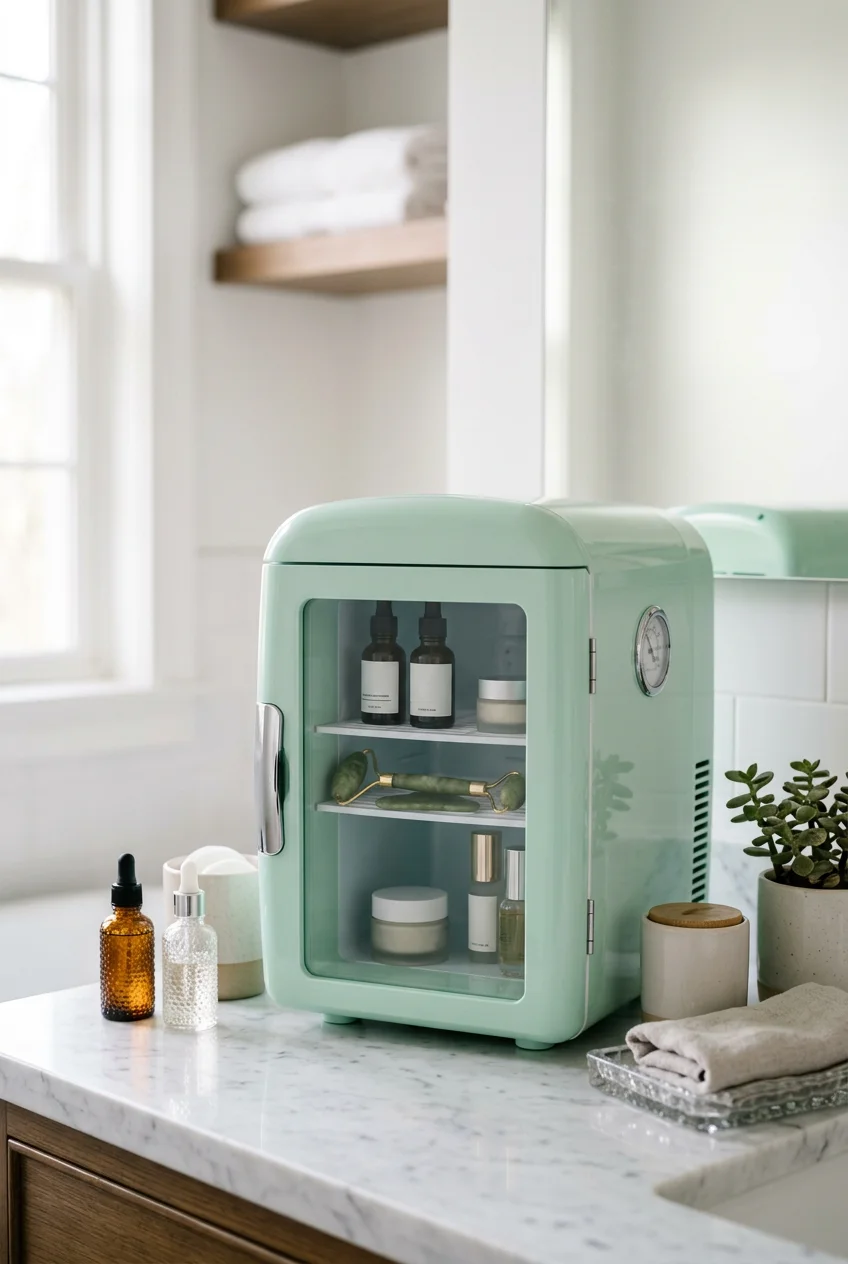
What’s Inside
- Optimize Temperature for Peak Performance
- Prioritize Potent Vitamin C Serums
- Preserve Retinol’s Power
- Depuff with Chilled Eye Creams and Gels
- Elevate Your Masking Experience
- Soothe Irritated Skin with Cooling Mists and Toners
- Extend the Life of Natural and Preservative-Free Formulas
- Enhance Facial Tool Benefits
- Avoid Refrigerating Oil-Based Products
- Steer Clear of Chilling Clay Masks and Thick Creams
- The Surprising Perk: Perfume Preservation
- Combat Inflammation with Chilled Acne Treatments
- The “Warm” Function Trend
- Prevent Condensation with a “Warm-Up” Rule
Three years ago, I pulled a $182 bottle of Skinceuticals CE Ferulic (1 fl oz) out of my bathroom cabinet only to find it had turned the color of rust. It smelled exactly like hot dog water. I applied 4 drops anyway, which left a sticky orange stain on my collar and did absolutely nothing for my skin. That was the day I realized mini fridge skincare isn’t a frivolous aesthetic choice for social media. It’s a functional chemistry preservation tactic. If you’re spending real money on unstable actives, letting them sit in a humid 80-degree bathroom is just throwing cash away. I’m going to walk you through exactly how I manage my cold storage, what goes in, what stays out, and the thermal rules that actually matter. I’ve ruined enough expensive serums by doing this wrong, so you won’t have to make the same mistakes. Learned that the hard way.
1. Optimize Temperature for Peak Performance

You need to set your mini fridge to a highly specific range of 40 to 50 degrees Fahrenheit (4.4 to 10 degrees Celsius). This isn’t a suggestion. It’s a requirement for formula stability. A standard kitchen refrigerator runs much colder, typically between 35 and 38 degrees Fahrenheit. I bought a basic mini fridge at Walmart for $29.99 last year that didn’t have a built-in thermostat. It dropped to 32 degrees overnight and completely froze my 1 oz bottle of copper peptides into a solid blue block. The glass cracked, and I had to throw the entire thing in the trash. Now, I keep a basic digital thermometer ($9.99 at Target) inside my skincare fridge at all times. You want to maintain a constant 45 degrees. This specific temperature window slows down kinetic energy and chemical degradation without causing the water phase of your serums to crystallize. If your fridge gets colder than 38 degrees, you risk separating the emulsifiers in your expensive lotions. Check the temperature display weekly to ensure the compressor isn’t malfunctioning.
2. Prioritize Potent Vitamin C Serums

L-ascorbic acid is notoriously unstable. It oxidizes rapidly when exposed to heat, light, and oxygen. When kept at 35 to 40 degrees Fahrenheit, the oxidation process slows down to a crawl. I buy the Drunk Elephant C-Firma Fresh Day Serum (1 oz, $78) because the 15 percent L-ascorbic acid formula comes unmixed. You mix the powder and liquid base yourself. Once mixed, I immediately put it in the fridge. I’ve tracked the color shift over six months. Kept at room temperature, it turns a dark amber within eight weeks. In the fridge, it stays a pale, clear champagne color for almost five months. The cold temperature preserves the electron donor capacity of the antioxidant. If your vitamin C serum comes in an opaque bottle, you won’t be able to see the color shift, but the chemical degradation is still happening. Keeping it chilled ensures the 4 drops you apply every morning are actually neutralizing free radicals instead of just painting your face with degraded acid.
3. Preserve Retinol’s Power

Retinoids break down rapidly under UV light and high temperatures. Last July, I left a backup tube of a prescription retinoid in my car while I shopped at Sprouts for two hours. The interior car heat reached 110 degrees. When I finally opened that tube weeks later, the yellow cream had separated into a clear oily liquid and a grainy white paste. It was completely ruined. Retinol molecules are fragile. Storing your Paula’s Choice Clinical 1% Retinol Treatment (1 oz, $62) in the fridge at 45 degrees ensures the active vitamin A derivative remains intact. Many dermatologists recommend refrigerating retinol products, particularly if you live in a warmer climate or don’t have air conditioning in your bathroom. The cold texture also feels incredibly soothing when applying a pea-sized amount over a compromised skin barrier. Just ensure the cap is screwed on tightly so the formula doesn’t absorb any ambient moisture from the fridge interior.

Yeamon Gua Sha Facial Tools and Face Roller Set
Yeamon Gua Sha Facial Tools and Face Roller Set has been one of the most consistently praised picks in this category. 11 reviewers averaged 4.5/5.
4. Depuff with Chilled Eye Creams and Gels

The science here relies on basic vasoconstriction. When you apply a cold substance to the delicate under-eye area, the localized drop in temperature forces the superficial blood vessels to constrict. This physically pushes pooled lymphatic fluid out of the tissue, effectively reducing puffiness and minimizing the dark purple appearance of dilated veins. I use a 1/4 teaspoon scoop of the Peter Thomas Roth Cucumber Gel Mask Extreme De-Tox Hydrator (5 oz, $55) under my eyes every morning. Last Tuesday, I had a 7 AM run to Costco. I woke up with my eyes completely swollen from seasonal allergies. Applying that 40-degree green gel instantly numbed the itch and flattened the puffiness within twenty minutes. If you prefer a cream, the Kiehl’s Creamy Eye Treatment with Avocado (0.5 oz, $38) is excellent. The cream is naturally thick, so the cold makes it slightly tacky. I’ve found this tacky texture actually grips liquid concealer much better than a warm, slippery eye cream.
5. Elevate Your Masking Experience

Hydrogel and cellulose sheet masks have a high specific heat capacity, meaning they hold onto cold temperatures for a long time. I keep three Dr. Jart+ Dermask Water Jet Vital Hydra Solution Sheet Masks (1 mask, $6) in the back of my fridge at all times. The trick is the 30 to 60 minute rule. You don’t want them sitting directly against the cooling element and freezing. You want them chilled to exactly 40 degrees. When you apply a cold hydrogel mask, the temperature differential between the mask and your 98-degree skin creates a minor occlusive vacuum effect. It forces the 1 oz of hyaluronic acid serum deeper into the epidermis while simultaneously pulling heat out of inflamed skin. If I’m using a wash-off mask like the Summer Fridays Jet Lag Mask (2.25 oz, $49), applying a cold, thick layer over my face drops my skin temperature by several degrees, which immediately shuts down the redness associated with mild rosacea flare-ups.
6. Soothe Irritated Skin with Cooling Mists and Toners

Hypochlorous acid, the active ingredient in many rescue sprays, is highly reactive. It degrades quickly if left in a hot, sunny room. I keep my Tower 28 SOS Daily Rescue Facial Spray (4 oz, $28) in the fridge door. I also bought the Heritage Store Rosewater & Glycerin Facial Mist (8 oz, $11.49) at Whole Foods specifically to keep cold. It contains purified water and damask rose oil. Spraying 3 pumps of a 45-degree liquid across your face lowers your immediate surface temperature. This is highly effective for stopping the histamine response if you’re dealing with a sudden flush, a sunburn, or a mild allergic reaction to a new sunscreen. The fine mist of cold water droplets evaporates quickly, pulling latent heat away from your skin. I keep the bottle right at the front of the top shelf so I can grab it blindly when my face feels tight or irritated.

COSRX Vitamin E Vitalizing Sunscreen,SPF 50 Face Sunscreen
COSRX Vitamin E Vitalizing Sunscreen has been one of the most consistently praised picks in this category. 43 reviewers averaged 4.5/5.
7. Extend the Life of Natural and Preservative-Free Formulas

Formulations with high water content and minimal synthetic preservatives are breeding grounds for bacteria and mold. Water activity dictates microbial growth. By dropping the storage temperature below 50 degrees, you severely inhibit the reproductive cycle of common cosmetic bacteria like Pseudomonas aeruginosa. I learned this the hard way. I left a 2.5 oz jar of Trader Joe’s Nourish Hyaluronic Moisture Cream ($8.99) on my bathroom counter for three months. Because it leans on milder preservative systems, when I opened it, there was a visible layer of fuzzy green mold on the lid. I had to throw it out. Now, any product lacking robust preservatives like phenoxyethanol or parabens goes straight into the cold chamber. Refrigeration can slow these biological processes, extending their usable life by several months. Always check for changes in color, texture, or smell as indicators of degradation, even if the product is chilled. You might also like: 15 Brilliant Skincare Routine Ideas That Make a Real Difference
8. Enhance Facial Tool Benefits

Stone tools have high thermal mass. They absorb cold quickly and release it slowly. Never put these in the freezer. I did that once with a cheap jade roller. The microscopic water molecules trapped in the fissures of the stone expanded as they froze, and the roller snapped right off its brass hinge when I pressed it to my face. The fridge is perfectly sufficient. I store my Mount Lai De-Puffing Jade Facial Roller ($34) and Kora Organics Rose Quartz Heart Facial Gua Sha ($63) on the middle shelf. I take my chilled rose quartz gua sha and apply 4 drops of a room-temperature slip agent to my neck. The cold stone gliding along the jawline encourages lymphatic fluid to drain toward the lymph nodes. The 45-degree surface temperature of the stone stays cold for the entire 5-minute massage routine, providing superior depuffing compared to a room-temperature tool. You might also like: 14 Foto Skincare Banyak You Need to See
9. Avoid Refrigerating Oil-Based Products

This is a strict rule. Keep anhydrous (waterless) facial oils out of the cold. Different fatty acids have different freezing points. Saturated fats solidify at higher temperatures than unsaturated fats. If you put a complex botanical oil in the fridge, the saturated lipids will crystallize and fall to the bottom of the bottle, leaving a cloudy, separated mess. I keep The Ordinary 100% Organic Cold-Pressed Rose Hip Seed Oil (1 oz, $10.90 at Target) strictly on my vanity. I tried chilling a $90 marula oil once because I thought it would feel nice. It turned into a solid, waxy lump. I had to run the glass bottle under hot water for ten minutes to melt it back down, which probably ruined the antioxidant profile anyway. Cold temperatures cause these formulas to separate, solidify, or change texture, rendering them completely ineffective and impossible to pull up into a glass dropper.

medicube Deep Vitamin C Capsule Serum | Hydrating Vitamin C
If you want something that just works, medicube Deep Vitamin C Capsule Serum | Hydrating Vitamin C Serum for is a safe bet (298 reviews, 4.5 stars).
10. Steer Clear of Chilling Clay Masks and Thick Creams

Emulsions are delicate chemical balancing acts. A thick cream relies on specific emulsifiers to keep the ceramides and water bound together. When you expose a heavy cream to continuous 40-degree temperatures, the emulsifiers can fail. The water phase separates from the oil phase. I bought a 16 oz tub of CeraVe Moisturizing Cream ($17.99) at Walmart, put half of it in a smaller jar in the fridge to try a cold body cream experiment, and within two weeks, it had the texture of cottage cheese floating in water. Clay masks are even worse. The cold environment pulls ambient moisture out of the bentonite clay. If you put a tub of Aztec Secret Indian Healing Clay (1 lb, $8.99) in the fridge, it turns a smooth paste into a rock-hard un-spreadable brick. Keep your heavy occlusives and mud masks at room temperature in a dark cabinet.
11. The Surprising Perk: Perfume Preservation

Fragrances are composed of volatile organic compounds suspended in alcohol. Heat and UV light are the absolute enemies of these compounds. The top notes (usually delicate citrus or herbal scents) are the first to degrade when a bottle sits on a warm bathroom shelf. By storing your 1 oz glass bottle of Jo Malone London Wood Sage & Sea Salt Cologne ($85) in a dark fridge at 50 degrees, you halt the breakdown of these fragile esters. I keep my Jo Malone bottle in the back corner of the bottom shelf. The scent profile remains incredibly sharp, and the sea salt notes don’t turn sour the way they do when the bottle is left exposed to the ambient heat and humidity of a daily hot shower. Lesser known, but non-oil-based perfumes benefit immensely from cool, dark storage to extend their fragrance life. No exaggeration. You might also like: 11 Aesthetic Skincare Products for Every Budget
12. Combat Inflammation with Chilled Acne Treatments

Salicylic acid and benzoyl peroxide can lose their chemical potency if stored improperly. I keep my 4 oz bottle of Paula’s Choice 2% BHA Liquid Exfoliant ($35) in the fridge door. Last month, I felt a massive cystic breakout forming on my chin right before a grocery run to Kroger. I soaked a cotton pad with 1/2 teaspoon of the 40-degree BHA liquid and pressed it against the cyst for three minutes. The cold temperature immediately reduced the localized swelling and redness, while the salicylic acid penetrated the pore to dissolve the sebum. Applying cold chemical exfoliants drastically reduces the stinging and burning sensation that usually accompanies acid application on active, open breakouts. The cooling sensation provides immediate soothing relief for inflamed tissue while maintaining the strict pH stability required for the acid to function properly.
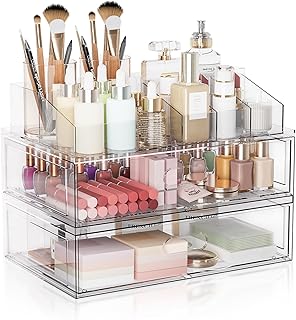
Clear Stackable Makeup Organizer with Drawer
If you want something that just works, Clear Stackable Makeup Organizer with Drawer is a safe bet (310 reviews, 4.5 stars).
13. The “Warm” Function Trend

Some modern skincare mini fridges, like the Pure Daily Care Luminous Skin Fridge ($99), now include a warming function. This trending approach flips the thermoelectric polarity, turning the fridge into a warming incubator that operates around 100 to 110 degrees Fahrenheit. I use this exclusively for specific lipid treatments. When you warm a 1 oz bottle of Biossance Squalane + Vitamin C Rose Oil ($74) slightly above body temperature, the viscosity drops. The oil becomes thinner and more fluid. Applying 5 drops of warmed oil over your nighttime moisturizer increases the permeability of the stratum corneum, allowing the lipids to integrate more smoothly into your skin barrier. I also use the warm setting to heat up small 8×8 inch damp cotton towels. Wiping off a heavy cleansing balm with a steaming 100-degree towel is a highly effective way to dissolve stubborn waterproof mascara without scrubbing.
14. Prevent Condensation with a “Warm-Up” Rule

This is the most critical technical step in mini fridge skincare. When you take a 40-degree glass bottle of serum out of the fridge and open it immediately in a 75-degree humid bathroom, the ambient water vapor in the air instantly condenses on the cold surfaces. This includes the inside of the dropper and the inner neck of the bottle. Over time, these microscopic water droplets drip down into the formula. If you’re using an anhydrous (water-free) vitamin C suspension, introducing water triggers hydrolysis, destroying the active ingredient. My strict rule is the 60-second wait. I take the bottle out, set it on the counter, and wait a full minute for the exterior glass to acclimate before I unscrew the cap. This prevents condensation from forming inside the bottle, which can introduce moisture and accelerate bacterial growth or chemical degradation. It’s a tiny step, but it saves your products. Trust me on this.
If you’re investing in high-quality actives, a skincare fridge is a functional necessity, not a luxury. I’d highly recommend starting with a basic model that has a reliable digital thermometer so you can track the exact temperature. Pin this guide so you don’t accidentally freeze your expensive serums or ruin your facial oils. Let’s keep those formulas stable and effective.
Frequently Asked Questions
What temperature should a skincare mini fridge be?
Your skincare mini fridge should be set between 40 and 50 degrees Fahrenheit. Temperatures below 38 degrees can freeze serums and break the emulsions in thick creams, while temperatures above 50 degrees won’t effectively preserve unstable ingredients like Vitamin C.
Should I keep facial oils in my skincare fridge?
No. You should never put anhydrous facial oils in a mini fridge. Cold temperatures cause the saturated fats in the oils to crystallize and solidify, which separates the formula and makes it impossible to dispense through a glass dropper.
Does refrigerating Vitamin C actually work?
Yes. L-ascorbic acid degrades rapidly when exposed to heat and light. Storing your Vitamin C serum at 40 degrees Fahrenheit significantly slows down the oxidation process, extending its shelf life and keeping the antioxidant effective for months longer.
Can I put my jade roller in the freezer instead?
Never put stone facial tools in the freezer. The extreme cold causes microscopic water molecules inside the stone to expand, which can crack the jade or rose quartz. The 40-degree temperature of a mini fridge provides plenty of safe cooling.
