What’s Inside
- Define Your Niche with Precision (Avoid the “All Skin Types” Trap)
- Craft a Clear Brand Mission and Values
- Invest in Visually Cohesive Packaging
- Embrace Ingredient Transparency for Your Skincare Brand Identity
- Use Hyper-Personalization Tools
- Prioritize Sustainable and Eco-Friendly Practices
- Develop a Unique Brand Voice and Tone
- Avoid Over-Launching Products Initially
- Price Strategically for Profit and Perception
- Showcase Real People and Authentic Stories
- Integrate Holistic Wellness and Skin Span Concepts
- Focus on Barrier Repair and Microbiome Health
- Make Packaging Part of the Treatment
- Feature Staff Skincare Stories
- Simplify Formulations to Protect Your Skincare Brand Identity
Last Tuesday at Whole Foods, I stood staring at a wall of beige bottles. They blurred together into one giant, confusing blob of hemp seed oil and false promises. It hit me then that creating a killer skincare brand identity isn’t just about picking a pretty font. I’ve spent years researching products, and I can tell you exactly why some bottles end up in my shopping cart while others collect dust. My first attempt at helping a friend launch her serum line failed miserably because we totally ignored who we were actually talking to. We just slapped a pink label on a 1 oz bottle and hoped for the best. It smelled like sour milk, the label peeled off in the shower, and nobody bought it. Learned that the hard way. Let’s fix that. Here are 15 real, actionable ways to build a brand that actually works for clear skin products.
1. Define Your Niche with Precision (Avoid the “All Skin Types” Trap)

I’m begging you to stop targeting “all skin types” on your packaging. It’s a massive mistake. When I see a label claiming it fixes dry, oily, and acne-prone skin all at once, I instantly put it back on the shelf at Target. You can’t be everything to everyone. Instead, pinpoint a highly specific audience. Think about hormonal acne for adults aged 25 to 40, or sensitive, redness-prone skin that flares up in freezing climates. Once I switched to a brand with a razor-sharp focus, my skin cleared up in weeks. Look at Hero Cosmetics. Their Mighty Patch Original costs exactly $12.99 for a 36-count box at Target. They don’t pretend to cure wrinkles or fade dark spots. They just suck the gunk out of angry whiteheads. That level of precision is exactly what builds a loyal following. Pick a lane and stay in it.
2. Craft a Clear Brand Mission and Values

Your brand needs a massive, compelling reason to exist. Customers can smell a cash grab from a mile away. I remember buying a random $45.00 vitamin C serum at a boutique because the bottle was cute, but it oxidized into a sticky orange mess within a week. Compare that to a brand like The Ordinary. Their mission to provide transparent, affordable, and science-based formulations built insane trust with buyers. When you pick up a 1 oz bottle of The Ordinary Niacinamide 10% + Zinc 1% for just $6.00, you know exactly what you’re getting. There aren’t any fluffy promises. You need to articulate whether your brand prioritizes all-natural ingredients, hardcore dermatological science, or strict cruelty-free testing. I personally swear by brands that just tell me the truth. If your formulas are developed by chemists in a lab, make that your core message. People want to buy into a belief system, not just a bottle of lotion.
3. Invest in Visually Cohesive Packaging

Packaging is the first interaction a customer has with your product. I’ve bought things purely because the bottle felt heavy and cold in my hand. Design it to be a full sensory experience. Herbivore Botanicals absolutely nails this. They use heavy glass bottles and let the natural pastel colors of their oils shine through. Their Lapis Blue Tansy Face Oil costs $72.00 for a 1.7 oz bottle, and holding it feels like holding a precious gemstone. It perfectly matches their natural, airy product identity. On the flip side, luxury brands like Dior use sleek, metallic pumps that click shut with a satisfying snap. The Dior Capture Totale Le Sérum runs $95.00 for a 1 oz bottle, and the packaging justifies that premium price tag. Don’t cheap out on flimsy plastic that cracks after two weeks. I once bought a cheap plastic pump bottle at Walmart that leaked half my cleanser onto my bathroom floor. Trust me on this. Make sure your physical packaging matches the story you’re trying to tell.
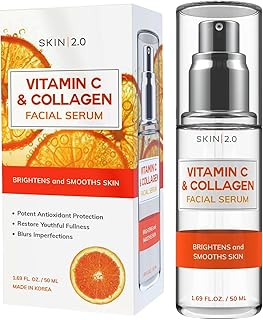
Skin 2.0 Vitamin C Serum – Dermatologist Tested
If you want something that just works, Skin 2.0 Vitamin C Serum – Dermatologist Tested is a safe bet (45 reviews, 4.5 stars).
4. Embrace Ingredient Transparency for Your Skincare Brand Identity

By the time 2026 rolls around, consumers are going to demand absolute, unfiltered transparency for your skincare brand identity. We want to know exactly what we’re putting on our faces. You need to clearly list all ingredients, their specific sources, exact concentrations, and their actual purpose. Stop hiding behind vague claims like botanical extracts. I was walking down the beauty aisle at Trader Joe’s last month and realized how much I appreciate products that just tell me what they do. Brands like The Inkey List have built massive success on this exact concept. Their Oat Cleansing Balm is $11.99 for a 5 oz tube, and the packaging literally explains what oat kernel oil does for the skin in plain English. Avoid greenwashing at all costs. I tried a natural face wash once that smelled exactly like synthetic pine needles and broke me out in tiny red bumps. If you use a 2% salicylic acid, put that number right on the front label. Clear ingredient communication builds trust faster than any flashy marketing campaign. You might also like: 20 Stunning Tips Natural Skincare That Actually Work
5. Use Hyper-Personalization Tools

The days of guessing your skin type are totally over. People are willing to pay more for customized cosmetic products that actually address their specific weird skin quirks. You need to use AI-powered online quizzes or diagnostic tools to recommend personalized routines. I used to guess my shade and formula, ending up with chalky moisturizers that made me look like a ghost. Now, I love taking a quick two-minute quiz to get exactly what I need. L’Oreal has that crazy Perso device that instantly mixes customized formulas right on your bathroom counter. But even if you can’t build a robot, look at brands like Curology. You send them pictures of your bare face, and they mix a custom prescription cream for $29.95 a month for a 24g bottle. I tried this wrong for months before figuring out I needed to actually be honest on the quiz about my stress breakouts. Personalization makes the customer feel seen. When you formulate a 30ml serum specifically for someone’s exact combination of dry patches and blackheads, they won’t shop anywhere else. You might also like: 15 Creative Aesthetic Rhode Skincare to Transform Your Space
6. Prioritize Sustainable and Eco-Friendly Practices

Sustainability isn’t just a cute buzzword anymore. It’s a strict baseline expectation. If your brand pumps out tons of single-use plastic, I’m probably not buying it. Focus on refillable containers or water-free solid products to actually reduce waste. I was browsing the natural beauty section at Sprouts recently and noticed how many brands are finally ditching the massive plastic pumps. You can also use upcycled ingredients. Think about using leftover 1/2 cup coffee grounds for exfoliants or discarded fruit peels for essential oils. UpCircle Beauty does this brilliantly. Their Coffee Face Scrub costs $20.00 for a 3.4 oz tube, and it’s made with repurposed coffee grounds from London cafes. It smells like a fresh espresso shot and scrubs away dead skin without destroying the planet. I used to buy these cheap, plastic-bead scrubs that felt like sandpaper and washed straight into the ocean. Make eco-friendly practices a loud, proud part of your story. Use glass jars, aluminum tubes, or compostable cardboard boxes. Your customers will gladly pay a few extra dollars for guilt-free packaging. You might also like: 20 Gorgeous Aesthetic Products Korean Skincare for Every Budget

COSRX Vitamin E Vitalizing Sunscreen,SPF 50 Face Sunscreen
COSRX Vitamin E Vitalizing Sunscreen punches above its price — 42 buyers rated it 4.5 stars. I would buy it again.
7. Develop a Unique Brand Voice and Tone

You absolutely have to nail down how your brand sounds. Are you informative and clinical, or are you witty and loud? Whatever you pick, maintain that exact tone across every single email, Instagram caption, and product label. The Ordinary uses very direct, science-focused language. They treat you like a chemistry student. Glow Recipe takes the total opposite approach with a playful, fruit-powered narrative. Their Watermelon Glow AHA Night Treatment costs $40.00 for a 2.02 oz jar, and their marketing sounds like a fun sleepover with your best friends. Both brands are massively successful because they are incredibly consistent. I once tried to write copy for a client who wanted to sound luxurious but also cheap and funny. The website sounded like three different people fighting over a keyboard. Pick one voice. If your brand is a sassy best friend, use slang and exclamation points. If your brand is a serious dermatologist, use precise medical terminology. Just don’t mix them up. Consistency is what makes a brand actually memorable in a crowded market.
8. Avoid Over-Launching Products Initially

Please don’t launch your brand with twenty different products. Starting with too many items just increases your inventory costs and completely dilutes your messaging. I see new brands do this all the time, and it’s exhausting to look at. Instead, build trust product by product. Focus on one or two hero products that perfectly embody your unique selling proposition. Paula’s Choice is a massive brand now, but they are still heavily known for their 2% BHA Liquid Exfoliant. It costs $34.00 for a 4 oz bottle, and it’s a staple in millions of bathroom cabinets. They perfected that formula before trying to sell us fifty other things. I made the mistake of buying a whole seven-step routine from a brand new indie company once. Half the products were sticky, and the eye cream gave me a weird rash. If they had just focused on making one really incredible moisturizer, I’d probably still be a customer. Perfect your hero product first. Let your audience fall in love with it before you expand.
9. Price Strategically for Profit and Perception

Do not underprice your products just to get sales. Consumers subconsciously associate a higher cost with higher quality. If you sell a potent anti-aging serum for three bucks, I’m going to assume it’s basically just tap water and cheap glycerin. Brands like CeraVe successfully offer affordable, dermatologist-recommended products. Their Daily Moisturizing Lotion is $14.99 for a massive 12 oz pump bottle at Kroger. That pricing makes sense for a daily pharmacy staple. But luxury brands like Chanel command wildly higher prices because of their perceived value and exclusivity. The Chanel Le Lift Serum costs $175.00 for a tiny 1 oz bottle. People happily pay it because the heavy glass bottle and signature scent make them feel wealthy. I tried selling a homemade lip balm for $1.00 at a craft fair once, and nobody bought it. When I raised the price to $5.00 and put it in a nicer tin, it sold out in an hour. Make sure your price tag matches the exact vibe and ingredient quality of your brand.

EQQUALBERRY Vitamin Illuminating Serum | Niacinamide 4% +
If you want something that just works, EQQUALBERRY Vitamin Illuminating Serum | Niacinamide 4% + Brightening is a safe bet (108 reviews, 4.5 stars).
10. Showcase Real People and Authentic Stories

We are all completely exhausted by flawless celebrity endorsements. When I see a twenty-year-old supermodel claiming a drugstore cream cured her nonexistent wrinkles, I roll my eyes and keep scrolling. Instead of paying influencers, feature diverse, real customers sharing their genuine, messy experiences. Neutrogena actually does a decent job highlighting real people from different age groups discussing their skin issues. I bought a two-pack of the Neutrogena Hydro Boost Water Gel for $29.99 at Costco (normally $19.99 for a 1.7 oz jar individually) specifically because I saw a video of a tired mom talking about how it saved her dry winter skin. It felt relatable. I want to see real texture, real acne scars, and real hyperpigmentation. I once bought a foundation because a famous actress swore by it, but it clung to every single dry patch on my chin and looked like cracked mud. Authenticity builds trust. Ask your actual buyers to send in unedited photos and videos. Real faces sell products way better than heavily filtered celebrities ever will.
11. Integrate Holistic Wellness and Skin Span Concepts

The whole anti-aging narrative is getting incredibly old. The trend is shifting heavily toward holistic skin health and longevity beauty. It’s all about keeping your skin biologically younger and stronger for a longer period of time. You need to position your products as prevention partners rather than just quick-fix cosmetics. Think about calming the skin and aiding in recovery. Cocokind does a beautiful job with this messaging. Their Ceramide Barrier Serum is $21.99 for a 1 oz dropper bottle, and they market it entirely around protecting and comforting your skin’s natural defenses. It doesn’t promise to erase your face; it promises to keep it healthy. I used to aggressively scrub my face with harsh apricot pits, thinking I was scrubbing the aging away. Now, I focus entirely on gentle recovery. If your brand promotes wellness, stress relief, and long-term skin health, you’re going to win big. People want products that feel like a relaxing therapy session, not a harsh chemical attack.
12. Focus on Barrier Repair and Microbiome Health

Harsh, burning exfoliation is officially out. Barrier repair and microbiome health are emerging as the absolute foundation of modern skincare. If your brand identity doesn’t include protecting the skin barrier, you’re already behind. Develop products packed with ingredients like niacinamide, ceramides, and peptides. You want to nurture and balance the skin’s microbial ecosystem, not strip it raw. Stratia Liquid Gold is the ultimate example of this. It costs $27.00 for a 2 oz pump bottle, and it looks like bright yellow mustard. It’s packed with ceramides, cholesterol, and fatty acids. I destroyed my moisture barrier last winter by using a strong retinol every single night. My face literally peeled off in flakes. Stratia’s formula was the only thing that stopped the burning. Your brand should loudly champion ingredients that feed the good bacteria on our faces. Skip the fat-free stuff. Give the skin rich, repairing lipids that actually rebuild the protective layer. That’s what keeps customers coming back for their third and fourth bottles.
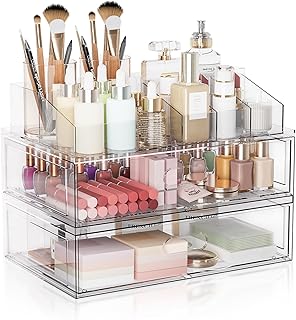
Clear Stackable Makeup Organizer with Drawer
A dependable everyday pick — Clear Stackable Makeup Organizer with Drawer pulls in 306 ratings at 4.5 stars. Not flashy, just solid.
13. Make Packaging Part of the Treatment

Packaging shouldn’t just be a passive container anymore. It needs to be a functional delivery system. Consider applicator-led innovations where the packaging actively improves the product’s performance. Think about specialized cooling metal rollers for depuffing serums, or unique airless pumps that dispense the exact perfect pea-sized amount. The RoC Retinol Correxion Line Smoothing Eye Cream is $24.99 for a 0.5 oz tube, and the narrow nozzle tip makes it incredibly easy to apply tiny dots right under the eye without wasting product. I absolutely hate dipping my fingers into an open jar of moisturizer. It feels unsanitary, and I always end up scooping out way too much. I once dropped a slippery glass jar of expensive night cream on my bathroom tile, and it shattered everywhere. Adding a built-in cooling tip or a precise pump adds massive perceived value to your brand without requiring extra steps from the customer. It makes the daily routine feel a little more high-tech and a lot less messy.
14. Feature Staff Skincare Stories

Here’s a brilliant tip from branding expert Harpal Singh: interview your own staff members about their personal skincare routines. Feature these stories in your blog posts or on your Instagram feed. It creates incredibly genuine viewpoints and makes the entire brand feel more relatable and trustworthy. Glossier used to do this really well. You’d see the actual girls working in their office talking about how they use the Milky Jelly Cleanser, which costs $19.00 for a 6 oz pump bottle. It made the company feel like a group of cool friends rather than a faceless corporation. I tried running a social media account for a small brand once, and we only posted sterile, professional product shots on white backgrounds. The second we posted a messy bathroom selfie of our warehouse manager holding her favorite serum, our comments blew up. People connect with people. Show the chemist who mixed the formula. Show the customer service rep who answers the emails. Let them talk honestly about their own acne struggles or dry skin patches.
15. Simplify Formulations to Protect Your Skincare Brand Identity

While ingredient transparency is crucial, buyers are also suffering from massive ingredient fatigue. We are completely overwhelmed by complex lists with thirty different botanical extracts we can’t pronounce. Keep your formulations highly focused and your explanations incredibly simple and science-backed. Good Molecules is fantastic at this. I picked up their Discoloration Correcting Serum for $12.00 (a 1 oz bottle) online at Walmart. The box clearly highlights just a few key active ingredients, like tranexamic acid, and explains exactly how it fades dark spots. They don’t throw a million different trendy acids into one bottle just to sound impressive. I once bought a miracle serum that had a 40-item ingredient list. It smelled like a harsh chemical peel and made my face itch uncontrollably. A strong skincare brand identity relies on clarity. Tell me exactly what the active ingredient is, what percentage you used, and what it’s going to do for my face. Cut through the noise and keep it beautifully simple.
Building a skincare brand identity isn’t just about picking a trendy color palette or copying what’s viral on social media. It’s about figuring out exactly who you’re talking to and solving their specific problems with total honesty. I’ve wasted so much money on gorgeous bottles that held absolute garbage inside. Don’t be that brand. Focus on transparency, real ingredients, and packaging that actually makes sense for the product. Pin this article to your mood board, save these tips, and start building a brand that people will actually empty and repurchase.

medicube No Cast Just Glow Collagen Sunscreen | SPF 50
If you want something that just works, medicube No Cast Just Glow Collagen Sunscreen | SPF 50 Broad Spectrum is a safe bet (861 reviews, 4.5 stars).
Frequently Asked Questions
Why is a specific skincare brand identity important?
A targeted identity prevents you from blending into a crowded market. If you try to appeal to everyone, you appeal to no one. Focusing on specific issues like hormonal acne builds deep customer trust.
How does packaging affect a skincare brand identity?
Packaging is the first physical interaction a buyer has with your product. Heavy glass jars convey luxury, while eco-friendly aluminum tubes show a commitment to sustainability. It must match your core message.
Should my skincare brand launch with a full routine?
No, it’s better to launch with one or two hero products. Perfecting a single formula lowers inventory costs and helps customers understand exactly what your brand does best before expanding.
How important is ingredient transparency today?
It’s absolutely critical. Consumers want to know exact percentages, sources, and purposes of active ingredients. Hiding behind vague terms like ‘botanical extracts’ damages trust and ruins your skincare brand identity.
