What’s Inside
- Master the Double Cleanse for Your Vision Board Photos Skincare
- Chemical Exfoliation Beats Physical Scrubs Every Time
- Hydration Layering with Hyaluronic Acid
- Vitamin C for Fading Post-Inflammatory Erythema
- The Non-Negotiable Daily SPF 50
- Niacinamide for Regulating Sebum Production
- Retinoids for Cellular Turnover and Vision Board Photos Skincare
- Locking It In With a Ceramide Barrier Cream
- Hydrocolloid Patches for Active Breakouts
- Managing Environmental Factors and Pillowcases
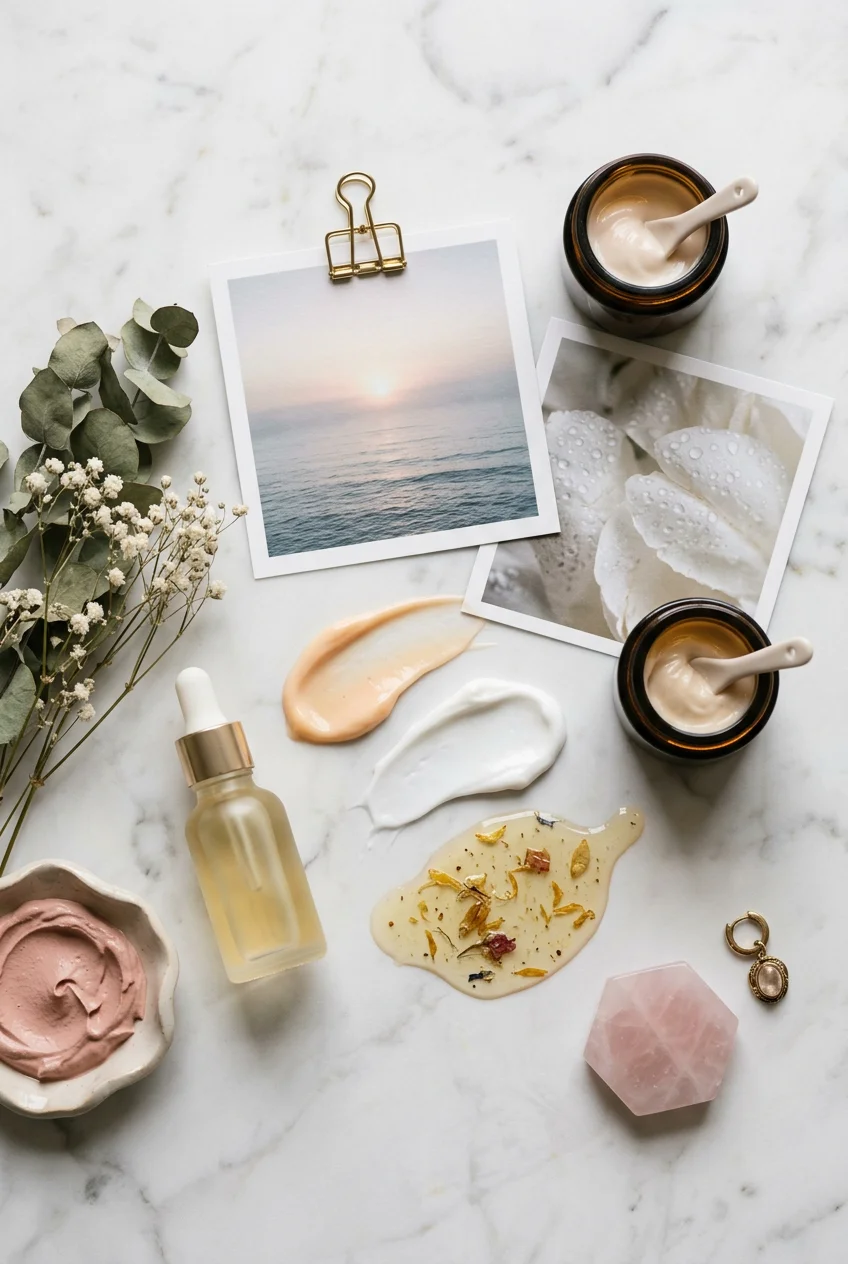
Last October, I caught my reflection in the self-checkout monitor at Target. The harsh fluorescent lighting revealed a harsh truth: my face looked nothing like the vision board photos I’d been saving for months. I’ve spent years pinning these aesthetic, dewy skin close-ups, trying to manifest that exact level of clinical clarity. The reality of achieving those photos requires a lot more than just buying whatever pastel glass bottle matches your bathroom tiles. My skin was severely congested, peeling in dry patches around my nose, and actively breaking out along my jawline from a failed experiment with a trendy raw coconut oil balm. I spent the next six months systematically testing formulations, tracking ingredient percentages, and logging the chemical results on spreadsheets. I stopped buying things just because the packaging looked nice on a shelf or an influencer told me to buy it. The transition from inflamed, textured skin to a clear, predictable complexion meant dropping the marketing hype and focusing strictly on clinical efficacy and barrier repair. Here’s the exact, methodical breakdown of how to build a routine that actually yields results, complete with the specific measurements and chemical logic you need to stop wasting your money.
1. Master the Double Cleanse for Your Vision Board Photos Skincare

I used to think double cleansing was a scam designed by cosmetic companies to sell two products instead of one. I tried it wrong for months before figuring it out. I’d slap some cleansing oil onto my wet face in the shower, rinse it immediately, and wonder why my pores were still clogged and my mascara was smeared under my eyes. The actual mechanic of an oil cleanse requires completely dry skin and physical friction to bind with sebum and waterproof sunscreen. I use the DHC Deep Cleansing Oil. It’s exactly $28.00 for the 6.7 fluid ounce bottle. You need a precise dime-sized amount massaged into your dry face for a full 60 seconds. Set a timer. The texture is thick, heavy like olive oil, and smells faintly of rosemary. It dissolves the water-resistant film left by chemical sunscreens. Once you rinse that off with lukewarm water, you follow up with a water-based cleanser to remove the emulsified oil residue. I rely on the CeraVe Hydrating Facial Cleanser. I buy the 16 fluid ounce pump bottle for $14.99 at Walmart. The texture is like a runny, translucent lotion. It doesn’t foam at all. Foaming cleansers often contain sodium lauryl sulfate, which strips your lipid barrier. If your skin feels tight or squeaky after washing, you’ve compromised your acid mantle. Getting that baseline clean without stripping the skin is the first non-negotiable step for vision board photos skincare. Trust me on this.
2. Chemical Exfoliation Beats Physical Scrubs Every Time

Physical scrubs are a massive liability for your skin barrier. I ruined my moisture barrier in college using a cheap apricot scrub I bought at Kroger for $4.99. The jagged walnut shell powder created microscopic tears across my cheeks, leading to persistent redness and low-grade bacterial infections. Chemical exfoliation is far more controlled and predictable. Salicylic acid is a beta-hydroxy acid, meaning it’s oil-soluble. It penetrates the lipid-rich pore lining to dissolve hardened sebum rather than just scraping the dead surface cells. I use the Paula’s Choice 2% BHA Liquid Exfoliant. A 4 fluid ounce bottle costs $35.00. The liquid feels slightly oily upon application but sinks in within two minutes. I dispense exactly five drops into my palms and press it into my T-zone every Tuesday, Thursday, and Sunday night. Using it daily is a critical mistake. I see people burning their faces off trying to speed up the clearing process. Over-exfoliation triggers a severe inflammatory response, which leads to more oil production and more breakouts. The goal is a steady, mild turnover of the stratum corneum. I noticed a measurable reduction in the blackheads on my nose after three weeks of consistent, spaced-out application. You can’t rush cellular turnover.
3. Hydration Layering with Hyaluronic Acid

Hyaluronic acid is widely misunderstood by most consumers. It’s a humectant, which means it draws water from its surrounding environment. If you apply it to a bone-dry face in a low-humidity room, it’ll pull moisture out of the deeper layers of your skin and evaporate into the air. I learned this the hard way last January. I was applying it straight out of the shower after entirely drying my face with a towel, and my skin felt like tight parchment paper within an hour. The correct method requires a damp canvas. I leave my face dripping wet after cleansing. I use The Ordinary Hyaluronic Acid 2% + B5. It’s $8.90 for a 1 fluid ounce dropper bottle. I dispense three drops and pat it rapidly over my wet face. The texture is slightly viscous and tacky. The tackiness disappears once you lock it in with a moisturizer. It acts as a molecular sponge, holding onto the water you just applied. This specific layering technique physically plumps the superficial fine lines around my eyes and mouth. You can’t skip the sealing step. If you leave the hyaluronic acid exposed to the air without an occlusive cream over it, the hydration is entirely temporary.

EQQUALBERRY Vitamin Illuminating Serum | Niacinamide 4% +
Honestly, EQQUALBERRY Vitamin Illuminating Serum | Niacinamide 4% + Brightening surprised me — sturdier than it looks in the photos, and over 108 buyers gave it 4.5 stars.
4. Vitamin C for Fading Post-Inflammatory Erythema

Fading the red marks left behind by old breakouts requires a dedicated antioxidant. L-ascorbic acid is the most studied form of Vitamin C, but it’s highly unstable. I bought a $20 L-ascorbic acid serum at Whole Foods last year. Within three weeks, the clear liquid turned dark orange and smelled exactly like hot dog water. It had oxidized. Applying oxidized Vitamin C introduces free radicals to your skin, which actively accelerates aging and inflammation. I switched to a more chemically stable derivative. I currently use the Mad Hippie Vitamin C Serum. It costs $33.99 for a 1.02 ounce bottle at Sprouts. It uses sodium ascorbyl phosphate, which is significantly less irritating and remains stable at room temperature for months. I use exactly four drops every morning before my moisturizer. The formula includes konjac root powder, which gives it a slightly gel-like slip that spreads easily. It takes about eight weeks of daily use to see a measurable difference in hyperpigmentation. It’s a slow, methodical process. You won’t wake up with a perfectly even skin tone overnight. But blocking tyrosinase, the enzyme responsible for melanin production, is a necessary step for achieving a uniform complexion. You might also like: 15 Gorgeous Aesthetic Glass Skin That Changed Everything
5. The Non-Negotiable Daily SPF 50

Relying on the SPF 15 built into your foundation is a mathematical failure. To get the stated protection on the bottle, you need to apply exactly one-quarter teaspoon of product to your face. Nobody applies a quarter teaspoon of liquid foundation. I measured it out once in my kitchen using metal baking spoons, and it looked like a thick, unblendable mask of beige paint. You need a dedicated sunscreen. I use the Beauty of Joseon Relief Sun Rice + Probiotics SPF 50. I order the 1.69 fluid ounce tube online for $18.00. The texture is identical to a lightweight, water-based gel cream. It contains no drying alcohols and leaves zero white cast on my skin. I apply two full finger-lengths of the cream every single morning, regardless of the weather. UV rays penetrate heavy cloud cover and standard window glass. Sun exposure degrades collagen and darkens existing acne scars. If you’re using chemical exfoliants or Vitamin C without a dedicated SPF 50, you’re actively damaging your skin barrier. The sunscreen acts as a literal shield, preventing the inflammatory response triggered by ultraviolet radiation. I won’t step outside without it.
6. Niacinamide for Regulating Sebum Production

Niacinamide is a highly effective ingredient that the skincare industry recently decided to overdose. Clinical studies show niacinamide is effective at concentrations between two and five percent. It strengthens the skin barrier and reduces the amount of oil your sebaceous glands produce. However, brands started releasing 15% and 20% formulations purely for marketing purposes. I bought a 20% niacinamide serum last summer and developed severe contact dermatitis. My cheeks broke out in tiny, itchy red welts that took two weeks of hydrocortisone cream to clear. More isn’t better. I downgraded to the Good Molecules Niacinamide Serum. It costs exactly $6.00 for a 1 fluid ounce bottle. It has a 10% concentration, which is the absolute maximum I’ll tolerate, and the formula is extremely watery. I mix two drops into my morning moisturizer. It blends easily without pilling under makeup. Over the course of three months, I noticed I was using significantly fewer oil blotting sheets during my workday. The oil regulation is subtle but mathematically consistent. It keeps the shine on my forehead manageable without drying out my cheeks or causing irritation.

medicube No Cast Just Glow Collagen Sunscreen | SPF 50
Honestly, medicube No Cast Just Glow Collagen Sunscreen | SPF 50 Broad Spectrum surprised me — sturdier than it looks in the photos, and over 861 buyers gave it 4.5 stars.
7. Retinoids for Cellular Turnover and Vision Board Photos Skincare

Retinoids are the only topical ingredients medically proven to alter cellular behavior at a structural level. They force your skin cells to divide and turn over faster, which pushes out microscopic comedones before they can form visible pimples. This is the heavy lifting required for true vision board photos skincare. I use Differin Gel. It contains 0.1% adapalene. I buy the 0.5 ounce tube for $14.97 at Walmart. The application requires strict discipline. When I first started, I applied a thick layer like a standard moisturizer. By day three, the skin around my mouth was flaking off in large, painful sheets. I learned that the hard way. You only need a precise pea-sized amount for the entire face. I use the sandwich method to mitigate irritation. I apply a layer of basic moisturizer, wait twenty minutes for it to dry completely, apply the exact pea-sized amount of Differin, wait another twenty minutes, and apply a second layer of moisturizer. This slows down the absorption rate of the adapalene. I only use it on Monday, Wednesday, and Friday nights. Do not mix this with salicylic acid in the same routine. The chemical conflict will destroy your acid mantle and cause severe peeling.
8. Locking It In With a Ceramide Barrier Cream

All the active ingredients in the world are entirely useless if your moisture barrier is compromised. Ceramides are lipids that naturally make up fifty percent of your skin’s protective barrier. When you wash your face or apply strong acids, you deplete these essential lipids. I used to try sealing my skin with raw, unrefined coconut oil I bought in the baking aisle at Costco. It was a complete disaster. Coconut oil is highly comedogenic. It trapped dead skin cells in my pores and caused deep, painful cystic acne along my jawline. I switched to a chemically formulated synthetic ceramide cream. I use the Vanicream Daily Facial Moisturizer. It costs $13.49 for a 3 fluid ounce tube at Target. It contains five essential ceramides and squalane. The texture is a dense cream that feels slightly heavy for the first five minutes before absorbing into a completely matte finish. I use a nickel-sized amount as the final step in my evening routine. It creates an occlusive seal that prevents transepidermal water loss while I sleep. Without this structural support, the retinoids and exfoliants would cause chronic, low-grade inflammation.
9. Hydrocolloid Patches for Active Breakouts

Spot treatments containing 10% benzoyl peroxide often just burn the top layer of skin, leaving a dark, crusty scab that’s impossible to conceal under makeup. Popping a pimple physically forces bacteria deeper into the follicle, increasing the size of the lesion and guaranteeing a post-inflammatory hyperpigmentation mark. I spent years attacking my face with metal extraction tools I bought on Amazon, which only extended the healing time from three days to three weeks. Hydrocolloid patches are the only logical intervention for an active, whitehead-stage breakout. I use the Hero Cosmetics Mighty Patch Original. A box of 36 patches costs $12.99 at Target. These are medical-grade wound dressings. You clean the area, dry it completely, and stick the translucent patch directly over the blemish. I leave it on for exactly eight hours overnight. The hydrocolloid polymer absorbs the pus and fluid, flattening the physical bump without breaking the surrounding skin tissue. When you peel it off in the morning, the patch is opaque white with the extracted exudate. It physically prevents you from picking at the spot, which is half the battle when dealing with localized inflammation. No exaggeration.

COSRX Vitamin E Vitalizing Sunscreen,SPF 50 Face Sunscreen
Honestly, COSRX Vitamin E Vitalizing Sunscreen surprised me — sturdier than it looks in the photos, and over 42 buyers gave it 4.5 stars.
10. Managing Environmental Factors and Pillowcases

Skincare doesn’t stop at topical products. Your face spends roughly eight hours a night pressed against a fabric surface. If that surface is covered in residual hair products, dead skin cells, and sweat, your topical routine is fighting a losing battle. I used to wash my cotton pillowcases with heavily fragranced laundry pods and liquid fabric softener. The cationic surfactants in fabric softeners are specifically designed to coat fibers in a waxy film to make them feel soft. That wax transfers directly to your face and clogs pores. I eliminated fabric softeners entirely. I also switched to a Kitsch Satin Pillowcase. I bought a standard size for $19.00 at Ulta. The satin weave creates significantly less friction against the skin than standard cotton percale, which prevents physical irritation and sleep creasing. I wash the pillowcase every Sunday using unscented Tide Free & Gentle liquid detergent. It’s a minor logistical adjustment, but controlling the bacterial load of your sleeping environment is a fundamental requirement for maintaining clear skin. You can’t isolate your face from its physical environment.
Building a functional routine requires patience and a strict adherence to chemical logic, not just aesthetics. Stop buying products based on their pastel packaging or because an influencer told you to. Stick to the precise measurements, respect your skin barrier’s pH, and give your active ingredients the full eight to twelve weeks they require to alter cellular turnover. If you found this methodical breakdown useful, pin this article to your skincare reference boards so you can check the exact product names, percentages, and prices during your next supply run.
Frequently Asked Questions
How long does it take to get vision board photos skincare?
It takes eight to twelve weeks of consistent application to see structural changes in your skin. Active ingredients like retinoids and Vitamin C require time to alter cellular turnover and block melanin production. You won’t see permanent results overnight.
Can I use salicylic acid and retinol on the same night?
No. Mixing a beta-hydroxy acid with a retinoid in the same routine will destroy your moisture barrier and cause severe peeling. I use salicylic acid on Tuesday and Thursday, and adapalene on Monday, Wednesday, and Friday.
Why does my hyaluronic acid make my skin feel dry?
Hyaluronic acid is a humectant. If you apply it to dry skin in a dry room, it pulls moisture from the deeper layers of your face. You must apply it to dripping wet skin and immediately seal it with a moisturizer.
Do I really need to double cleanse if I don’t wear makeup?
Yes. If you wear water-resistant SPF 50, a water-based cleanser won’t remove the chemical film. An oil cleanse is necessary to dissolve the sunscreen and excess sebum before your regular cleanser can actually clean your pores.
