
What’s Inside
- The Chemistry Of Cleansers And Why Foam Fails For Skincare Products For Dry Skin
- The Damp Skin Rule For Hyaluronic Acid Serums
- Heavy Duty Ceramides Are Non-Negotiable
- Hydrating Deep Layers With Snail Secretion Filtrate
- Preventing Water Loss With Petrolatum Ointments
- Breaking Down Keratin With Synthetic Urea
- Dissolving Sunscreen With Emulsifying Oils For Skincare Products For Dry Skin
- The Superior Hydration Of High-Percentage Glycerin
- Soothing Inflammation With Colloidal Oatmeal
- Mimicking Natural Sebum With Plant-Derived Squalane
- Gentle Chemical Exfoliation With Lactic Acid
- Avoiding Zinc Oxide In Daily Sun Protection
- Strategic Use Of Sheet Masks For Immediate Hydration
Last February, I sat in my car outside a pharmacy with my heater blasting. I was staring into the rearview mirror at my forehead. My skin was peeling in thick, translucent flakes right above my eyebrows. I tried rubbing it off with a dry napkin. It just left a raw, red patch. Finding the right skincare products for dry skin isn’t about buying the most expensive jar with a fancy name. It’s about understanding how your skin barrier works and how to repair it. Trust me on this.
I spent the next year testing formulas, reading clinical dermatology trials, and tracking my skin’s moisture levels with a digital hydration meter. I learned that most commercial moisturizers rely on cheap silicones that just sit on top while the lower layers dehydrate underneath. I’m writing this to save you the trial and error, the wasted money, and the chemical burns. If you’re dealing with chronic flaking, tightness, or a compromised barrier, here’s the clinical approach to fixing it.
1. The Chemistry Of Cleansers And Why Foam Fails For Skincare Products For Dry Skin

Most people get this wrong. For years, I used a foaming salicylic acid wash because I thought a clean face meant a tight, squeaky feeling. That tightness is actually your lipid barrier screaming for help. Foaming agents, specifically sodium lauryl sulfate, strip natural oils and increase water loss. When I finally researched the best skincare products for dry skin, dermatologists kept pointing to non-foaming, creamy formulas.
I switched to the CeraVe Hydrating Facial Cleanser ($15.99 for 16 fl oz) during a grocery run at Target. The texture is like a thick body lotion. It doesn’t lather. You massage 2 pumps onto damp skin. It feels like you’re just moving moisturizer around your face. It takes getting used to. I tried rinsing it off too fast the first few weeks and it left a weird film on my jawline. You have to rinse with lukewarm water for a full thirty seconds. The ceramides and hyaluronic acid in the formula stay behind to patch micro-tears. I’ve used this bottle for three months. My cheeks don’t turn red the second I step out of the shower anymore.
2. The Damp Skin Rule For Hyaluronic Acid Serums

Hyaluronic acid is a humectant. It draws water from its environment. If you apply it to a bone-dry face, it pulls moisture out of your deeper layers. This makes you drier. I made this mistake for six straight months. I bought a bottle of La Roche-Posay Hyalu B5 Pure Hyaluronic Acid Serum ($39.99 for 1.0 fl oz), rubbed it onto a dry face, and wondered why my chin felt like sandpaper by noon.
The correct method is applying it to visibly damp skin. After cleansing, I leave my face dripping wet. I dispense exactly 3 drops of the serum into my palm, rub my hands together, and press it into my face. The serum binds to the surface water and pulls it into the skin. The La Roche-Posay formula is viscous and slightly blue, with a faint medicinal scent. It takes about forty seconds to absorb. The bottle is annoying, though. The dropper is too thick for the neck of the glass bottle. It scrapes the sides and wastes product. Despite the packaging, the formulation contains vitamin B5, which accelerates barrier repair. In dry climates, you have to seal this immediately with a heavy cream or it’ll just evaporate.
3. Heavy Duty Ceramides Are Non-Negotiable

Your skin barrier is essentially a brick wall. The skin cells are the bricks, and ceramides, cholesterol, and fatty acids are the mortar. Dry skin lacks that mortar, letting water escape and irritants enter. You can’t fix this with lightweight gel moisturizers. You need a dense cream with the right ratio of lipids. I currently use the Illiyoon Ceramide Ato Concentrate Cream ($18.50 for 6.8 oz). I ordered this online after reading a Korean dermatology journal about the 3:1:1 lipid ratio.
The texture is bizarre. When you squeeze a quarter-sized amount from the tube, it looks like standard white lotion, but it contains tiny, encapsulated ceramide beads. You can feel them scratching your skin if you don’t warm the cream between your fingers first. That was a frustrating lesson I learned last Tuesday when I applied it cold and irritated my neck. You need to rub the cream in your palms for five seconds to melt the capsules. Once applied, it dries down to a matte finish rather than a greasy slick. It provides a structural patch that lasts a full twelve hours. It prevents that tight feeling that usually hits around lunchtime.
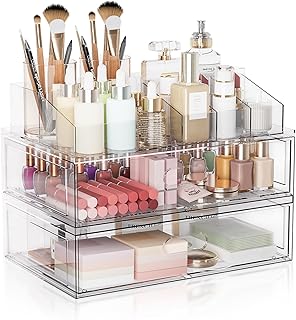
Clear Stackable Makeup Organizer with Drawer
If you want something that just works, Clear Stackable Makeup Organizer with Drawer is a safe bet (306 reviews, 4.5 stars).
4. Hydrating Deep Layers With Snail Secretion Filtrate

Snail mucin sounds like a gimmick, but the biochemical composition is effective for dry, compromised skin. It contains glycoproteins, hyaluronic acid, and glycolic acid. I buy the COSRX Advanced Snail 96 Mucin Power Essence ($25.00 for 3.38 fl oz) at Walmart. The texture is exactly what you expect. It’s stringy, sticky, and looks like clear liquid glue. Pumping it out requires a quick snap. Otherwise, it trails down the side of the bottle and makes a mess.
I apply 2 pumps over my damp hyaluronic acid layer. You can’t rub this in. If you rub it, it foams up slightly and sits on the surface. You have to pat it aggressively into the skin until the stickiness disappears. I learned this from a clinical esthetician after complaining that the product was pilling under my makeup. It acts as an intermediate layer, plumping the skin before you lock it down with heavier creams. It provides a glassy, reflective surface without any fragrance or essential oils to trigger contact dermatitis. You might also like: 20 Lovely Aesthetic Night Routine Skincare for a Fresh New Look
5. Preventing Water Loss With Petrolatum Ointments

The medical term is transepidermal water loss. The solution is an occlusive barrier. Petrolatum is the most effective occlusive available. It blocks 99 percent of water loss. The internet calls this slugging. I use the CeraVe Healing Ointment ($19.99 for 12 oz jar), which I grab at Kroger. Unlike pure Vaseline, this includes ceramides and mineral oil. It’s less thick and easier to spread. You might also like: 20 Beautiful Routine Skin Care Tips Natural Acne Skincare for a Fresh New Look
I take a pea-sized amount, warm it on my fingertips, and press a thin film over my face as the last step of my night routine. Do not use more than a pea-sized amount. Two weeks ago, I used a nickel-sized scoop because my heater was running high. I woke up with my hair glued to my face and a ruined silk pillowcase. It’s messy. You will look shiny, and your face will stick to your sheets. But the results are undeniable. By trapping the moisture and active ingredients underneath, the ointment forces your skin to hydrate itself overnight. In the morning, wash it off thoroughly with a warm washcloth or your morning skincare won’t penetrate. You might also like: 15 Charming Aesthetic Pictures Skincare Worth Trying This Year
6. Breaking Down Keratin With Synthetic Urea

Dry skin builds up layers of dead, hardened cells. If you don’t remove them, your expensive serums just sit on top of a dead crust. Traditional scrubs create micro-tears, and high-percentage acids cause chemical burns on a weak barrier. Urea is a keratolytic agent. It breaks down the protein bonds holding dead cells together while acting as a humectant. I rely on the Eucerin Roughness Relief Lotion ($12.49 for 16.9 fl oz). I bought my current bottle at Costco in a two-pack.
It contains 10 percent urea. The formula is sticky. It feels heavy and takes twenty minutes to fully absorb. I apply 1 tablespoon to my legs and arms right after showering while my skin is still damp. I tried using it on my face once. That was a mistake. The 10 percent concentration is too high for facial skin. It resulted in a stinging sensation that lasted an hour and left me red for a day. Keep this strictly for your body. It dissolves those dry, white scales on your shins and elbows within three applications.

EQQUALBERRY Vitamin Illuminating Serum | Niacinamide 4% +
EQQUALBERRY Vitamin Illuminating Serum | Niacinamide 4% + Brightening has been one of the most consistently praised picks in this category. 108 reviewers averaged 4.5/5.
7. Dissolving Sunscreen With Emulsifying Oils For Skincare Products For Dry Skin

Makeup wipes are essentially sandpaper soaked in alcohol. The friction alone destroys your skin’s acid mantle. To remove water-resistant sunscreen and makeup without friction, you need an oil cleanser. Oil dissolves oil. I use the Kose Softymo Speedy Cleansing Oil ($9.50 for 7.8 oz). It’s a thin, clear fluid that smells faintly of olive oil. You must apply this to a completely dry face with dry hands. If you introduce water too early, the oil emulsifies before it can break down your makeup.
I use 3 pumps, massaging it over my eyelids and cheeks for sixty seconds. The tactile feedback is gross but satisfying. You can feel tiny plugs of sebum rolling out of your pores. Once the makeup is dissolved, I wet my hands and massage my face again. The oil turns milky white and rinses away clean. I bought a cheap cleansing balm at Whole Foods last year that left a waxy residue. It caused a painful breakout along my jawline. The Kose oil rinses clean, prepping the skin for a gentle second cleanse.
8. The Superior Hydration Of High-Percentage Glycerin

The industry pushes new, exotic botanical extracts, but clinical data consistently proves that glycerin is the superior humectant. It penetrates deeper than hyaluronic acid due to its smaller molecular weight and provides longer-lasting hydration. Most products contain 3 to 5 percent glycerin. I sought out a higher concentration and found the Experiment Super Saturated Serum ($28.00 for 1.7 oz).
This formula contains 30 percent glycerin. The texture is thick, almost like a light syrup. It has a blue tint and zero fragrance. Because the concentration is so high, it feels sticky. I apply 2 pumps to damp skin in the morning. If you don’t let it dry for five minutes before applying sunscreen, it will pill aggressively. I learned that the hard way when I was rushing to work and ended up with blue-tinted flakes on my jaw. Despite the tricky application, the high glycerin content creates a moisture reservoir. It prevents that tight, pulling sensation that usually sets in around 3 PM.
9. Soothing Inflammation With Colloidal Oatmeal

When dry skin progresses to an active flare-up, it becomes red, itchy, and hot. This requires an immediate anti-inflammatory approach. Colloidal oatmeal contains avenanthramides, which clinically reduce itching and block inflammatory cytokines. During winter flare-ups, I use the First Aid Beauty Ultra Repair Cream ($38.00 for 6 oz). I usually pick this up at a beauty supply store next to my local Sprouts.
The cream is whipped and fluffy, looking like thick frosting in the plastic tub. It contains 0.5 percent colloidal oatmeal alongside shea butter. I scoop out a half-teaspoon with a clean spatula and apply it directly to red patches. It absorbs quickly with a matte finish. There is a noticeable eucalyptus scent, which is a flaw. Eucalyptus oil is a potential irritant. I don’t understand why they included it in a cream meant for sensitive skin. It hasn’t triggered a reaction for me, but it’s a risk factor. The oatmeal effectively neutralizes the itching within ten minutes, stopping the scratch-itch cycle dead in its tracks.
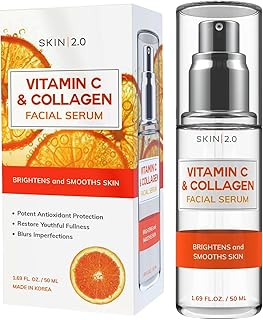
Skin 2.0 Vitamin C Serum – Dermatologist Tested
Skin 2.0 Vitamin C Serum – Dermatologist Tested punches above its price — 45 buyers rated it 4.5 stars. I would buy it again.
10. Mimicking Natural Sebum With Plant-Derived Squalane

Human sebum is composed of triglycerides, wax esters, and squalene. As we age, our squalene production drops off, contributing to chronic dryness. You can supplement this topically. I use The Ordinary 100% Plant-Derived Squalane ($10.00 for 1 oz). It’s a stable, non-comedogenic oil derived from olives or sugarcane. The texture is lightweight, almost watery for an oil, and it has no scent.
I dispense 3 drops into the palm of my hand, rub my hands together, and press it over my moisturizer. It acts as an emollient, filling in the gaps between dry skin cells and smoothing the surface. I tried mixing the oil directly into my moisturizer in my palm to save time. That was a mistake. The oil disrupted the emulsifiers in the cream, turning the mixture into a watery, separated mess. You have to layer it on top. It leaves a slight sheen, so I only use it at night. It’s a cheap, single-ingredient solution for barrier support that won’t clog pores like coconut oil.
11. Gentle Chemical Exfoliation With Lactic Acid

Dry skin still needs chemical exfoliation, but glycolic acid has a small molecular size. It penetrates quickly and causes stinging. Lactic acid has a larger molecular structure. It stays closer to the surface, exfoliating gently while drawing moisture into the skin. It’s the only alpha hydroxy acid I use. I rely on the Paula’s Choice 8% AHA Gel Exfoliant ($34.00 for 3.3 oz).
I ordered this directly from their website after a failed experiment with a harsh lemon physical scrub from Trader Joe’s that left my cheeks raw. The Paula’s Choice gel is clear and dispenses from a pump. I use 1 pump twice a week at night. You apply it after cleansing and before moisturizing. It has a slight chemical smell that fades quickly. The first few times I used it, I felt a mild tingling. If you use it every day, you will over-exfoliate and damage your barrier. Stick to twice a week. It dissolves the dry, flaky patches around my nose, allowing my makeup to sit smoothly.
12. Avoiding Zinc Oxide In Daily Sun Protection

Mineral sunscreens rely on zinc oxide and titanium dioxide to deflect UV rays. Zinc is an astringent. It absorbs oil and moisture, which is terrible for dry skin. Every mineral sunscreen I’ve tried settles into my dry patches and highlights them with a chalky white cast. I switched entirely to chemical filters. I currently use the Beauty of Joseon Relief Sun : Rice + Probiotics ($18.00 for 1.69 fl oz).
It utilizes modern chemical filters not approved in the US yet, so I buy it from authorized Korean retailers. The formula looks like a lightweight lotion and feels like a standard moisturizer. I apply 2 finger-lengths to my face and neck every morning. It absorbs in about three minutes and leaves a dewy finish. There is zero white cast. The 50 SPF rating means I get adequate protection without the heavy, suffocating feeling of traditional American sunscreens. The tube is small. If you use the correct amount, you will run out in four weeks. It’s an annoying recurring expense, but the formula doesn’t trigger my eczema or cling to dry spots.

COSRX Vitamin E Vitalizing Sunscreen,SPF 50 Face Sunscreen
A dependable everyday pick — COSRX Vitamin E Vitalizing Sunscreen pulls in 42 ratings at 4.5 stars. Not flashy, just solid.
13. Strategic Use Of Sheet Masks For Immediate Hydration

Most sheet masks are just wet paper infused with cheap fragrance. They provide a temporary cooling effect but no lasting hydration. However, when used correctly, a well-formulated mask utilizes occlusion to force humectants past the top layer of dead skin. I buy the Trader Joe’s Rich Hydrating Face Sheet Mask ($1.99 for 1 sheet) when I’m checking out. It contains hyaluronic acid, chamomile, and green tea extract.
The cotton sheet is thick and saturated with a clear, viscous essence. I leave it on for exactly 15 minutes. If you leave a sheet mask on until it dries out, the dry cotton will start pulling moisture back out of your skin through reverse osmosis. I did that once while watching a movie. My face felt tighter than before I started. Set a timer. When you remove the mask, there will be a thick layer of essence left on your face. Do not wash it off. Pat it in with your fingertips until it absorbs, then immediately apply a heavy ceramide cream to lock it in. I use these once a week for maintenance.
Managing dry skin is a mechanical process of adding water and trapping it there. You don’t need a thirty-step routine, and you definitely don’t need to spend hundreds of dollars on luxury jars with heavy perfumes. Focus on gentle cleansing, strategic humectants, and heavy occlusives. If your current routine leaves you feeling tight by noon, throw out your foaming cleanser and buy a tube of petrolatum ointment. Let’s fix the barrier first, and worry about the rest later. Save this list for your next pharmacy run so you know exactly which active ingredients to look for.
Frequently Asked Questions
What are the best skincare products for dry skin?
The most effective products focus on barrier repair. Look for non-foaming cleansers, humectants like glycerin and hyaluronic acid applied to damp skin, thick ceramide creams, and occlusive ointments like petrolatum to trap moisture overnight.
Why does my skin still feel dry after moisturizing?
You are likely experiencing transepidermal water loss. If your moisturizer lacks occlusives, the water simply evaporates. You need to seal your hydration layers with a heavier cream or a petrolatum-based ointment to prevent moisture from escaping into the air.
Should I exfoliate if I have dry skin?
Yes, but avoid harsh physical scrubs. Use gentle chemical exfoliants like lactic acid or urea. These dissolve the bonds holding dead skin cells together without causing micro-tears, allowing your hydrating serums to actually penetrate the skin.
Are foaming cleansers bad for dry skin?
Yes. Foaming agents, particularly sodium lauryl sulfate, strip the skin of its natural lipid barrier. Switch to a creamy, non-foaming cleanser that hydrates while removing dirt, preserving your skin’s natural oils.
