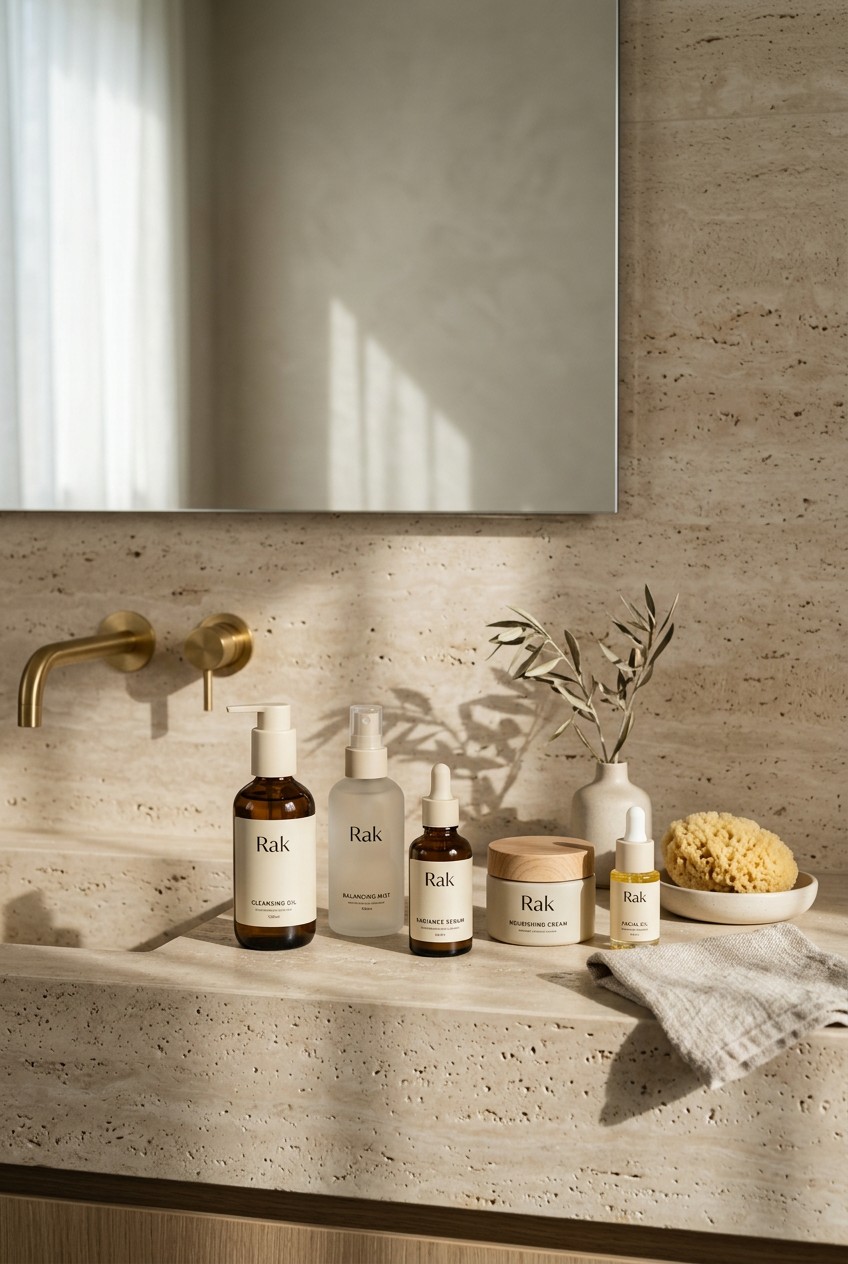
What’s Inside
- Embracing Skin Longevity for the Rak Skincare Aesthetic
- Making Barrier-First Repair Your Baseline
- Feeding Your Face With Microbiome-Friendly Actives
- Swapping to Plant-Based Retinol Alternatives
- Going Waterless With Concentrated Cleansing Balms
- Cheating Time With Multi-Functional Hybrids
- Adding Clinical Bio-Actives to the Rak Skincare Aesthetic
- Committing to Daily Microcurrent Devices
- Playing With Slime and Hydrogel Textures
- Cooling Down Redness Fast
- Upgrading to Post-Glass Skin Realness
- Spotting Greenwashing and Refillable Packaging
Last Tuesday at Whole Foods, I stood in the supplement aisle aggressively rubbing a tester serum onto my wrist while a woman holding organic kale judged me. The serum smelled exactly like old pennies and wet dog. I’m officially done buying into random hype. Getting the rak skincare aesthetic isn’t about slapping 15 trendy layers on your face until you look like a glazed donut. The rak skincare aesthetic is actually about strategic, highly effective routines prioritizing long-term skin health over quick fixes. I’ve ruined my skin barrier more times than I can count. I used to think the burning meant it was working. It doesn’t. Let’s talk about what actually works right now, complete with the weird textures, the high price tags, and the absolute fails I’ve experienced along the way.
1. Embracing Skin Longevity for the Rak Skincare Aesthetic

I was at Target last month staring at a wall of boxes screaming about anti-aging miracles. I bought a cheap $12.99 cream in a 2 oz plastic jar. It felt like applying actual Crisco to my face. It didn’t fix my fine lines. It just gave me cystic acne on my chin. The industry is quietly dropping the term anti-aging. Now, we’re talking about skin longevity. This means you’re focusing on strengthening the skin barrier and supporting deep hydration instead of just burning off the top layer of your skin with harsh acids. I’m currently obsessed with using AI-powered personalization tools online before I buy anything. You scan your face with your phone camera, and it tells you exactly what your skin needs. It’s wildly accurate. My scan told me I needed a daily dose of 1/4 teaspoon of a ceramide-rich moisturizer, not the harsh scrubs I was using. Stop trying to reverse time. Start treating your skin like an expensive silk shirt. You wouldn’t bleach silk. You shouldn’t bleach your face. Learned that the hard way.
2. Making Barrier-First Repair Your Baseline

The skin barrier is your literal shield against the world. I tried this wrong for months before figuring it out. I was using a harsh foaming cleanser from Walmart that cost $4.50 for an 8 oz bottle. My face felt squeaky clean, which actually means stripped and desperate. In 2026, barrier repair goes way beyond basic ceramide creams. You need formulations combining multiple ceramide types (NP, AP, EOP) with cholesterol and fatty acids. I personally swear by Dr. Jart+ Ceramidin Cream. It costs $48 for a 50ml tube. The texture is a thick, pale yellow paste smelling faintly of medicinal herbs and wet earth. It sounds weird, but I love it. You only need about a pea-sized drop, roughly 1/8 teaspoon, warmed up between your fingers before pressing it into your cheeks. For intensive recovery, look for products with Panthenol (Vitamin B5) at 5% concentration or higher. I bought a cheap knockoff at Costco once that only held 1% Panthenol. It felt like rubbing water on my face and did absolutely nothing for my redness. Stick to the clinically tested stuff. Your barrier won’t survive on cheap filler ingredients.
3. Feeding Your Face With Microbiome-Friendly Actives

We need to talk about the bacteria living on your face. It sounds gross, but your skin’s natural flora is what keeps the bad breakouts away. I learned this the hard way after using a harsh antibacterial soap I found at Kroger for $3.99 for a 3-pack. It killed everything on my skin, good and bad. My face turned into a flaky, red disaster zone. Now, I integrate prebiotics and postbiotics to feed the good bacteria. Gallinée Youthful Serum is my current obsession. It retails for $75 for a 30ml glass dropper bottle. The liquid is slightly milky and smells a bit sour, honestly just like plain Greek yogurt. You apply exactly 3 drops to a damp face. It absorbs in seconds and leaves a slightly tacky finish. The gentle preservatives in these clean beauty formulas mean they won’t last forever on your shelf, so use them up within six months. Supporting your skin ecosystem is a massive trend right now. If your current routine feels like a chemical warzone, you’re doing it wrong. Nurture the flora. Give it the 2 tablespoons of microbial love it needs to thrive.

Vtopmart 3 Tier Clear Makeup Organizer with Drawer
Vtopmart 3 Tier Clear Makeup Organizer with Drawer has been one of the most consistently praised picks in this category. 19 reviewers averaged 4.5/5.
4. Swapping to Plant-Based Retinol Alternatives

Retinol is a classic, but it’s also a bully. Two years ago, I bought a 1% pure retinol cream and slathered a full 1/2 teaspoon onto my face right before bed. I woke up looking like a boiled lobster. My skin was peeling in literal sheets. If you’re sensitive like me, you need plant-based alternatives like bakuchiol. Biossance Squalane + Phyto-Retinol Serum is the only thing I’ll use now. It costs $72 for a 30ml pump bottle. The texture is incredibly lightweight, almost like a watery gel, and it smells like crushed green leaves. I use exactly 2 pumps every single night. It gives you the same cell turnover and collagen support as traditional retinol, but without the angry red flaking. I found a cheaper bakuchiol knockoff at Sprouts once for $15.99 in a 1 oz bottle. It was mostly just sunflower oil and gave me terrible blackheads. Don’t cheap out on active ingredients. The botanical actives in the Biossance serum actually work because they’re properly formulated with squalane to push the ingredients deep into the skin. You won’t miss the chemical burns. I promise. You might also like: 20 Beautiful Routine Skin Care Tips Natural Acne Skincare for a Fresh New Look
5. Going Waterless With Concentrated Cleansing Balms

Waterless skincare is taking over, and I’m entirely here for it. Most liquid cleansers are 80% water. You’re paying for water in a plastic bottle. I realized this while staring at a $22 liquid face wash in the beauty aisle at Trader Joe’s. I put it back and ordered Farmacy Green Clean Makeup Removing Cleansing Balm instead. It’s $36 for a 100ml plastic tub. This stuff is a solid, mint-green sorbet smelling strongly of lime and sweet papaya. You scoop out exactly 1/2 teaspoon with the little plastic spatula they provide. The second you massage it into dry skin, it melts into a rich, slippery oil dissolving even waterproof mascara. I used to scrub my eyes with rough cotton pads and cheap micellar water until my eyelids were raw. That was a huge mistake. The friction tears your delicate eye skin. With a concentrated balm, there isn’t any friction. You just add a splash of warm water, about 2 tablespoons worth, and the oil turns milky and rinses completely clean. It reduces environmental impact because you aren’t shipping heavy water across the country. Plus, it increases the potency of the actual cleaning agents. You might also like: 15 Lovely Aesthetic Luxury Skincare to Inspire Your Next Project
6. Cheating Time With Multi-Functional Hybrids

I lack the time for a 15-step skincare routine on a Tuesday morning. I used to wake up at 6 AM just to layer six different serums, wait 10 minutes for them to dry, apply moisturizer, wait again, and then apply sunscreen. It was exhausting. Now, I streamline my routine with smart products doing three jobs at once. IT Cosmetics CC+ Cream with SPF 50+ is my holy grail. It costs $47 for a 32ml metallic tube. It acts as a full-coverage foundation, an anti-aging serum, and a physical sunscreen all in one. I squeeze exactly 1 pump, which is about 1/4 teaspoon, onto the back of my hand. It has a thick, creamy texture and smells faintly of lemon cake and zinc. I blend it in with a damp sponge. I tried a cheap tinted moisturizer from Walmart once for $8.99 in a 1.5 oz squeeze tube. It was streaky, smelled like plastic, and slid off my face by noon. Skip the cheap stuff. The IT Cosmetics hybrid actually stays put. It simplifies my morning routine down to three minutes while still delivering serious results. You might also like: 20 Charming Aesthetic Videos Night Routine Skincare You’ll Want to Bookmark

Yeamon Gua Sha Facial Tools and Face Roller Set
If you want something that just works, Yeamon Gua Sha Facial Tools and Face Roller Set is a safe bet (1 reviews, 4.5 stars).
7. Adding Clinical Bio-Actives to the Rak Skincare Aesthetic

The K-Beauty trends for 2026 are heavily focused on clinical bio-actives. We’re talking about ingredients like PDRN (Polydeoxyribonucleotide), exosomes, mucin, and tranexamic acid. If you aren’t using these, you’re missing out on serious cellular repair. I recently picked up Medicube Collagen Glow Booster Serum. The price fluctuates, but I got mine for $38 for a 15ml bottle. The texture is wild. It’s sticky, slightly stringy, and looks almost like liquid glass when you drop it onto your skin. I use 3 drops pressed directly into my forehead and cheeks. Last month, I was walking through Kroger buying oat milk while letting a cheaper, $12 snail mucin knockoff dry on my face. It never dried. It just sat there feeling like a wet, sticky film all day. The Medicube serum actually absorbs. These advanced clinical ingredients signal your cells to produce more collagen and repair damage at a microscopic level. It isn’t just about temporary hydration anymore. It’s about fundamentally changing how your skin behaves. The stringy texture takes some getting used to, but the immediate plumping effect is worth the sensory weirdness.
8. Committing to Daily Microcurrent Devices

Skincare tools aren’t just for spa days anymore. Booster tools and devices are daily routine staples. I bought the NuFACE Mini Facial Toning Device last year for $220. It’s a small, white, handheld device with two metal spheres on top. I use it for exactly 5 minutes every single morning while drinking my coffee. It sends tiny electrical currents into your facial muscles to lift and tone them. I made a massive mistake my first week using it. I didn’t use enough of the conductive gel primer. I used maybe a drop instead of the required 1/2 teaspoon per section of my face. The metal spheres zapped my bare skin, and it felt like a tiny taser hitting my forehead. It hurt. You absolutely must use a thick layer of the primer gel. The gel costs about $35 for a 2 oz tube, but you can’t skip it. When you do it right, you just feel a slight, cool gliding sensation and maybe a metallic taste in your mouth. The results are instant. My cheekbones look visibly sharper, and my jawline loses that morning puffiness. It’s a non-negotiable step for me now.
9. Playing With Slime and Hydrogel Textures

Skincare is becoming a highly tactile, sensory experience. If a product feels boring, I won’t use it. I want hydrogel, capsule, or literal slime textures making the routine fun. I was at Target a few weeks ago and bought a pack of hydrogel sheet masks for $14.99 for a box of 4. They feel like cold, wet rubber against your skin. They adhere perfectly, unlike those cheap paper masks sliding off your chin the second you look down. I used a paper mask once that dripped 2 tablespoons of sticky essence down my neck and ruined my favorite t-shirt. Never again. The hydrogel material locks the moisture in and forces the serum into your pores. If you want something even more extreme, look into injectable moisturizers. Skinvive by Juvéderm is a treatment where a dermatologist injects micro-droplets of hyaluronic acid directly into your cheeks. It costs around $650 per session, but the deep hydration lasts for six months. It’s a bizarre concept, but it works better than any topical cream I’ve ever tried. Whether it’s a slippery hydrogel mask or a bouncy slime moisturizer, the texture matters just as much as the ingredients.

EQQUALBERRY Vitamin Illuminating Serum | Niacinamide 4% +
Honestly, EQQUALBERRY Vitamin Illuminating Serum | Niacinamide 4% + Brightening surprised me — sturdier than it looks in the photos, and over 101 buyers gave it 4.5 stars.
10. Cooling Down Redness Fast

Heat and redness are the enemies of calm skin. My cheeks naturally flush, and hot showers make it ten times worse. I used to grab an actual ice cube from the freezer and rub it directly on my face. Don’t do this. I broke tiny capillaries around my nose that I still can’t fix. The sudden, extreme cold damages the fragile skin tissue. Instead, you need dedicated cooling care. I keep a can of Avène Thermal Spring Water in my refrigerator at all times. It costs $18 for a 150ml continuous spray can. After a hot shower or a workout, I spray a fine mist for about 3 seconds over my entire face. The mist is incredibly fine, almost like a fog, and it feels instantly soothing. The water is sourced from a specific spring in France and contains trace minerals calming inflammation. I tried a cheap rosewater spray from a generic drugstore brand once for $5.99 in a 4 oz plastic bottle. It was loaded with artificial fragrance and made my skin burn. Stick to pure, mineral-rich thermal water kept at a crisp 40 degrees Fahrenheit in your fridge. Trust me on this.
11. Upgrading to Post-Glass Skin Realness

The glass skin trend had a good run, but we’re moving on to Glass Skin 2.0, also known as post-glass skin. The original trend was all about looking as shiny and reflective as possible. I tried it by layering 1/4 cup of heavy oils and shiny serums on my face. I didn’t look like glass. I looked like a greasy pizza box. My pores were suffocating. The new focus has deepened into skin barrier repair, resilience, and regeneration. We want healthy, plump skin glowing from within, not skin artificially lacquered with heavy oils. This means prioritizing deep hydration and protection over a superficial shine. Skip the fat-free stuff in your diet, too. I started eating 1/2 an avocado every day, and the healthy fats completely changed my skin’s texture. It feels softer and more resilient. The post-glass skin look is slightly more matte, heavily hydrated, and deeply healthy. It’s about longevity, not just looking good for a selfie. You want a product sinking in completely, leaving your face feeling like a cool, smooth pebble rather than a slippery oil slick.
12. Spotting Greenwashing and Refillable Packaging

Sustainability is no longer optional, but you must be careful of greenwashing. A common mistake is falling for vague natural or clean claims on a brown paper label. I bought a moisturizer at Sprouts last year for $24.99 in a 2 oz glass jar because the box had a picture of a leaf on it. I checked the ingredients later, and it was mostly denatured alcohol and green dye. It ruined my moisture barrier in three days. In 2026, you need to demand radical transparency. Look for detailed ingredient breakdowns and third-party certifications. Beyond the formula, look at the packaging. I actively seek out brands offering refillable systems or mono-material packaging that is actually recyclable. Kiehl’s is doing this right. I buy their Ultra Facial Cream in the original 50ml plastic tub for $38. But when I run out, I don’t buy a new tub. I buy their 150ml refill pouch for $54. It looks like a giant Capri Sun pouch. You just squeeze 3 tablespoons of the thick, white, unscented cream into your old tub. It saves plastic and saves you money. Don’t trust a brand just because their bottle is green. Read the label.
Honestly, fixing your routine takes a lot of trial and error. I’ve wasted hundreds of dollars on products smelling like garbage or burning my face. But once you find the exact textures, active ingredients, and smart packaging that work for you, everything changes. I highly recommend starting with a solid cleansing balm and a heavy ceramide cream to get your barrier in check before playing with the expensive clinical serums. If you found these tips helpful, pin this article to your skincare board so you won’t forget the exact brands and prices next time you’re shopping.

COSRX Vitamin E Vitalizing Sunscreen
COSRX Vitamin E Vitalizing Sunscreen punches above its price — 42 buyers rated it 4.5 stars. I would buy it again.
Frequently Asked Questions
What is the rak skincare aesthetic?
The rak skincare aesthetic focuses on strategic, highly effective routines prioritizing long-term skin health and barrier repair over quick fixes. It emphasizes clinical bio-actives, deep hydration, and multi-functional products rather than layering dozens of harsh, trendy chemicals.
How do I repair a damaged skin barrier?
To fix a broken barrier, stop using harsh exfoliants and switch to a thick cream containing multiple ceramides (NP, AP, EOP), cholesterol, and fatty acids. Ingredients like Panthenol at 5% concentration also speed up the healing process.
Are plant-based retinol alternatives effective?
Yes, botanical alternatives like bakuchiol offer similar cell turnover and collagen-boosting benefits as traditional retinol. They’re much gentler on the skin, making them perfect for sensitive types who can’t tolerate the peeling and redness associated with pure retinol.
Why should I use a waterless cleansing balm?
Waterless balms are highly concentrated, meaning they dissolve waterproof makeup and sunscreen without the harsh friction of cotton pads. They’re also more eco-friendly since you aren’t paying to ship heavy water in plastic bottles across the country.
