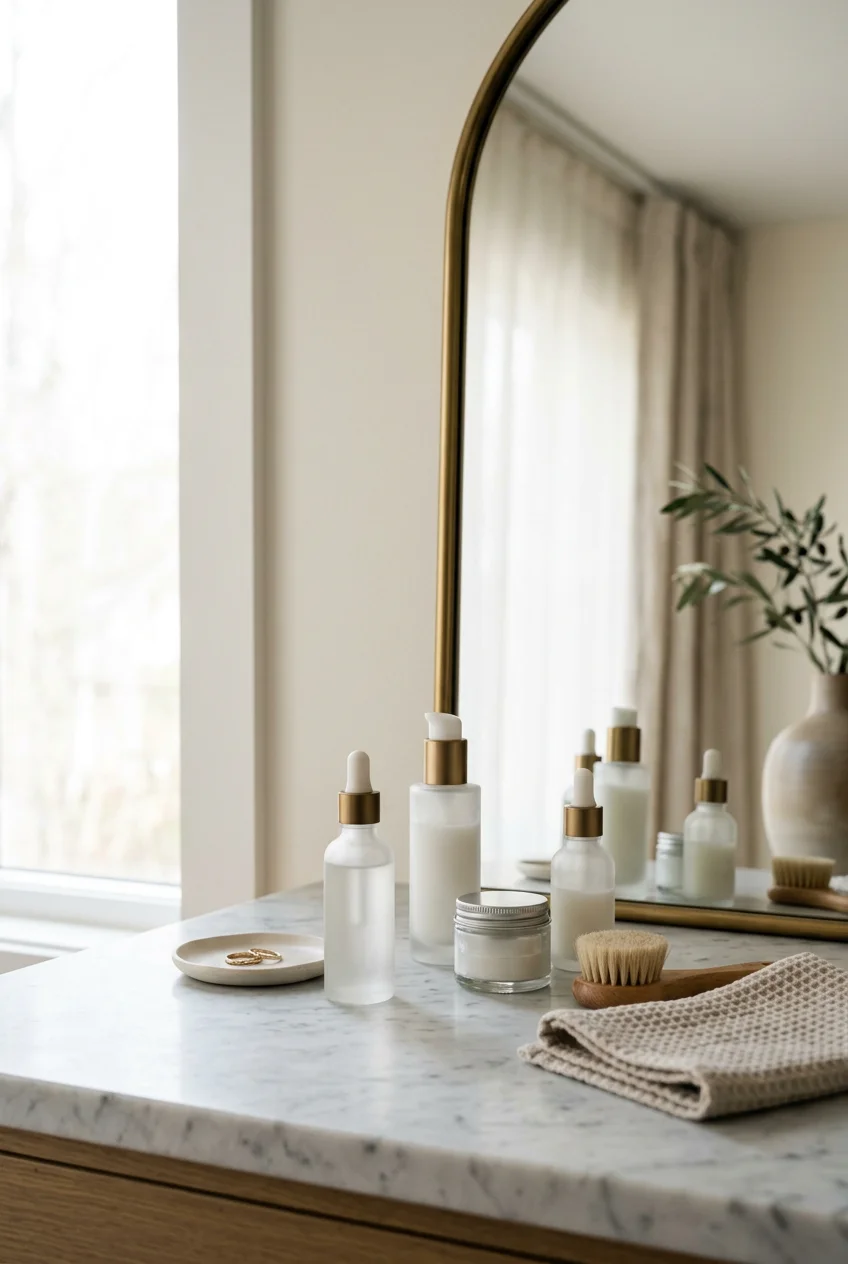
What’s Inside
- Master the Art of Double Cleansing Every Evening
- Prioritize Daily Broad-Spectrum SPF 50, Rain or Shine
- Incorporate a Potent Vitamin C Serum in Your Morning Routine
- Embrace Peptides as a 2026 Anti-Aging Powerhouse in Your Aesthetic Skincare Routine
- Strategically Integrate Retinoids 2-3 Nights Per Week
- “Skin Flooding” for Maximum Hydration
- Strengthen Your Skin Barrier with Ceramide-Rich Formulas
- Don’t Over-Exfoliate – Less is Often More
- Embrace Lymphatic Drainage Facial Massage for De-puffing
- Consider Growth Factors for Cellular Regeneration
- Apply Skincare Products from Thinnest to Thickest Consistency
- Don’t Neglect Your Neck and Décolletage in Your Aesthetic Skincare Routine
- Keep Your Unstable Products in a Skincare Fridge
- Use Silk Pillowcases to Protect Your Skin Barrier Overnight
- Track Your Progress with Weekly Photos in Consistent Lighting
Last November, I stood under the harsh, buzzing fluorescent lights of my bathroom mirror and realized my face was actively peeling off in sheets. I’d tried to build a skincare routine by slapping ten different active ingredients on my skin at once. It was a disaster. My face felt like tight plastic, and putting on plain moisturizer burned. I spent the next three months researching clinical trials and analyzing ingredient lists to fix the damage. You don’t need a twenty-step vanity display to get results. You need a methodical approach based on how skin actually functions. I’m going to walk you through exactly what works, what to skip, and how to layer products without causing a chemical burn.
1. Master the Art of Double Cleansing Every Evening

Start your routine with double cleansing. I use DHC Deep Cleansing Oil ($28 for 6.7 fl oz). I rub 2 pumps onto my dry skin every evening. It smells faintly of olive oil and feels thick, almost heavy, until you add warm water. Then it emulsifies into a milky liquid that instantly breaks down waterproof mascara and SPF. I used to just scrub my face with a makeup wipe and call it a night. That left a film of dirt and silicone sitting in my pores. Learned that the hard way. Now, I follow the oil with La Roche-Posay Toleriane Hydrating Gentle Cleanser ($17 for 13.5 fl oz). I buy the massive pump bottle at Target. I dispense a nickel-sized amount and massage it in for 60 seconds. The texture is like a runny lotion that doesn’t foam at all. If your cleanser leaves your skin feeling squeaky clean, you’re damaging your acid mantle. You want your skin to feel pliable and damp after washing, not stripped dry.
2. Prioritize Daily Broad-Spectrum SPF 50, Rain or Shine

Skipping sunscreen renders every other anti-aging product useless. I learned this when I noticed dark sunspots forming on my left cheekbone just from driving. You need exactly 1/4 teaspoon of sunscreen to cover your face and neck. Most people apply a tiny dot, which gives you a fraction of the SPF rating printed on the bottle. I use SkinCeuticals Physical Fusion UV Defense SPF 50 ($42 for 1.7 fl oz). It has a thin, watery texture that you have to shake vigorously before applying. The slight tint neutralizes the white cast that usually comes with zinc oxide. If you’re buying for a household, Costco sometimes carries multipacks of high-quality mineral sunscreens in their pharmacy section. Another solid option is ISDIN Eryfotona Ageless Tinted Mineral Sunscreen SPF 50 ($78 for 3.4 oz). It dries down to a matte finish, which stops my concealer from sliding off by noon.
3. Incorporate a Potent Vitamin C Serum in Your Morning Routine

L-Ascorbic Acid is notoriously unstable. It degrades quickly when exposed to light, heat, and air. I use SkinCeuticals CE Ferulic ($169 for 1 fl oz). Yes, the price is absurd. Yes, it smells exactly like hot dog water. Last Tuesday, my boyfriend walked into the bathroom while I was applying it and asked if I was boiling sausages. No exaggeration. But the formula is patented for a reason. It uses a specific 15% concentration at a pH of 2.0 to 3.5, which allows it to actually penetrate the stratum corneum. I apply exactly 4 drops to my bare, dry face immediately after cleansing. If you apply it to damp skin, the lower pH can cause intense stinging. I tried a cheaper derivative form for six months and saw zero brightening. The pure L-Ascorbic Acid faded my post-acne hyperpigmentation in four weeks.

Yeamon Gua Sha Facial Tools and Face Roller Set
Yeamon Gua Sha Facial Tools and Face Roller Set has been one of the most consistently praised picks in this category. 1 reviewers averaged 4.5/5.
4. Embrace Peptides as a 2026 Anti-Aging Powerhouse in Your Aesthetic Skincare Routine

Peptides are short chains of amino acids that act as messengers, telling your cells to produce more collagen. They aren’t as aggressive as retinoids, making them great for sensitive days. I use Medik8 Liquid Peptides ($70 for 1 fl oz). It has a slightly viscous, slippery texture that sinks in immediately. You only need a pea-sized amount. I tried picking up a natural peptide alternative at Whole Foods last month, but the formula was full of essential oils that caused a red, itchy rash along my jawline. Stick to clinical brands. If you’re on a budget, The Ordinary Multi-Peptide + Copper Peptides 1% Serum ($30 for 1 oz) is highly effective. It has a distinct blue color from the copper. Apply it after your watery toners but before heavy creams. Don’t mix copper peptides with direct acids or pure Vitamin C, as they can neutralize each other.
5. Strategically Integrate Retinoids 2-3 Nights Per Week

Retinoids speed up cell turnover. I started with Differin Gel 0.1% Adapalene ($15 for 0.5 oz), which I grab in the pharmacy aisle at Walmart. When I first started using it, I made a massive mistake. I washed my face, left it damp, and immediately rubbed a thick layer of the gel all over. The water increased the absorption rate, and I woke up with angry, red, stinging skin that felt like a chemical burn. Now, I wait a full 10 minutes after washing my face to ensure it’s completely dry. I squeeze out exactly a pea-sized amount. I dot it on my forehead, cheeks, and chin, then spread it thin. I skip the eye area and the corners of my nose entirely. I only use it on Tuesdays and Thursdays. If your skin starts flaking, you aren’t doing it right. Back off the frequency immediately. You might also like: 14 Glass Skin Routine for Every Budget
6. “Skin Flooding” for Maximum Hydration

This technique involves layering humectants on damp skin to pull water into the epidermis. After my evening cleanse, I don’t touch a towel. While my face is still dripping wet, I pat in a splash of Laneige Cream Skin Toner & Moisturizer ($36 for 5.9 fl oz). It looks like skim milk and feels incredibly soothing. Immediately after, while the toner is still wet, I apply 2 pumps of Paula’s Choice Hyaluronic Acid Booster ($38 for 0.5 fl oz). Hyaluronic acid acts like a sponge. If you apply it to a dry face in a dry room, it will pull moisture out of your deeper skin layers, leaving you more dehydrated than when you started. By applying it to damp skin, you give it water to hold onto. I seal it all in with a heavy moisturizer within 60 seconds before the water evaporates. You might also like: 15 Lovely Tips Korean Skincare That Changed Everything

EQQUALBERRY Vitamin Illuminating Serum | Niacinamide 4% +
EQQUALBERRY Vitamin Illuminating Serum | Niacinamide 4% + Brightening has been one of the most consistently praised picks in this category. 108 reviewers averaged 4.5/5.
7. Strengthen Your Skin Barrier with Ceramide-Rich Formulas

Ceramides are lipids that hold your skin cells together, like mortar between bricks. When I ruined my barrier with too many acids, I went to Sprouts looking for a quick fix. I bought a cheap, natural calendula cream. It was gritty, didn’t spread well, and sat on top of my skin like wax. I threw it out and switched to Skinfix Barrier+ Triple Lipid-Peptide Cream ($54 for 1.7 oz). This cream contains a specific ratio of ceramides, cholesterol, and fatty acids that mimics the skin’s natural structure. It comes in a hygienic pump jar. Press the top down, and exactly 1/2 teaspoon of thick, unscented cream dispenses. I massage it in every night over my serums. It has a heavy, comforting texture that absorbs after about five minutes, leaving a slight protective sheen. You might also like: 15 Gorgeous Aesthetic Anti Aging Skincare You Haven’t Thought Of
8. Don’t Over-Exfoliate – Less is Often More

Chemical exfoliants dissolve the glue holding dead skin cells together. I use Paula’s Choice 2% BHA Liquid Exfoliant ($34 for 4 fl oz). It contains salicylic acid, which is oil-soluble, meaning it can penetrate inside the pore lining to clear out sebum. I saturate a cotton pad with about 1 teaspoon of the liquid and swipe it over my T-zone just twice a week. It feels slightly oily upon application but dries down tacky. I used to use this every single day. My skin looked incredibly shiny, almost like glass, but it felt tight and burned when I applied plain moisturizer. That shiny look wasn’t a healthy glow; it was the look of over-exfoliated, thinned-out skin. Stick to 1-2 times a week. Your skin needs its protective outer layer to function properly.
9. Embrace Lymphatic Drainage Facial Massage for De-puffing

Facial massage helps move stagnant lymphatic fluid towards the lymph nodes near your ears and collarbones. You need a medium with good slip so you don’t drag and stretch your skin. I use Biossance Squalane + Vitamin C Rose Oil ($72 for 1 fl oz). I dispense 3 drops into my palms and press it into my face and neck. I previously tried using a cheap $8 bottle of pure jojoba oil from Trader Joe’s for this. It was too heavy and gave me closed comedones all over my cheeks within three days. The squalane oil is lightweight and non-comedogenic. I use my knuckles to gently glide from the center of my face outward toward my hairline. I do this for 5 minutes every Sunday morning. You aren’t pressing hard into the muscle; you’re just lightly sweeping the fluid directly under the skin.
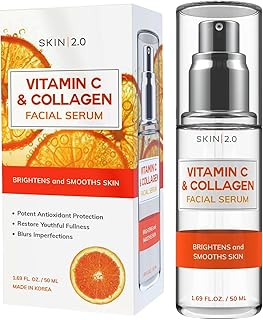
Skin 2.0 Vitamin C Serum – Dermatologist Tested
If you want something that just works, Skin 2.0 Vitamin C Serum – Dermatologist Tested is a safe bet (45 reviews, 4.5 stars).
10. Consider Growth Factors for Cellular Regeneration

Growth factors are large proteins that signal your cells to repair damage. They’re heavy hitters for texture and firmness. I use SkinMedica TNS Advanced+ Serum ($295 for 1 oz). It has a dual-chamber pump that dispenses a clear gel from one side and a white lotion from the other. You blend them on the back of your hand before applying. I have a major complaint about the packaging: the pump clogs constantly. I have to bang the bottle on the counter to get both sides to dispense evenly. For a product that costs almost three hundred dollars, the hardware is infuriating. However, the formula itself actually works. I use 1 pump every night. It has a slightly sticky finish and a faint, clinical scent, but it smoothed out the fine lines around my eyes faster than peptides alone.
11. Apply Skincare Products from Thinnest to Thickest Consistency

The order of operations dictates whether your products actually absorb. If you apply a heavy face oil and then try to put a watery serum on top, the serum will just sit there, blocked by the lipid barrier of the oil. Always start with water-based, thin liquids. After cleansing, I apply my liquid toner. I wait 30 seconds for it to absorb. Next comes my Vitamin C serum, which has a watery consistency. I wait another 60 seconds. Then I apply thicker gel serums, like my hyaluronic acid. Finally, I apply my creams and oils. The only exception is prescription topicals, which usually go on bare skin first to maximize penetration, unless you’re intentionally buffering them with a moisturizer to reduce irritation. I keep a timer on my bathroom counter to force myself to wait between layers.
12. Don’t Neglect Your Neck and Décolletage in Your Aesthetic Skincare Routine

The skin on your neck is thinner and has fewer sebaceous glands than your face, making it prone to dryness and wrinkling. Whatever goes on my face, goes down to my collarbones. I allocate an extra 1/2 teaspoon of every serum and moisturizer specifically for my neck. Last year, I tried buying a cheap, generic body lotion from Kroger to use on my neck instead of wasting my expensive face creams. It was highly fragranced and caused a patch of contact dermatitis right in the center of my throat. Now, I just drag my Skinfix cream down. When applying products to your neck, use upward sweeping motions. Pulling downward constantly can contribute to skin laxity over time. Also, remember to apply your SPF 50 generously to the front and sides of your neck every morning.

COSRX Vitamin E Vitalizing Sunscreen,SPF 50 Face Sunscreen
If you want something that just works, COSRX Vitamin E Vitalizing Sunscreen is a safe bet (42 reviews, 4.5 stars).
13. Keep Your Unstable Products in a Skincare Fridge

Storing certain active ingredients at lower temperatures slows down their degradation. I keep a small, dedicated fridge set to exactly 40 degrees F on my bathroom vanity. I store my Vitamin C serum and my retinoids in there. The cold temperature extends the shelf life of the L-Ascorbic Acid by several months, preventing it from oxidizing and turning dark brown. I also keep my eye cream in the fridge. Applying a 40-degree gel to my under-eyes at 6 AM physically constricts the blood vessels, reducing morning puffiness much faster than a room-temperature cream. Don’t put your oil-based products or heavy balms in the fridge. The cold will cause the waxes and oils to solidify, making them impossible to pump or spread.
14. Use Silk Pillowcases to Protect Your Skin Barrier Overnight

Cotton pillowcases are highly absorbent. If you apply a $50 ceramide cream and immediately lay your face on a cotton pillowcase, the fabric absorbs half the product. Cotton also creates friction, which can tug at the skin. I switched to a Slip pure silk pillowcase ($89 for standard size). It’s incredibly smooth and stays cool to the touch. The silk fibers don’t absorb my skincare, meaning the products stay on my face where they belong. The maintenance is annoying, though. I have to hand wash it in the sink every Sunday with 1 tablespoon of mild, pH-neutral detergent and let it air dry over the shower rod. If you throw it in the washing machine with regular laundry pods, the enzymes will destroy the silk fibers within a month.
15. Track Your Progress with Weekly Photos in Consistent Lighting

You won’t notice gradual changes in your skin if you look in the mirror every day. I take a set of photos every Sunday morning at 9 AM, standing in the exact same spot in front of my bedroom window. I take one straight on, and one of each profile, completely bare-faced. I keep them in a hidden album on my phone. When I started using the copper peptides, I thought they weren’t doing anything. It wasn’t until I compared week 1 to week 8 that I saw the visible reduction in the redness around my nose. Relying on your memory for skincare results is a mistake. Take clinical-style photos. It stops you from abandoning a routine prematurely just because you’re bored.
Skincare is a methodical process of chemistry and patience. You can’t force your skin to change overnight, but you can consistently support its natural barrier. I recommend starting with just the cleanser, moisturizer, and SPF before adding any actives. Save this routine, pin it to your skincare boards, and reference it the next time you’re tempted to buy a product just because the packaging looks pretty.
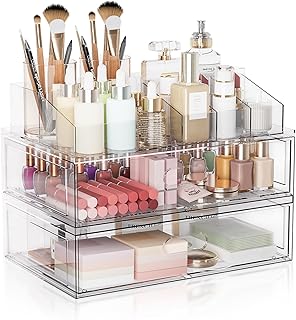
Clear Stackable Makeup Organizer with Drawer
Clear Stackable Makeup Organizer with Drawer has been one of the most consistently praised picks in this category. 306 reviewers averaged 4.5/5.
Frequently Asked Questions
What is an aesthetic skincare routine?
An aesthetic skincare routine focuses on methodical, science-backed steps using highly effective products to improve skin texture, tone, and barrier health. It prioritizes function and visible results over simply having pretty packaging on your vanity.
In what order should I apply my skincare products?
Always apply products from thinnest to thickest consistency. Start with a water-based cleanser, follow with liquid toners, apply thin watery serums like Vitamin C, then thicker gel serums, and finally seal everything with a heavy moisturizer and SPF.
How often should I use chemical exfoliants?
Limit chemical exfoliants like AHAs or BHAs to 1-2 times per week. Over-exfoliating strips your skin’s protective barrier, leading to redness, tightness, and increased breakouts. Less is often more when it comes to acids.
Why is double cleansing important?
Double cleansing uses an oil-based cleanser first to dissolve makeup, SPF, and excess sebum. Following up with a water-based cleanser removes the remaining residue, ensuring your pores are fully clean without stripping the skin’s natural moisture barrier.
