What’s Inside
- Start Chemical Exfoliating for Bumpy Skin on Face Skincare
- Swap to PHAs if Your Skin Freaks Out Easily
- Repair the Barrier with Heavy Ceramides
- Regulate Sebum with a 10% Niacinamide Serum
- Flood the Bumps with Hyaluronic Acid
- Introduce Retinoids Without Destroying Your Face
- Lock Everything Down with a Basic Moisturizer
- Stop Using Physical Scrubs Immediately
- Double Cleanse to Melt SPF and Makeup
- Use Urea for Stubborn Bumpy Skin on Face Skincare
- Layer Your Products from Thinnest to Thickest
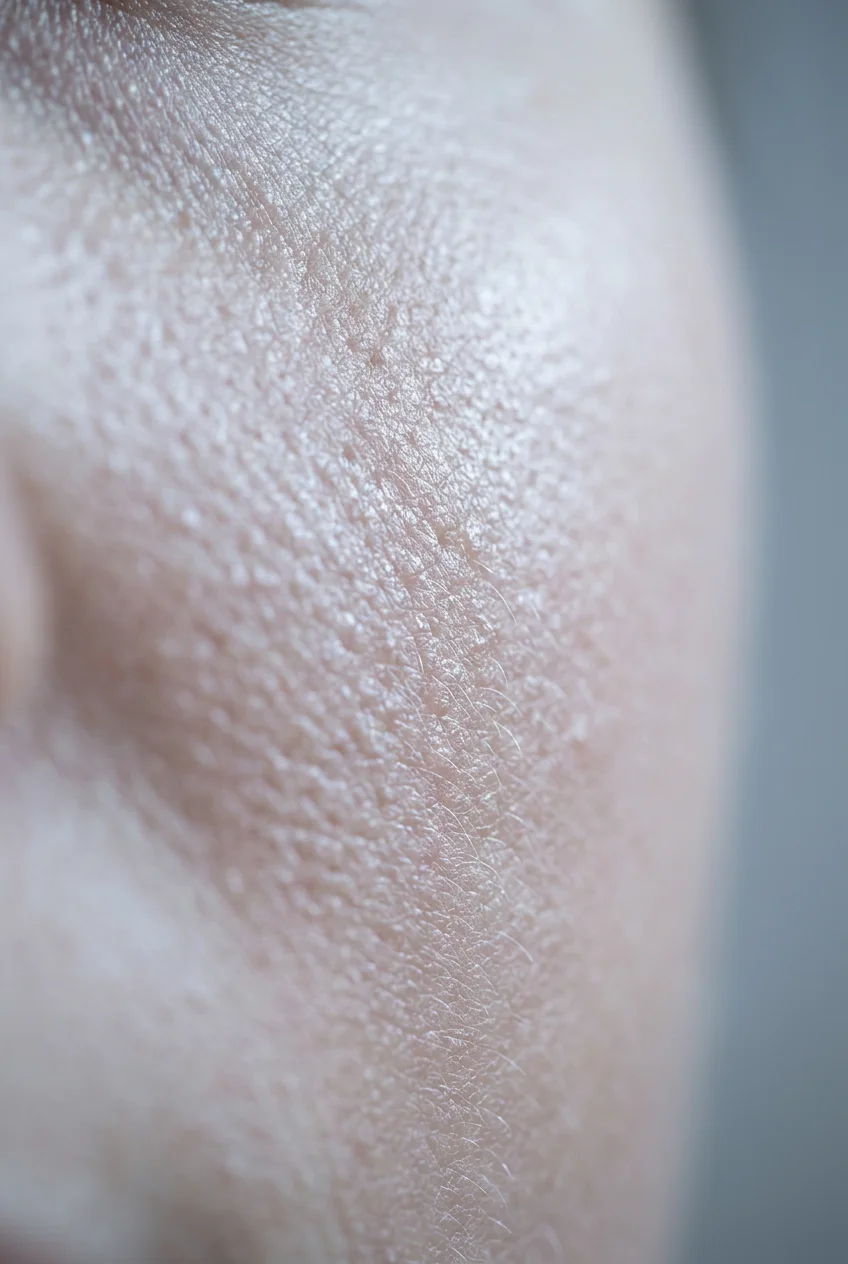
I caught my reflection in the self-checkout mirror at Whole Foods last Tuesday, and the harsh fluorescent lighting highlighted every single flesh-colored bump along my jawline. Figuring out a routine for bumpy skin took me three years of wrecked moisture barriers and wasted cash. I learned that the hard way. Most people treat texture like acne. They scrub it. They dry it out. That just makes it angry and inflamed. I did it wrong for months before finally catching on. I’m going to walk you through exactly how I flattened out my skin texture using science, not marketing fluff.
When you’re dealing with closed comedones, keratosis pilaris, or just general congestion, your pores are trapped under a layer of dead cells. You can’t scrub them away. You have to dissolve the glue holding them there. I’ve spent hundreds of hours analyzing ingredient lists and testing formulas to find out what actually penetrates the pore lining. Here is the methodical approach I use to keep my skin smooth.
1. Start Chemical Exfoliating for Bumpy Skin on Face Skincare

If you’re still using gritty scrubs, stop. Physical exfoliation just scratches the surface. To address texture, you need chemical exfoliants containing Alpha Hydroxy Acids (AHAs) or Beta Hydroxy Acids (BHAs). These ingredients dissolve the bonds holding dead skin cells together. Salicylic acid is a BHA, meaning it’s oil-soluble. It travels down inside your pore to clear out the sebum and dead cell mixture causing the bump. Glycolic acid is an AHA. It’s water-soluble and works on the top layer to smooth things out.
Paula’s Choice 2% BHA Liquid Exfoliant costs $34 for 4 oz. I bought this at Target after my forehead broke out in tiny bumps from a heavy sunscreen. The texture is like water, but it smells sharp, like vinegar. I apply exactly 1/2 teaspoon to a cotton pad and press it into my skin twice a week. It stings if you’ve got an open blemish. For a cheaper option, The Ordinary Glycolic Acid 7% Toning Solution is $13 for 240ml. It’s strong. I ruined my moisture barrier in 2021 by using it every single morning. Don’t do that. Keep chemical exfoliation to two or three nights a week, max.
2. Swap to PHAs if Your Skin Freaks Out Easily

Sometimes AHAs and BHAs are too aggressive. If you have rosacea, eczema, or a reactive face, strong acids trigger a massive inflammatory response. This makes your texture look ten times worse. Polyhydroxy Acids (PHAs) are the alternative. Ingredients like gluconolactone and lactobionic acid have much larger molecular structures than glycolic acid. Because the molecules are huge, they can’t penetrate deeply. They sit on the surface, gently dissolving dead cells without bothering the nerve endings below.
Dr. Dendy Engelman notes that PHAs are gentle enough for compromised skin. I ordered The INKEY List Polyhydroxy Acid (PHA) Gentle Exfoliating Toner while waiting in the checkout line at Costco last month. It costs $15 for 3.4 oz. The formula is watery but leaves a slightly tacky film on your face for about two minutes before it dries. That sticky feeling is annoying, but it works. It provides mild exfoliation while drawing moisture into the skin. I apply 4 drops directly into my palms and pat it onto my cheeks. It won’t give you overnight results like a strong BHA, but it won’t leave you peeling and red either.
3. Repair the Barrier with Heavy Ceramides

A compromised skin barrier is a huge contributor to rough texture. When your barrier is weak, microscopic cracks form. Moisture escapes, irritants enter, and your skin responds by producing more keratin and sebum, creating tiny bumps. Ceramides are lipids that make up about 50% of your skin’s natural barrier. Think of your skin cells as bricks and ceramides as the mortar. When the mortar degrades, the wall crumbles. Trust me on this.
You need to replace those ceramides. CeraVe’s SA Smoothing Cleanser is $15 for 8 oz. I pick this up at Walmart. It contains three essential ceramides along with salicylic acid. The pump dispenser is poorly designed and gets slippery, but the gel cleanser is effective. I use exactly 1 pump and massage it in for 60 seconds. I follow it with the CeraVe SA Lotion for Rough & Bumpy Skin, which is $20 for 8 oz. This lotion smells like nothing and has a thick, heavy texture. It takes a solid three minutes to fully absorb. The combo of chemical exfoliation to clear the pore and ceramides to seal the cracks is how you flatten out persistent texture.

COSRX Vitamin E Vitalizing Sunscreen,SPF 50 Face Sunscreen
COSRX Vitamin E Vitalizing Sunscreen has been one of the most consistently praised picks in this category. 43 reviewers averaged 4.5/5.
4. Regulate Sebum with a 10% Niacinamide Serum

Niacinamide, or Vitamin B3, is great for refining skin texture. It works by regulating your sebaceous glands. When your skin produces less excess oil, there’s less raw material to mix with dead skin cells and clog your pores. Niacinamide also strengthens the lipid barrier and reduces the visible inflammation that makes tiny bumps look red.
I use the Paula’s Choice 10% Niacinamide Booster, which is $44 for 0.67 oz. It comes in a glass dropper bottle. I dispense exactly 3 drops onto my forehead and cheeks every morning. The Ordinary Niacinamide 10% + Zinc 1% is a much cheaper alternative at $8 for 30ml. I tried The Ordinary version first, but the zinc formulation pills terribly if you apply makeup over it. That’s a huge negative if you wear foundation. If you use the cheaper one, keep it for your nighttime routine. Don’t use a concentration higher than 10%. Clinical studies show maximum efficacy between 2% and 5%. A 20% serum won’t clear your bumps faster; it’ll just cause contact dermatitis. You might also like: 14 Dm Skincare Products Worth Trying
5. Flood the Bumps with Hyaluronic Acid

Dry skin is rough skin. When your stratum corneum lacks water, the dead cells on the surface dry out, curl up at the edges, and refuse to shed. This creates a sandpaper-like texture. Humectants are ingredients that attract water. Hyaluronic acid is the most common, capable of holding 1000 times its weight in water. It pulls moisture from the air and deeper layers of your skin to plump up the surface. You might also like: 20 Gorgeous Acne Skincare Routine for Any Style
I bought the Neutrogena Hydro Boost Water Gel for $25 (1.7 oz jar) at Kroger last winter. The blue glass jar is heavy, and the fragrance is overpowering. It smells like cheap laundry detergent. However, the hydration works perfectly. I scoop out a 1/4 teaspoon amount and apply it to a damp face. This is the critical step most people get wrong. If you apply hyaluronic acid to a bone-dry face, the humectant will pull water out of your deeper skin layers, dehydrating you further and making your bumps more pronounced. Always apply it over a mist or immediately after washing while your skin is still wet.
6. Introduce Retinoids Without Destroying Your Face

Retinoids are Vitamin A derivatives that force your skin cells to turn over faster. Normally, a skin cell takes about 28 days to travel from the bottom layer to the top and shed. Retinoids speed this up. This rapid turnover pushes trapped congestion to the surface and prevents dead cells from lingering long enough to clog a pore. It’s the most effective long-term strategy for smooth skin. You might also like: 14 Skincare Products Photography You Need to See
CeraVe Resurfacing Retinol Serum is $22 for 1 oz. La Roche-Posay Retinol B3 Serum is $50 for 1 oz. I burned my face raw in 2022 by applying a prescription retinoid every night right out of the gate. My skin peeled off in sheets. You have to start low and go slow. Buy an over-the-counter retinol at a 0.25% or 0.5% concentration. Apply a pea-sized amount once a week. Wait two weeks. If you aren’t red or peeling, increase to twice a week. Use the sandwich method: apply a thin layer of moisturizer, wait 5 minutes, apply the retinol, wait 5 minutes, and apply another layer of moisturizer. This buffers the absorption and prevents irritation.

EQQUALBERRY Vitamin Illuminating Serum | Niacinamide 4% +
EQQUALBERRY Vitamin Illuminating Serum | Niacinamide 4% + Brightening has been one of the most consistently praised picks in this category. 112 reviewers averaged 4.5/5.
7. Lock Everything Down with a Basic Moisturizer

Exfoliating and applying serums won’t do much if you don’t seal the active ingredients in. Transepidermal water loss happens when moisture evaporates into the air. When this happens, your skin panics and overproduces oil, which leads right back to clogged pores. You need a moisturizer with emollients. Emollients are lipids that fill in the microscopic empty spaces between curling, dry skin cells, instantly creating a softer surface.
CeraVe Moisturizing Cream is $20 for a massive 16 oz tub. It contains petrolatum, an occlusive that prevents water evaporation. I also frequently use AmLactin Daily Moisturizing Lotion, which costs $15 for 7.9 oz. I usually grab it at Sprouts. AmLactin contains 12% lactic acid. I’m going to be honest, it smells terrible. The lactic acid gives it a distinct sour milk odor that lingers for twenty minutes. But the combination of heavy moisturizers and chemical exfoliants is incredibly effective for stubborn texture. I use 1 pump for my face and neck every night after my serums have dried.
8. Stop Using Physical Scrubs Immediately

This is the most common mistake I see. When you feel rough bumps, your instinct is to scrub them off. I spent my teenage years scrubbing my face with that infamous St. Ives apricot scrub. The jagged edges of crushed walnut shells don’t smoothly remove dead skin. They create microscopic tears. Bacteria enter those tears, causing inflammation. Your immune system rushes blood to the area, resulting in red, angry bumps that take weeks to heal.
Dr. Shereene Idriss frequently warns that aggressive scrubbing irritates the barrier and makes texture worse. You can’t sand down a closed comedone. The plug is deep inside the follicle. Scrubbing just removes the healthy skin on top, leaving the bump exposed and irritated. If you absolutely insist on physical exfoliation, use a damp microfiber cloth and use zero pressure. Let the weight of the cloth do the work. Limit this to once a week. Throw away any scrub containing fruit pits, sugar, or salt. They are too abrasive for facial skin.
9. Double Cleanse to Melt SPF and Makeup

If you wear water-resistant sunscreen or foundation, a standard water-based cleanser won’t remove it completely. Sunscreen filters and makeup pigments are designed to adhere tightly to your skin. When you wash your face with just a foaming cleanser, you leave a microscopic film of oil and silicone behind. Overnight, this film mixes with your natural sebum and dead cells, creating the perfect environment for closed comedones.
You have to use the chemical principle of “like dissolves like.” Oil dissolves oil. An oil-based cleanser breaks down the sebum, makeup, and SPF on your face. I use exactly 2 pumps of an oil cleanser on a dry face. I massage it in small circles for a full 60 seconds. You can actually feel tiny gritty plugs dislodging from your pores as you do this. Then, I add a splash of lukewarm water to emulsify the oil, turning it milky, and rinse. I follow up with a 1/2 teaspoon of a gentle water-based cleanser to remove the remaining residue. This double cleansing method completely eliminated the tiny bumps I used to get along my jawline.

Jade Gua Sha and Face Roller
Jade Gua Sha and Face Roller punches above its price — 12 buyers rated it 4.5 stars. I would buy it again.
10. Use Urea for Stubborn Bumpy Skin on Face Skincare

If your texture issues are actually keratosis pilaris (KP), standard acne treatments won’t work. KP occurs when your body overproduces keratin, a hard protein that protects your skin. The excess keratin forms a hard plug over the opening of the hair follicle, resulting in tiny, rough, flesh-colored or red bumps. While KP is common on the arms, it frequently appears on the cheeks and jawline. You need a keratolytic agent to break down that specific protein.
Urea is a highly effective keratolytic ingredient. It dissolves the keratin plug while acting as a powerful humectant to draw water into the skin. Dr. Shereene Idriss recommends urea for hydrating while softening buildup. Ebanel Urea Cream costs $16 for a 4.2 oz jar. It’s a thick, white paste that feels heavy. It takes 3 minutes to absorb. I apply a dime-sized amount specifically to the outer edges of my cheeks where my KP flares up. It’s too heavy to use all over my face, but as a targeted treatment for keratin plugs, it works faster than standard AHAs.
11. Layer Your Products from Thinnest to Thickest

The order in which you apply your routine dictates whether the ingredients actually penetrate your skin or just sit on top. If you apply a heavy ceramide cream and then try to apply a watery BHA liquid, the BHA can’t get through the lipid barrier of the cream. You just wasted $34. You must layer your products based on consistency, moving from the thinnest liquids to the thickest creams.
The correct order is: cleanser, liquid exfoliants or toners, thin water-based serums (like hyaluronic acid or niacinamide), thicker emulsion serums (like retinol), and finally your heavy moisturizer. In the morning, a 1/4 teaspoon of SPF is always your last step. I wait exactly 60 seconds between each layer to allow the product to absorb. If your face feels sticky or the products start pilling and rolling off, you’re either applying too much product or you’re applying a water-based product over a silicone-based one. Pay attention to the textures.
Fixing skin texture isn’t about finding a magic product. It’s about respecting your skin barrier and using chemical mechanisms to dissolve dead cells and hydrate the deeper layers. Stop scrubbing your face with walnut shells. Start using a BHA liquid twice a week, apply your hyaluronic acid to damp skin, and seal it all in with a heavy ceramide cream. It takes about 28 days for your skin to complete a full turnover cycle, so you won’t see flat skin by tomorrow morning. Stick to the routine for a month. Save this guide so you can double-check the layering order next time you’re standing in the bathroom wondering which serum goes first.
Frequently Asked Questions
What causes bumpy skin on the face?
Bumpy skin is usually caused by dead skin cells and sebum trapped inside the pore lining, creating closed comedones. It can also be keratosis pilaris, where excess keratin forms a hard plug over the hair follicle.
Should I use a scrub to remove bumpy skin?
No. Physical scrubs create micro-tears in the skin barrier, leading to inflammation and redness. Instead, use chemical exfoliants like AHAs or BHAs to gently dissolve the bonds holding dead skin cells together.
How often should I use chemical exfoliants for texture?
Limit chemical exfoliation to 2-3 times a week. Over-exfoliating damages your moisture barrier, causing your skin to overproduce oil and create more bumps. Always follow with a heavy moisturizer.
Can hyaluronic acid make bumpy skin worse?
Yes, if applied incorrectly. If you apply hyaluronic acid to a dry face in a dry room, it pulls moisture out of your deeper skin layers. Always apply it to damp skin to draw moisture in.
