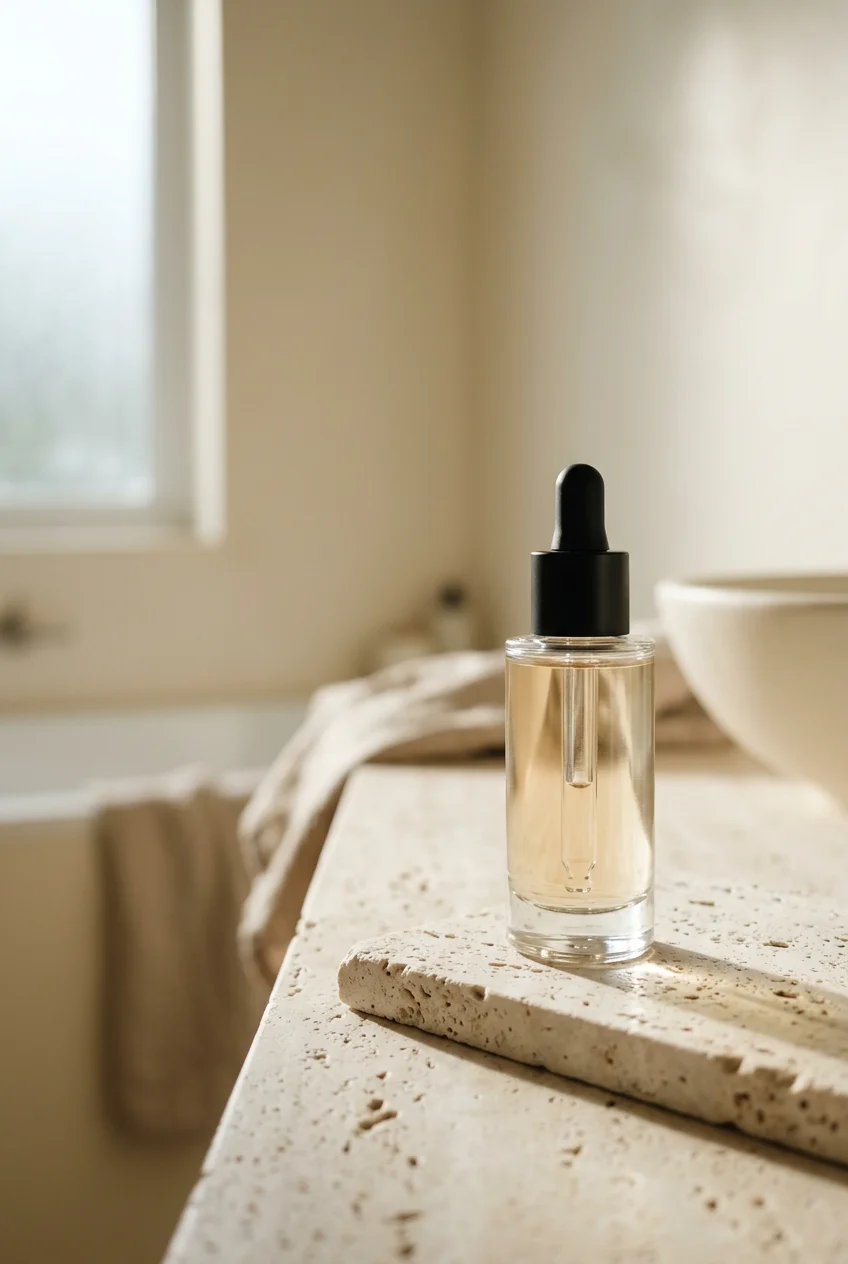
What’s Inside
- The Core Three Rule for a Minimal Skincare Aesthetic
- Finding a Barrier-Supporting Cleanser You Won’t Hate
- Applying Serums Sparingly (The 3-Drop Rule)
- Hydrating With a Multi-Functional Moisturizer
- The Quarter-Teaspoon Rule for Daily SPF
- Prioritizing Skin Barrier Health Over Acids
- Embracing Tinted Sunscreens to Replace Foundation
- Listening to Your Skin’s Changing Daily Needs
- Avoiding the Over-Exfoliation Trap
- Skipping the Toner Step Entirely
- Choosing Packaging That Fits the Aesthetic
- Managing Expectations with Active Ingredients
- Sticking to One Active Product Per Routine
- Organizing Your Vanity for Visual Calm
Last December, I stood in the middle of a Target aisle with a bright red, peeling face. I’d just tried a new 12-step routine I saw online, layering strong acids and thick essences until my skin literally burned to the touch. That night, I threw all those half-empty bottles into a plastic bin under my sink and realized I needed a massive reset. Building a minimal skincare aesthetic isn’t just about making your bathroom counter look clean and organized for photos. It’s a strategic shift toward healthier, more resilient skin by focusing on quality over quantity. I’ve spent the last two years researching ingredient formulations for freshfaceroutine.com, and the clinical data points to one undeniable fact. Dermatologists consistently tell us to stop overwhelming our skin barriers with unnecessary steps. You don’t need fourteen different serums to get a healthy glow. I’m going to walk you through exactly how to strip your daily routine down to the essentials that actually work, using specific products and exact measurements. Let’s fix the clutter on your vanity and the breakouts on your chin at the exact same time.
1. The Core Three Rule for a Minimal Skincare Aesthetic

Dermatologists constantly advocate for a minimalist routine built on three fundamental pillars. Those pillars are cleansing, moisturizing, and sun protection. I tried skipping moisturizer for months because my skin gets incredibly oily by noon, and I learned that the hard way—that mistake only made me break out worse. This focused approach provides essential care without overwhelming your skin barrier. When you limit yourself to exactly three steps, you’re forced to pick products that actually do their job properly. I started my core three routine last spring after a disastrous trip to Costco where I bought a bulk pack of rough makeup wipes that scratched my face up and left me with dry patches. Now, I stick strictly to a gentle wash, a solid cream, and a reliable SPF. If you’re currently using six different toners, essences, and mists, put them in a drawer for a week. You’ll likely notice your skin calms down almost immediately. The core three rule cuts out the friction of getting ready in the morning. It takes me exactly three minutes from start to finish. I use a 1/2 teaspoon of cleanser, a pea-sized dot of moisturizer, and a 1/4 teaspoon of sunscreen. That’s all you actually need to keep your face clean and protected.
2. Finding a Barrier-Supporting Cleanser You Won’t Hate

You need a formula that removes dirt and oil without stripping your skin’s natural barrier. I bought the CeraVe Hydrating Facial Cleanser ($15.49 for 16 oz) at Walmart three years ago, and I’ve repurchased it six times since. It contains ceramides and hyaluronic acid to cleanse while actively supporting moisture retention. I use exactly one full pump, which equals about a 1/2 teaspoon, twice daily. I’ll admit, the texture takes getting used to if you’re used to suds. It doesn’t foam at all. The very first time I used it, it felt like I was washing my face with a thin, slippery lotion. I kept trying to scrub harder to get bubbles. Don’t do that. The lack of foam means it isn’t formulated with harsh sulfates that dry you out. If you wear heavy foundation, this single cleanser won’t take off waterproof makeup. You’ll need a dedicated cleansing balm first, but for a bare face or light makeup day, it works perfectly. My skin used to feel tight, stretched, and squeaky after washing. Now, it just feels soft and normal. That squeaky clean feeling is actually a major sign of barrier damage.
3. Applying Serums Sparingly (The 3-Drop Rule)

Serums are highly concentrated liquids, so less is truly more. A general rule is to use 2-3 drops or a pea-sized amount for your entire face. For heavy oil-based serums, 1-2 drops are often sufficient. Over-application directly leads to severe irritation and terrible pilling under your makeup. I learned this the hard way with The Ordinary Niacinamide 10% + Zinc 1% ($6.00 for 1 oz). I bought it at Target and started slathering a full dropper onto my cheeks every single morning. Within three days, my face was incredibly sticky, and my liquid foundation rolled off in tiny white clumps. I thought the product was defective and almost threw it away. It wasn’t defective. I was just using way too much. Now, I dispense exactly three drops into the palm of my left hand, press my hands together, and pat it gently onto my skin. The 1 oz bottle now lasts me four entire months instead of one. If your face feels tacky or wet five minutes after applying a serum, you’re using too much product. Cut the dose in half the next day.

Yeamon Gua Sha Facial Tools and Face Roller Set
Honestly, Yeamon Gua Sha Facial Tools and Face Roller Set surprised me — sturdier than it looks in the photos, and over 1 buyers gave it 4.5 stars.
4. Hydrating With a Multi-Functional Moisturizer

Select a moisturizer that suits your specific skin type and offers additional built-in benefits. Minimalist skincare thrives on total efficiency. I look for formulas that combine several benefits, reducing the number of steps in my rushed morning routine. The Cetaphil Daily Facial Moisturizer with SPF 50 ($16.99 for 1.7 oz) is a solid multi-tasker. It combines deep hydration with strong sun protection in one simple plastic tube. I apply a nickel-sized amount for my face and neck every morning. I grabbed this at Kroger last summer when I forgot my regular SPF on a weekend camping trip. The tradeoff with combination products is they can sometimes feel heavier than a standalone clear gel moisturizer. This one has a slightly thick, white consistency straight out of the tube, but it absorbs completely after about two minutes of rubbing. If your skin gets very oily, a pea-sized amount might be enough for your whole face. I appreciate that the pump lid latches securely with a loud click, which matters when I toss it into my gym bag. It prevents the white lotion from exploding all over my clothes. You might also like: 15 Beautiful Aesthetic Morning Skincare for Any Style
5. The Quarter-Teaspoon Rule for Daily SPF

Sunscreen is arguably the most crucial step of any routine, no matter how minimal. You must apply at least 1/4 teaspoon for your face and neck, or a nickel-sized dollop for the face alone. Ensure it’s SPF 30 or higher and clearly labeled broad spectrum to protect against both UVA and UVB rays. I use the EltaMD UV Clear Broad-Spectrum SPF 46 ($45.00 for 1.7 oz). It’s quite expensive, but the 46 SPF means I don’t worry about burning during my sunny morning commute. I’ve used this specific brand for eight months. Last Tuesday, I actually took a 1/4 teaspoon metal baking spoon into my bathroom to see exactly what that amount looks like. It’s significantly more product than you think. Most people apply a tiny smear and think they’re protected. I used to do that, and I still got dark sunspots on my forehead. The EltaMD formula’s great because it has niacinamide in it, which helps calm my morning redness. The pump mechanism does clog with dried lotion if you don’t use it for a few days, but a quick wipe with a tissue fixes it immediately. You might also like: 20 Brilliant Aesthetic Pink Skincare You Can Try Today
6. Prioritizing Skin Barrier Health Over Acids

A major focus in clinical skincare right now is strengthening the skin’s natural barrier to prevent chronic irritation. You want to look for restorative ingredients like ceramides, hyaluronic acid, and glycerin. These help reinforce the cellular barrier structure and trap deep hydration. I spent my early twenties nuking my face with harsh apricot scrubs and strong toners. My barrier was so compromised that even splashing plain tap water on my face stung. I completely stopped using all acids for three months and switched to Stratia Lipid Gold ($27.00 for 2.7 oz). I apply two pumps, which is about a dime-sized amount, every night before bed. It has a bright yellow color from the sea buckthorn oil, which can temporarily tint very pale skin if you use too much. I don’t mind the temporary yellow tint because it fixed my flaking dry patches in exactly two weeks. A healthy barrier means your skin holds onto its own moisture much better. You won’t wake up feeling tight and dry. When you prioritize barrier health, you naturally adopt a minimal skincare aesthetic because you stop buying harsh, stripping treatments that require five thick recovery creams to fix. You might also like: 20 Clever Aesthetic Blue Skincare That Actually Work
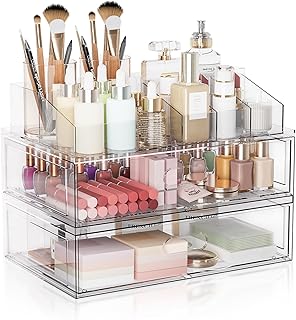
Clear Stackable Makeup Organizer with Drawer
A dependable everyday pick — Clear Stackable Makeup Organizer with Drawer pulls in 306 ratings at 4.5 stars. Not flashy, just solid.
7. Embracing Tinted Sunscreens to Replace Foundation

If you want to drastically cut down your morning routine, swap your heavy foundation and sunscreen for a single tinted SPF. I bought the Trader Joe’s Daily Facial Sunscreen SPF 40 ($8.99 for 1.7 oz) on a random grocery run, and it completely altered how I do my makeup. It has a translucent, silicone-like texture that acts perfectly as a blurring primer. I use a measured 1/4 teaspoon amount. It doesn’t offer full opaque coverage, but it blurs out minor redness and large pores beautifully. I tried the expensive Supergoop version first, but it made me break out in painful cysts along my jawline. The Trader Joe’s version is a fraction of the price and doesn’t clog my pores at all. The main negative is that it only comes in one clear, invisible shade, so it doesn’t provide any actual color correction if you’re trying to hide dark acne spots. However, it leaves a smooth matte finish that lasts for about six hours before I need powder. Merging your makeup prep and your sun protection into one 30-second step is the ultimate way to simplify your cluttered bathroom counter.
8. Listening to Your Skin’s Changing Daily Needs

A common mistake is ignoring your skin’s unique daily needs and blindly following a rigid routine. Skincare isn’t one-size-fits-all. The ideal product amount varies wildly based on your skin type, the current climate, and the product’s formulation. I live in an area with brutal, windy winters and sticky, humid summers. In July, I use exactly one pea-sized drop of gel moisturizer. In February, I use a thick, quarter-sized dollop of heavy cream. You must pay attention to how your face actually feels. If your skin feels tight, red, or stings when you apply a basic unscented lotion, your barrier is compromised. You need to adjust your quantities immediately. Last winter, I noticed my cheeks were flaking despite using my regular cream. Instead of buying a brand new expensive product, I just added a 1/2 teaspoon of plain Vaseline ($4.99 for 7.5 oz) over my moisturizer at night. I picked it up at Walgreens on my way home. It trapped the moisture and fixed the flaking overnight. You don’t always need a new product. Sometimes you just need to change how you use the ones you already own.
9. Avoiding the Over-Exfoliation Trap

While exfoliating is highly beneficial for unclogging pores, excessive exfoliation destroys your skin’s protective barrier. This leads directly to chronic irritation, severe redness, and extreme sensitivity. You need to limit strong chemical exfoliants to 2-3 times a week, not daily. I use the Paula’s Choice 2% BHA Liquid Exfoliant ($35.00 for 4 oz). I pour exactly four drops onto a thin cotton pad and swipe it gently over my oily T-zone. The plastic bottle says you can use it twice a day. Do not do that. I tried using it daily last October, and by day five, my nose was peeling and bright red like a sunburn. It took two full weeks of heavy moisturizing to fix the damage I caused. Now, I strictly use it on Tuesday and Friday nights only. The 4 oz bottle lasts me almost an entire year at this slower rate. BHA is excellent for clearing out stubborn blackheads because it’s oil-soluble, meaning it actually gets inside the pore to dissolve gunk. But you must respect the chemical strength. More acid doesn’t equal better skin. It usually just equals a damaged barrier.

Vtopmart 3 Tier Clear Makeup Organizer with Drawer
A dependable everyday pick — Vtopmart 3 Tier Clear Makeup Organizer with Drawer pulls in 2 ratings at 4.5 stars. Not flashy, just solid.
10. Skipping the Toner Step Entirely

Toners were originally invented decades ago to rebalance the skin’s pH after using harsh, highly alkaline bar soaps. Modern facial cleansers are specifically formulated to be pH-balanced right out of the bottle, which means the traditional liquid toner step is largely obsolete. I completely stopped buying toner two years ago. I used to spend $30 a month on various colorful astringents that mostly just smelled like rubbing alcohol and stripped my skin of its natural oils. I bought a witch hazel toner at Whole Foods once, thinking the natural green label meant it was gentle. It dried my face out so badly that my forehead overproduced oil to compensate for the dryness. By 2 PM, I looked incredibly sweaty and shiny. When you cut out toner, you save money, you save valuable counter space, and you drastically reduce the risk of chemical irritation. If you really miss the refreshing feeling of a liquid step, you can just use plain tap water. I leave my face slightly damp after washing, and apply my moisturizer directly on top of the water. The water helps the thick moisturizer spread easier, and it costs absolutely nothing.
11. Choosing Packaging That Fits the Aesthetic

Part of achieving a minimal skincare aesthetic is cultivating visual calm in your physical space. If your bathroom counter is cluttered with neon bottles, mismatched fonts, and giant plastic tubs, your morning routine feels chaotic before you even start washing your face. I strongly prefer products with simple, uniform packaging that blends into the background. I recently picked up the Byoma Moisturizing Gel Cream ($14.99 for 1.69 oz) at Target. The square, pastel bottle looks incredibly clean and modern on my bathroom shelf. More importantly, the square shape means it doesn’t tip over easily when I’m reaching past it for my toothbrush. I hate tall, round bottles that knock into each other like plastic bowling pins. The Byoma pump dispenses exactly a pea-sized amount every single time, which prevents me from wasting expensive product. The only downside to heavy opaque packaging is that you can’t see how much product is left inside. I ran out completely on a busy Tuesday morning and had to aggressively scrape the bottom with a Q-tip to get enough for my face. But the visual organization it brings to my vanity is absolutely worth that slight inconvenience.
12. Managing Expectations with Active Ingredients

Active ingredients take serious time to work. You aren’t going to see deep wrinkles disappear overnight, no matter what a flashy marketing campaign claims on TikTok. I use the CeraVe Resurfacing Retinol Serum ($19.99 for 1 oz) to help fade my old purple acne marks. I apply exactly one pump, which is roughly a pea-sized amount, every other night. I bought it at Sprouts when I was picking up groceries on a Sunday. I used it for three full months before I noticed any actual fading on my cheek scars. Most people give up after three weeks because they don’t see instant, magical results. Retinol speeds up cellular turnover, but that biological process is inherently slow. The CeraVe formula’s great for beginners because it includes ceramides to buffer the expected irritation and peeling. The packaging is a bit flimsy, though. The clear plastic cap cracked in half when I dropped it on my hard tile floor, but the formula inside remained stable. Pick one active ingredient that targets your main concern, use it consistently for 12 weeks, and ignore the strong urge to buy something new in the meantime.
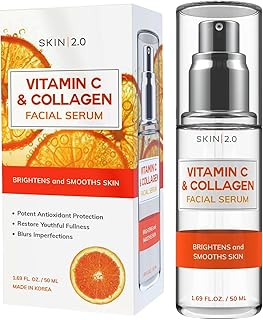
Skin 2.0 Vitamin C Serum – Dermatologist Tested
Skin 2.0 Vitamin C Serum – Dermatologist Tested has been one of the most consistently praised picks in this category. 45 reviewers averaged 4.5/5.
13. Sticking to One Active Product Per Routine

Layering multiple strong active ingredients is a guaranteed recipe for disaster. If you mix Vitamin C, retinol, and exfoliating acids in the exact same sitting, your face will rebel violently. I stick to a very strict rule: one active per routine. I use Vitamin C in the morning and retinol at night. I use the Mad Hippie Vitamin C Serum ($33.99 for 1.02 oz) right after I wash my face. I apply exactly three drops to my skin before my daily moisturizer. I grabbed this at Whole Foods because it uses Sodium Ascorbyl Phosphate, a much more stable and significantly less irritating form of Vitamin C than pure L-ascorbic acid. It doesn’t smell like hot dog water, which is a massive bonus for a morning product. The dropper bottle is made of heavy glass, so I must be careful not to knock it off the slippery counter. Separating your actives ensures they actually work at their correct pH levels without neutralizing each other. It also keeps your routine incredibly short. I used to try mixing a brightening serum, a clearing serum, and an anti-aging serum all at 7 AM. My face would be sticky all day, and I’d get weird dry patches around my nose. Now, the single active rule keeps my skin calm and my mornings efficient.
14. Organizing Your Vanity for Visual Calm

The final crucial step in a minimal skincare aesthetic is exactly how you store your products. When you only use three or four items daily, you don’t need a massive, bulky acrylic organizer taking up half your bathroom sink. I keep my core daily products on a simple, flat ceramic tray I found at Target for $10.00. It’s about six inches wide, and it holds my cleanser, moisturizer, and SPF perfectly. Storing them in plain sight means I never skip my routine out of pure laziness. I keep my weekly exfoliants and nighttime retinol tucked away in a closed drawer so they don’t clutter the counter space. I used to own a giant spinning plastic tower of products. It collected dust constantly, and I always knocked things over trying to find my tiny eye cream hidden in the back. Getting rid of the tower and switching to a small flat tray forced me to confront how many expired, separated products I was hoarding. If a bottle doesn’t fit on the 6-inch tray, it doesn’t belong in my daily morning routine. This physical space limitation is the absolute best way to prevent yourself from impulse-buying new serums you don’t actually need.
Building a minimal skincare routine takes a bit of strict discipline at first. I must resist the urge to buy every new viral product that pops up on my feed in pretty packaging. But once you strip your routine down to the bare essentials, your skin will thank you. The chronic redness fades, the hormonal breakouts calm down, and you suddenly have an extra ten minutes to drink your coffee every morning. I highly recommend starting with the core three rule for at least a full month before adding any serums or liquid exfoliants back into your rotation. If you found this detailed breakdown helpful, pin this article to your skincare board so you can easily reference these exact measurements, specific product recommendations, and dermatologist tips next time you’re standing confused in the drugstore aisle.
Frequently Asked Questions
What is a minimal skincare aesthetic?
It’s a streamlined approach focusing on a few high-quality, essential products rather than a complex multi-step routine. It prioritizes skin barrier health and visual calm on your vanity.
Do dermatologists recommend a minimal skincare routine?
Yes. Dermatologists consistently recommend sticking to a basic routine of cleansing, moisturizing, and applying SPF to avoid overwhelming the skin and damaging its natural protective barrier.
How many products do I need for a minimal skincare aesthetic?
You only truly need three core products: a gentle facial cleanser, a hydrating moisturizer, and a broad-spectrum sunscreen. You can add one targeted serum or exfoliant if needed.
Can I still use active ingredients in a minimal routine?
Absolutely. The key is to pick one primary active ingredient, like retinol or Vitamin C, and use it consistently rather than layering multiple harsh acids on your face at once.
