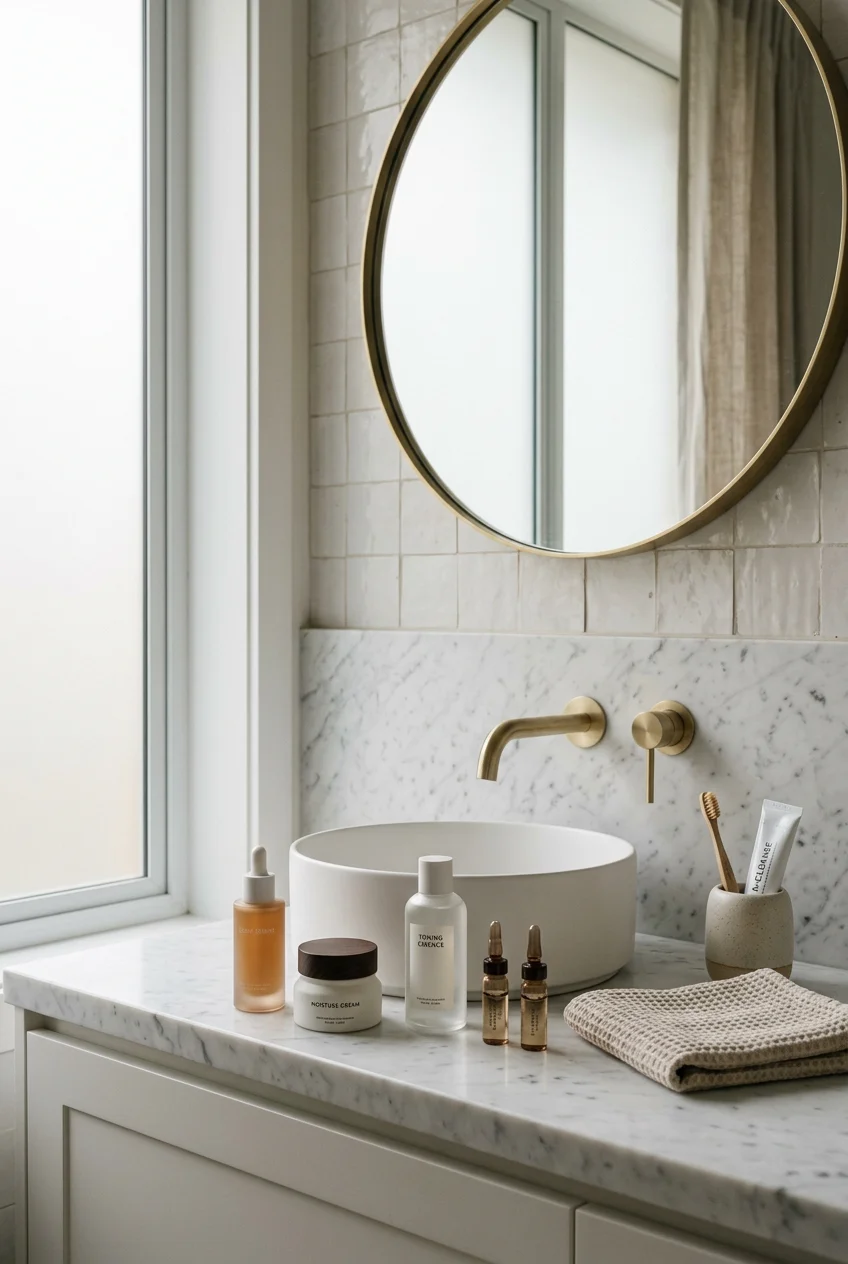
What’s Inside
- Embrace the Gentle Double Cleanse Every Evening
- Integrate BHA for Deep Pore Clearing 2-3 Times Weekly
- Soothe Inflammation with Centella Asiatica (Cica)
- Regulate Oil and Fade Marks with Niacinamide
- Prioritize Skin Barrier Health with Ceramides and Snail Mucin
- Hydrate with Lightweight, Non-Comedogenic Moisturizers
- Spot Treat Effectively Without Burning Your Skin
- Never Skip Sunscreen (Even When Breaking Out)
- Use Toner Pads for Gentle Physical Exfoliation
- Incorporate Green Tea for Sebum Control (My Favorite Korean Skincare For Acne Step)
- Try Heartleaf Extract for Stubborn Redness
- Wash-Off Masks for Weekly Maintenance
- Consistency Over Quick Fixes
Last Tuesday at Whole Foods, a cashier stared directly at the angry, peeling cystic breakout on my chin while handing me my receipt. I felt my face burn, remembering the harsh benzoyl peroxide cream I’d applied the night before. Figuring out Korean skincare for acne completely shifted how I handle my skin, but it took me years of chemical burns to get here. I’m Kailyn, I research skincare formulations for a living, and I used to blast my face with maximum-strength drugstore acids. It didn’t work. My moisture barrier was completely destroyed. I switched my approach entirely after studying how South Korean labs formulate for barrier defense first. The methodology focuses on hydration and slow cell turnover rather than nuking your pores with drying agents. Here is the exact routine and product breakdown I use to keep my acne-prone skin clear and functional. Let’s break down the specific steps.
1. Embrace the Gentle Double Cleanse Every Evening

I tried this wrong for months before figuring it out. I thought putting oil on my already greasy, breaking-out face was a terrible idea. I was wrong. Start your evening routine with an oil-based cleanser to effectively dissolve makeup, sunscreen, and the hardened excess sebum sitting in your pores. Water alone won’t touch that stuff. I use the Anua Heartleaf Pore Control Cleansing Oil ($17.99 for 200ml). It has a very thin, watery-oil texture that smells faintly of clean herbs. I pump exactly 1.5 pumps into dry hands and massage it onto my dry face for a full 60 seconds. You can actually feel tiny grits of dried sebum rolling out of your pores under your fingertips. It’s gross but deeply satisfying. After rinsing that with lukewarm water, you follow up with a low-pH, water-based cleanser. This two-step method prevents pore clogging without stripping the skin of its natural moisture. I use the COSRX Low pH Good Morning Gel Cleanser ($14.00 for 150ml). It smells strongly of tea tree, almost medicinal, and foams up just enough to remove the oil residue. Most people get this wrong by scrubbing too hard or using hot water. Keep the water tepid. I used to buy harsh foaming scrubs from Target that left my skin feeling tight and squeaky. Squeaky clean means your barrier is stripped. You want your skin to feel soft and pliable after washing, not like a stretched rubber band.
2. Integrate BHA for Deep Pore Clearing 2-3 Times Weekly

Beta Hydroxy Acids (BHAs) are oil-soluble. This means they can penetrate deep into the sebum inside your pores to dissolve the glue holding dead skin cells together. If you’re dealing with congestion, this step is non-negotiable. I use the COSRX BHA Blackhead Power Liquid ($18.50 for 100ml). This formula contains 4% betaine salicylate, which is a much gentler derivative of the standard salicylic acid you find in Western products. I apply exactly a pea-sized amount to a cotton pad, or just pat 3 drops directly into my skin using my palms, focusing heavily on my nose and chin where blackheads cluster. The liquid feels slightly slippery, almost like a very thin serum, and leaves a temporary shiny film for about two minutes before sinking in. I made a massive mistake with this in 2023. I decided more was better and applied it every single night for two weeks. My skin peeled like a terrible sunburn and everything stung, even plain water. BHA is powerful. Use it 2-3 times a week at most. I apply it on Tuesday and Friday nights. Skip the harsh physical scrubs entirely. I threw out a half-empty tub of walnut scrub I bought at Walmart because the jagged edges were causing micro-tears and spreading acne bacteria across my cheeks. Chemical exfoliation is safer and far more precise when formulated correctly.
3. Soothe Inflammation with Centella Asiatica (Cica)

Centella Asiatica, also known as Cica or tiger grass, is a powerhouse ingredient for calming redness and supporting skin barrier repair. When I have an active, angry breakout, my skin radiates heat. Centella cools that inflammatory response down. I use the SKIN1004 Madagascar Centella Ampoule ($16.49 for 100ml). It comes in a heavy glass bottle with a glass dropper. The ingredient list is literally just 100% Centella Asiatica extract. The texture is exactly like water, with a very faint earthy scent. I dispense exactly 4 drops into my palm and press it gently into my cheeks and forehead. It absorbs in seconds and leaves absolutely no sticky residue. I started using this after a particularly bad reaction to a vitamin C serum I picked up at Sprouts. My face was covered in tiny red bumps. I applied this ampoule twice a day, and the redness subsided within 48 hours. It doesn’t magically erase a pimple, but it stops the surrounding skin from turning into a red, flaky disaster zone. If you’re using drying acne treatments like benzoyl peroxide or sulfur, you need a soothing agent to counteract the irritation. I follow this up with the SKIN1004 Centella Poremizing Light Gel Cream ($19.99 for 75ml), which has a bouncy, translucent pink texture that feels physically cooling on contact. No exaggeration.

EQQUALBERRY Vitamin Illuminating Serum | Niacinamide 4% +
Honestly, EQQUALBERRY Vitamin Illuminating Serum | Niacinamide 4% + Brightening surprised me — sturdier than it looks in the photos, and over 112 buyers gave it 4.5 stars.
4. Regulate Oil and Fade Marks with Niacinamide

Niacinamide, or Vitamin B3, is a multi-tasking ingredient that helps regulate oil production and effectively fades post-acne marks. Those annoying red or brown spots left behind after a pimple flattens are called post-inflammatory hyperpigmentation. Niacinamide stops the melanin transfer that causes those dark spots. I rely on the Beauty of Joseon Glow Serum (Propolis + Niacinamide) ($17.00 for 30ml). This specific formula combines 2% niacinamide with 60% propolis extract. Propolis is a resinous mixture honey bees produce, and it has natural antibacterial properties. The serum itself has a thick, honey-like consistency that feels slightly tacky when you first spread it. I use 2 drops for my entire face. It takes about five minutes to fully dry down. I’ll admit the sticky texture bothered me at first. I almost stopped using it because it made my face stick to my pillowcase. The trick is to apply it to slightly damp skin and immediately seal it in with a moisturizer. Once I figured that out, I noticed the dark marks on my jawline fading significantly faster. I’ve used this for two years now, replacing the bottle roughly every three months. It’s a slow-burn product. You won’t see results in a week, but after a month, your overall skin tone looks noticeably more even and less blotchy.
5. Prioritize Skin Barrier Health with Ceramides and Snail Mucin

A compromised skin barrier will exacerbate acne. If your skin feels tight, looks dull, or stings when you apply basic moisturizer, your barrier is damaged. You need to strengthen your skin’s natural defenses using repairing ingredients. The COSRX Advanced Snail 96 Mucin Power Essence ($18.00 for 100ml) is my primary tool for this. The texture is notoriously stringy and gooey. It literally stretches between your fingers like melted cheese. I pump 2 pumps onto my fingertips and pat it vigorously into my skin. You have to pat it, not rub it, or it foams up strangely. Snail mucin is packed with glycoproteins and hyaluronic acid that speed up the healing process of popped pimples. I pair this with the Anua 7 Rice Ceramide Hydrating Barrier Serum ($22.00 for 50ml). Ceramides are the lipids that hold your skin cells together, like mortar between bricks. This serum has a milky, opaque look and feels incredibly silky. I bought my first bottle at a specialty Asian beauty store, but I’ve seen similar ceramide formulas starting to pop up at Costco. When my chin is breaking out, my first instinct is to dry it out. That’s a mistake. Flooding the area with snail mucin and ceramides actually helps the blemish heal flat instead of turning into a crusty, peeling scab that takes weeks to fade. You might also like: 15 Charming Aesthetic Pictures Skincare Worth Trying This Year
6. Hydrate with Lightweight, Non-Comedogenic Moisturizers

Even oily and acne-prone skin needs hydration. Skipping moisturizer is the worst thing you can do. If you let your skin dry out, your sebaceous glands panic and pump out even more oil to compensate, leading to a slick face and clogged pores by noon. I used to skip moisturizer entirely in high school, thinking it caused my breakouts. My skin was an oil slick. Now, I always use a lightweight gel formula. The SKIN1004 Centella Poremizing Light Gel Cream ($19.99 for 75ml) is my current standard. I scoop out exactly a quarter-sized amount using the little plastic spatula it comes with. Never dip your fingers directly into a jar, it introduces bacteria. The gel is completely clear and bursts into a watery texture the second you rub it in. It smells faintly of aloe and dries down to a matte finish. Heavy creams formulated with thick waxes or shea butter will trap dead skin cells and sebum in my pores. I learned that the hard way after buying a thick, rich night cream at Kroger on a whim because it was on clearance for $4.99. Within three days, I had painful, deep cysts along my cheekbones. Stick to gel-based moisturizers that list water or centella extract as the first ingredient. They hydrate the top layer of your skin without suffocating the pores underneath. You might also like: 12 Facial Routine Skincare You Need to See

medicube Deep Vitamin C Capsule Serum | Hydrating Vitamin C
medicube Deep Vitamin C Capsule Serum | Hydrating Vitamin C Serum for has been one of the most consistently praised picks in this category. 298 reviewers averaged 4.5/5.
7. Spot Treat Effectively Without Burning Your Skin

Spot treatments in Western skincare usually involve 10% benzoyl peroxide paste that bleaches your towels and leaves chemical burns on your face. Korean skincare takes a different route entirely: hydrocolloid patches. These are small, flexible stickers that absorb fluid from the blemish while maintaining a moist healing environment. I use the COSRX Acne Pimple Master Patch ($6.00 for a sheet of 24 patches). They come in three different sizes on a clear plastic film. You have to apply them to completely clean, dry skin. If you put your serums on first, the patch won’t stick. I made this mistake for a month, waking up to find the patches stuck in my hair instead of on my face. When you have a pimple that has come to a head, you gently cleanse the area, dry it, and press a patch over it for 5 seconds to warm the adhesive. Leave it on overnight. By morning, the translucent patch will have a white, opaque bubble in the center where it pulled the pus out. It flattens the blemish overnight without any crusty scabbing. I buy these in bulk now. I refuse to use drying lotions anymore. The patches also act as a physical barrier so I can’t pick at my skin while I sit at my desk typing. You might also like: 20 Beautiful Routine Skin Care Tips Natural Acne Skincare for a Fresh New Look
8. Never Skip Sunscreen (Even When Breaking Out)

Applying thick sunscreen over active breakouts feels counterintuitive, but UV exposure actually darkens post-acne marks and increases inflammation. You have to wear it daily. Finding a sunscreen that doesn’t feel like a greasy mask is difficult. I use the Round Lab Birch Juice Moisturizing Sun Cream ($21.00 for 50ml). It has an SPF of 50+ and PA++++. The texture is exactly like a lightweight daily lotion, not a traditional sunscreen. It dispenses as a soft white cream but blends into the skin completely clear within ten seconds. There’s zero white cast and absolutely no heavy, silicone-like slip. I measure out exactly 1/4 teaspoon for my face and neck. It smells very faintly of chamomile, but the scent dissipates immediately. I spent years avoiding sunscreen because the thick mineral formulas I bought at Whole Foods left me looking chalky and caused massive closed comedones on my forehead. Zinc oxide is great for some people, but it clogs my pores instantly. The Round Lab formula uses newer chemical filters that aren’t approved in US-manufactured sunscreens yet, which is why the texture is so vastly superior. It leaves a slightly dewy finish, so if I’m feeling particularly oily, I’ll dust a tiny bit of translucent setting powder over my T-zone before leaving the house.
9. Use Toner Pads for Gentle Physical Exfoliation

Sometimes chemical exfoliants aren’t quite enough to remove the flaky skin around a healing blemish, but a harsh scrub is too aggressive. Toner pads bridge this gap perfectly. They’re pre-soaked cotton pads with a slightly textured side for physical exfoliation and a smooth side for depositing product. I use the Mediheal Teatree Trouble Pad ($22.00 for a tub of 100 pads). The tub comes with a tiny pair of plastic tweezers snapped into the lid so you don’t contaminate the stack with your fingers. The pads are actually square, not round, and made of a very soft gauze material. They’re soaked in tea tree extract and liposome-based ceramides. After cleansing, I take one pad and gently swipe the textured side over my chin and nose, where my skin gets flaky. Then, I flip the pad over and stick the smooth side directly onto an active breakout, leaving it there for 3 to 5 minutes like a mini sheet mask. The tea tree provides a distinct cooling sensation that dulls the throbbing pain of a cystic pimple. I used to use generic witch hazel pads from the drugstore, but they were loaded with denatured alcohol that stripped my skin tight. These Mediheal pads hydrate while they clarify, which is the entire philosophy behind this routine.

COSRX Vitamin E Vitalizing Sunscreen,SPF 50 Face Sunscreen
A dependable everyday pick — COSRX Vitamin E Vitalizing Sunscreen pulls in 43 ratings at 4.5 stars. Not flashy, just solid.
10. Incorporate Green Tea for Sebum Control (My Favorite Korean Skincare For Acne Step)

Green tea is incredibly effective at reducing sebum production when applied topically. If you have an oily T-zone that melts your makeup by 2 PM, you need a green tea toner. I use the Isntree Green Tea Fresh Toner ($19.50 for 200ml). The liquid is literally the color of steeped black tea, a deep amber brown. It smells exactly like a cold cup of unsweetened green tea. The formula uses 80% green tea extract sourced from Jeju Island, along with willow bark extract for mild pore clearing. I pour roughly 4 drops into the palm of my hand, rub my hands together, and press the liquid firmly into my face. It absorbs instantly and leaves a completely matte finish. It actually feels slightly astringent, but without any alcohol sting. I apply this specifically in the morning under my sunscreen. I noticed a drastic reduction in my midday oiliness after about two weeks of consistent use. I tried a DIY version of this once by brewing actual green tea bags and keeping the liquid in my fridge. It went rancid in three days and smelled like swamp water. Don’t do that. The formulated versions have the correct preservatives and concentrated extracts to actually penetrate the skin and regulate your oil glands safely.
11. Try Heartleaf Extract for Stubborn Redness

Heartleaf, or Houttuynia Cordata, is another botanical extract that dominates the K-beauty acne space. It specifically targets heat and redness in the skin. When my acne flares up, my entire lower face flushes red. Heartleaf acts as a botanical fire extinguisher. I use the Anua Heartleaf 77% Soothing Toner ($20.00 for 250ml). It comes in a tall, clear plastic bottle and looks exactly like water. There’s virtually no scent, maybe a hint of something green if you really try to smell it. I use this when my skin is too irritated for the green tea toner. I splash about a teaspoon of the liquid into my hands and layer it on. Sometimes I do three layers if my barrier feels particularly fragile. I wait about 30 seconds between each layer to let it sink in. The hydration plumps up the skin cells, making pores look temporarily smaller. Before I found this, I was using a harsh astringent I bought at Target that contained peppermint oil. The peppermint made my face tingle, which I falsely equated with it working. In reality, the tingling was a sign of severe irritation, and my breakouts were multiplying because my skin was inflamed. Heartleaf doesn’t tingle. It just feels like a drink of cool water for your face. Trust me on this.
12. Wash-Off Masks for Weekly Maintenance

Sheet masks get all the attention, but wash-off masks are much better for acne-prone skin because they can incorporate clays and actual crushed botanicals to draw out impurities. I use the I’m From Mugwort Mask ($32.00 for 110g). Mugwort is a traditional Korean herb known for its detoxifying and soothing properties. The mask comes in a heavy glass jar and looks like a thick, greenish-brown gel suspended with actual crushed plant matter. It smells strongly of damp earth and herbs. I scoop out exactly 1 tablespoon and spread a thick layer over my entire face, avoiding my eyes. I leave it on for exactly 15 minutes. As it sits, it doesn’t dry down hard and crack like a traditional clay mask. It stays wet and gel-like. When I rinse it off with lukewarm water, the crushed mugwort pieces provide a very gentle physical exfoliation. My skin looks significantly brighter and less red immediately after washing it off. I do this every Sunday night. I used to use those cheap mud masks in the plastic pouches from Walmart. They dried my face out so badly that my skin would overproduce oil the next day, causing tiny whiteheads everywhere. This mugwort mask calms the skin without stripping a single drop of moisture.

medicube No Cast Just Glow Collagen Sunscreen | SPF 50
Honestly, medicube No Cast Just Glow Collagen Sunscreen | SPF 50 Broad Spectrum surprised me — sturdier than it looks in the photos, and over 939 buyers gave it 4.5 stars.
13. Consistency Over Quick Fixes

The biggest mistake you can make with any routine is expecting overnight miracles. Acne is an inflammatory disease, and healing takes time. You have to commit to a routine for at least 28 days to see how your skin truly responds, because that’s how long it takes for your skin cells to turn over. I finish my nighttime routine with the Laneige Water Sleeping Mask ($32.00 for 70ml) to lock everything in. It’s a pale blue gel that smells like fresh water and lavender. I use a dime-sized amount as the very last step before bed. The silicone-like texture creates a breathable seal over the serums and treatments I applied earlier. It stops the moisture from evaporating into the dry air of my bedroom. I used to switch my entire routine every time I got a new pimple. I’d panic, throw out my cleanser, and buy something new. That constant disruption kept my skin in a state of perpetual shock. Once I established this specific lineup of gentle cleansers, BHA, centella, and lightweight hydration, I forced myself to stick to it for three months. The cysts stopped forming. The redness faded. The texture smoothed out. You have to give the ingredients time to alter the environment of your pores.
Figuring out the exact formulations that work for your skin takes patience, but stepping away from harsh, stripping chemicals is the best first step you can take. Your skin barrier is your first line of defense against acne bacteria. Protect it, hydrate it, and use actives like BHA sparingly. If you’re struggling with painful breakouts and dry, flaky patches, I highly recommend swapping out your cleanser and moisturizer for the Anua and SKIN1004 options I listed above. Save this post or pin it to your skincare board so you can reference these exact product names and prices the next time you restock your bathroom cabinet.
Frequently Asked Questions
Is Korean skincare good for acne-prone skin?
Yes. Korean skincare for acne focuses on repairing the skin barrier, reducing inflammation, and regulating sebum with gentle ingredients like centella asiatica and snail mucin, rather than stripping the skin with harsh drying chemicals.
What is the best Korean ingredient for clearing pores?
BHA (Beta Hydroxy Acid) is highly effective for clearing pores. K-beauty products typically use betaine salicylate, a gentler alternative to standard salicylic acid, which dissolves hardened sebum without causing severe peeling or irritation.
Will oil cleansing make my acne worse?
No, oil cleansing actually helps acne. Oil attracts oil, meaning an oil-based cleanser effectively dissolves excess sebum, sunscreen, and makeup trapped in your pores better than water-based cleansers alone.
How do hydrocolloid pimple patches work?
Hydrocolloid patches absorb excess fluid and pus from an active blemish while creating a moist, protected healing environment. They flatten the pimple overnight and prevent you from picking at the skin.
